If you have to move three bottles to reach your face wash, your sink cabinet needs a simpler setup. Better under bathroom sink storage starts with easy access, a few useful containers, and room for the plumbing.
You don’t need a new bathroom vanity or a matching set of expensive organizers. Start by clearing your bathroom cabinet, then choose storage that fits the space you have.
Start With a Clear Cabinet
Empty the cabinet before buying anything. You’ll see what you own, spot forgotten products, and check whether the cabinet floor needs attention.
Wipe the interior and let it dry completely before putting items back. If you find a leak, swollen wood, or a damp patch, deal with that first.
Sort What You Use and What You Keep
Group your daily toiletries, unopened replacements, cleaning supplies, and occasional-use items. Keep each group together while you work.
Be realistic about duplicates. Several half-used bottles can take up more room than your everyday routine needs. Finish suitable open products before buying replacements.
Move items that belong elsewhere out of the bathroom. A cabinet feels much larger when it holds only the things you use nearby.
Check Products Before Discarding Them
Look for printed expiration dates and manufacturer guidance. The FDA’s advice on cosmetic shelf life explains that U.S. law doesn’t require ordinary cosmetics to carry expiration dates.
Set aside products with changed smells, colors, or textures, and check the manufacturer’s advice if you’re unsure.
Handle unwanted cleaners separately. Follow the label and local disposal rules. The EPA’s household hazardous waste guidance covers safe handling of leftover household chemicals. Don’t combine products to save space.
Measure the Cabinet Around the Plumbing
The cabinet’s outside dimensions won’t tell you which organizer fits inside. Pipes, hinges, and the door opening all reduce usable space.
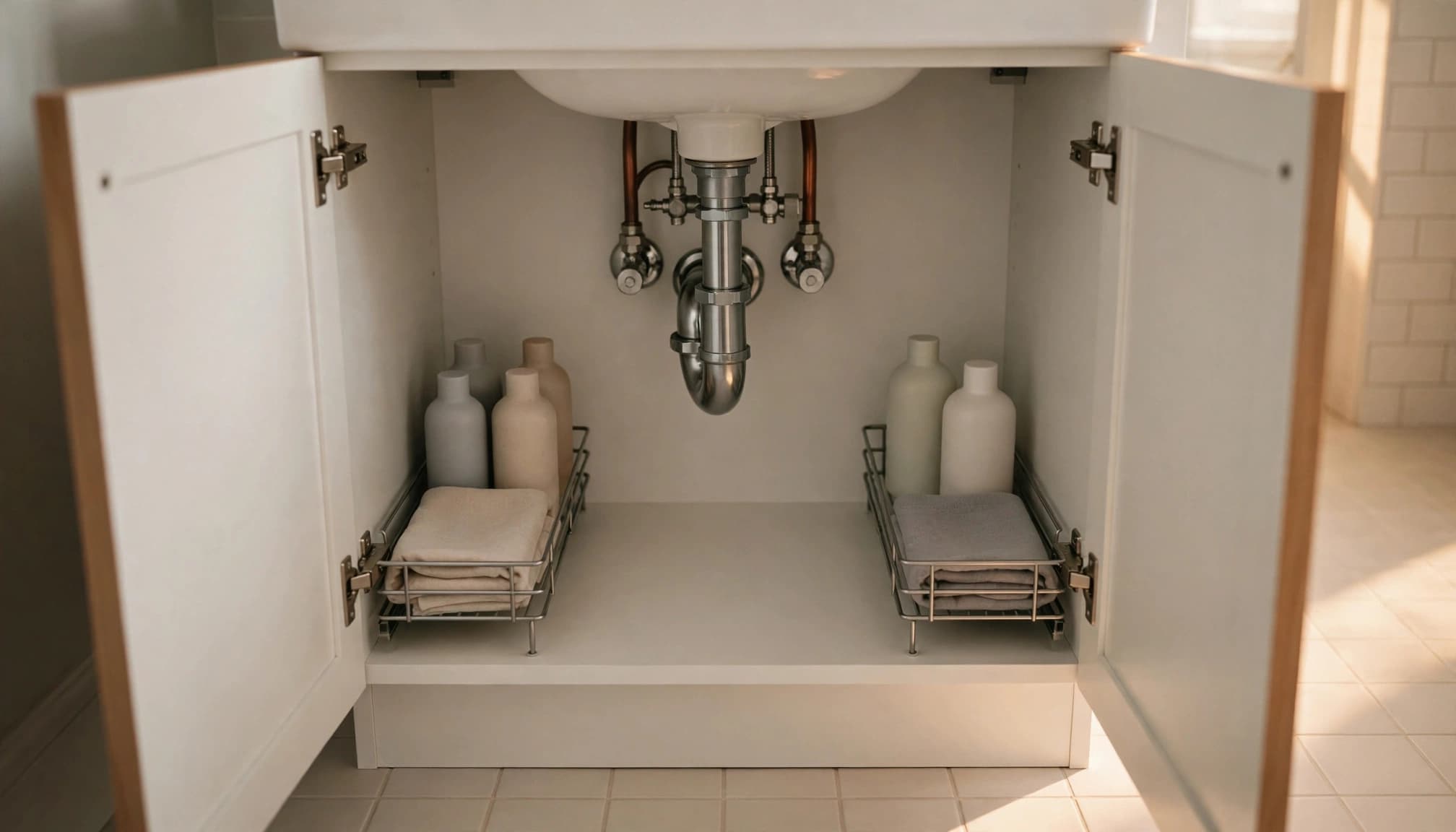
Map the Clear Areas
Measure the interior width, depth, and height. Then measure the clearance around the plumbing pipes, including beside the curved drainpipe, often called the P-trap.
Check the height beneath the pipe and the clearance below the sink bowl. A tall organizer may fit beside the plumbing but won’t fit directly underneath it.
Note where the shutoff valves sit. Leave them reachable without dismantling your storage setup. You also need room to inspect connections and remove containers during repairs.
For off-center plumbing, plan around the larger clear area rather than trying to create matching storage on both sides.
Test the Opening and Moving Parts
Measure the cabinet opening separately. A center divider or hinge can prevent a wide basket from sliding out, even when it fits inside.
Make a simple cardboard footprint before ordering an organizer. Place it inside, close the doors, and check the clearance.
For pull-out drawers, picture the full movement. The drawer needs to clear the hinge, door edge, and any bottles stored nearby.
A drawer can fit inside the cabinet and still be unusable if the door opening blocks its path.
Which Under Bathroom Sink Storage Fits Your Cabinet?
Choose a bathroom sink organizer that fits your cabinet’s shape and the items you need to reach. Start with one useful piece, then add more only if there’s a clear need.
Check available cabinet space around pipes and beneath the basin before choosing.
Use these storage solutions to narrow your choices.
| Storage Option | Useful For | Check Before Buying |
|---|---|---|
| Narrow pull-out drawer | Deep cabinets and frequently used bottles | Drawer travel and door clearance |
| Two-tier organizer | Open height beside the plumbing | Upper shelf clearance beneath the basin |
| Handled caddy | Cleaning supplies you carry together | Loaded weight and handle access |
| Stackable boxes | Small backups and occasional-use items | Whether lower boxes remain accessible |
| Small turntable | Bottles in an unobstructed area | Full turning clearance around pipes |
The right choice should make retrieval easier, not simply fill more space.
Pull-out drawers help when items disappear at the back. Open baskets are simpler when you can lift the whole container out comfortably.
A two-tier organizer uses vertical space, but check the lower tier’s headroom. Tall spray bottles may need a separate floor-level spot.
For a tight budget, reuse washable containers you already own, including plastic drawers if they slide past the plumbing. A sturdy plastic basket or clean food-storage tub can hold backups without committing to a larger system. If considering metal baskets, check that their finish can handle a damp cabinet.
Avoid buying several identical containers before testing one. Small bathroom storage often works better with different container shapes around fixed plumbing.
Use Cabinet Doors Without Blocking the Interior
Cabinet doors can hold lightweight items that might otherwise disappear among larger bottles. Think cleaning cloths, spare sponges, or small sealed toiletries.
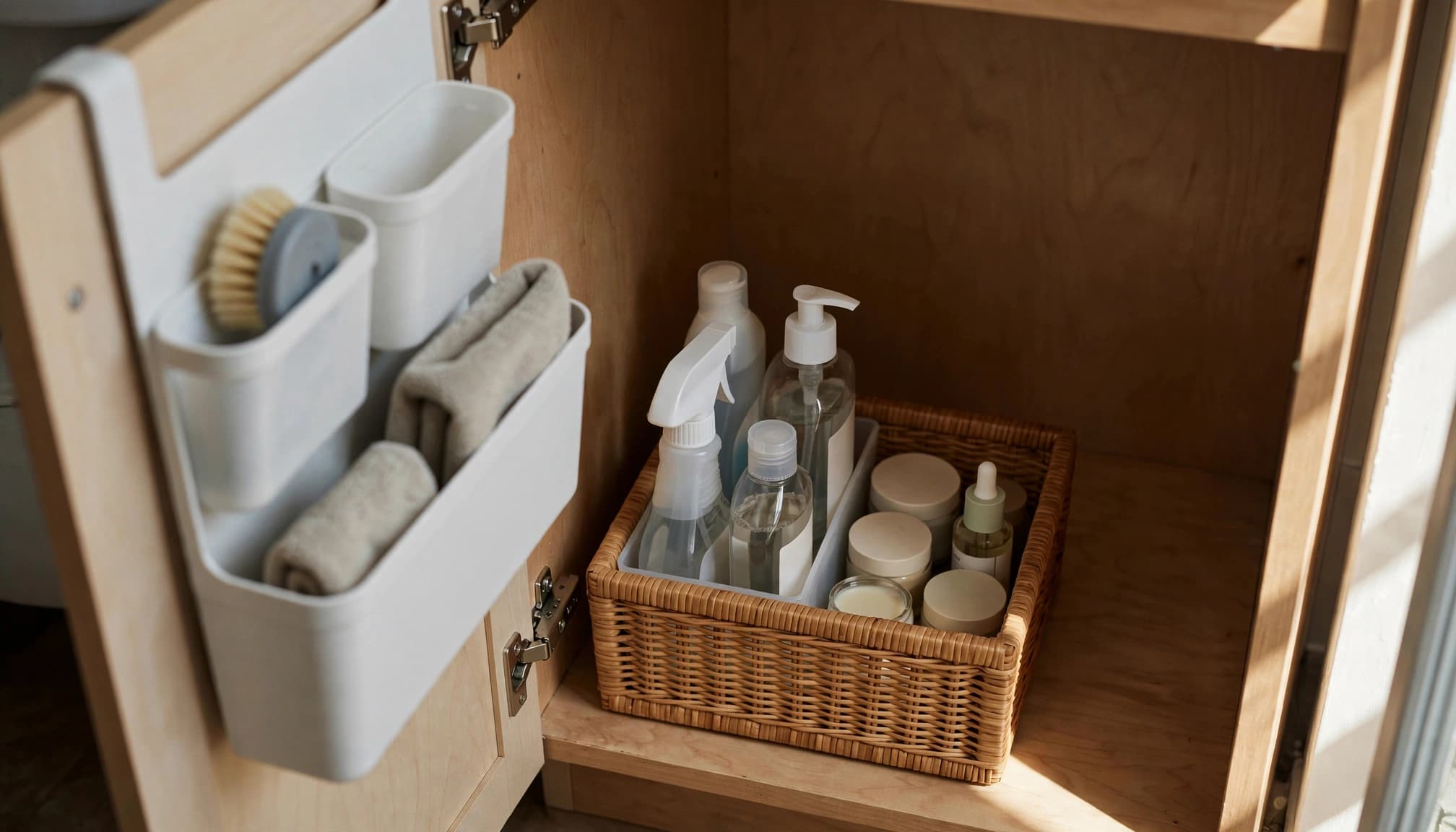
An over-door caddy is a practical renter-friendly storage option when its hooks fit your door. Check the door thickness and whether the hooks prevent it from closing.
Keep the caddy away from pipes and interior baskets. Close the door slowly with the caddy loaded to check for contact.
Adhesive holders are another option, but removable doesn’t mean suitable for every cabinet finish. Follow the manufacturer’s surface, preparation, curing, and weight instructions. If you’re renting, check your lease before attaching anything.
Keep door storage shallow and light. Heavy bottles can make the door awkward to use, and a deep basket may take space from the main cabinet.
You don’t need to use every door. One well-placed holder may solve the problem.
Keep Everyday Toiletries Separate From Cleaners
A useful cabinet has clear homes for different tasks. You should be able to get ready without moving cleaning products out of the way.
Put Daily-Use Items Within Reach
Keep skincare essentials, like face wash and moisturizer, near the front in a small tray or basket. Store unopened replacements behind them or in a separate storage container.
Leave enough room to lift bottles out without tipping nearby items. If a container is tightly packed, reduce its contents.
Check backup sunscreen before keeping it. According to the FDA’s sunscreen guidance, sunscreen without an expiration date should be considered expired three years after purchase.
Keep a purchase date on undated replacements so you don’t have to guess later.
Give Cleaning Supplies Their Own Container
Keep cleaning supplies upright in a separate storage caddy, away from skincare and personal-care products. A handled caddy is helpful if you carry supplies around the bathroom.
Leave products in their original containers with labels intact. Don’t transfer them into decorative bottles.
If children live in or visit your home, follow the CPSC’s household storage safety advice: keep household cleaning products in original containers and cabinets with child-safety latches or locks.
Easy access for you shouldn’t mean easy access for a child.
Keep Moisture From Undoing Your Organization
The area beneath a sink needs regular checks. A tidy arrangement should let you notice moisture and clean up spills without emptying everything.
Keep the Cabinet Floor Visible
Use removable trays beneath bottles that might drip. Choose trays you can lift out, wipe, and dry easily.
Don’t cover an existing damp patch with a liner. Check the plumbing and cabinet condition first. A liner can catch small spills, but it won’t fix a leak.
Leave some floor space visible around pipe connections. When the cabinet is tightly packed, small problems are harder to spot.
Dry bottle bottoms before returning them to the cabinet, especially after cleaning the bathroom.
Choose Containers You Can Maintain
Look for smooth surfaces and simple shapes that are easy to clean. Check whether the manufacturer allows washing or only wiping.
For metal baskets, follow the care instructions and inspect the finish regularly. Scratches, peeling coatings, and visible corrosion need attention. Don’t assume every metal basket is suitable for a damp cabinet.
Keep cardboard packaging out of areas that repeatedly get wet. Store cotton pads and similar items in a clean, closed container.
Fabric and woven baskets need care too. Use them only where you can keep them dry, and remove them promptly if you discover moisture.
What Can You Put Under a Pedestal Sink?
A pedestal sink creates a different storage problem because there’s no cabinet floor or door. Keep the setup small enough to clean around the base.
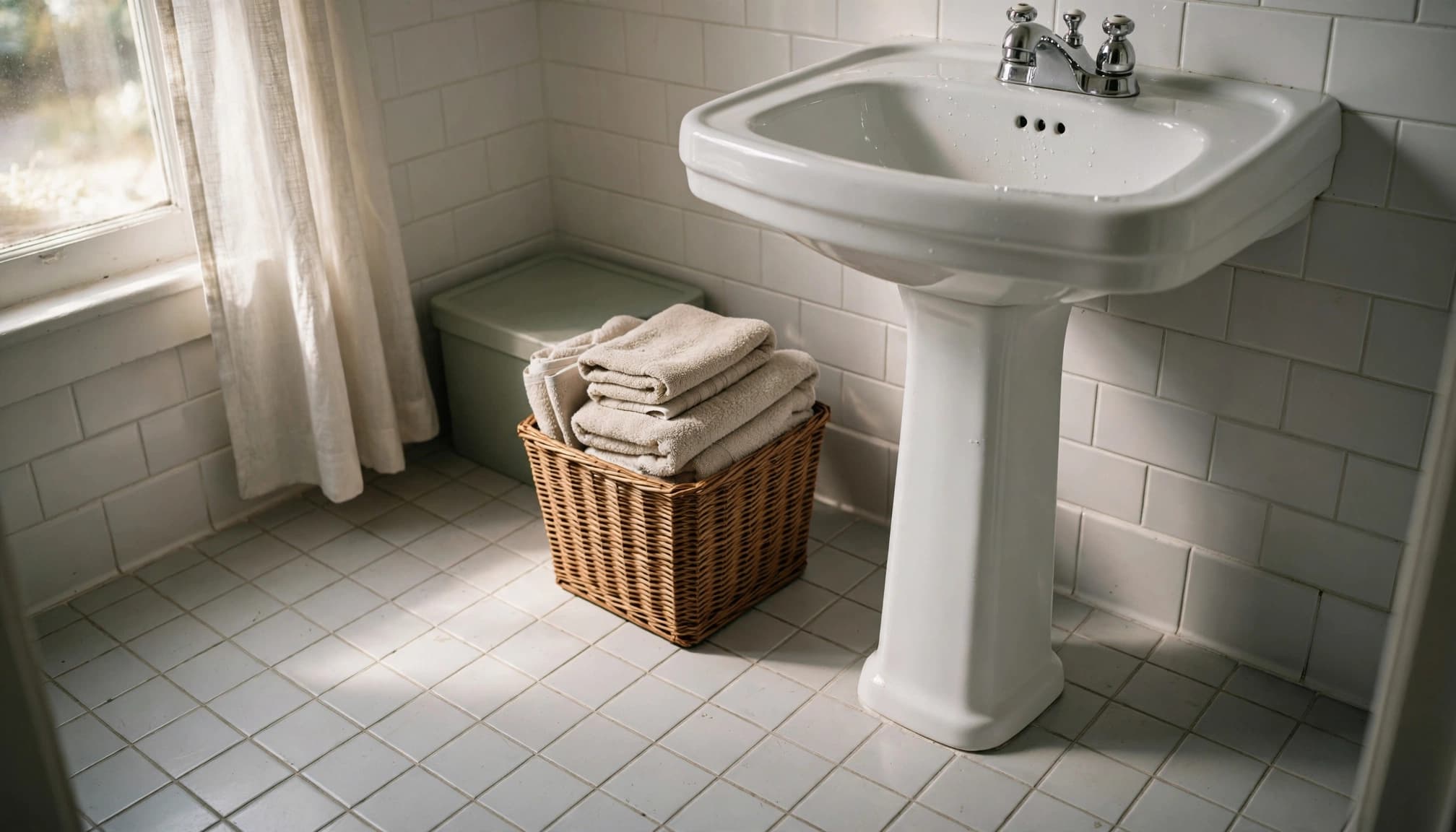
Start with one narrow storage basket or lidded container beside the pedestal. Use it for a limited group of items rather than everything that would normally fill a vanity.
A shelf designed for a pedestal sink may work, but measure the pedestal sink, drainpipe, and nearby floor space before buying. Product shapes vary, so check the full dimensions.
Open baskets are usually easier to position than a drawer unit in this space. Drawers need a stable frame and room to open.
Keep towels off a floor that gets wet. Cleaning supplies also need a secure location if children can reach them.
If the space feels crowded, move backups elsewhere instead of adding another organizer.
Key Takeaways for a Setup You Can Maintain
A simple organizing system makes bathroom organization easier to maintain after the initial cleanup. Give it a quick check when you replace toiletries or bring home new products.
- Measure the clear areas around pipes, then test the door opening before buying storage.
- Keep daily-use items at the front and backups in a separate container.
- Choose removable storage that leaves valves accessible and moisture easy to spot.
Keep extra purchases within the space you’ve assigned them. If the backup container is full, check what you already own before shopping.
When something becomes difficult to reach, adjust that part of the setup. You don’t need to reorganize the whole bathroom each time your routine changes.
Frequently Asked Questions
How do I organize an under-sink cabinet around pipes?
Measure the open areas beside and beneath the pipes, then choose storage that fits those spaces. Keep shutoff valves and pipe connections accessible so you can inspect them or make repairs.
What is the best organizer for under a bathroom sink?
The best organizer is one that fits your cabinet and makes frequently used items easy to reach. A pull-out drawer, handled caddy, or open basket may work, depending on the plumbing and door clearance.
How can I keep items dry under the sink?
Use removable trays beneath bottles that might drip, and leave some cabinet floor visible so you can spot moisture. If you find dampness, check for a leak rather than covering it with a liner.
Can I store cleaning supplies under the bathroom sink?
Yes, keep them upright in a separate caddy and in their original labeled containers. If children can reach the cabinet, use child-safety latches or locks.
Make the Space Easy to Use
A useful sink cabinet gives you clear access to both your belongings and the plumbing. A few well-sized containers can do more than a crowded collection of organizers.
Start with one problem: bottles at the back, loose toiletries, or wasted height beside the pipes. Fix that first, then add storage only where it makes everyday use easier.