Over the toilet storage makes use of vertical space in a small bathroom, giving you room for towels, spare rolls, and everyday supplies without crowding the floor. A well-fitted unit keeps the tank, plumbing, and toilet easy to access.
Your starting point is fit, not shelf count. A compact unit that clears your pipes is more useful than a larger cabinet you can’t install safely.
Start with a few practical options, then check the measurements that matter before you buy.
Key Takeaways
- Choose open shelves for easy access or a closed cabinet to hide everyday clutter.
- Measure the tank, plumbing, baseboards, and usable wall space before ordering.
- Follow the product’s anchoring instructions, even when assembly doesn’t require tools.
- Check the exact model’s weight limits rather than relying on a similar-looking product.
Which Over-the-Toilet Storage Options Should You Consider?
These bathroom furniture options offer useful starting points for over the toilet storage across several budgets. Prices are listing snapshots, so check the retailer for changes and availability.
| Product | Retailer | Listed price | Useful starting point |
|---|---|---|---|
| IKEA FRÖSJÖN shelf | IKEA | $59.99 | Affordable open shelving |
| Brightroom brushed-nickel metal storage | Target | $65 | A simple metal option |
| Walsunny storage cabinet | Walmart Business | $74.99 | Compact cabinet storage |
| Crosley Furniture Tara | Home Depot | $187.85 | A narrower, taller option |
Choosing a space saver starts with checking your available clearance. A lower price won’t help if the frame blocks your water valve.
For Affordable Open Storage
IKEA’s FRÖSJÖN is a budget-friendly starting point if you want metal shelving. It provides open bathroom storage for towels and baskets. Compare its full product diagram with your bathroom measurements before ordering.
Target’s Brightroom brushed-nickel metal option gives you another affordable metal shelving choice. Target also lists a separate black iron tier shelf with three tiers and no-tool assembly.
Keep those Brightroom versions separate when checking features and prices. No-tool assembly describes how you put a shelving unit together, but it doesn’t establish whether you can skip wall anchoring.
For Cabinet Storage
The Walsunny storage cabinet measures 23.6 inches wide, 9.1 inches deep, and 65.4 inches tall. Its listing includes an adjustable shelf and an anti-tip device.
That shallow depth is worth considering when your toilet sits near a doorway or vanity. Check the usable opening beneath the cabinet, too.
The Crosley Furniture Tara storage cabinet measures 22 inches wide, 11 inches deep, and 72 inches tall. It needs less width than the Walsunny, but more depth and height. Choose it only after checking those three measurements against your room.
Should You Choose Open Shelves or a Closed Cabinet?
Your everyday supplies can help you choose the right over the toilet storage. Think about what you need to reach quickly and what you’d rather keep out of sight.
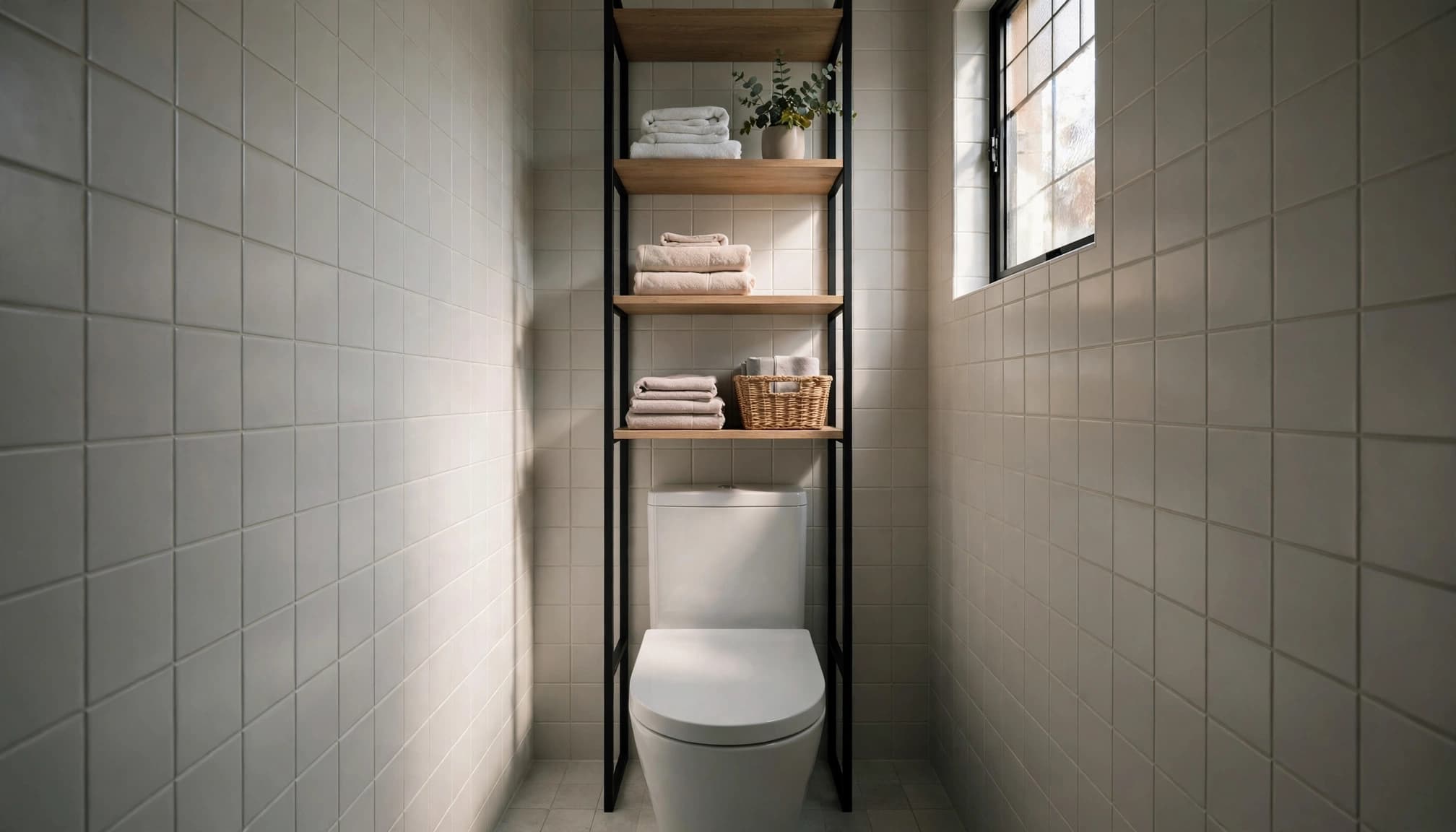
Open Shelves Make Supplies Easy to Reach
Open shelving works well for folded hand towels, spare toilet paper, and a few frequently used items. You can see what’s running low without opening doors.
Choose shelves with enough usable depth for your baskets. Check that shelf lips or support bars won’t reduce the space you expect to have.
Small items need containment. A shallow bin keeps skincare bottles together, while a washable basket can hold spare rolls. Leave some shelf space empty so you can remove items without moving everything around.
Closed Cabinets Keep Visual Clutter Down
A storage cabinet helps hide mismatched bottles, personal supplies, or backup products. An adjustable shelf lets you arrange the interior around taller containers.
Check nearby towel bars, walls, and light fixtures to make sure the cabinet doors have room to open.
A shallow floating cabinet can be wall mounted to keep the floor clear for cleaning. If you’re renting, get permission before drilling and use hardware suited to your wall. Glass or rattan-style doors are decorative choices, but check how much of the contents remains visible.
What Should You Measure Before Buying?
Don’t rely on the unit’s overall height alone. For over the toilet storage, measure the opening around the toilet and the space occupied by its supports. This confirms whether a space saver will fit.
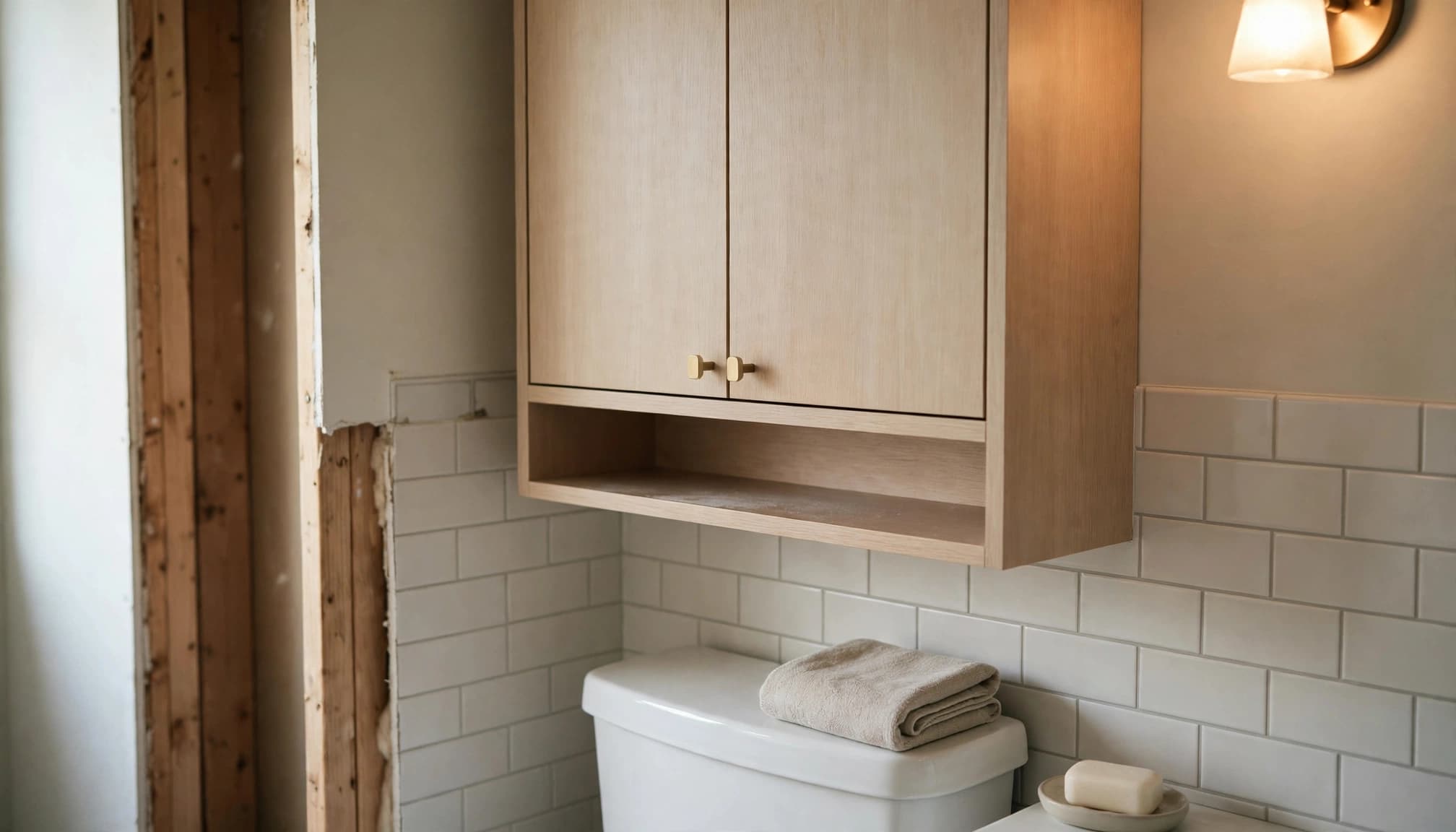
Check the Tank and Usable Opening
Measure your toilet at its widest point, then measure floor-to-tank-lid height. Compare those numbers with the bathroom organizer’s inside opening, not its outside dimensions.
For example, the Zenna Home spacesaver instructions describe 30.5 inches of toilet clearance for that model. That figure applies only to the specified unit, not every bathroom.
Check whether you can lift and remove the tank lid with storage in place. For wall-mounted cabinets, Lowe’s cabinet installation guide recommends at least 24 inches between the tank lid and cabinet bottom.
That wall-cabinet recommendation differs from a freestanding rack’s floor-to-shelf opening.
Check Pipes, Baseboards, and Reach
Measure the water valve and supply line behind or beside your toilet. A low crossbar can collide with them even when the main frame fits.
In a small bathroom, check how far your baseboard projects. It can push a rack forward or prevent its legs from sitting where the product diagram shows.
Use painter’s tape to mark the proposed cabinet outline on the wall. Check the depth with a cardboard template, then sit down and stand up normally.
A rack can clear the toilet tank but still block access to the shutoff valve. Check both before you buy.
Also confirm that you can reach the upper shelves without climbing on the toilet.
Which Materials Work Well in a Humid Bathroom?
Choose a finish you can wipe clean, then check the manufacturer’s care instructions. Material names alone don’t show how well a product handles moisture.
Coated metal is practical for open metal shelving, but damaged coatings can expose the metal to rust. Check joints and feet regularly, especially where condensation or splashes collect.
Sealed wood and bamboo can work for wooden shelves in bathrooms when their finish remains intact. Neither should be treated as waterproof simply because it looks natural or appears in a bathroom product listing.
MDF, an engineered wood board, needs particular care around exposed edges and seams. The Walsunny seller describes its painted surface as moisture-resistant and waterproof, but that’s a seller claim rather than independent testing.
Keep splashes off the unit and wipe up water promptly. Use your bathroom ventilation after showers, and let towels dry before storing them.
For easier upkeep, choose smooth surfaces with accessible corners. Decorative grooves and tightly woven doors give you more places to clean.
How Do You Install and Anchor Storage Safely?
Read the complete instructions before assembling over the toilet storage. Confirm the supplied hardware suits your wall and that you can reach every fixing point.
Mount a Wall Cabinet Step by Step
Use the storage cabinet’s instructions as your main guide. The installation sequence generally follows these steps:
- Mark the cabinet position and check tank-lid access, reach, and door movement.
- Locate wall studs and compare their positions with the cabinet’s approved fixing points.
- Check for hidden services before drilling, then use fasteners specified for the cabinet and wall construction.
- Level and secure the cabinet, check every connection, and load it only after installation is complete.
A stud finder doesn’t rule out every hidden pipe or cable. If you’re unsure about the wall, use a qualified installer.
Tile needs suitable drilling methods and hardware. Don’t assume a general cabinet guide covers your particular tile surface.
Secure Freestanding Units and Respect Weight Limits
A freestanding shelf rests on the floor, but a tall unit still needs wall attachment to prevent tipping.
The over-the-toilet cabinet assembly instructions call for anti-tipping devices, wall anchors, or direct attachment with appropriate hardware.
Follow your exact model’s requirements. Never remove a structural crossbar to get around plumbing unless the manufacturer permits that configuration.
Check whether the stated capacity applies per shelf or to the whole unit. For wall mounted cabinets, account for the cabinet’s own weight as well as its contents.
There isn’t one safe load for every cabinet or anchor. Keep heavier supplies lower down, distribute weight evenly, and don’t exceed the product’s documented limits.
What Can You Use If Your Rental Doesn’t Allow Drilling?
Ask your landlord whether small holes for required safety hardware are permitted. Get approval before buying a unit that depends on wall attachment.
If anchoring isn’t allowed, an unsecured rack isn’t a safe over the toilet storage workaround. Choose a different location instead, and follow the product’s installation requirements.
A space saving over-door organizer can hold lightweight bathroom supplies without taking up the toilet area. Check that its hooks fit your door, the door closes fully, and it won’t block access to the toilet paper holder.
A compact under-sink organizer is another practical option when plumbing leaves enough room. Measure around the drainpipe and keep access to valves clear.
Some tension-mounted organizers avoid screws, but they still need suitable contact surfaces and correct installation. Follow their load limits and don’t use a shelf as a handhold.
For small apartment storage solutions, move backup supplies elsewhere to free up bathroom storage space. Keep bulk toilet paper in an existing cupboard and store only a manageable supply near the toilet.
How Can You Make Bathroom Storage Look More Put Together?
Start by removing items you don’t use. You’ll gain useful space without adding another shelf or container.
Choose two or three matching baskets instead of a different container for every product. Check their dimensions before buying, including whether the handles will catch on the shelf above.
Keep everyday supplies on the easiest shelf to reach. Store lightweight backups on higher shelves, as long as you can reach them safely.
For a more cohesive look, match the cabinet’s handles or finish to one existing feature in your bathroom decor, such as your towel bar. You don’t need to replace every bathroom accessory.
On open shelves, fold towels consistently and leave a little space around baskets. One small decorative item is enough when you also need room for toiletries.
Avoid storing loose glass containers near shelf edges. Small bathroom storage should make your routine easier, with supplies that stay secure and simple to remove.
Frequently Asked Questions
How much space should you leave between the toilet tank and a storage unit?
Check the clearance required by the specific product, since freestanding racks and wall-mounted cabinets differ. Make sure you can still lift the tank lid and reach the shutoff valve.
Can you use over-the-toilet storage without drilling?
Only if the product is designed to stand securely without wall attachment and its instructions allow it. If a tall unit requires anchoring, choose another storage location rather than leaving it unsecured.
What should you store on the upper shelves?
Use upper shelves for lightweight items you can reach safely, such as spare towels or extra toilet paper. Keep heavier supplies lower down and within the product’s weight limits.
How do you protect over-the-toilet storage from bathroom moisture?
Use the unit according to the manufacturer’s care instructions, wipe up splashes, and ventilate the bathroom after showers. Check coated metal for damage and keep water away from exposed wood or MDF edges.
Choose Storage That Fits Your Bathroom
The best over the toilet storage gives you usable shelves without blocking plumbing, tank access, or comfortable movement. Let your measurements and installation options guide the purchase.
Compare a few products, check their instructions, and choose the smallest unit that holds what you need. Good small-space organization and bathroom storage make the room easier to use, while well-chosen bathroom furniture adds function without becoming another obstacle.