If taking out a bowl means lifting a stack of plates first, your cabinet needs a simpler layout. Small kitchen organization works better when everyday dishes have easy access and their own clear spaces.
You can improve a cramped cabinet with fewer mixed stacks, better shelf spacing, and one well-chosen organizer. Start with the dishes you use, then build your storage around them.
Key Takeaways
- Keep everyday plates and bowls within comfortable reach, near your dishwashing or serving area.
- Measure the cabinet opening and dish stacks before buying risers, racks, or baskets.
- Use no-drill organizers only where they leave enough room to remove dishes and close the door.
1. Start With a Cabinet Reset
Empty the cabinet before adding storage. If you’re organizing the whole kitchen, work through one cupboard at a time so your preparation counter stays usable.
Sort Dishes by Everyday Use
Group dinner plates, side plates, cereal bowls, serving bowls, and mugs separately. Keep matching sizes together so you can see how much space each group needs.
Choose your everyday set based on your household, meals, and usual washing routine. You don’t need an arbitrary limit, but guest dishes don’t need your easiest shelf.
Move occasional serving pieces to a less convenient cupboard. Separate damaged dishes, unwanted duplicates, and containers without matching lids before putting anything back.
Clear Nearby Food and Tool Clutter
Dish cabinets sometimes collect snacks, utensils, and appliance attachments. Return those items to their own zones rather than squeezing them around plate stacks.
Sort pantry foods into piles by type. Donate unopened cans that meet the food bank’s acceptance requirements, and discard unsuitable food.
Our room-by-room decluttering checklist helps you handle neighboring storage areas without tackling everything at once.
Keep one small area clear for sorting. That makes it easier to finish the cabinet before starting another.
2. Plan Small Kitchen Organization Around Daily Use
Choose the location before choosing the organizer. Your everyday plates should be easy to take out and just as easy to put away.
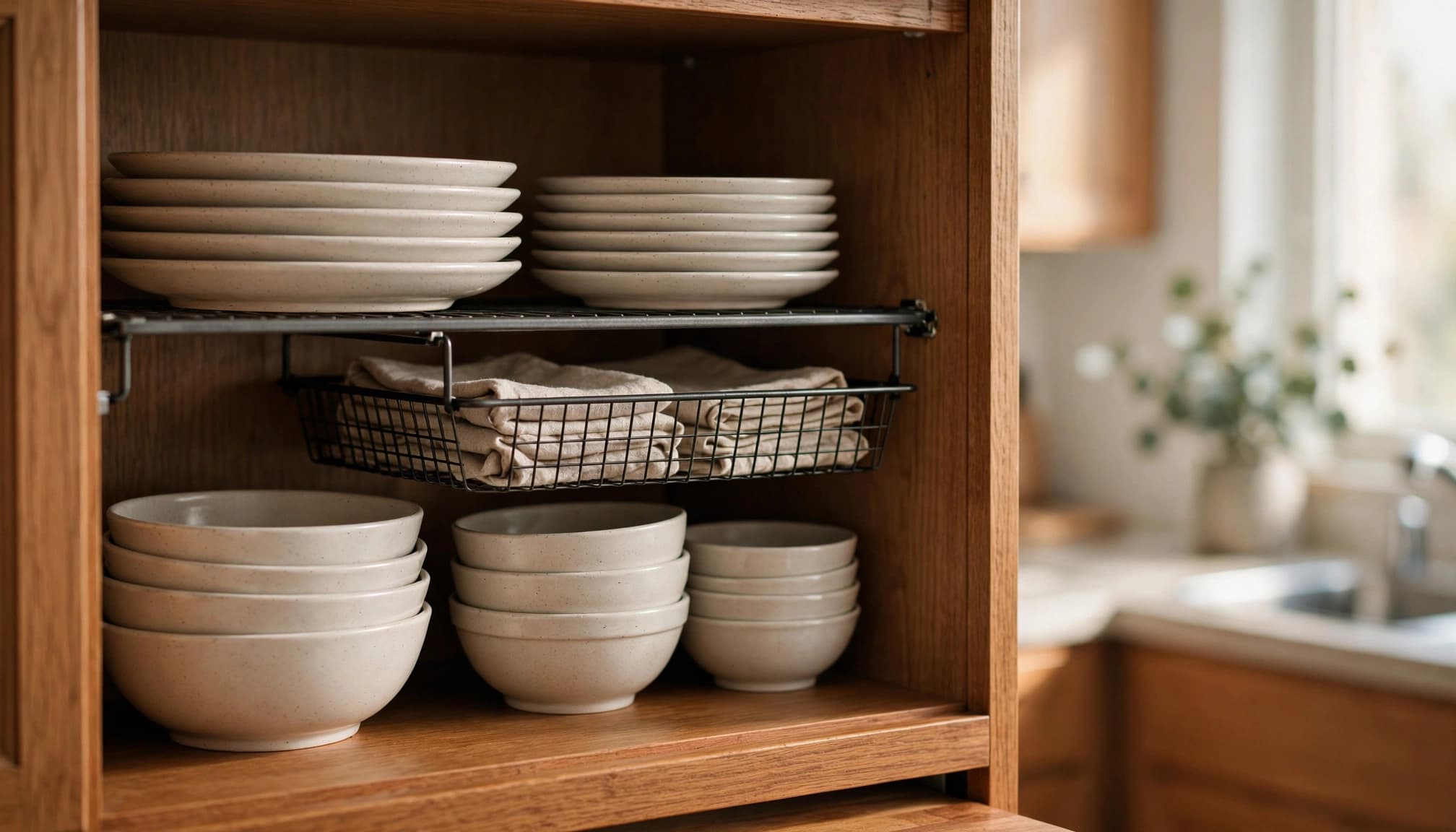
Give Plates and Bowls Separate Spaces
Place dinner plates in one stack, side plates beside them, and bowls in a separate stack. Avoid putting bowls on top of plates you use at every meal.
Keep heavier dishes on a lower, comfortable shelf. Reserve higher shelves for lighter, occasional-use pieces rather than tall stacks of heavy ceramics.
Choose the cabinet nearest the dishwasher or drying area when it also suits serving meals. In a narrow galley kitchen, a cupboard between washing and serving areas can reduce extra trips.
Put Related Items Near Their Tasks
Store mugs in a cabinet above or below the coffee maker. Keep cooking utensils near food preparation and dishwashing supplies near the sink.
A food processor belongs in a suitable cabinet near the electrical outlet where you’ll use it. Move it onto an appropriate work surface before operating it.
Keep rarely used appliances off the countertop when suitable storage is available. Our guide to small appliance storage shows how to choose a cupboard spot you can reach comfortably. Don’t let an appliance you use occasionally displace dishes you reach for daily.
3. Use Vertical Cabinet Space Without Awkward Stacks
Unused height above dishes helps only when an organizer improves access. Measure the usable cabinet space, including width, depth, and height, along with hinges and shelf supports.
Measure your largest plate and tallest bowl stack too. Leave enough room to lift each item by hand.
Separate Dish Sizes With a Shelf Riser
A freestanding shelf riser is one of the simplest kitchen organizers and creates a second level without drilling. Store one plate size beneath it and another above, if the riser can support the full load.
Choose legs that don’t block the plates underneath. If you have to tilt a stack sharply to remove it, the arrangement needs more clearance.
Shelf risers also make smaller items easier to see. Knowing what you own can help you avoid buying duplicates hidden behind larger dishes.
Leave lifting room above a bowl stack. A shelf can hold the dishes and still be too low to use comfortably.
Use Baskets and Bins for Lighter Items
An undershelf basket can hold napkins or lightweight accessories beneath an existing shelf. Avoid loading it with heavy ceramics unless it’s designed for that weight.
Adjustable stacked wire baskets can use tall cabinet spaces for pantry packets or dish towels. Set the spacing to suit the contents, rather than giving each level the same height. Adjust the wire baskets as needed to fit what you’re storing.
Stackable plastic bins with removable dividers work for snack packets, small attachments, and other loose items. Reconfigure the dividers as your needs change.
Keep bins out of the way of daily dish stacks. Extra storage shouldn’t create another obstacle.
4. Add Renter-Friendly Storage Without Drilling
Freestanding kitchen organizers offer a no-drill option and can stand or hang inside existing cabinets. Shelf risers, drawer dividers, and suitable over-door baskets can move with you.
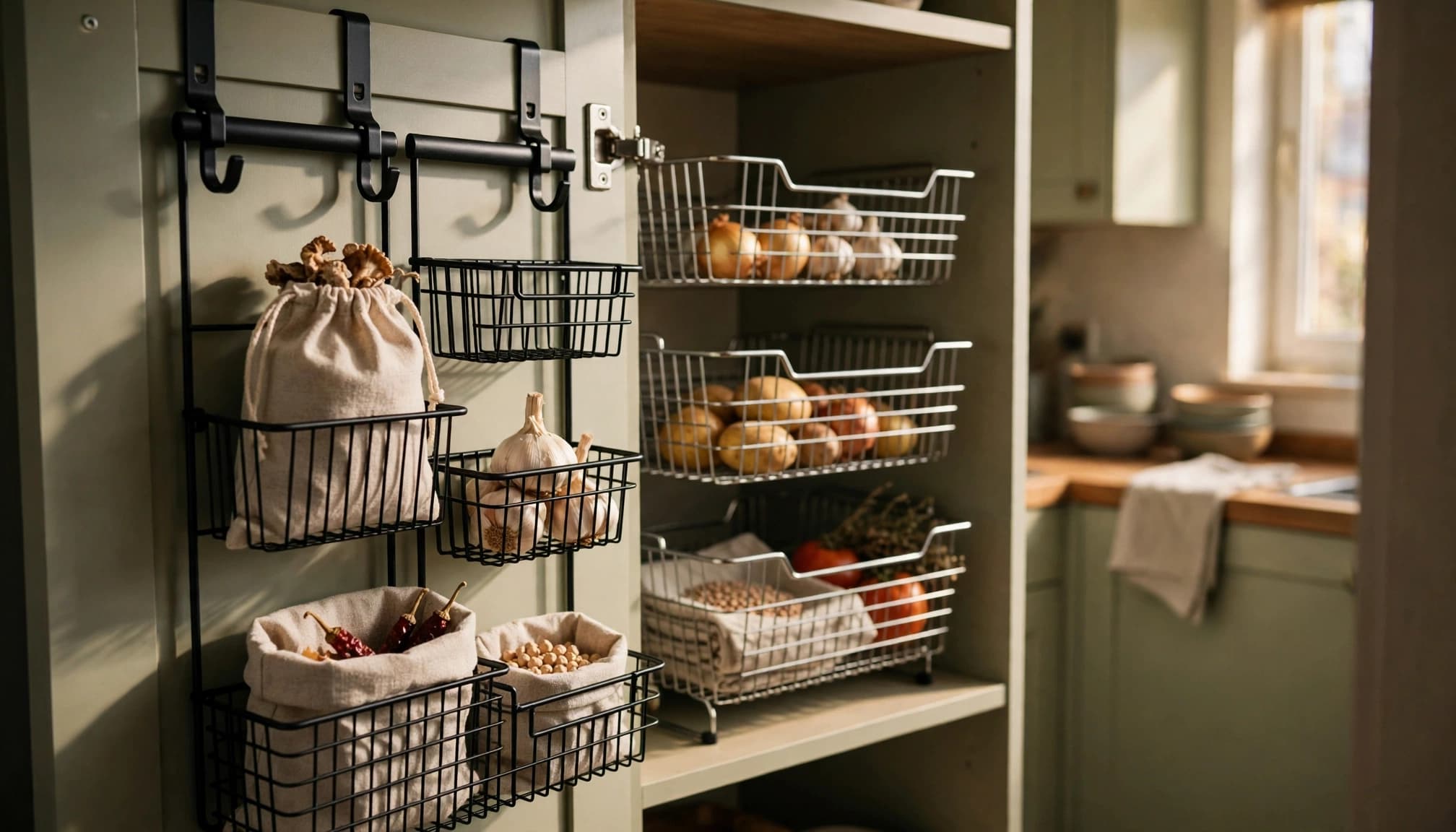
Use Door Space for Lightweight Supplies
Over-the-door pantry organizers add storage without a drill. Use this space for light packets, wraps, or small supplies rather than transferring heavy plate stacks onto the door.
Measure the space behind the closed door, including basket depth and contents. Hooks can interfere with the frame, while baskets can hit shelves inside.
Choose a door size that suits the organizer. A full-height pantry model won’t fit every small cabinet door.
Keep the Door and Cabinet Usable
Close the door with the organizer loaded before settling on the layout. Storage attached to a door still occupies cabinet space.
Protect the finish from rubbing hooks, and keep neighboring drawers clear. Follow the organizer’s surface requirements and weight limits.
Removable hooks suit some lightweight accessories, but they aren’t a safe substitute for properly supported dish shelves. In a rental, use freestanding solutions when permanent installation isn’t allowed.
Buy one organizer for one clear problem. Filling every available surface can make a small kitchen harder to use.
5. Choose Organizers That Solve the Right Problem
Some products free dish space indirectly by organizing pantry items or cutlery. Choose the one that addresses your crowded area.
| Organizer | Useful Feature | Best Use |
|---|---|---|
| iDesign Linus Divided Lazy Susan | Five divided sections and stainless steel ball bearings | Bringing small pantry items within reach |
| Joseph Joseph DrawerStore | Drawer organizer that stacks forks, knives, and spoons rather than laying them side by side | Reducing cutlery’s footprint in a narrow drawer |
| COVAODQ 6-tier over-the-door pantry organizer | Adds six storage levels without drilling | Moving lightweight pantry supplies out of crowded cupboards |
Start with the simplest option that fits. You may only need a shelf riser for dishes, even when another cupboard needs a different organizer.
A divided lazy Susan can help in deep or corner storage, but its round shape leaves unused corners. Measure the turning space and allow clearance above taller contents. It generally makes more sense for small pantry items than large dinner plates.
For DrawerStore, allow enough drawer height for the stacked cutlery arrangement. A narrow footprint doesn’t help if the drawer cannot close.
If a shelf is already adjustable, reposition it before buying another product. Existing shelf space may solve the problem at no cost.
6. Free Dish Space by Moving Other Kitchen Items
Plates and bowls need dedicated room. When cookware or pantry overflow takes up that space, adjust nearby kitchen storage instead of making dish stacks taller.
Give Cookware Its Own Storage
Use pot racks on a suitable wall or ceiling to store pots and pans and free drawer or cabinet space. Heavy cookware needs secure fixings, adequate support, and rental permission for permanent installation.
Some simple pot racks mount inside cabinet doors in minutes. Use a purpose-built rack on a suitable door, with room for handles and the door to close.
When drilling isn’t possible, use a freestanding pan or lid organizer. Our space-saving pot and pan storage ideas cover options that keep cookware accessible without taking over dish shelves.
Contain Pantry and Drying Supplies
Sealed glass canisters help keep flour, rice, and pasta fresh. Use sizes that suit what you buy, and retain useful cooking and expiry information.
Don’t decant everything automatically. Original packaging can use less space, especially when a large matching container would remain mostly empty.
For pantry storage, keep daily foods toward the front of deep cabinets, with matching unopened backups behind them. A removable bin can bring small packets forward together.
If you don’t have a dishwasher, use a dish drying rack or mat beside the sink. Let dishes dry before storing them, then put a foldable rack or dry mat away to clear the countertop.
Frequently Asked Questions
Is It Better to Store Plates Upright or Stacked?
Small stacks work well when you can lift a plate without moving another dish category. An upright plate rack can help when mixed stacks are frustrating, provided it supports the plates securely.
Allow space above and around the rack so you can remove each plate without catching the shelf or door.
Can You Store Plates and Bowls in a Deep Drawer?
Yes. A deep drawer can keep heavy dishes below shoulder height and make them easy to see.
Use suitable dividers or a dish-storage system to limit shifting. Keep the full load within the drawer’s rating, and leave enough height for bowls when the drawer closes.
What If You Only Have One Dish Cabinet?
Give the easiest shelf to everyday plates and bowls. Store occasional serving pieces elsewhere, then use a riser only where it creates accessible space.
Move pantry packets or lightweight supplies into suitable baskets. Keep enough room to return clean dishes without rearranging the whole cabinet.
Make Everyday Dishes Easy to Reach
A useful dish cabinet lets you take out one plate or bowl without rebuilding a pile. Separate everyday stacks, use shelf height carefully, and keep neighboring supplies in their own spaces.
Start with your most frustrating shelf and make one measured change. When dishes are easy to remove and return, keeping the cabinet organized takes less effort.