A deep kitchen drawer gives you plenty of room, but choosing an organizer can feel surprisingly confusing. The right deep drawer organizers should fit both your drawer and your everyday items, without making anything harder to reach.
You don’t need to replace every tray or buy a complete matching set to improve drawer organization. Start with one drawer, take accurate measurements, and choose a layout around what you already use.
How Do You Measure a Deep Kitchen Drawer?
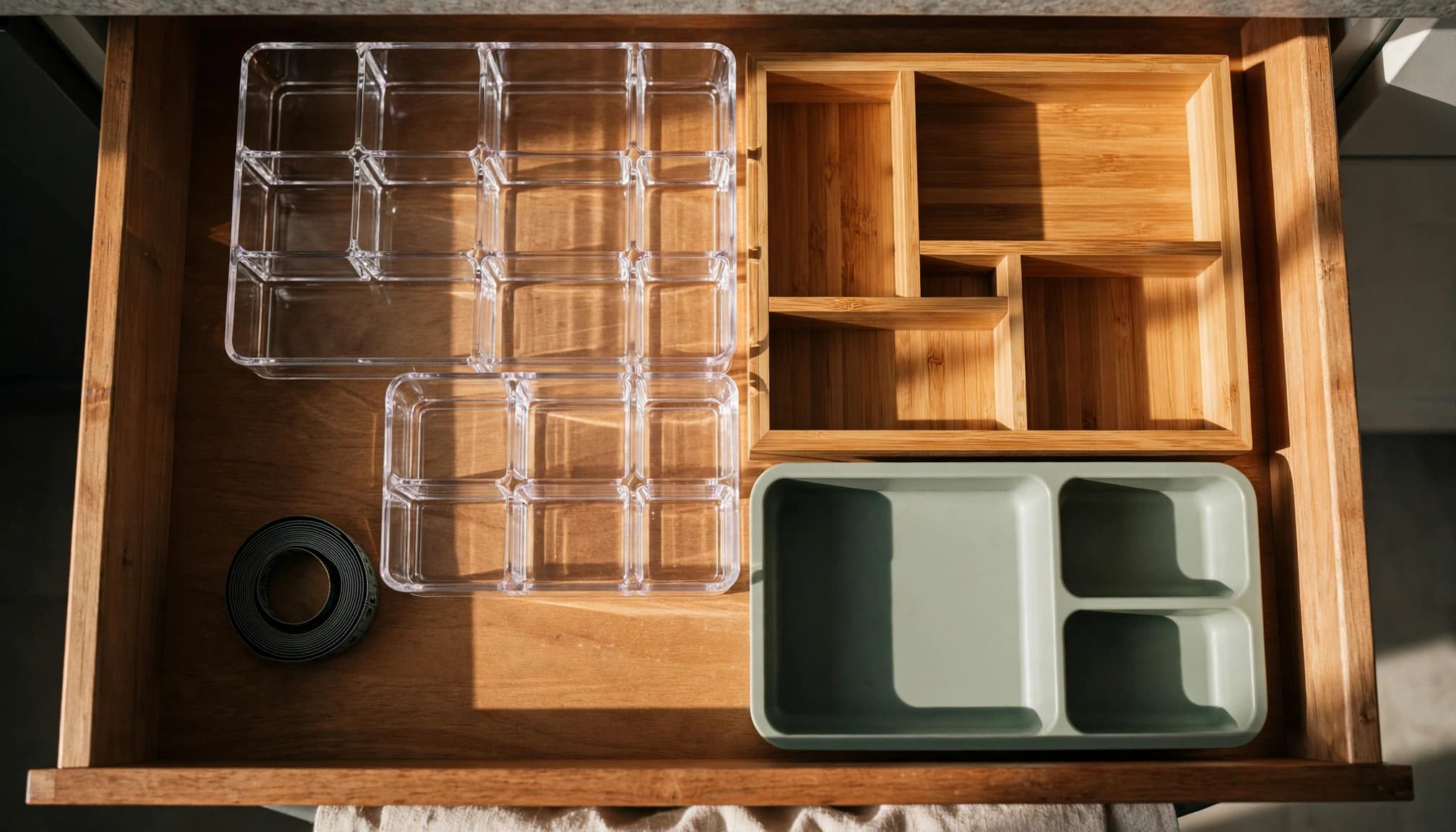
Measure inside the drawer rather than at the kitchen cabinet front. That usable space matters when comparing a fitted drawer insert with several smaller trays, and it’s the starting point for effective drawer organization.
Record the Usable Width, Depth, and Height
Empty the drawer so you can see its corners and any fittings. Measure the inside width from side to side and the depth from front to back.
Next, check the usable height with the drawer closed. Tall sides don’t automatically mean you have the same clearance above everything inside.
Write down any sloping sides, rounded corners, or hardware that could affect the fit. If the width changes, record those measurements too. Keep this information together so you don’t have to empty the drawer again while shopping.
Compare Actual Product Dimensions
Check the organizer’s outside measurements, then look for compartment measurements. Both matter: an insert can fit your drawer while its sections are too small for your utensils.
For example, IKEA lists its UPPDATERA flatware tray, a bamboo cutlery tray, as 12 by 19½ inches. Compare those dimensions with your usable space rather than assuming they match your cabinet size.
For a custom-fit drawer organizer, follow the seller’s measuring instructions exactly. Ask whether you should submit the drawer dimensions or the finished organizer dimensions. Don’t add your own clearance allowance unless the seller requests it.
Match the Organizer to What You Keep Inside
Before choosing compartments, decide what belongs in this drawer. For small kitchen storage, base drawer organization on what you actually keep. Each purchase should solve a clear problem, not add another container.
Measure Cookware and Other Bulky Items
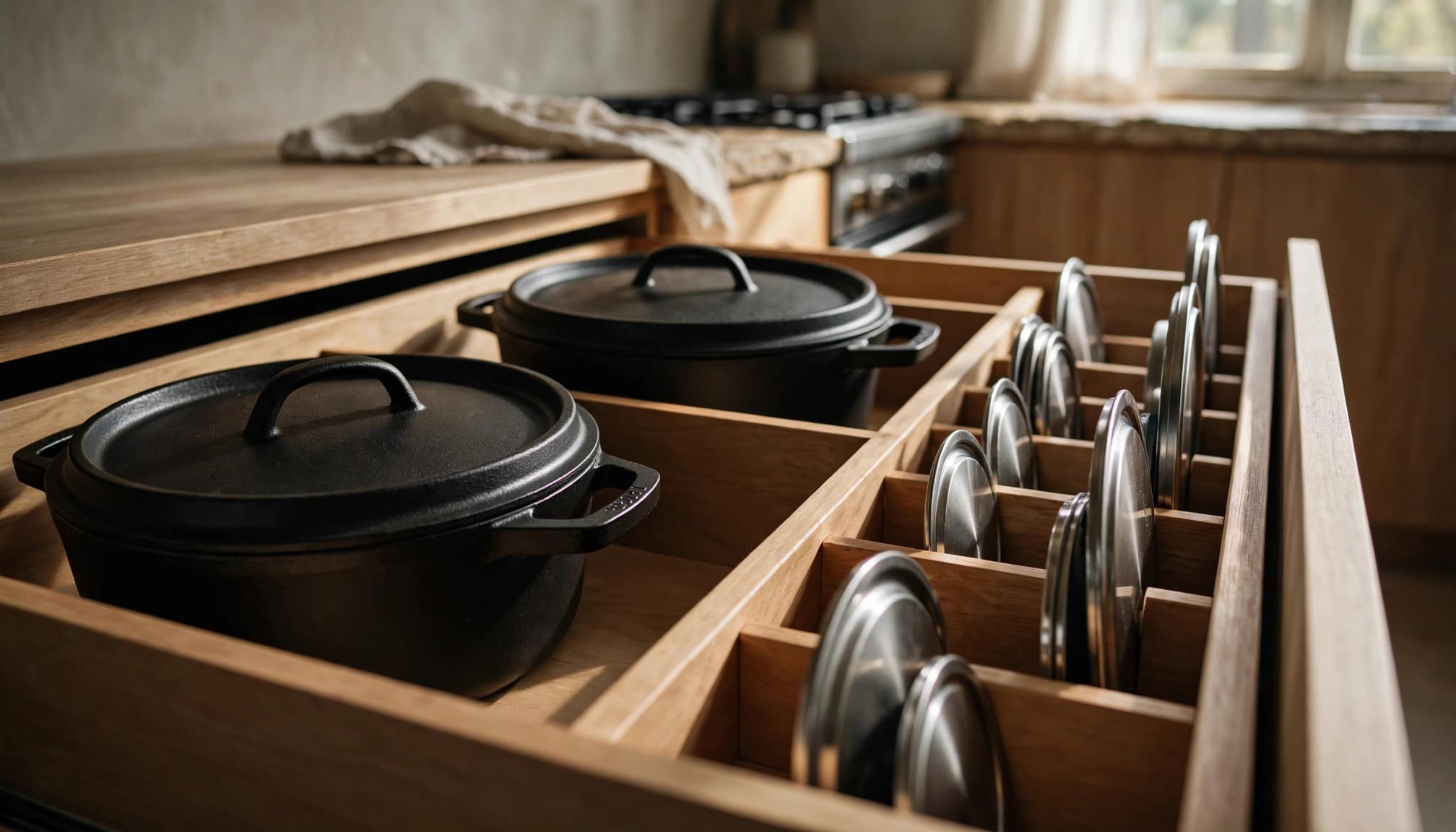
Set aside the pots, pans, lids, and appliances you want to store. Record their dimensions, including handles, knobs, and other parts that extend beyond the main body.
Compare those measurements with the organizer’s compartment sizes. Check the manufacturer’s stated purpose and any loading limits before choosing an insert for heavy cookware.
Keep fragile lids on your measurement list too. If you’re considering a pot lid organizer, ask the supplier which lid sizes it accepts and whether your lid handles affect the fit. A product photograph alone doesn’t give you those answers.
Check the Small Items Separately
Gather kitchen utensils, food storage containers, and the lids that belong with them. Remove duplicates you don’t use and anything that belongs elsewhere.
Then measure your longest utensils and widest containers. Include the items you reach for daily, not only the ones that look easy to arrange.
If a product offers adjustable compartments, check the adjustment range. “Adjustable” doesn’t tell you whether a section can accommodate your particular ladle, whisk, or container. Your measurements make that decision much clearer.
Which Deep Drawer Organizers Suit Your Kitchen?
Choose the organizer format before choosing its finish to make drawer organization easier. Removable trays, adjustable dividers, and fitted inserts involve different buying decisions. For a focused need, a pot lid organizer may work better than a general tray.
Start With Removable Trays for a Flexible Purchase
Removable trays are worth considering when you want renter-friendly storage or expect to change your kitchen setup. Check whether they simply sit inside the drawer or need anything else to stay in place.
IKEA’s UPPDATERA series includes flexible interior organizers. Compare individual products rather than treating the whole range as interchangeable.
Before buying several trays, draw their outside dimensions on paper. Include the spaces between them. This gives you a clearer picture of the proposed layout and helps you identify gaps that don’t serve a purpose.
Check Divider and Fitted-Insert Requirements
For drawer dividers, read how the product attaches and how much adjustment it offers. Confirm whether the listed size refers to its minimum length, maximum length, or a particular configuration.
For a fitted drawer insert, check whether the compartments are fixed, or consider a custom-fit drawer organizer for unusual dimensions. Ask about trimming, mounting, and removal before ordering, rather than assuming installation is simple.
If you’re renting, confirm that the product can be installed and removed within your lease rules. A fitted appearance doesn’t guarantee easy drop-in installation, so check whether screws, adhesive, or permanent changes are involved.
Compare Materials Without Relying on Appearance
A clear organizer and a bamboo insert can both look appealing. Their appearance doesn’t tell you how acrylic drawer organizers are constructed, how they should be cleaned, or whether they suit your intended use.
Use these questions when comparing listings.
| Material listed | What to check before buying |
|---|---|
| Acrylic | Cleaning instructions, panel thickness, joined corners, and compartment dimensions |
| Wood | Whether it’s solid wood or another construction, its finish, and installation requirements |
| Bamboo | Listed coatings, other materials, and care instructions |
| Plastic | The stated material, cleaning guidance, and any restrictions on use |
Choose from the product’s actual specifications rather than making a durability judgment from the material name alone.
For example, IKEA lists bamboo, stain, and clear polyurethane/acrylic among the materials in its UPPDATERA flatware tray. This specific bamboo cutlery tray includes other listed materials, so don’t generalize from bamboo alone.
Don’t assume an organizer has antimicrobial properties because it’s clear, wooden, or marketed as natural. Look for evidence supporting any such claim.
Also check how the maker recommends cleaning corners and joints. If the care routine doesn’t suit your household, choose another product. An organizer should be practical to maintain, not simply attractive when it’s empty.
What Should You Check About Fit and Movement?
Before buying, check the instructions for keeping the organizer in place. Look for its intended drawer surface, attachment method, and any included fittings.
If the listing doesn’t explain these details, ask the seller. Don’t buy extra liners, adhesive, or mounting hardware until you know what’s required.
A drawer insert’s outside dimensions show whether it fits, but not how it will sit or stay in place.
When it arrives, compare the organizer with your measurements. Follow the fitting instructions, then check that the empty drawer opens and closes normally.
Look for contact with the drawer sides, nearby fittings, or cabinet opening. Check that removable sections sit as instructed.
Before loading it, confirm any stated weight limits and intended uses. If the fit differs from the listing, contact the seller while you still have the packaging and order details. Don’t alter the product before checking whether that could affect your return options.
Keep the Purchase Small and Useful
For small apartment storage solutions, start with one problem drawer. You can assess the fit and everyday usefulness before buying organizers for the rest of your kitchen.
Compare the full purchase cost, including delivery, extra fittings, and customization charges. A matching set isn’t automatically better value if you won’t use every piece.
Buy Only the Sections You Need
A smaller tray may suit one group of items without filling the entire drawer. IKEA lists its UPPDATERA utensil tray as 6 by 12 inches, giving you another size to compare with your measurements.
Check how much useful space would remain beside it. You don’t need to fill every gap with a purchased organizer.
Review Return and Custom-Order Terms
Read the return policy before checkout, especially when ordering a custom-fit drawer organizer. Confirm whether you can change the measurements after ordering and what happens if the finished insert doesn’t fit.
Keep the product page, your measurements, and any seller correspondence together. This makes it easier to check what you ordered and resolve questions without starting again.
Key Takeaways Before You Shop
A useful organizer starts with a clear plan. Keep these points beside you when comparing products:
- Measure the usable interior, including height and any awkward corners.
- Compare compartment dimensions with the items you intend to store.
- Check installation, care, and loading information for the exact product.
- Start with one drawer and review return terms before committing.
These simple checks help you narrow your choices without buying a large collection of trays first.
Frequently Asked Questions
What Should You Ask Before Ordering a Custom Insert?
Ask the seller which measurements they need and whether photos would help explain your drawer’s shape. Confirm the finished outside dimensions and the sizes of the compartments you want.
Request the installation instructions before ordering. You’ll want to know whether fitting requires tools, trimming, or attachments, especially in a rental.
Also ask how the seller handles measurement errors and manufacturing differences. Keep their answers with your order confirmation. Clear written details are more useful than relying on a photograph of a similar drawer.
Can You Reuse the Same Organizer After Moving?
Check it against the new drawer rather than assuming it will transfer. Measure the new usable interior and compare its corners, fittings, and clearance with the previous setup.
Review the organizer’s installation instructions again. If it has adjustable parts, check their stated range and whether all original components are still present.
For apartment organization, the possibility of reuse is worth considering before purchase. Ask whether replacement fittings are available, but don’t count on compatibility with a future kitchen whose dimensions you don’t yet know.
Choose a Fit You Can Use Every Day
Good drawer organization starts with accurate measurements and a clear idea of what you need deep drawer organizers to hold. Product dimensions, compartment sizes, and installation details give you a stronger basis for choosing than appearance alone.
Start with your most frustrating drawer. Buy only what fits its contents, and check the result before organizing the next one.