You can store books with under-bed containers, existing furniture, door organizers, or a compact cart. Good small apartment book storage protects your books and keeps everyday routes clear, which matters in small spaces.
In a small apartment, start with unused space rather than adding furniture. A container beneath your bed can hold books you rarely open, while a small basket keeps current reads nearby. Measure what you need to store and where you can comfortably reach it.
Plan Your Small Apartment Book Storage
Measure Your Collection and Your Available Space
Line your books up and measure their combined spine width. This gives you a more useful starting point than book count because paperbacks and large hardcovers need different amounts of room.
Measure the height and depth of your largest books, too. Then measure each potential storage spot, including the room needed to open lids, pull out containers, or move past furniture. Tape a proposed footprint onto the floor before buying anything.
Separate Everyday Reads From Stored Books
Keep reference books and current reads within easy reach. Put finished novels and occasional-use books in less convenient spaces.
Avoid building tall stacks on the floor. Book Cave discourages this because stacks create clutter and can become unsafe. Hidden containers and supported vertical storage give your collection a clearer home.
For renter-friendly storage, start with hidden storage inside existing furniture. Tall or leaning bookcases may still need a wall anchor, even when they look freestanding.
1. Roll Book Containers Under Your Bed
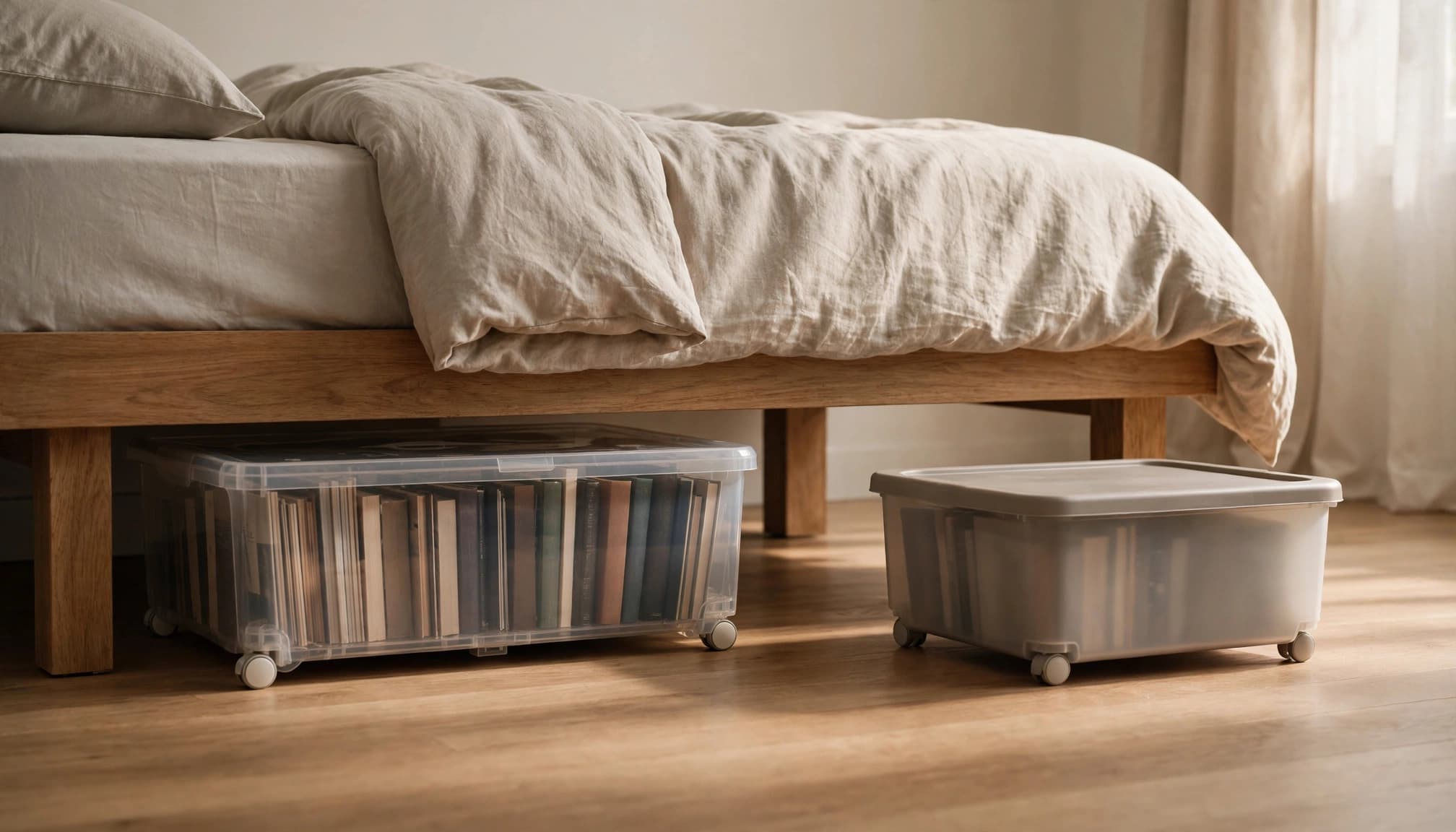
Measure Beneath the Frame, Not the Mattress
Under bed storage is a practical form of hidden storage for books you don’t need daily. Book Cave recommends rolling containers to make this space easier to use.
Measure beneath the lowest side rail and around center supports. Treat spaces separated by legs as individual compartments. Include wheels, handles, and lids in your measurements.
Leave enough space beside the bed to remove each container. A box that fits underneath but cannot slide past your bedside table won’t be convenient.
Choose Firm Containers and Manageable Loads
Rigid containers provide more support for book storage than lightweight clothing bags. Divide your collection between smaller containers so each load stays manageable.
Morosnook describes a 10-inch wheeled option with a transparent window and label holder. It also lists a two-pack of 4.5-inch-tall containers holding up to 45 liters each. Those measurements describe size, not safe book weight.
Our guide to choosing under-bed storage containers explains clearance and access considerations. When choosing under bed storage containers for books, prioritize a firm base and suitable load capacity rather than maximum volume.
2. Give Existing Furniture a Second Job
Before adding storage, check your coffee table, bedside cabinet, or TV unit. An unused compartment may already provide book storage for a row of paperbacks.
Use bookends to support upright books, and keep the titles visible when possible. Avoid packing a cupboard so tightly that removing one book pulls several others forward.
A storage ottoman can hold occasional reads while providing seating or a footrest. Books are dense, so keep the load manageable and check any stated weight limit. Leave room for the lid to open fully.
If you’re already replacing your bed, a headboard with built-in book compartments can take the place of a bedside unit, much like a compact bookshelf. Keep books secure rather than balancing them above your pillow.
A bookshelf door or storage dividing wall is another option, but it usually costs more and requires installation. In a rental, using existing furniture is a simpler starting point than adding a separate bookcase.
3. Use Door Space for Lighter Books
Hang Paperbacks Over a Suitable Door
A renter-friendly over-the-door organizer can hold thin paperbacks, children’s books, or magazines without taking up floor space.
Measure the door thickness before buying to make sure the hooks fit snugly. Check that the door opens and closes fully without the organizer or its contents scraping the frame.
Follow the organizer’s stated load limit. Morosnook recommends this no-drilling option for lighter books and paperbacks, not heavy hardcovers.
Use the Wall Behind the Door
Shallow shelves behind a door can use an overlooked strip of wall. Measure with the door fully open, including the handle’s projection.
Door-based organizers are renter-friendly and need no drilling, while wall-mounted shelves may require permanent fixings. Check rental rules before installing them, since wall damage could affect your security deposit.
Keep exit routes clear. Extra book storage shouldn’t stop a bedroom door from opening properly or make an entryway harder to use.
4. Keep Current Reads on a Compact Book Cart
A small utility cart gives books a movable home beside a sofa or bed in a small apartment. IKEA’s RÅSKOG is one familiar example of this book cart style.
Place heavier books on the lowest tier. Use the upper section for current reads, and keep the cart away from narrow walking routes. Don’t fill it until it’s difficult to move safely.
Measure the cart’s full footprint, including handles and wheels. Some carts look narrow in photographs but project farther into the room than expected.
Choose a cart that replaces a side table or another storage piece for a space-saving setup. Our space-saving studio furniture ideas offer more ways to combine functions without adding obstacles.
5. Consider Slim Alternatives to a Full Bookcase
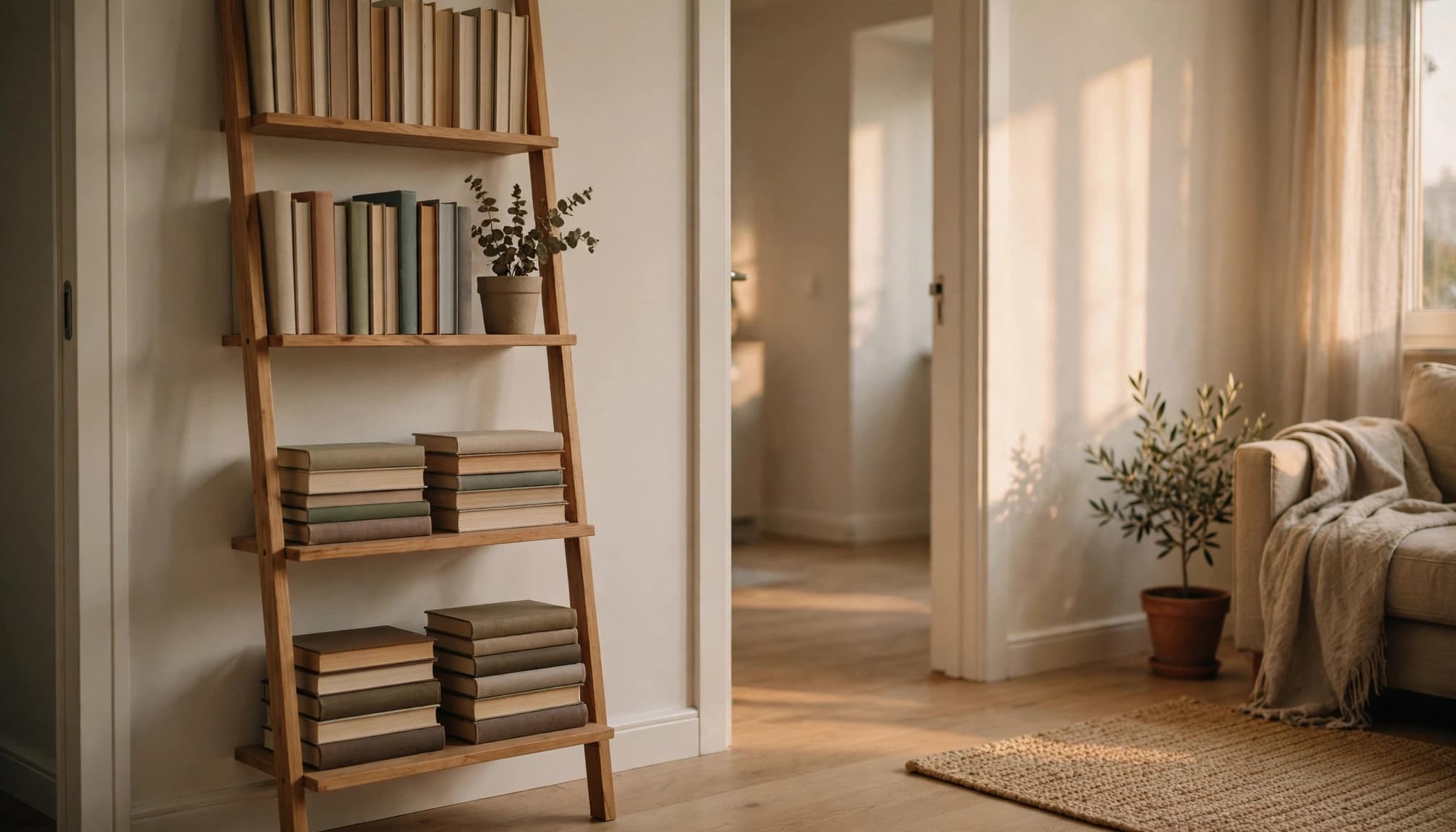
If bulky furniture is your main concern, wall shelves or a narrow, wall-mounted unit can provide vertical storage. These measurements are useful starting points, not universal product dimensions.
Morosnook suggests that a 25 cm gap beside a refrigerator can fit a narrow shelf. Use that space only if it leaves the appliance’s required ventilation clear. Keep books away from heat, steam, and splashes.
The same guide gives roughly 60 cm of wall width for a leaning ladder shelf and a 30 cm by 30 cm footprint for a compact corner bookcase. Measure your nook against that corner bookcase footprint, and include the ladder’s projecting base.
Keep heavier books on lower ladder shelves to reduce wobbling. Follow all securing instructions, since leaning against a wall doesn’t replace required anchoring. The University of Hawaiʻi at Hilo explains securing freestanding shelves to walls.
HGTV features a book tower with a narrow aluminum spine, a standing base, and projecting shelves. Compared with a full-size bookshelf, this book tower has a smaller visual footprint.
Keep the base clear. Follow the book tower’s stability instructions.
6. Add Wall Shelves Only Where Installation Is Suitable
Wall shelves can free floor space and add vertical storage, but books need dependable support. Floating shelves don’t share one universal capacity. Their safe load depends on the shelf, brackets, fixings, wall construction, and installation.
For heavy book loads, anchor brackets for these shelves into wall studs rather than relying on drywall alone. A thick hardwood board is a stronger starting choice than thin softwood or pressed wood, but material alone doesn’t establish capacity. Bracket spacing and unsupported shelf length matter, too. A properly anchored bookshelf is safer for heavy loads than an unanchored unit.
Some adhesive or removable products are renter-friendly options for lightweight storage with no drilling. Don’t assume picture-hanging strips or adhesive ledges can support a row of books.
Get written rental approval before wall-mounted installation to help protect your security deposit. If the required anchoring isn’t allowed, choose containers or another suitable location instead.
A high shelf can hold occasional-use books, provided you can reach it safely with a stable step stool. An existing stair recess may also offer storage, but consult a building professional before building shelves into stairs. The structure must support both books and foot traffic.
Keep Books Away From Sunlight and Damp Areas
A bright windowsill may look convenient, but direct sunlight can damage books. The New York Public Library’s book-care advice recommends keeping books away from direct sun and warns about overly hot or moist storage areas.
Choose a dry bedroom or living-room location instead of a bathroom, damp cupboard, or steamy kitchen corner. You don’t need a basement to store books well. A dry, accessible indoor spot is more useful than a large unsuitable space.
The Library of Congress storage guidance advises avoiding frequent extreme changes in temperature and humidity. The University of Chicago Library identifies 70°F and 50% relative humidity as ideal conditions.
A lid helps keep dust away, but it doesn’t fix dampness. Only pack dry books into clean containers.
Key Takeaways
- Measure your books and the usable storage space, including clearance for doors, lids, and wheels.
- Use existing compartments and under-bed containers before adding furniture that takes up more floor space.
- Treat anchoring requirements and load limits as part of the storage choice, not an optional extra.
Small-space organization works better when you can retrieve what you store. Leave enough room to remove books without moving several other items.
Frequently Asked Questions
Should You Store Books Upright or Flat?
Store ordinary books upright with support so they don’t lean heavily against one another. Bookends help when a compartment isn’t full.
Large or unusually heavy books can lie flat in short, supported stacks. Avoid piling them so high that retrieving the bottom book becomes difficult.
How Do You Find Books in Hidden Storage?
Give each container a clear category, such as novels, cookbooks, or reference books. Add an outward-facing label so you can identify it without pulling everything out.
For a larger collection, keep a simple note on your phone listing which books are in each numbered container. Leave frequently used titles outside the hidden storage system.
Make Room for Books Without Crowding Your Apartment
You don’t need a full bookcase to give your books a useful home. Start with one dry, accessible space and choose storage that fits your routine.
In a small apartment, a setup that keeps books easy to retrieve and walkways clear is easier to maintain.