You can set up a small home office by choosing a quiet spot, fitting a comfortable desk, and storing only daily essentials nearby. Start with usable space, including room to move your chair and open nearby drawers.
When storage is limited, every extra cabinet competes with your living space. A closet office, Murphy desk, or portable work kit can give you a practical setup without a dedicated room.
Start with your layout, then use these small home office ideas to choose a setup that fits your home.
Key Takeaways
- Measure the usable area before choosing a desk, including chair movement, drawer openings, and walking routes.
- Closet offices, Murphy desks, corner desks, under-stair nooks, and mobile work kits can fit different small-home layouts.
- Keep daily supplies within reach and move occasional-use equipment and files to suitable storage elsewhere.
- Choose furniture and storage that preserve clear routes and leave enough space to work comfortably.
Plan Your Small Home Office Before Buying Furniture
Compare small office setup ideas only after measuring the available area. Your workspace needs to support your work and everyday movement through the house.
Choose a Quiet, Connected Location
Look for low foot traffic, natural light, and a reliable internet connection. A room with a door gives you better noise control than a busy hallway or kitchen.
Position your screen sideways to a window rather than directly facing it. This helps reduce glare while preserving daylight. Use task lighting when daylight isn’t enough.
For shared rooms, curtains and a rug can soften echoes. They won’t block conversations like a closed door. Keep video calls away from the television and household activity whenever possible.
Measure the Desk and Chair Together
There’s no universal standard size for a small office. A 6-by-8-foot room gives you 48 square feet, but a workable desk zone can occupy less.
For that room, try a 40-inch-wide, 24-inch-deep desk against a 6-foot wall. Allow about 36 inches behind the desk’s front edge for chair movement. Choose an ergonomic chair that fits this clearance, and adjust it for your walking routes.
Mark the footprint with removable tape. Include drawer openings, nearby closet doors, and the route past the desk.
A centered desk can work when the room has enough clearance. Keep power connections beside it, away from walking paths. Have an electrician install an outlet if safe cable routing isn’t possible. Before buying a wall-mounted desk, check that it can be secured into wall studs.
1. Turn a Closet Into a Closet Office
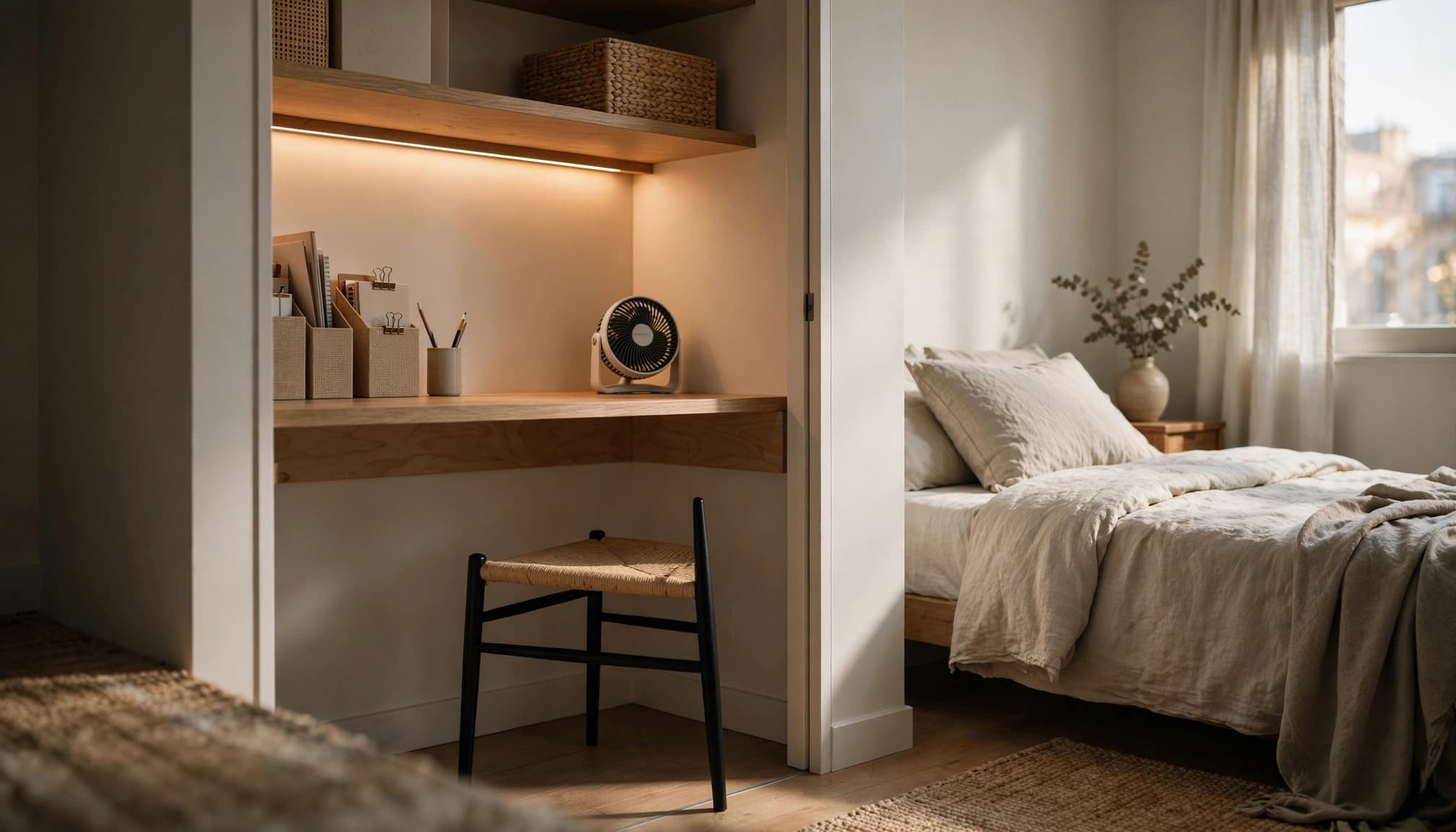
A closet office, often called a cloffice, puts your workspace inside an existing footprint. It works best when converting the closet won’t leave your clothes without a home.
Fit the Desk and Chair
Remove the doors if they restrict movement, keeping the hardware for later. In a rental, door removal needs to be permitted.
Set the desktop roughly 28 to 30 inches above the floor as a starting point. Adjust your chair so your shoulders stay relaxed, wrists remain straight, and feet have support.
OSHA’s workstation evaluation checklist provides useful guidance on posture and equipment placement. Desk height alone doesn’t guarantee comfort.
Choose a slim chair that fits beneath the surface without catching on the closet frame.
Share the Closet Without Crowding It
In a large primary-bedroom closet, use half for a small desk and narrow bookcase or filing cabinet. Keep the other half accessible for clothing.
Improve your everyday closet organization before giving up hanging space. Move seasonal clothing elsewhere rather than squeezing it behind your chair.
Add under-shelf LED task lighting to brighten the work surface. A quiet USB desk fan helps circulate air, although it doesn’t replace fresh-air ventilation.
Keep shelving clear of your head when standing up.
2. Fold Away a Wall-Mounted Murphy Desk
A Murphy desk folds against the wall when you’re finished. It’s useful in a bedroom or living room where you need the floor space back each evening.
Choose a model rated to hold at least 50 pounds, mounted into wall studs. Always follow the manufacturer’s weight limit and mounting instructions. The desk, wall, hardware, and installation all affect its safe capacity.
Don’t lean heavily on the open surface or assume it can support someone sitting on it.
Before buying a Murphy desk, account for its open depth and the chair behind it. A folding surface saves space only when you can clear and close it easily.
Keep supplies in one nearby container rather than arranging a permanent display on the desktop. That makes closing the desk part of a simple evening routine.
For renters who can’t drill, a freestanding folding table provides a similar pack-away benefit. Adhesive strips and removable hooks aren’t suitable substitutes for structural desk mounting.
3. Make an Under-Stair Nook Bright and Comfortable
An under-stair nook can use an awkward corner without adding furniture to the main room. The desk area needs at least 6 feet of headroom, with more clearance wherever you stand and move.
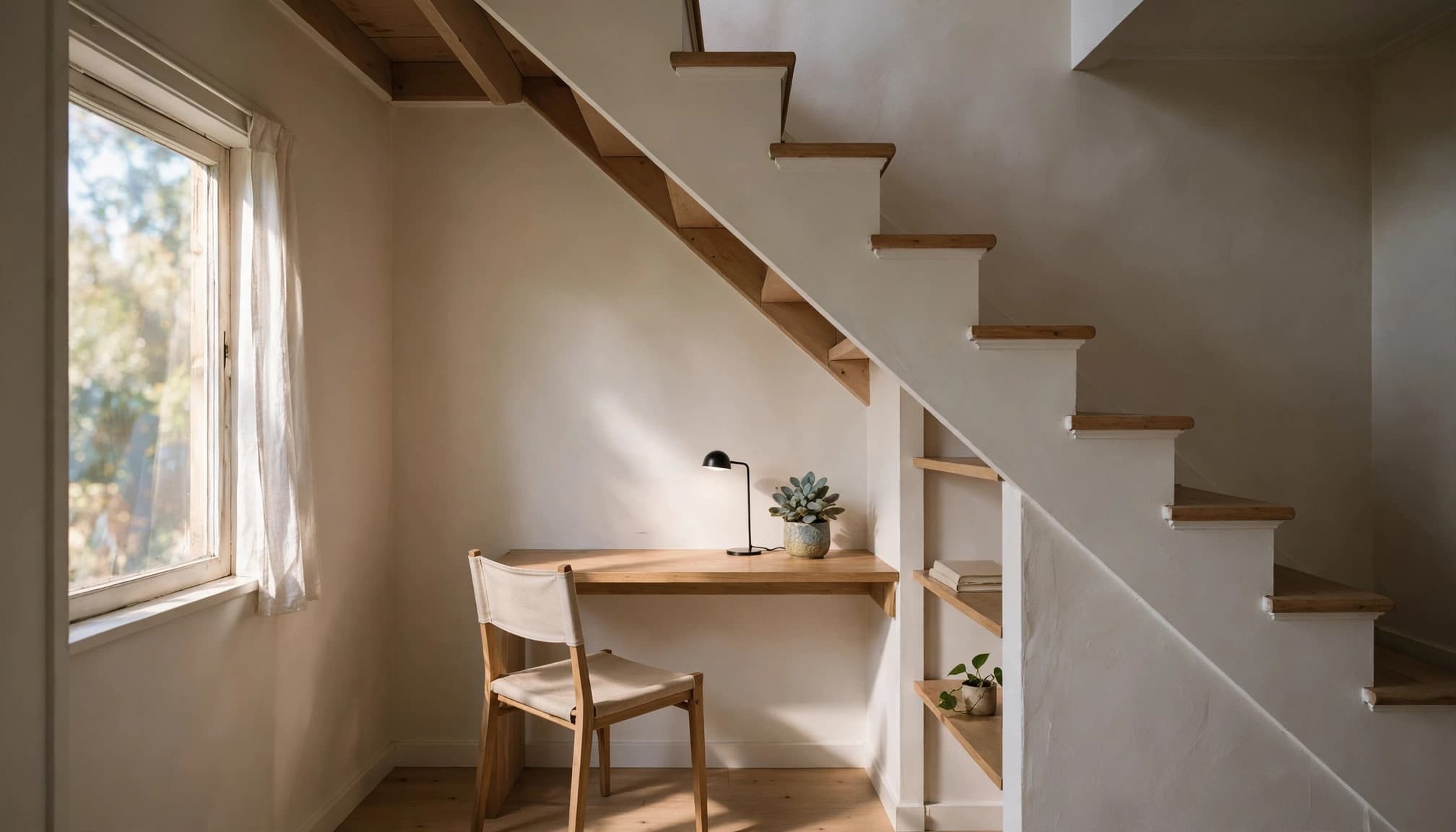
Position the chair beneath the taller section. Reserve the lowest part for occasional-use storage rather than your head or monitor.
White, beige, or light grey finishes help the nook feel brighter. Add task lighting because the staircase can block light even in a sunny room.
A shallow desk is easier to fit, but it still needs enough depth for your equipment. Keep your knees clear of drawers and storage boxes.
Use an existing open area. If creating the nook requires removing walls or altering the staircase, involve a qualified professional.
4. Fit a Floating Desk Into a Corner
A corner floating desk leaves the floor beneath it open. It can fit an unused bedroom corner or a short wall beside a living area.
For the bracket-supported approach, use brackets rated for at least 100 pounds each, mounted directly into wall studs. Follow the complete desk system’s instructions for bracket spacing, desktop material, and maximum load.
Two 100-pound brackets don’t automatically create a 200-pound desk. The surface, fasteners, wall, and installation also limit capacity.
Get professional installation help if the wall construction or mounting arrangement is uncertain.
Keep the space underneath available for your legs. Adding a cabinet there can remove the main advantage of the floating design.
Paint a built-in desktop the same color as the wall for a less visually busy corner. If permanent mounting isn’t allowed, choose a compact freestanding corner desk instead.
5. Separate Your Work Area With Useful Furniture
An open-backed bookshelf can support work-life separation by visually defining a work zone while letting light pass through. Position it so you can reach its storage without moving the chair.
A folding screen offers visual separation without becoming another storage unit. Neither option blocks noise like a solid wall and door.
Choose a divider that leaves routes to the bed, kitchen, and entrance open. Our space-saving studio furniture ideas offer more ways to combine storage and room separation.
Tall shelving may require wall anchoring. If your rental doesn’t permit required anchoring, choose a different divider.
Give each shelf a clear purpose. One basket can hold work supplies, while another stores items used in the living area.
For simple office decor, add one small plant if greenery helps you feel calmer. A colorful lamp or a corkboard inside a cupboard door adds personality without using much desktop space.
Keep decorative items away from the area your keyboard and mouse need.
6. Build a Mobile Workspace That Packs Away
A mobile workspace is one of the more flexible small office setup ideas when your dining table also handles meals, homework, or hobbies. Use a basket or tote as a briefcase for your laptop, charger, notebook, and headset.
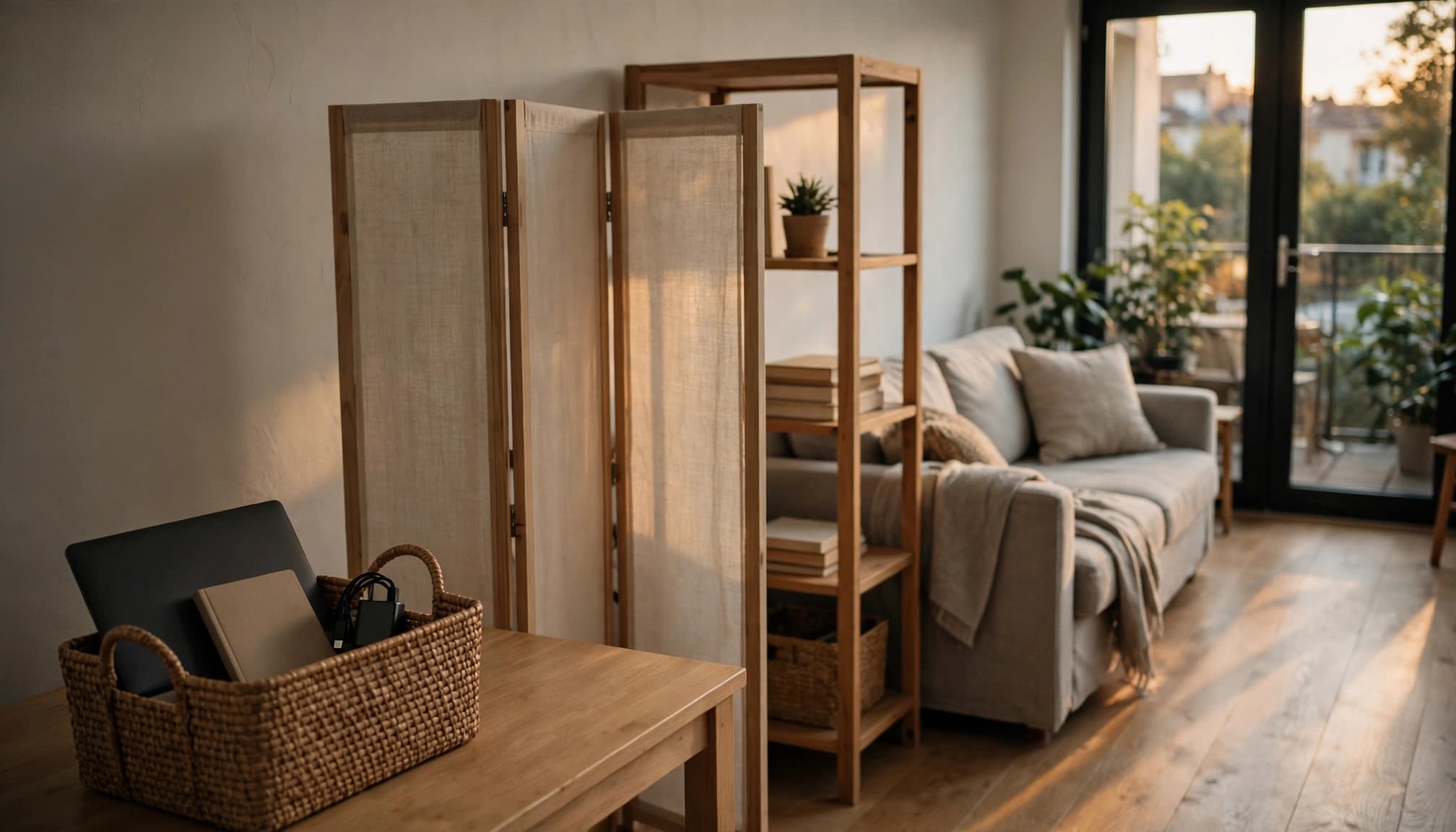
Keep the kit small enough to carry comfortably. Give it one dry storage spot so work supplies don’t spread across the apartment.
You can move the kit to the dining table or patio when conditions suit. Although it’s easy to carry to bed, use a stable table and supportive chair for longer sessions.
A kitchen-counter office works best for short tasks. Keep equipment away from water and heat, and clear the counter before preparing food.
If you need an expanding surface, IKEA’s home-office desk range includes the LÄNGDHOPP pull-out design. Measure any extending desk when fully open. A surface expanding from 39 to 71 cm deep needs another 32 cm of clearance.
Set a starting budget for a desk if you’re buying rather than reusing a table. Reserve more of your budget for an adjustable chair if you’ll sit for several hours daily.
Store Less Beside the Desk, Not More
Limited office storage is easier to manage when you separate daily supplies from occasional equipment. Start with what you use, then choose containers that fit those items.
Keep Daily Supplies Easy to Reach
Your nearest storage should hold your current notebook, charging cables, headset, and active paperwork. Reuse a tray or shoebox before buying matching organizers.
For renter-friendly storage, try drawer dividers, desktop risers, or a clamp-on cable tray. These use existing furniture without adding wall holes.
Our no-drill desk cable ideas can help keep chargers accessible without leaving loose cords beneath your feet.
Use vertical storage carefully. Place light, occasional items higher up and keep daily supplies within comfortable reach. Heavy equipment belongs on stable, suitable surfaces.
A container can fit inside a shelf and still be awkward to use. Leave room to open it and remove its contents.
Move Occasional Equipment Elsewhere
Store rarely used files and a wireless printer in another room when suitable space is available. Keep the printer accessible for paper loading, with the ventilation clearance its instructions require.
Archive completed paperwork separately from current tasks. A dry cupboard or accessible under-bed container can hold occasional files, provided you can retrieve them without moving furniture.
Don’t shift office clutter onto the kitchen counter or into a damp bathroom. Storage ideas for small homes work best when each area keeps its everyday purpose.
Finish work by returning loose supplies to their assigned places. If the same items keep landing on your desk, give them a closer home before buying another cabinet.
Frequently Asked Questions
How much space do I need for a small home office?
There’s no universal standard size. Measure the desk area, chair clearance, drawer openings, and route past the workspace; a 40-by-24-inch desk with about 36 inches of chair clearance can work in a 6-by-8-foot room.
Can I turn a closet into a home office?
Yes, if you can give clothing another accessible home and fit a desk and chair without crowding the space. Check rental rules before removing closet doors, and keep shelves clear of your head when standing.
What should I check before installing a Murphy desk?
Choose a model rated to hold at least 50 pounds and follow its mounting instructions and weight limit. Check the open depth and chair clearance, and don’t lean heavily on the desk or sit on it.
How should I organize a small home office with limited storage?
Keep daily supplies such as your notebook, cables, headset, and active paperwork nearby. Store occasional-use equipment and completed files elsewhere when suitable space is available, and return loose supplies to their assigned places after work.
Make Your Workspace Easy to Use Every Day
The most useful small home office ideas fit your chair, equipment, and daily routine. They also keep the rest of your home accessible.
Start with one clear work surface and accessible storage for essentials. Add furniture only when it solves a specific problem.
You don’t need to fill every corner. Leave enough room to work comfortably, put things away, and enjoy your home after work.