These practical clothes storage tips make seasonal clothes storage easier, with easy access to everyday outfits and off-season pieces clean, organized, and ready for their next turn.
You don’t need a spare room or a new closet system to get started. A smaller wardrobe, well-chosen containers, and a simple rotation plan can make limited space easier to manage.
Start by deciding what deserves a place in your closet before buying anything to organize it.
Key Takeaways
- Edit your wardrobe before buying storage, and keep transitional layers easy to reach.
- Wash, fully dry, inspect, and repair clothes before packing them; clean and dry the storage area too.
- Choose containers to suit the garments and available space, and follow care instructions for delicate, structured, or insulated pieces.
- Store clothes in a cool, dry place away from sunlight and moisture, and check them periodically.
- Label containers and rotate clothes in manageable groups so stored items stay easy to find and retrieve.
Make Room Before You Buy Storage
Packing everything away feels productive, but it can leave you storing clothes you won’t wear again. Before choosing storage, review off-season clothing for fit, condition, and usefulness.
Treat this as wardrobe editing, not a push to reach a certain number of pieces. Keep clothes that suit your current life, and set aside items you no longer reach for, duplicates you don’t need, and anything needing repairs. Try on anything you’re unsure about rather than saving that decision for next season.
You don’t have to reduce your wardrobe to a fixed number. Your available space is the limit.
Give Unwanted Clothes a Useful Next Stop
Offer wearable pieces to friends, sell them, or donate them to an organization that accepts their condition. Check donation requirements first, especially for footwear and heavily worn clothing.
For items beyond repair, look for a local textile collection program and confirm what it accepts. Some programs have different rules for damaged fabrics. Reuse suitable cotton pieces as cleaning cloths when that makes sense.
Keep Transitional Clothes Within Reach
Avoid packing away every warm layer when spring arrives. Keep the pieces you use during changing weather, such as a light sweater or rain jacket.
Give these clothes a small, accessible area. This saves you opening several containers whenever the temperature changes.
Prepare Clothes Before Packing Them
Storage is easier when everything going into it is ready to wear. Leave yourself enough time for washing, drying, and repairs rather than rushing through the swap.
Clean and Check Each Garment
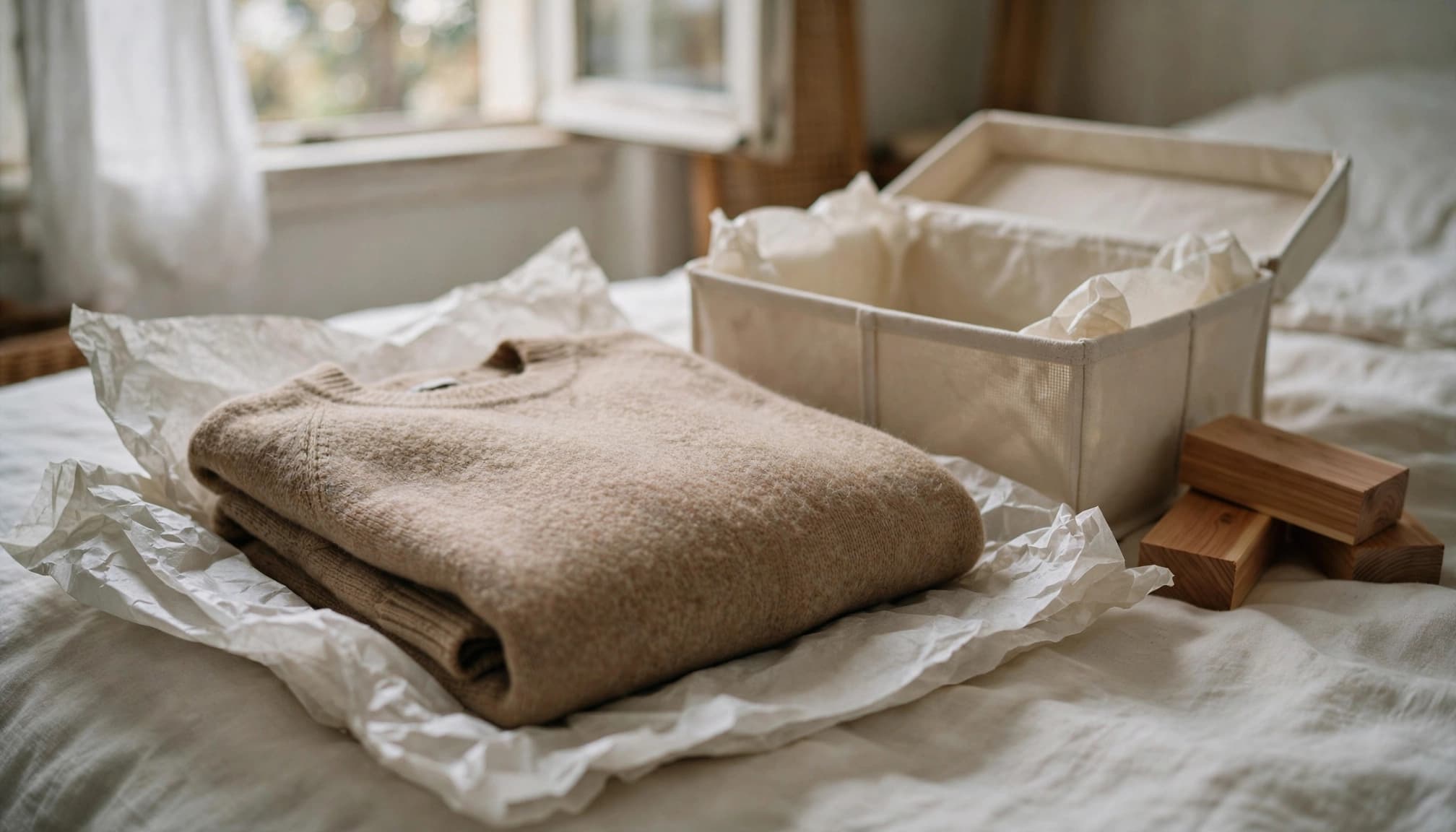
Follow the care label for washing or professional cleaning. Check collars, cuffs, pockets, and underarms for marks you might otherwise miss.
Don’t pack clothes while they’re still damp. Give thick seams, waistbands, and pockets time to dry, and check them before folding.
Empty every pocket. Remove receipts, tissues, and anything else that shouldn’t spend months inside your clothing.
Inspect items for loose buttons, broken zippers, or small tears. Repair what you can now so your next seasonal swap doesn’t begin with unfinished jobs.
Clean the Storage Area Too
Take everything off the shelf before adding your seasonal containers. Wipe suitable surfaces and vacuum corners where dust collects.
The George Washington University’s textile storage guidance recommends regularly vacuuming storage areas because accumulated dust and dirt can attract insects.
Check your empty bags and bins at the same time. Clean them according to their instructions, and let them dry before packing. A freshly washed wardrobe still needs a clean place to go.
Choose Seasonal Clothes Storage That Fits
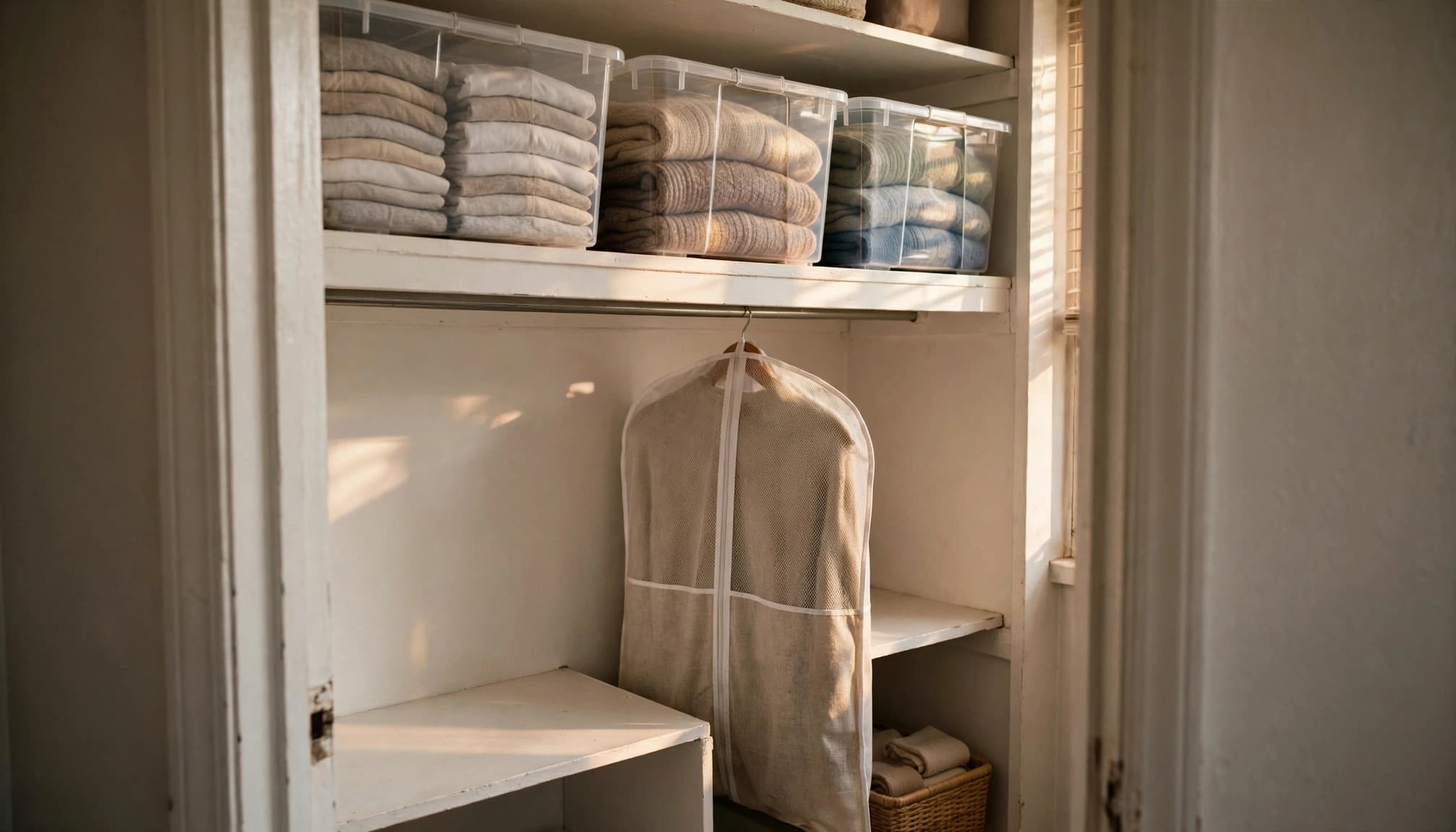
Measure your shelf or storage opening before shopping for storage containers. Include the space needed to lift a lid, pull out a container, or open a zipper.
Match the Container to the Job
Use these storage methods to narrow your choices.
| Storage option | Practical use | What to check |
|---|---|---|
| Storage bins (lidded plastic bins) | Grouping everyday folded clothes | Shelf fit, lifting weight, and lid access |
| Zipped fabric bag | Keeping a small clothing group together | Closure, washable materials, and support |
| Protective garment bag | Covering clothes that need hanging | Length, hanger support, and care instructions |
| Acid-free storage box | Separating special or delicate textiles | Material specifications and available space |
Choose based on the garments and location, rather than buying a matching set first. Smaller containers can be easier to retrieve without disturbing everything beside them.
Be Selective About Storage Materials
Ordinary moving boxes aren’t the same as textile-storage boxes. The Smithsonian Museum Conservation Institute’s textile storage guidance identifies acid-free corrugated cardboard boxes and acid-free tissue paper as effective protection for antique textiles.
For treasured pieces, look for materials clearly described as acid-free. Don’t assume ordinary packing tissue has the same properties.
If you’re considering vacuum sealed bags, check the garment manufacturer’s storage advice first. Space savings alone shouldn’t decide how you pack a structured coat or delicate garment.
Store Bulky and Delicate Pieces With Care
Different garments need different amounts of support and space. Keep care instructions nearby while deciding what to fold, hang, or separate.
Give Coats and Jackets Enough Room
For down jackets and heavily insulated winter coats, check the brand’s instructions before using vacuum sealed bags. Saving space isn’t worth going against garment-care guidance. If instructions aren’t available, choose a roomy arrangement rather than forcing the garment into the smallest possible bag.
Keep structured jackets supported on appropriately shaped hangers when their care instructions call for hanging. Use a protective garment bag if you need to cover one. Check that the closet rod can handle the load, especially if you’re using a removable organizer.
Leather needs its own care routine. Follow the manufacturer’s cleaning and conditioning instructions instead of treating it like washable fabric. Avoid applying an unfamiliar product immediately before storage.
Fold Knitwear and Support Accessories
For wool and cashmere, follow the care instructions. Choose a storage arrangement that avoids sharp folds or heavy pressure on delicate fabrics. Fold loosely rather than wedging several sweaters into an already full container.
Use suitable acid-free tissue where you need to cushion a fold or separate a special piece. Keep heavily embellished garments apart so decorations don’t catch neighboring fabrics.
For shoe storage, clean footwear according to its material. If you use shoe trees or stuffing, choose a size and shape that supports the shoe without stretching it.
Place heavy shoes in a separate container rather than on top of delicate clothing.
Where Can You Store Clothes Without Extra Space?
The best location is somewhere you can inspect and retrieve your clothes without dismantling the room. Keep frequently used items accessible and reserve awkward spaces for genuinely off-season clothing.

Use Closet Shelves and Under-Bed Space
A high closet shelf can hold lighter seasonal containers. Avoid placing a heavy, overfilled bin where you’ll need to lift it overhead.
If your bed has clearance, measure both its height and the route a container needs to slide out. Bed legs and nearby furniture can make a seemingly suitable box difficult to retrieve. See our article on Under Bed Storage Containers here for simple, easy solutions that bring extra storage.
Measure the retrieval space as well as the storage space. A container that fits under your bed still needs somewhere to slide out.
Use an enclosed drawer or container rather than leaving loose garments beneath the bed.
Work Around a Bed With No Clearance
If under-bed storage isn’t available, look for unused height in your existing furniture. A freestanding wardrobe, an upper cabinet shelf, or an enclosed storage bench may offer usable space.
For renter-friendly storage, try a removable shelf insert inside a sturdy cabinet. Follow its load limits and check that it doesn’t interfere with doors or drawers.
An over-door organizer can free closet space by holding small everyday accessories. Use the newly available shelf for seasonal clothes, rather than squeezing bulky coats into door pockets.
Keep walkways clear. Useful small apartment storage solutions shouldn’t make your home harder to move around.
Keep Storage Away From Moisture and Dust
Choose a cool dry place away from direct sunlight. Winterthur’s textile conservation tips advise protecting stored textiles against light damage and dust buildup.
A sunny windowsill, damp bathroom cupboard, or unconditioned attic shouldn’t be your default overflow space. Check the actual conditions before deciding that an empty area is suitable.
If you live in a humid climate, inspect the storage location during your dampest season. Look for condensation, water marks, or persistent musty smells. A closed container doesn’t make an unsuitable location suitable.
In a hot climate, choose an interior storage area that avoids strong temperature changes. In either setting, don’t pack clothing that already smells musty. Identify the cause and follow appropriate cleaning guidance first.
Avoid treating cedar blocks, dryer sheets, or fragrance sachets as a complete clothing-care plan. A pleasant smell doesn’t tell you whether clothes are clean or the space is dry.
Keep stored garments off the bare floor where possible, and check them periodically. No bag, bin, or location provides a guarantee against pests, mildew, odors, or fabric damage.
Make Your Seasonal Rotation Easy
A simple closet rotation system keeps your seasonal wardrobe easy to find without unpacking everything. Group items by how you’ll retrieve them, such as summer clothes, winter clothes, or cold-weather accessories.
Label each container with its contents. If the box isn’t transparent, add a short inventory inside the lid or keep a photo on your phone. Use descriptions you’ll recognize months later.
Keep the swap manageable:
- Bring out the incoming season’s clothes and check their condition.
- Review outgoing clothes before cleaning and packing them.
- Update labels whenever the contents change.
- Return containers to their assigned places.
You don’t need to empty the whole closet onto your bed. Work through one clothing group at a time if space is tight.
Choose a rotation date that suits your local weather, rather than following a fixed calendar. Leave transitional layers accessible until you stop using them regularly.
Before adding another container, check whether you can comfortably retrieve the ones you already own. Small-space organization works better when your storage remains usable after everything is packed.
Frequently Asked Questions
How should I prepare clothes for seasonal storage?
Follow each garment’s care label, check for stains and damage, and repair small issues before packing. Make sure clothes are completely dry and empty every pocket.
Are vacuum sealed bags suitable for seasonal clothes storage?
Check the garment manufacturer’s storage advice before using them, especially for structured coats or delicate pieces. Saving space alone shouldn’t determine how a garment is packed.
Where should I store seasonal clothes in a small home?
Use accessible closet shelves, under-bed space, or enclosed furniture, after measuring both the storage area and the space needed to retrieve containers. Choose a cool, dry location away from direct sunlight and moisture.
How can I keep track of clothes in storage containers?
Label each container with its contents, using descriptions you’ll recognize later. For opaque containers, add a short inventory inside the lid or keep a photo on your phone.
When should I rotate seasonal clothes?
Choose a date based on your local weather rather than following a fixed calendar. Keep transitional layers accessible until you no longer use them regularly.
Keep Your Closet Ready for Everyday Use
Seasonal clothes storage works best when you store fewer items carefully and give each container a clear home. The goal is an accessible wardrobe, with off-season clothes ready when you need them.
Start with one shelf or clothing group. Keep the system simple enough to repeat, and your winter coat won’t have to block tomorrow’s outfit.