Living room hidden storage can keep your space tidy while holding the things you use every day. Add easy-to-reach storage where clutter collects, and make sure you can open it without rearranging the room.
The best hidden storage ideas give everyday clutter an accessible home and support home organization. Your living room furniture doesn’t need to match, and you don’t need a major renovation.
Begin with what needs a home, then choose pieces that fit your space and everyday routine.
Key Takeaways
- Start by sorting everyday clutter and giving each storage compartment a clear purpose.
- Choose furniture that replaces a piece you already need, and check its interior dimensions before buying.
- Measure how drawers, doors, and lids open so storage doesn’t block walkways or seating.
- Keep storage easy to maintain with removable dividers, accessible everyday items, and regular tidying.
- Follow manufacturer instructions for anchoring, lids, moving parts, and electronics, especially in homes with children.
Start With the Clutter You Use Every Day
Before buying furniture, gather the loose items on your coffee table, sofa, floor, and media unit. This gives you a clearer picture of the storage you need.
Remove anything that belongs elsewhere. A living room cabinet fills quickly when it becomes the default home for paperwork, spare toiletries, and unused kitchen supplies.
Separate Daily Items From Occasional Items
Keep remotes, current reading material, and frequently used toys within easy reach, with toy storage close to where you use them. Blankets, board games, and guest bedding can go in compartments that take longer to open.
Think about access as well as size. If you need a remote several times each evening, lifting a large lid every time may become frustrating.
Group items before measuring them. Check whether your games stack neatly and whether your blankets fit without being tightly compressed. You’ll have a more useful shopping list than “buy more storage.”
Give Each Compartment One Main Job
Choose a main purpose for every drawer, cabinet, or ottoman. Hidden drawers can hold small items, while another compartment might keep family games or charging accessories together.
You can combine related items, but avoid creating one large miscellaneous compartment. Small-space organization becomes easier when you know where something belongs.
Leave enough room to put things away comfortably. A compartment that needs careful repacking after every use will soon become another clutter problem.
Which Living Room Furniture Offers Useful Hidden Storage?
Start with furniture you already need. Multi-functional furniture has greater space-saving potential when it replaces an existing table instead of adding another cabinet.
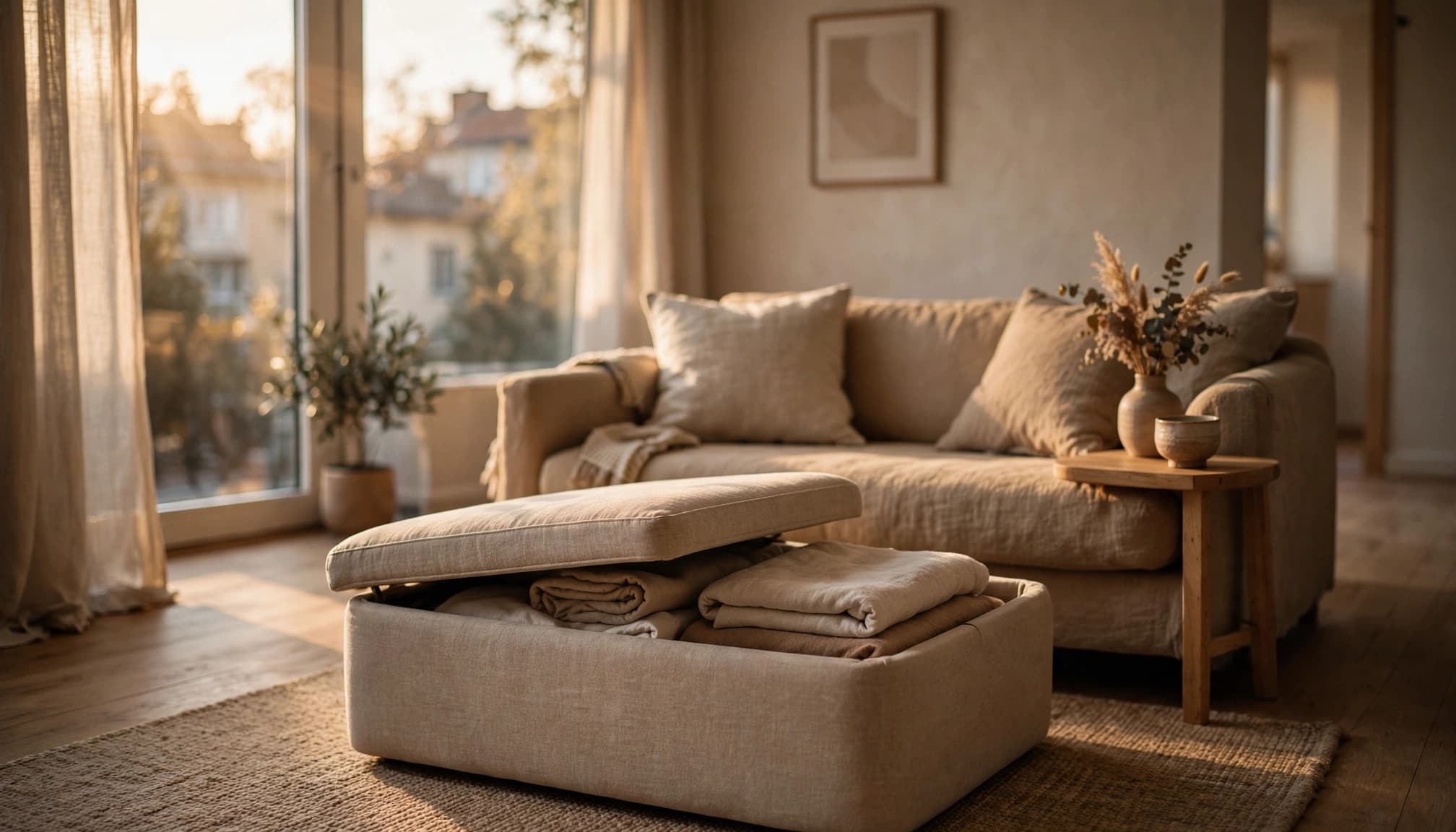
Match the furniture to your main storage problem.
| Furniture Type | Useful For | Check Before Buying |
|---|---|---|
| Storage ottoman | Throws and spare cushions | Whether the lid is easy to open |
| Lift-top coffee table | Remotes and small games | How the raised top moves toward seating |
| Storage bench | Guest linens or entryway overflow | Whether you can open it in position |
| Closed media unit | Games and media accessories | Interior layout and cable access |
| Side table with drawers | Chargers and small everyday items | Whether larger items fit through the opening |
The most useful piece is the one you can access comfortably while using the room. A side table with hidden drawers keeps small items close but out of sight.
A storage ottoman makes sense when you want a footrest and blanket storage in the same spot. Check whether its lid is removable or hinged. A loose lid needs somewhere to rest while you reach inside.
A lift-top coffee table suits items you use while seated. Consider what stays on its surface, too. Decorative trays and drinks can complicate opening it.
An accent cabinet can provide closed storage for items you don’t need near the TV.
Before buying online, read the assembly instructions, return policy, and interior measurements. Exterior dimensions alone won’t tell you whether your board games fit.
For an affordable setup, prioritize one replacement piece. Compare its total cost, including delivery, with adapting furniture you already own.
Plan the Layout Before You Buy
Hidden compartments need room to open, so plan hidden storage ideas around traffic before buying living room furniture. A cabinet can fit against a wall and still be inconvenient when its doors block your usual walking route.
IKEA’s small living room planning ideas offer examples of combining storage with a workable room layout.
Measure the Open Position
Measure the available floor space, then check the furniture’s opening movement. Include swinging doors, pull-out drawers, extended table tops, and lifted lids.
Use a removable outline on the floor to picture the footprint. Place a box where an open drawer or door would reach. Walk past it and sit down nearby.
For a lift-top coffee table, check the direction of the lift. The top should move where you need it without trapping your knees or blocking another seat.
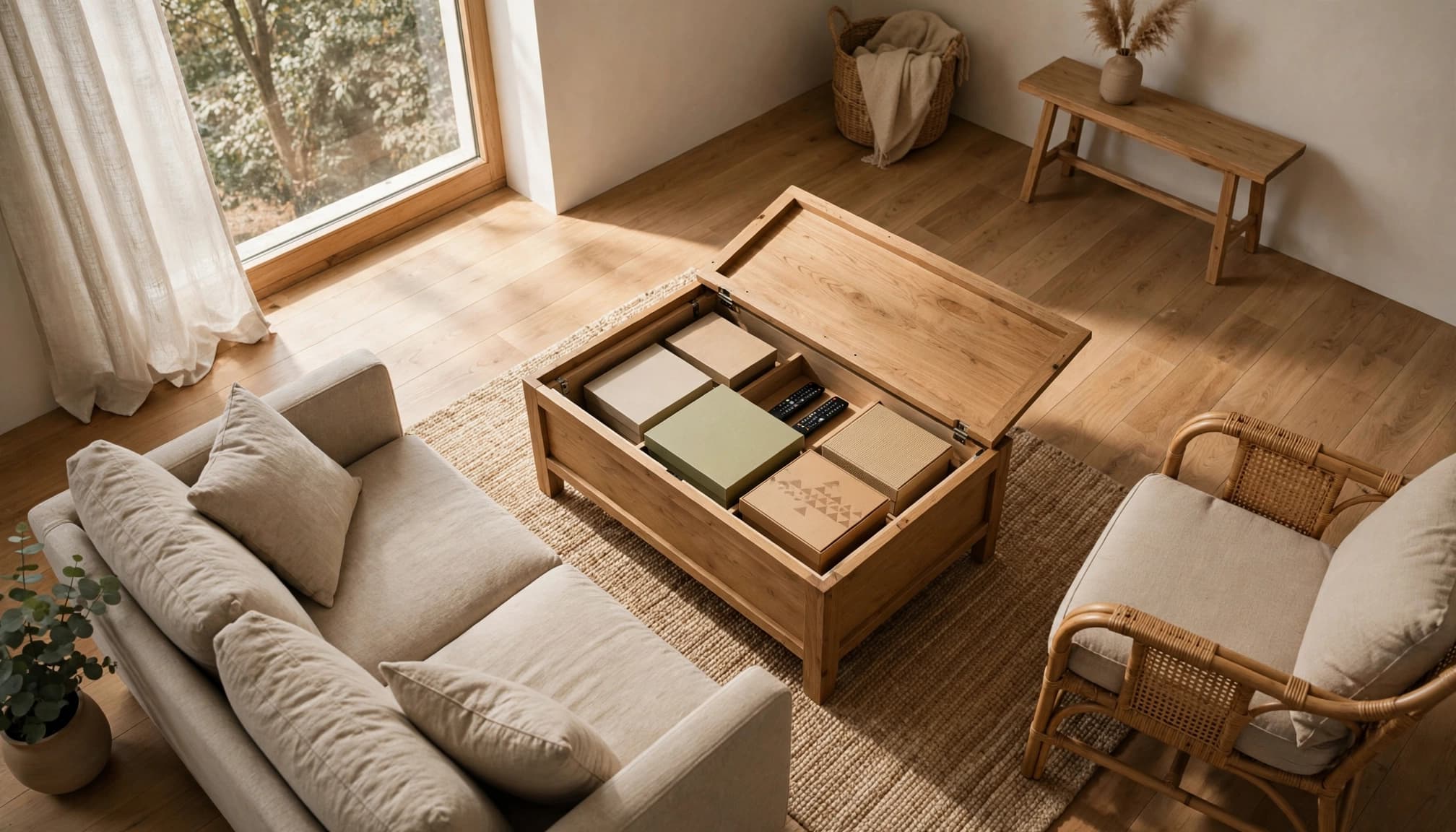
Match Storage to Your Room Shape
In small spaces, keep bulky storage along a wall instead of the central walkway. Wall-mounted storage can also save floor space, but follow the appropriate installation requirements. A side table with drawers may be more useful than a large central trunk.
If your sofa floats away from the wall, check whether a console table behind it would interrupt circulation. Storage behind seating is less helpful when you must squeeze sideways to reach it.
Keep doors, heating outlets, and frequently used switches accessible. Make sure storage choices support easy daily movement.
How Can You Add Renter-Friendly Hidden Storage?
Begin with removable changes. Fitted boxes inside an existing cabinet, a fabric cover over a suitable shelf, or a replacement storage table can conceal clutter without altering the building.
Use a cover only where it won’t obstruct ventilation, heating, or electrical equipment. Secure it so it doesn’t trail onto the floor.
If you have an open bookcase, opaque containers offer concealed storage for loose items while leaving the furniture unchanged. Choose containers that slide out easily rather than filling every shelf edge to edge.
Check whether your furniture manufacturer offers compatible doors or inserts. A fitted accessory is usually simpler than attaching a homemade door to furniture that wasn’t designed for one.
Freestanding furniture still needs any anchoring required by its instructions. Review CPSC’s furniture-anchoring demonstration and discuss permitted installation with your landlord. Adhesive strips aren’t a substitute for required furniture anchors.
For combined living and entryway storage, keep shoes near the entrance rather than spreading them through the room. A shoe storage cabinet can help if it fits without blocking the door or circulation.
Start with one reversible change and use it for a week. This helps you judge whether the location works before spending more.
Make Concealed Storage Easy to Maintain
A tidy exterior is helpful, but the inside needs a simple arrangement. Otherwise, you’ll spend time searching through compartments that look organized when closed.
Divide Deep Compartments Into Smaller Areas
Use removable boxes or dividers to organize deep compartments, including hidden drawers in a media cabinet or storage bench. Keep game controllers separate from charging cables, and store small accessories in a container you can lift out.
Choose organizers after measuring the usable interior. Hinges, shelves, and drawer runners can reduce the space available.
For toy storage, give each activity its own container where practical. This makes toy storage easier to manage and lets you bring out building blocks without emptying the entire cabinet.
Put frequently used items near the front. Avoid stacking everyday supplies beneath objects that are heavy or awkward to move.
Keep a Little Open Storage
You don’t have to conceal everything. A few books or a favorite object can stay visible, while concealed storage holds less attractive essentials.
IKEA’s open and closed storage guidance shows how both types can work together.
Keep surfaces easy to clear, especially above lids and lift mechanisms. A storage bench covered with cushions may take too much effort to open regularly.
During your weekly tidy, return misplaced items and remove anything you no longer use. If a compartment repeatedly overflows, reduce its contents before adding more furniture.
When Are Built-Ins Worth Considering?
Built-ins can make use of awkward recesses, but they involve more work than movable furniture. Consider them when ordinary pieces leave unusable gaps or can’t provide the access you need.
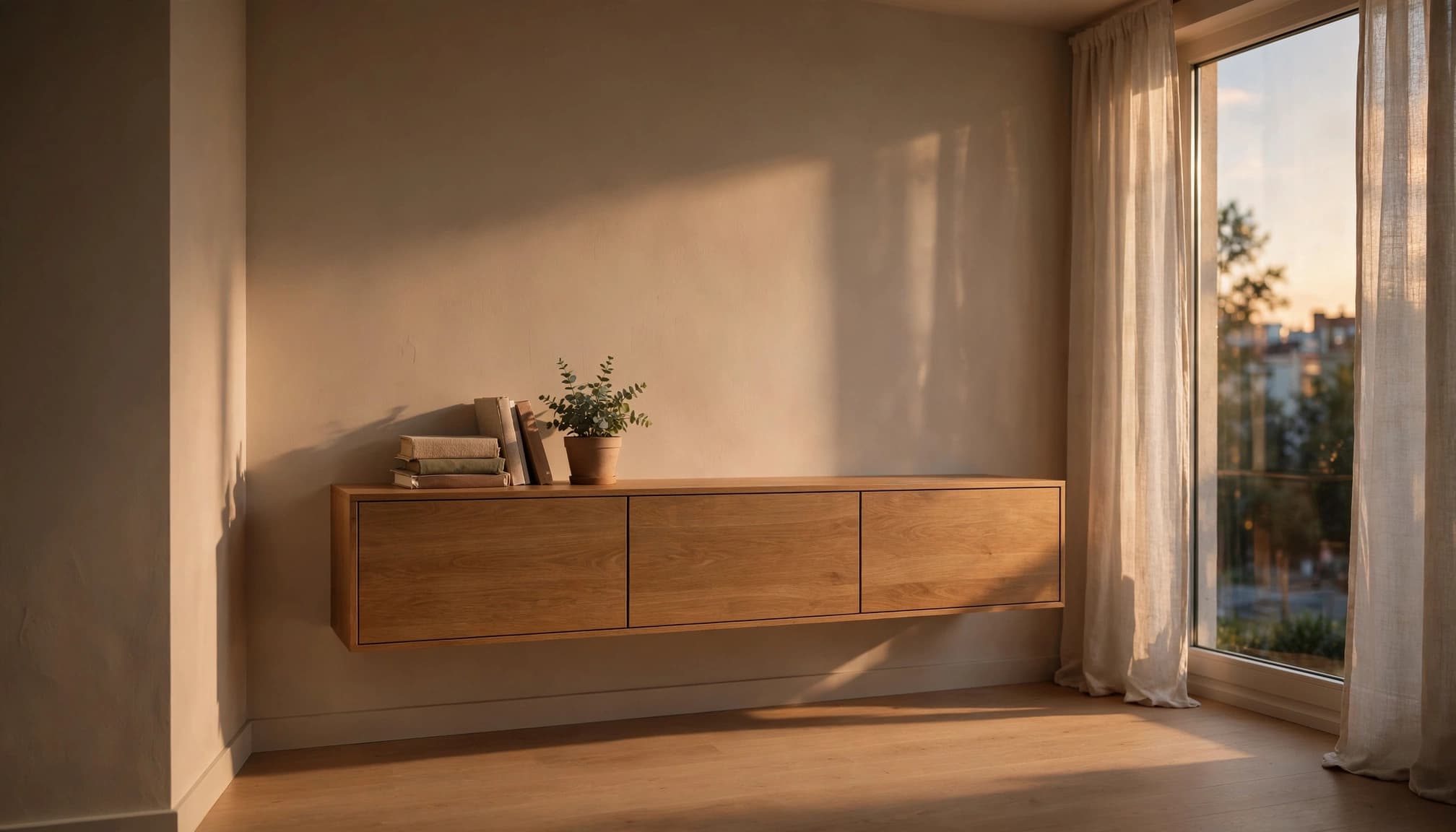
Use Existing Recesses Carefully
An alcove beside a fireplace may suit fitted cabinets or custom furniture designed for the space. Weigh the cost and permanent changes against the access it provides.
Under-stair space may accommodate pull-out drawers or a cupboard if the structure allows it.
Ask a carpenter to assess the space before removing panels or planning deep compartments. Hidden wiring, pipes, and structural parts affect what you can change.
Plan doors and handles around nearby furniture. A fitted cabinet loses much of its value if the sofa prevents it from opening fully.
Keep access to service equipment available. Concealing a utility area shouldn’t make maintenance difficult.
Keep DIY Changes Removable
For beginner-friendly improvements, use fitted boxes, removable dividers, or organizers inside existing furniture. These changes are easy to adjust when your needs change.
Avoid cutting secret compartments into furniture frames or modifying load-bearing parts. The piece may become unstable or lose its intended strength.
Heavy wall-mounted cabinets also need appropriate installation for the wall and product. Follow the manufacturer’s instructions and use qualified help when needed.
If you rent, get written permission before any permanent alteration. Simple furniture changes are often a more practical starting point.
Check Storage Furniture for Everyday Safety
Safety matters most when children can reach drawers, doors, or lids. Read the product instructions before assembly, and follow the intended use.
Anchor Furniture and Keep Heavy Items Low
The U.S. Consumer Product Safety Commission’s Anchor It campaign recommends anchoring furniture with drawers, doors, and shelves to prevent tip-over injuries.
Use the required anchoring method for your furniture and wall. Keep heavy contents low, but don’t treat that arrangement as a replacement for anchoring.
A floating TV unit needs secure mounting. Keeping the floor clear doesn’t remove the need to check installation requirements.
Don’t encourage climbing by putting attractive toys on top of tall cabinets. Keep everyday children’s items accessible in furniture suited to that purpose.
Check Lids, Moving Parts, and Electronics
Before choosing a lidded storage piece, check how it opens, stays open, and closes. Look for potential finger-pinching areas and follow any age restrictions.
An ordinary storage ottoman shouldn’t be treated as child-safe toy storage unless the manufacturer says it’s suitable.
Keep batteries, medicines, and sharp objects in appropriate secured storage. An out-of-sight compartment alone doesn’t prevent children from opening it.
For media equipment, follow ventilation instructions and avoid pinching cords behind doors. Don’t run cables through moving hinges.
After assembly, check for wobbling, loose hardware, and sticking mechanisms. Stop using a damaged piece until it’s repaired properly.
Frequently Asked Questions
What is the best hidden storage for a small living room?
Choose a piece that solves a storage need without crowding the room, such as a side table with drawers or a storage ottoman. Measure its footprint and opening movement to make sure it won’t block your usual walking route.
How can I add hidden storage without renovating?
Use removable organizers inside existing furniture, opaque containers on open shelves, or a replacement storage table. Start with one reversible change and see whether its location works for a week.
What should I check before buying storage furniture?
Check the interior measurements as well as the exterior dimensions, and confirm that the items you plan to store will fit. Also consider how the piece opens, whether it can be accessed in position, and the assembly and return details.
How can I keep hidden storage organized?
Give each compartment one main job and use removable boxes or dividers to separate smaller items. Keep frequently used items near the front, and clear out contents when a compartment repeatedly overflows.
Is a storage ottoman safe for children’s toys?
Don’t assume an ordinary storage ottoman is suitable for toy storage; check the manufacturer’s instructions and age restrictions. Look for potential finger-pinching areas, and use required furniture anchors where applicable.
Build a Setup You Can Use Every Day
Useful hidden storage in your living room starts with a clear home for everyday clutter. Choose furniture around what you need to store, then check its opening space and safety requirements.
Begin with one practical change, such as organizing an existing cabinet or replacing a table you already need.
You’ll know the setup works when putting things away feels easy and your room stays comfortable to use.