Store cleaning supplies in a secure cabinet, group them by cleaning task, and use removable bins around awkward plumbing. Good cleaning supplies storage keeps everyday items easy to carry while keeping chemicals away from children and pets.
You don’t need a dedicated utility closet or matching containers to make this work. Start with what you use, then choose a setup that fits your cabinets, doors, and available floor space.
Key Takeaways
- Sort out empty, unusable, and unwanted products before buying organizers.
- Keep cleaners in their original containers, secured away from children and pets.
- Use under-sink bins, a portable caddy, and vertical tool storage before adding more furniture.
- Measure plumbing clearance, door openings, and walking space so the setup remains easy to use.
Sort Your Supplies Before Buying Organizers
Empty one storage area at a time. Keep spray bottles upright while sorting, and leave yourself enough room to finish without blocking the kitchen or bathroom.
Keep a Basic Working Kit
Choose cleaning products that suit your surfaces and routine. A basic kit can include an all-purpose cleaner, natural cleaning products, microfiber cloths, sponges, scrub brushes, and gloves. Add glass cleaner, bathroom cleaners, disinfectant wipes, or floor cleaner as needed.
Remove empty packaging and products you no longer use. Follow label instructions for expiry and disposal rather than pouring unwanted chemicals together.
Keep unopened replacements separate from your working supplies. Finish suitable open products before starting another bottle. A defined backup area helps you avoid buying something already hidden at the back.
Separate Supplies by Cleaning Zone
Group kitchen, bathroom, and laundry supplies separately. Keep toilet-cleaning brushes and cloths away from tools used on food-preparation surfaces. Separate bins or different-colored cloths make the distinction easy to follow.
Store each group near its usual room when a secure cupboard is available. Otherwise, keep labeled kits together in one secure cupboard.
If unrelated belongings fill that cupboard, use our room-by-room decluttering checklist to return them to suitable places before adding another organizer.
Keep Cleaning Supplies Secure
Keep cleaning supplies, bleach, and detergents secured away from young children and pets. The Consumer Product Safety Commission’s storage guidance calls for household cleaners to be locked up and kept out of children’s reach.
Choose a locked upper cabinet when possible. If you use a lower cupboard, fit a suitable child-safety lock. An open cart or high shelf alone doesn’t protect as well as a locked cabinet.
Keep products in their original containers with readable directions and warnings. Refillable bottles can separate a cleaner from information you need. Never use food or drink containers for chemicals, and never mix cleaning products. Natural cleaning products still need to be handled and secured according to their directions.
An organizer helps you find a cleaner, but it doesn’t replace the product’s original safety information or a secure cupboard.
A washable basket on a sturdy upper shelf can hold small, less-used bottles such as Goo Gone, carpet cleaner, or rubbing alcohol when the manufacturer’s directions allow it. Keep incompatible products separated.
Place heavy containers on a lower shelf inside a locked cupboard rather than lifting them overhead. Keep cleaners separate from food, medicines, and personal-care products.
Make Under-Sink Storage Easy to Reach
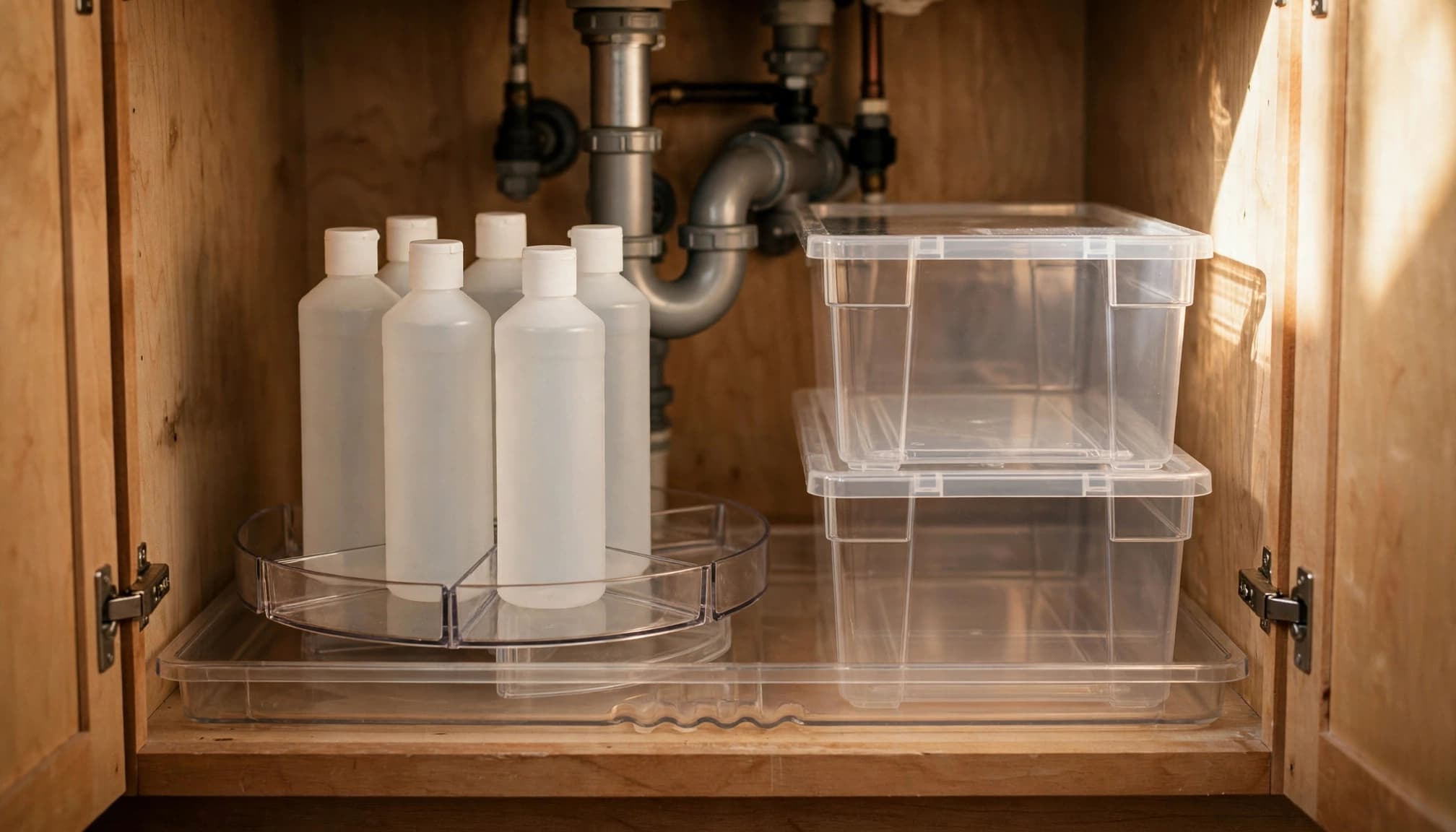
Measure Around Pipes and Hinges
Measure the usable width, depth, and height, including the cabinet opening. Pipes, shelf brackets, and hinges can reduce the space an organizer needs.
Leave shutoff valves accessible and leave enough room to spot moisture. Two narrow bins may fit better than one wide drawer that hits the drainpipe.
Measure your tallest bottle too. A shelf that clears the container but catches its spray nozzle will be frustrating every time you put it away.
Match the Organizer to the Space
Pull-out wire racks suit deep cupboards, while a lazy susan works where bottles have room to turn. Clear stackable bins are useful for dry cloths, gloves, and spare sponges.
An under sink organizer is useful only if it clears the pipes and valves. The IKEA UPPDATERA box with slider is another option for narrow cupboard space. Its slider attaches inside the cupboard. A loose bin is a renter-friendly option if you don’t want to install anything.
Keep liquids and spray bottles upright in washable plastic trays or bins. A caddy with a pour spout makes small drips easier to empty.
For shared vanity space, our guide to organizing a bathroom without a linen closet helps separate cleaning supplies from everyday toiletries.
Choose a Portable Caddy or Rolling Cart
Carry Your Everyday Kit in One Trip
A cleaning caddy keeps everyday cleaning tools together without requiring duplicate bottles in every room. Choose a washable tote with a comfortable handle and enough height to hold bottles upright.
Pack only what you need for the task. A bathroom kit might hold the appropriate cleaner, gloves, a scrub brush, and bathroom-only cloths.
Keep dirty tools separate from clean cloths, and return the caddy to a secure cupboard after use. Don’t fill it so heavily that carrying it becomes awkward.
Give a Cart a Defined Parking Spot
A rolling cart works when you don’t have a utility closet but have a clear place to park it. The IKEA RÅSKOG Utility Cart is one option; a multi-tier cart with a pegboard or bucket rack can also hold tools.
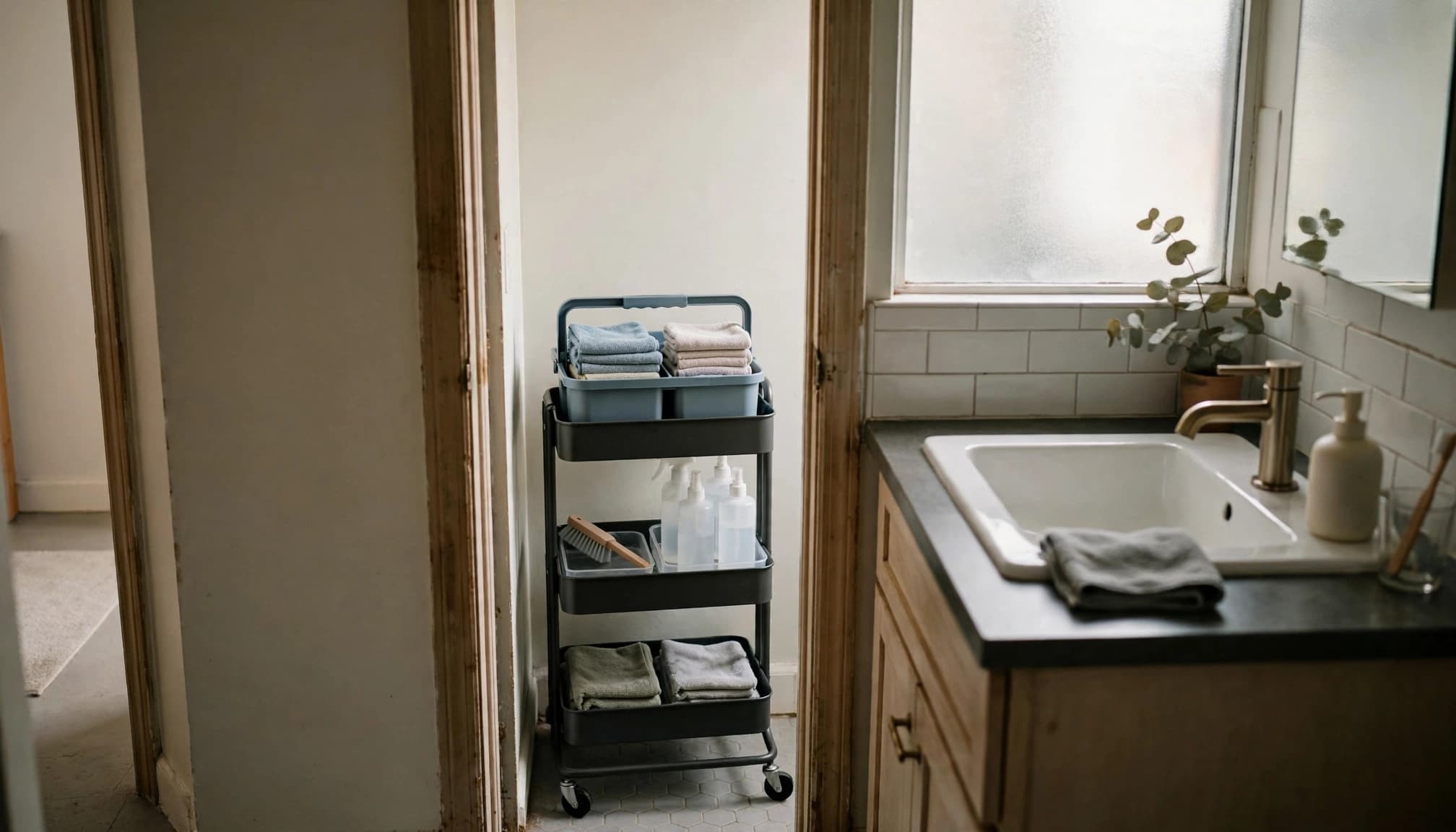
Measure the parked footprint and the route between rooms, including any closet doorways. Keep bathroom doors, laundry appliances, and walking paths clear.
Keep heavier items on the bottom tier. If children or pets can reach the cart, use it for cloths and tools rather than unsecured chemicals.
Use Doors and Walls for Cleaning Tools
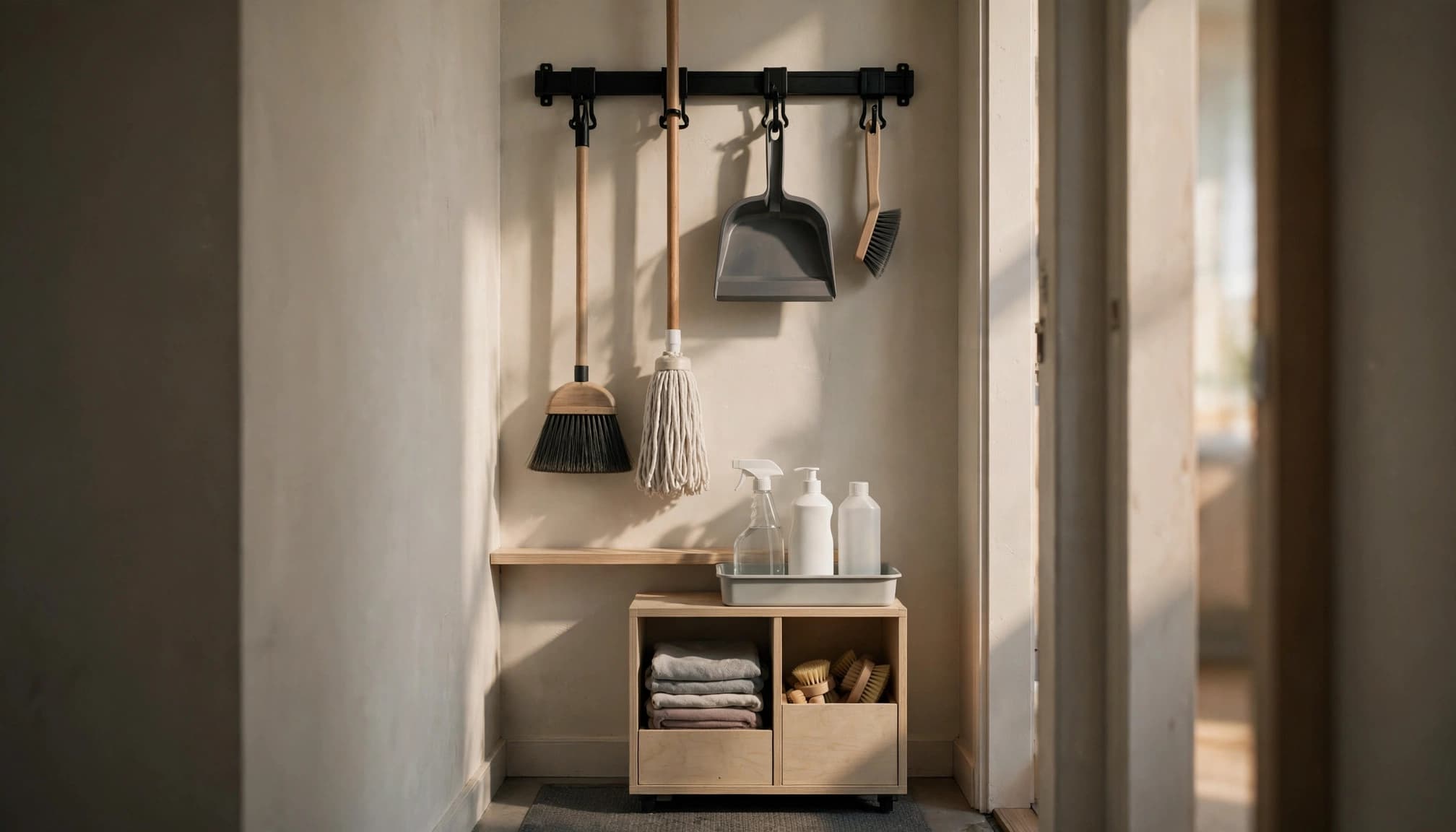
Hang Mops and Brooms Securely
Wall hooks, tool racks, and adjustable grippers keep long cleaning tools upright and off the floor. Choose clips that fit your broom and mop handles instead of forcing them into a fixed opening.
A mounted pegboard can hold mops and brooms, a dustpan, and scrub brushes. Add a shallow shelf to the pegboard only if the board supports it and chemicals stay secure.
For a tight indoor space without wall installation, use a freestanding mop-and-broom organizer on a narrow floor section. Leave enough clearance to lift each tool out.
Use Door Pockets for Lightweight Supplies
An over-the-door shoe holder works for microfiber cloths, dusters, gloves, and smaller spray bottles when they’re safe to access. Choose wipe-clean pockets and stay within the organizer’s load limit.
Hang bottles only where the pockets support them securely. Keep chemicals in a locked cupboard if children or pets could reach the door.
Before installing the organizer, leave room for its brackets and loaded pockets so the door closes fully. Follow surface and weight instructions for removable hooks. Get permission before drilling, and keep hanging tools clear of clothing and walkways.
Keep Labels, Backups, and Bins Easy to Maintain
Label each storage bin and drawer with a plain name such as “Bathroom,” “Kitchen Cloths,” or “Laundry Backups.” Use water-resistant tape or a label maker where drips could loosen paper.
Keep cleaning products identifiable in their original containers. Use refillable bottles only when product directions allow it; keep all safety information visible and don’t cover the original label with a household label.
Give backups a fixed amount of space. One defined bin is easier to manage than several bottles scattered through different rooms. Look there before shopping, and keep your current bottle at the front.
Once a week, return loose items and inspect trays for drips. Remove the contents, wipe the container according to any product-cleanup directions, and let it dry before replacing supplies.
Keep some space between bottles so you can lift one out without unpacking the whole bin. If an organizer repeatedly gets messy, simplify its contents before buying a larger one.
Frequently Asked Questions
How Should You Store Cleaning Brushes?
Rinse brushes according to their care instructions and let them dry before putting them away. Hang scrub brushes by their handles or place them in a ventilated holder with drainage.
Keep toilet brushes in their own holder, separate from kitchen brushes and clean cloths. Don’t seal a damp brush inside a closed storage bin.
Where Can You Store Supplies Without a Cleaning Closet?
Use a secure kitchen or bathroom cabinet for liquids, a portable caddy for working supplies, and a door rack for lightweight tools.
If you have a pedestal sink, keep the chemical kit in another locked cupboard. You don’t need to force every cleaning product into the bathroom simply because that’s where you use it.
What Should You Do if a Cleaner Leaks?
Keep children and pets away, avoid contact with the liquid, and follow the product’s spill instructions. Don’t add another cleaner to the tray or try to neutralize the spill with household chemicals.
For a possible poisoning exposure in the United States, contact Poison Control for exposure advice at 1-800-222-1222. Call emergency services for an immediate medical emergency.
Give Every Cleaning Supply a Practical Home
You can organize cleaning supplies without adding a large cabinet or filling every spare corner. A secure cupboard, manageable caddy, and space for long-handled tools create a compact storage setup for everyday needs.
Start with one crowded storage area and reuse suitable containers before buying more. Keep safe access and easy returns at the center of the setup so it stays useful after cleaning day.