Shoes, bags, and everyday items can quickly crowd the area beside your door. An entryway storage bench gives you a place to sit and helps keep frequently used belongings close by.
For small-space organization, compare storage benches for small spaces by available floor area and the items you need to store. A small storage bench with open shelves keeps shoes easy to reach, while a lift-up seat can hide loose accessories. Before choosing a style, check how much room the bench and its storage need to open.
Key Takeaways
- Choose a compact bench with open shoe storage when you have limited wall space and want quick access.
- Look for a shallow design if your hallway is narrow.
- Pick a wider bench with open shelves when several people keep everyday shoes near the door.
- Consider concealed storage only if you have enough room to use the lid or drawers comfortably.
- Measure the door swing, walking path, and seating space before you buy.
Before buying, measure the door swing, check the manufacturer’s weight limit if listed, and decide whether you want quick access or a covered compartment.
What Size Entryway Storage Bench Fits Your Space?
Measure the usable wall area, not the full length of the wall. Leave room for door trim, outlets, radiators, and anything you need to reach.
Next, check how far the bench can extend into the entryway. In a narrow hall, depth can matter more than width. A long, shallow bench may leave more walking room than a shorter, deeper one.
Mark the planned footprint on the floor with painter’s tape. Then open the front door fully and walk past the marked area with a bag. Make sure you can still bend down comfortably and sit without crowding the entrance.
Also measure the space your feet need when you sit. A bench may fit against the wall but still feel awkward if you can’t put on your shoes comfortably.
Finally, measure the footwear you plan to store. Boots need more vertical clearance than low shoes, and bulky footwear can reduce the number of pairs that fit on a shelf.
Use painter’s tape to mark the footprint on your floor. Open the front door fully, walk past with a bag, and check whether you can comfortably bend down.
Allow space for your feet when seated, too. A bench can fit against the wall but still make putting on shoes awkward.
Measure the footwear you plan to fit in the shoe storage area. Tall boots need more shelf clearance than trainers, and larger shoes can reduce the advertised pair count.
Check the usable capacity of a bench with storage before you buy. This simple check can help you find small space solutions without crowding the entrance.
Compare Four Entryway Bench Styles
| Bench style | Works well when | Check before buying |
|---|---|---|
| Compact open bench | You have a short wall and need a seat with basic shoe storage | Shelf capacity and seating space |
| Shallow shoe bench | Your hallway has limited floor depth | Whether larger shoes fit the shelf |
| Wide open-shelf bench | Several people need easy access to everyday shoes | Wall length and total footprint |
| Lift-top storage bench | You want loose accessories out of sight | Lid clearance and support mechanism |
Choose the smallest option that holds what you use regularly. Extra capacity can take up valuable floor space if you don’t need it.
An “overall pick” or “sponsored” label doesn’t confirm that a bench fits your entryway. A “bought in past month” count doesn’t replace checking its measurements. Check whether “free delivery” applies to your address and confirm the final price after any “coupon applied” discount.
Four Bench Styles for Small Entryways
1. Compact Open Bench for a Short Wall
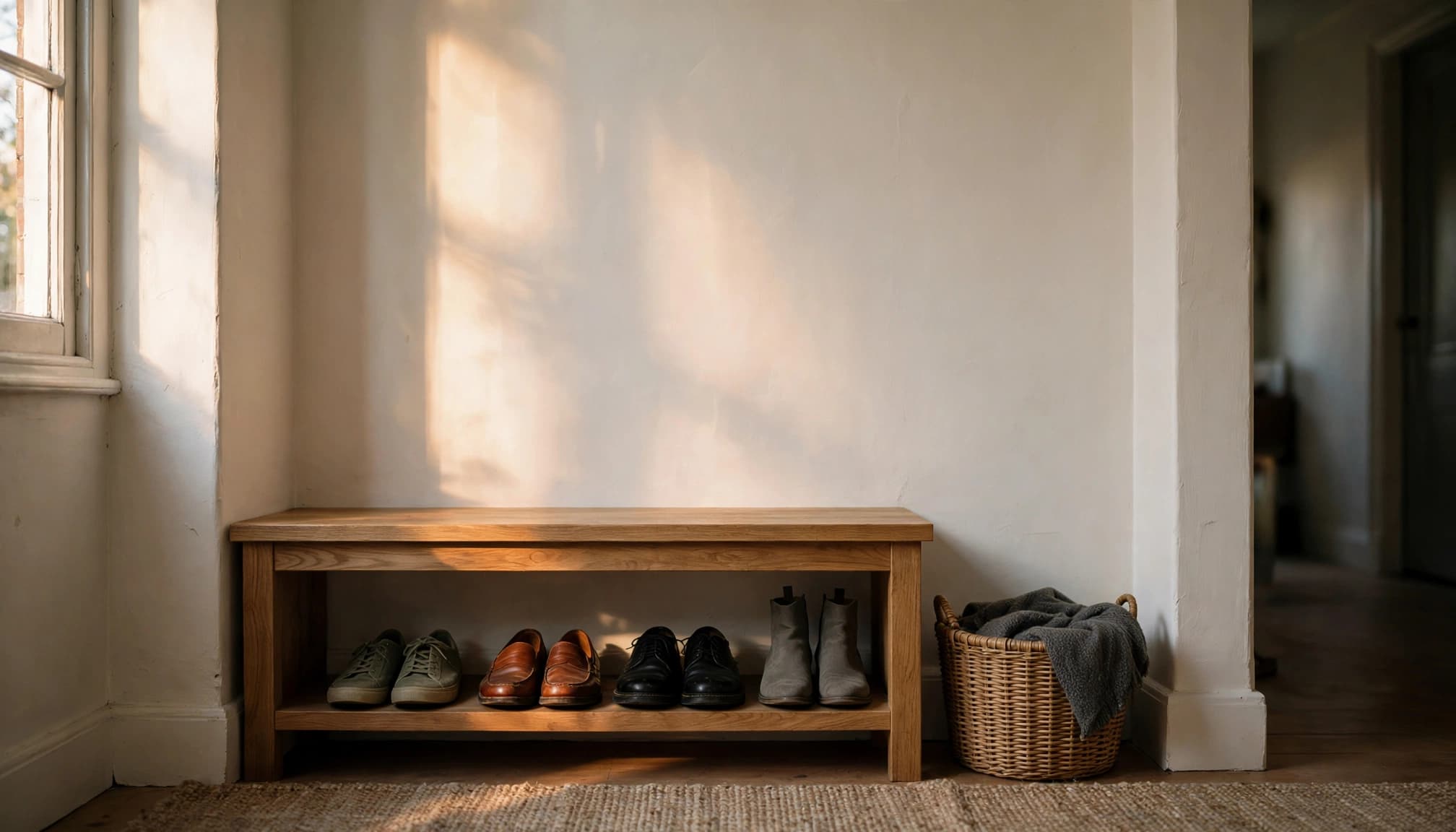
A compact bench with an open lower shelf can fit a small entryway where a wider unit would block the walking path. The shelf keeps a few everyday pairs easy to reach, and you don’t have to move anything to get your shoes.
This style is also a practical choice for renter-friendly storage because it doesn’t require wall mounting. Keep seasonal and occasional footwear elsewhere so the shelf stays useful.
2. Shallow Bench for a Narrow Hallway
When floor depth is limited, look for a bench with a slim profile. It can leave more room to pass through than a deeper ottoman or cabinet.
Before buying, measure your largest shoes. A shallow shelf may fit everyday shoes but leave little room for bulky trainers or boots. An upholstered, padded seat can reduce usable sitting depth, so measure the seating area, too. Raised sides or a back can also limit where you can sit.
3. Wide Open Bench for Several Pairs
A wider bench with open shelves can hold more everyday footwear while keeping each pair visible. This layout works well when you have enough wall length but want to avoid a deep cabinet.
The main trade-off is the bench’s width. Measure the full footprint and keep nearby baskets or other furniture from narrowing the walkway.
4. Lift-Top Bench for Concealed Storage
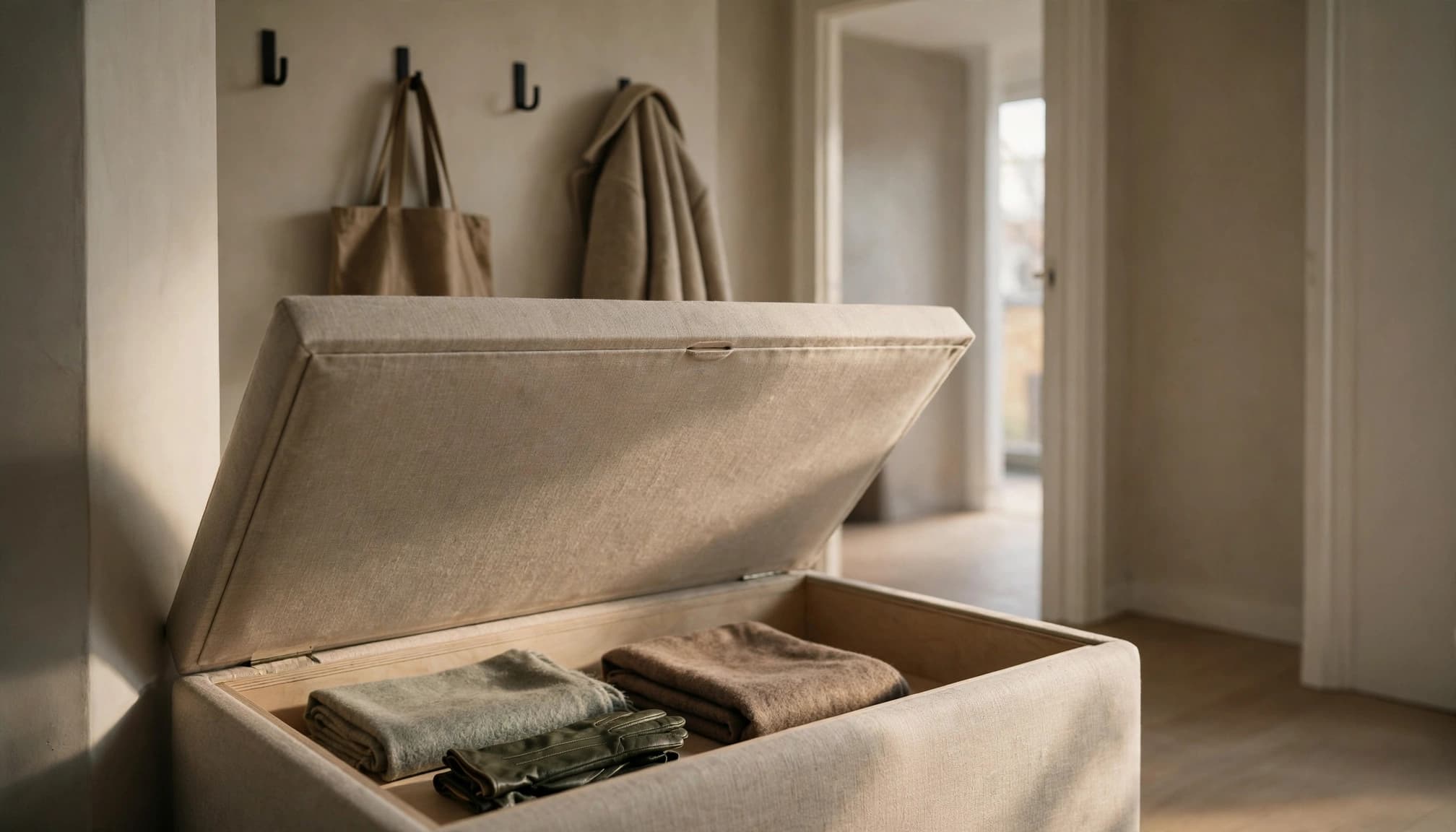
A lift-top bench can hold scarves, gloves, or dog leads out of sight. It may also give your entryway a tidier look than open shelves.
Some lift-top benches resemble a storage ottoman, and models marketed as an end of bed bench for a bedroom may also suit an entryway. Check the dimensions and lid clearance before choosing one.
You need clear space to raise the lid, and you may need to remove bags or other items from the seat first. Check the manufacturer’s listed opening angle and lid support. Don’t assume the lid will stay open on its own.
Which Storage Opening Works Best in a Narrow Entryway?
Open shelves provide quick access to shoes because nothing needs to swing or slide out. They’re a good fit if you use the storage several times a day.
Sliding doors can conceal clutter without swinging into the walkway. However, they may expose only part of the compartment at a time, which can make larger items harder to reach.
Drawers need clear floor space in front. Measure how far each drawer extends before choosing this style for a tight entrance.
A lift-up lid creates a storage chest that can hide loose items, but it needs enough room above it to open. You also have to keep the seat clear, so opening the compartment can be inconvenient if you often drop a bag on the bench.
Check Comfort, Weight Limits, and Assembly
A bench should feel comfortable when you sit to put on your shoes. Check the seat height and usable depth, and remember that the overall product height may not match the sitting height. If you plan to add a cushion, include its thickness in your measurements.
Check the manufacturer’s stated weight limit and follow the assembly instructions. A listing might claim “load up to 661.4 lb”; repeat that capacity only when it’s verified for the exact model. Don’t infer capacity from material or appearance, since construction, joints, and hardware also affect it.
Treat “overall pick” and “sponsored” labels, “free delivery” terms, and “bought in past month” indicators as buying cues. They don’t replace checks of the exact model’s specifications, fit, or assembly requirements. Assemble the bench on a level, protected surface, fit every required fastener, and check for rocking or loose parts before sitting. If you notice damage to a structural piece, contact the seller about a replacement instead of using the bench.
Keep Your Entryway Storage Bench in Good Condition
Care for Wood and Finished Surfaces
Remove grit before wiping the seat or shelves. Dirt from shoes can scratch a surface when you rub it across the finish.
For finished wood, use the care instructions that came with the bench. Keep wet footwear on a washable tray rather than directly against the wood, and wipe spills promptly.
Untreated wood needs different care from a sealed finish. If you paint or seal the bench, follow the product directions for preparation, cleaning, and drying time.
Care for Upholstery and Moving Parts
Upholstered seats need care suited to their fabric. Vacuum upholstered seams and corners to remove dust, pet hair, and grit. Check the fabric’s care label before treating a stain, and keep wet or muddy shoes out of covered compartments.
If hinges or handles loosen, follow the assembly instructions when tightening them. Stop using a lift-top lid if its support no longer holds it safely open.
Frequently Asked Questions
Can You Paint an Unfinished Pine Bench?
Yes, you can paint an unfinished pine bench if the manufacturer allows it. Check the care and assembly instructions first, then follow the paint maker’s directions for sanding, primer, drying time, and any protective topcoat.
Let the finish cure for the recommended time before sitting on the bench or placing shoes against it. Paint can feel dry before it’s ready for everyday use.
What Should You Store in an Entryway Bench?
Keep items you use when leaving or coming home, such as everyday shoes, gloves, scarves, and dog leads. Give each compartment a clear purpose, and use a small removable container to keep loose accessories together.
Move seasonal footwear and occasional-use items to a closet or another storage area. Let wet shoes dry before putting them into a closed compartment, and keep the seat clear when you need it for sitting.
How Do You Keep a Small Entryway Organized?
Give everyday belongings a specific place near the door. Use a tray for keys and a bench shelf or shoe rack for the pairs you wear most often. Move extra shoes and occasional-use items elsewhere so they don’t crowd the entrance.
For small apartment storage solutions, start with what you already own. A spare basket or tray may work as a drop zone before you buy more organizers. This simple approach can support apartment organization without adding another bulky piece of furniture.
Choose a Bench That Fits Your Routine
The right entryway storage bench gives you a useful place to sit and keeps daily essentials within reach without blocking your path. Measure the area, consider how the storage opens, and choose a style that fits the items you use most.
Open shelving is a practical space-saving solution for quick shoe access. Choose concealed storage when you have enough clearance to open it easily. With the right fit, your bench can make your entrance easier to use without crowding your home.