To organize spices in a small kitchen cabinet, clear out stale jars, measure your usable space, and choose storage that makes every label visible. Keep everyday seasonings within easy reach, with duplicates stored separately.
You don’t need a matching jar collection or an expensive pull-out system to get started. A simple tray, shelf riser, or drawer insert can make cooking easier without taking over your kitchen. Start with what you use, then choose the setup that fits.
Key Takeaways
- Store spices in a cool, dry cupboard away from stove heat and direct sunlight.
- Choose organizers around your cabinet measurements and spice collection, rather than buying containers first.
- Keep frequently used spices accessible, label jars where you can see them, and give refills one separate home.
1. Empty and Clean Your Spice Cabinet
Sort Out Stale Spices and Duplicates
Take everything out, including packets tucked behind larger bottles. Group matching spices together so you can spot duplicates before putting anything back.
Ground spices often keep good flavor for about 1 to 3 years, while whole spices commonly last 3 to 4 years. Treat these as approximate freshness guidelines. Storage conditions and spice type affect those estimates, as Safeway’s spice shelf-life comparison shows.
Expired spices may be discarded if their usual aroma has faded or their appearance has changed. Throw away anything with mold or signs of insects. Don’t combine an older jar with a fresh refill.
Wipe Down the Empty Space
Vacuum loose seasoning from corners, then wipe shelves and drawer interiors. Let everything dry before returning jars.
Clean sticky bottle bases and check lids for trapped powder. Replace damaged containers that no longer close securely.
The University of Minnesota’s guidance on pantry pests in stored food includes spices among foods that can attract insects. An empty-cabinet cleanout gives you a chance to inspect overlooked packets and shelf corners.
2. Choose a Spice Organizer That Fits Your Cabinet
Choose a location for spice storage before choosing an organizer. A cupboard near your preparation area is convenient, but avoid spaces directly above or next to the stove. Heat and light reduce flavor, so keep jars out of direct sunlight too.
Measure the usable width, depth, and height of your cabinet shelves. Include hinges, door openings, and room to lift jars out.
Use your cabinet’s shape to narrow the options.
| Available Space | Practical Organizer | Main Limitation |
|---|---|---|
| Shallow shelf | Tiered spice rack | Rear labels still need to remain visible |
| Deep corner cabinet | Lazy Susan or two-tier turntable | Round trays leave unused corners |
| Narrow, deep shelf | Removable rectangular tray | You need room to pull it forward |
| Tall shelf | Adjustable riser | Jars need clearance above each level |
A tiered rack staggers jars on a shallow shelf, making labels easier to scan.
Choose better access over maximum capacity. A turntable helps when it brings hidden jars forward, but a rectangular tray may hold more in a narrow cupboard.
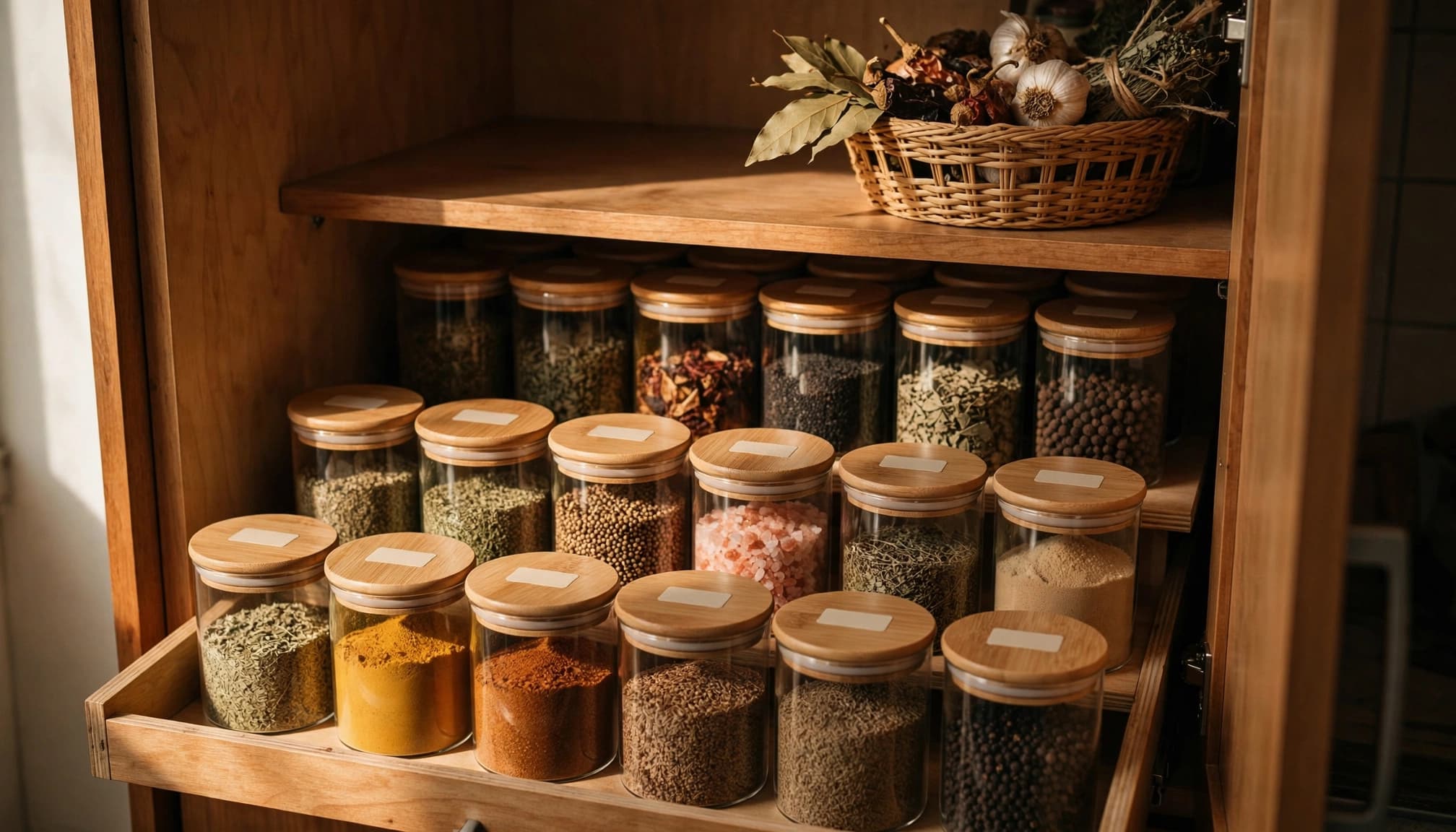
For a two-tier turntable, allow enough height for the upper jars. A pull-out spice rack also needs room for its sliding hardware. In a rental, a freestanding organizer is usually the simpler starting point.
3. Use Uniform Jars Where They Help
Choose Containers Around What You Buy
Uniform glass jars make a mixed collection easier to arrange and browse. Straight-sided shapes can sit neatly together, while removable shaker discs let you sprinkle seasoning or reach inside with a measuring spoon.
Choose spice jars around the amount you normally buy. Tiny jars create extra refill work when most of each purchase ends up elsewhere.
You don’t need to decant every spice. Keep original packaging when it seals well, fits neatly, and holds useful ingredient or date information. Reusing suitable containers, including clean, food-safe mason jars that fit the space and seal securely, is a practical budget option.
Put Labels Where You Can See Them
Place labels on the lid or jar top when you look down into your storage. On an eye-level shelf, add a front label instead.
Use clear names that distinguish similar ingredients, such as ground cumin and cumin seeds. Matching labels help you scan quickly, but readable wording matters more than decorative lettering.
Transfer useful dates and blend ingredients before discarding packaging. This is especially helpful when several people cook or someone needs to avoid particular ingredients.
Leave a little space between jars so you can remove one without knocking over its neighbors.
4. Set Up a Spice Drawer Without Wasting Space
A drawer can free an entire cabinet shelf, provided it closes comfortably over the jars and organizer.
Use an expandable drawer organizer or angled spice rack insert to hold jars in rows. Measure the drawer’s internal dimensions and clearance above the tallest part of the loaded insert.
NEAT recommends laying uniform jars flat with labels facing upward, with a rubber liner underneath to reduce shifting. If your jars have rounded sides, dividers or grooves help keep them from rolling.
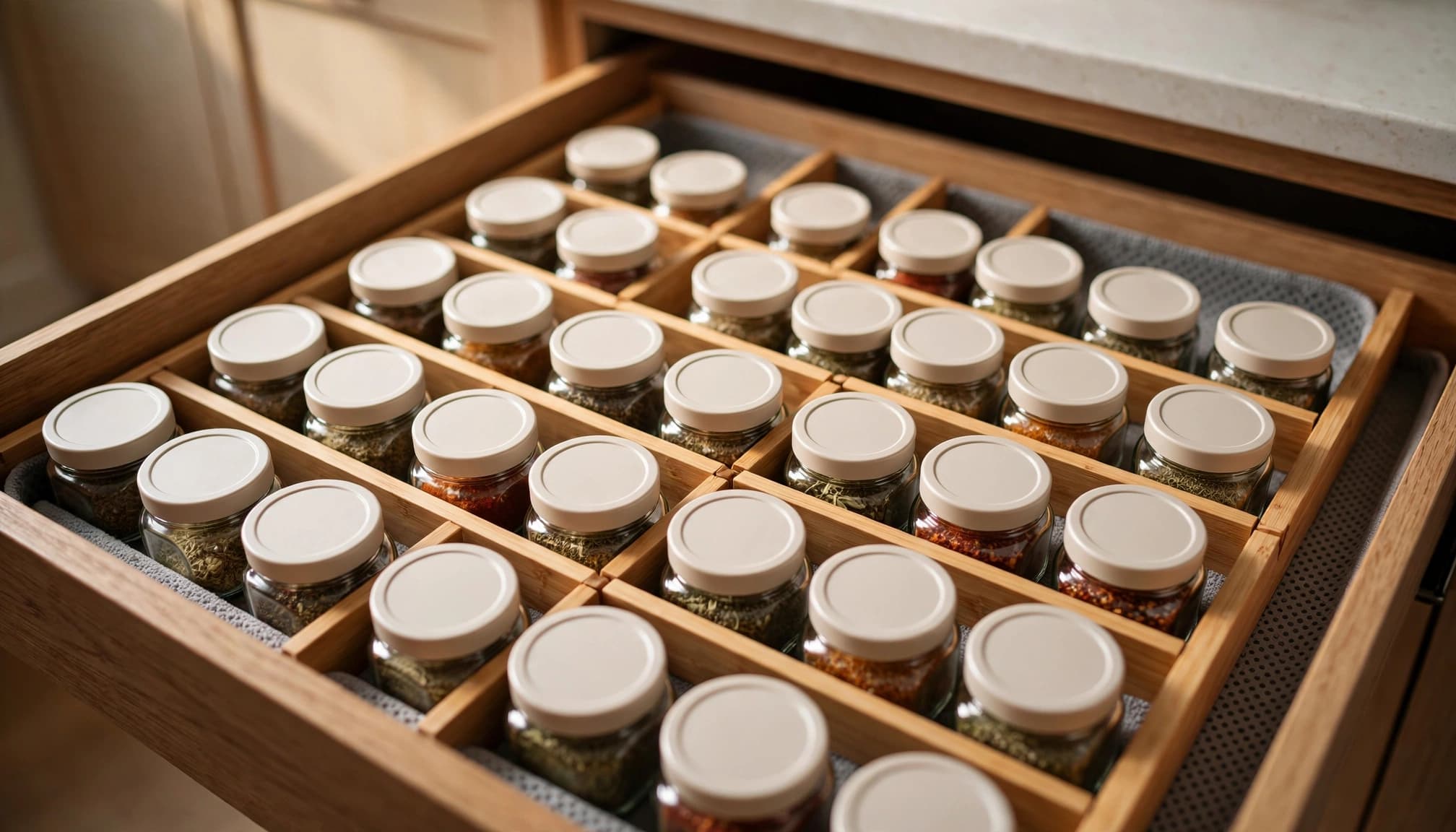
Test the arrangement with the jars you already own before buying replacements. Open and close the drawer gently to see whether anything moves.
For deeper drawers, compare upright storage with an angled insert. Our guide to choosing deep drawer organizers covers the measurements that help prevent a poor fit.
5. Organize Spices Around How You Cook
Keep Everyday Seasonings at the Front
Organizing by frequency works well when you repeatedly reach for the same ingredients. Keep salt, pepper, garlic powder, and onion powder front and center if they’re part of your everyday cooking.
Move occasional-use seasonings farther back or onto a higher shelf. Your holiday baking spices don’t need the easiest position all year.
Choose the front row based on your meals, rather than a standard list. If you cook with cumin every evening, it belongs closer than a seasoning you rarely open.
Choose Alphabetical Order or Simple Cooking Groups
Alphabetical order is a common choice for shared kitchens. Everyone can find paprika or turmeric without needing to remember where another person placed it.
Sorting by cuisine or cooking task can work better when those patterns match how you cook. Keep baking spices together, group Indian spices in one section, and give everyday savory blends another.
Avoid too many overlapping categories. Cinnamon might belong with baking ingredients or Indian spices, so choose one home that everyone understands.
In a shared kitchen, the best sorting system is one that another cook can follow without asking where each jar belongs.
You can combine methods by keeping everyday jars at the front and arranging the remaining collection alphabetically.
6. Use Doors and Backstock Bins Carefully
If shelves remain crowded, use a magnetic strip inside a cabinet door for compatible metal tins. Stackable tins can save cabinet space if they close securely and are easy to identify. A wall-mounted spice rack can free shelf space, but it needs secure mounting and may not suit a rental. Keep magnetic racks on the refrigerator’s side away from heat and sunlight.
For renter-friendly storage, choose removable products suited to the surface and loaded weight. Door-mounted storage still occupies cabinet space, so allow room for shelves and hinges when the door closes.
Keep overflow in one backstock bin, as NEAT recommends. Label packets clearly and keep each refill with its matching spice.
Our guide to organizing a small pantry offers more ways to separate daily ingredients from backup supplies.
Buying small quantities from bulk bins can reduce cost and packaging, though savings depend on the unit price. Store purchases in sealed, food-safe labeled bags, then file them upright in a small box.
Keep that box in a cool, dry cupboard. Thin packets need protection from light and accidental punctures.
7. Keep the System Easy to Maintain
Before shopping, look through the main collection and backstock bin together. Add nearly empty spices to your list rather than buying another jar because the first one is hidden.
Use older stock first. When a jar needs refilling, empty it and clean it before adding fresh spices. Let it dry completely.
Give the cabinet a quick reset when putting groceries away. Return misplaced jars, wipe spills, and keep labels facing your usual viewing direction.
Review occasional-use spices a few times a year. If a group keeps overflowing, adjust its space rather than squeezing in another organizer.
Good small-space organization leaves enough room to take things out and put them back. Keep the counter available for cooking instead of turning overflow into a permanent display.
Frequently Asked Questions
How Can You Organize Spices Without a Rack?
Stand jars in a shallow tray with lid labels visible, or file sealed packets upright in a small box. Pull the container forward to browse everything together. This works well when you want a low-cost setup using containers you already own.
What’s the Best Way to Organize Lots of Spices?
Separate everyday spices from occasional-use jars and refills. Use alphabetical order within the larger collection, then keep backups together. Avoid spreading the same category across several cupboards, which makes duplicates harder to spot.
Do Ground Spices Need Replacing More Often?
Generally, yes. Grinding exposes more surface area, so ground spices usually lose flavor sooner than whole spices. This spice shelf-life guide explains the difference. Use dates alongside aroma and appearance when deciding what needs replacing.
Build a Spice Cabinet That’s Easy to Use
A useful spice cabinet gives each jar a clear home and leaves enough room to reach it. Start with a clean shelf, choose one organizer that fits, and keep your everyday seasonings accessible.
You can add matching jars later if they make the system easier. Easy access and a simple refill routine will do more for your small kitchen than filling every available gap.
We recommend the UviaHomi magnetic organizer. Great space saving rack that holds 28 spice jars (spices sold separately). Top rated 4 tier rack that also can be hung on your refrigerator (magnetic back rated for 33 lb). Also includes hooks if you’d like to hang it on the wall.
Take a look at the UviaHomi Spice Rack Here.
We only recommend top-rated, affordable products you can trust. As an Amazon Associate, I may earn from qualifying purchases through the affiliate links above at no extra cost to you. Thank you for supporting our work.