You can add storage to a small apartment with renter-friendly storage solutions that use cabinet interiors, door backs, narrow gaps, and the space beneath your bed, with no drilling. Bed risers can create extra under-bed space if they’re suitable for your bed.
Choose organizers that fit your belongings without damaging surfaces or blocking movement. Check your lease first, then pick storage you can remove when you move.
Key Takeaways
- Use existing shelves, furniture, and floor space before attaching anything to walls.
- Check each product’s weight limit, surface requirements, and removal instructions before installation.
- Keep furniture safety in mind. A unit that stands on its own may still require wall anchoring.
For small-space organization, a few well-placed organizers are easier to manage than extra bins scattered throughout your home.
Check Your Lease and Measure Before Buying
“No drilling” doesn’t automatically mean every adhesive, pressure-mounted product, or door hook is allowed. Review your lease and ask your landlord about restrictions on painted walls, cabinet finishes, and adhesives.
Photograph surfaces before installation. Existing peeling paint, loose veneer, or damaged plaster can make removable products a poor choice.
Measure the storage space and the clearance needed to use it. Check whether bed risers will fit and leave enough room to move around the bed.
Here’s how common options compare.
| Storage Option | Useful For | Check Before Buying |
|---|---|---|
| Adhesive hooks | Keys and lightweight accessories | Surface compatibility and load rating |
| Tension rods | Dividing cabinets or hanging light items | Span, grip, and rated capacity |
| Door organizers | Shoes and bathroom supplies | Door thickness and closing clearance |
| Rolling carts | Accessible storage in narrow gaps | Full footprint and appliance clearance |
Choose the mechanism that suits the space. Heavy belongings usually belong on existing shelves or suitable furniture rather than removable wall attachments.
How Can You Use Adhesive Hooks Safely?
Match the Hook to the Surface and Load
Sticky wall hooks can hold keys, reusable shopping bags, and lightweight cleaning tools when the surface and load are suitable. Adhesive hooks aren’t a dependable shortcut for heavy shelving.
Check the exact product’s approved surfaces. Wallpaper, rough walls, and weak paint may be unsuitable. Bathroom humidity also calls for products approved for that setting.
Use Command’s hooks and strips instructions to check installation details and weight limits. Different products have different ratings.
Weigh the complete load, including any basket or organizer. Don’t assume two hooks automatically support twice the weight unless the manufacturer allows that arrangement.
Prepare, Wait, and Remove Carefully
Follow the cleaning instructions rather than using whichever cleaner is nearby. For compatible Command products, surface preparation commonly includes rubbing alcohol. Let the surface dry before applying the adhesive.
Press and hold for the time stated on the package. Then allow the required waiting period. Command’s Australian installation guidance specifies waiting one hour before loading a hook.
Leave the release tab accessible. Follow the removal directions instead of pulling the hook outward.
If paint starts lifting, stop. Removable adhesive isn’t a guarantee against damage, especially on an unsuitable or poorly bonded finish.
What Works for Small Kitchen Storage Without Drilling?
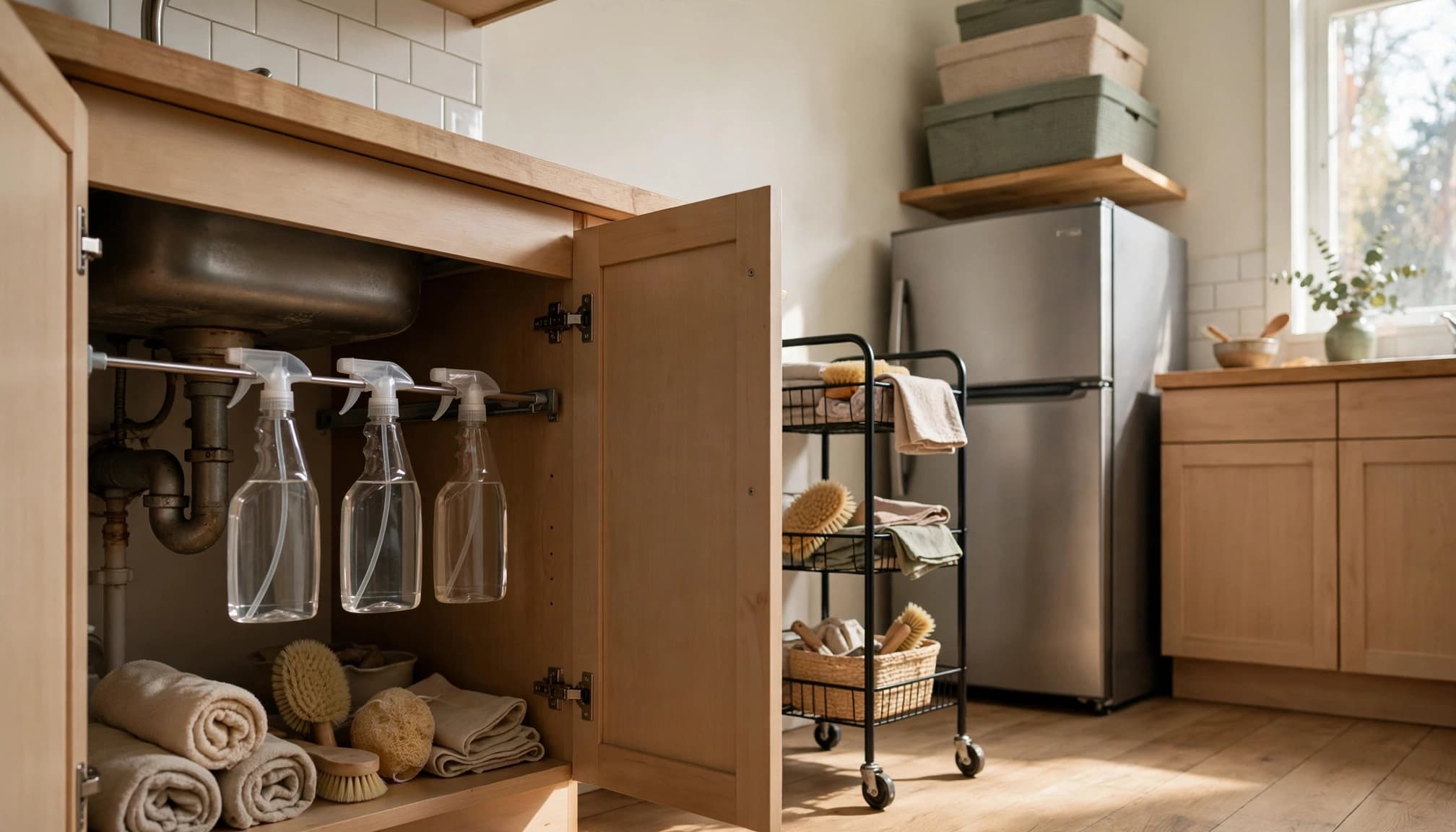
Use Cabinet Space More Efficiently
Shelf risers let you separate dishes within an existing cabinet. Choose sturdy kitchen organizers that fit beneath the shelf above and support your dishes.
Tension rods can divide trays vertically or hold lightweight cleaning supplies beneath a sink. Check the capacity of tension rods, and keep their pressure pads away from fragile cabinet surfaces.
Full spray bottles add weight quickly. Store heavier bottles in a washable tray on the cabinet floor instead.
A slide-on shelf basket can hold tea towels or food-storage lids. Check its thickness against the cabinet door so it doesn’t prevent closing. Keep access to pipes and shutoff valves clear. These simple additions can improve cabinet organization.
Put Narrow Gaps to Work
Slim rolling carts can hold pantry items, spare towels, or cleaning supplies. Before buying kitchen organizers for a narrow gap, measure its narrowest point, including baseboards and projecting handles.
Don’t assume a popular utility cart, such as IKEA RASKOG, fits a narrow opening. Compare its full footprint with your available space.
Leave appliance ventilation openings clear and follow the appliance manufacturer’s clearance requirements. Use locking wheels where available.
Magnetic strips only work on suitable metal surfaces. Keep sharp knives inside drawers unless magnetic strips have secure, manufacturer-approved mounting for a knife holder.
Add Small Bathroom and Entryway Storage
Keep Bathroom Supplies Away From Wet Areas
Over-the-door organizers can hold spare toiletries, hairbrushes, and cleaning cloths. Put heavy bottles in low pockets and check the organizer’s total capacity.
Choose washable materials for small bathroom storage. Avoid hanging absorbent fabric where shower spray will keep it damp.
A tension shower caddy can use corner space, but its contact surfaces and height range must suit your bathroom. Inspect it regularly for slipping.
Keep medicines somewhere suitable for their storage instructions rather than assuming the bathroom is the right place. Leave only your daily essentials within easy reach.
Protect Doors While Adding Storage
For entryway vertical storage, use an over-door rack for light jackets or bags. Check that the door closes and latches without force.
Thin protective pads may reduce rubbing, but they won’t fix a bracket that’s too thick. Stop using the rack if you notice marks or scraping.
Don’t place organizers on doors where they interfere with hinges, locks, or safe exit. In a narrow hallway, a shallow shoe tray may be more practical than a rack that projects into your walking space.
Use Under-Bed Space and Small Closet Storage
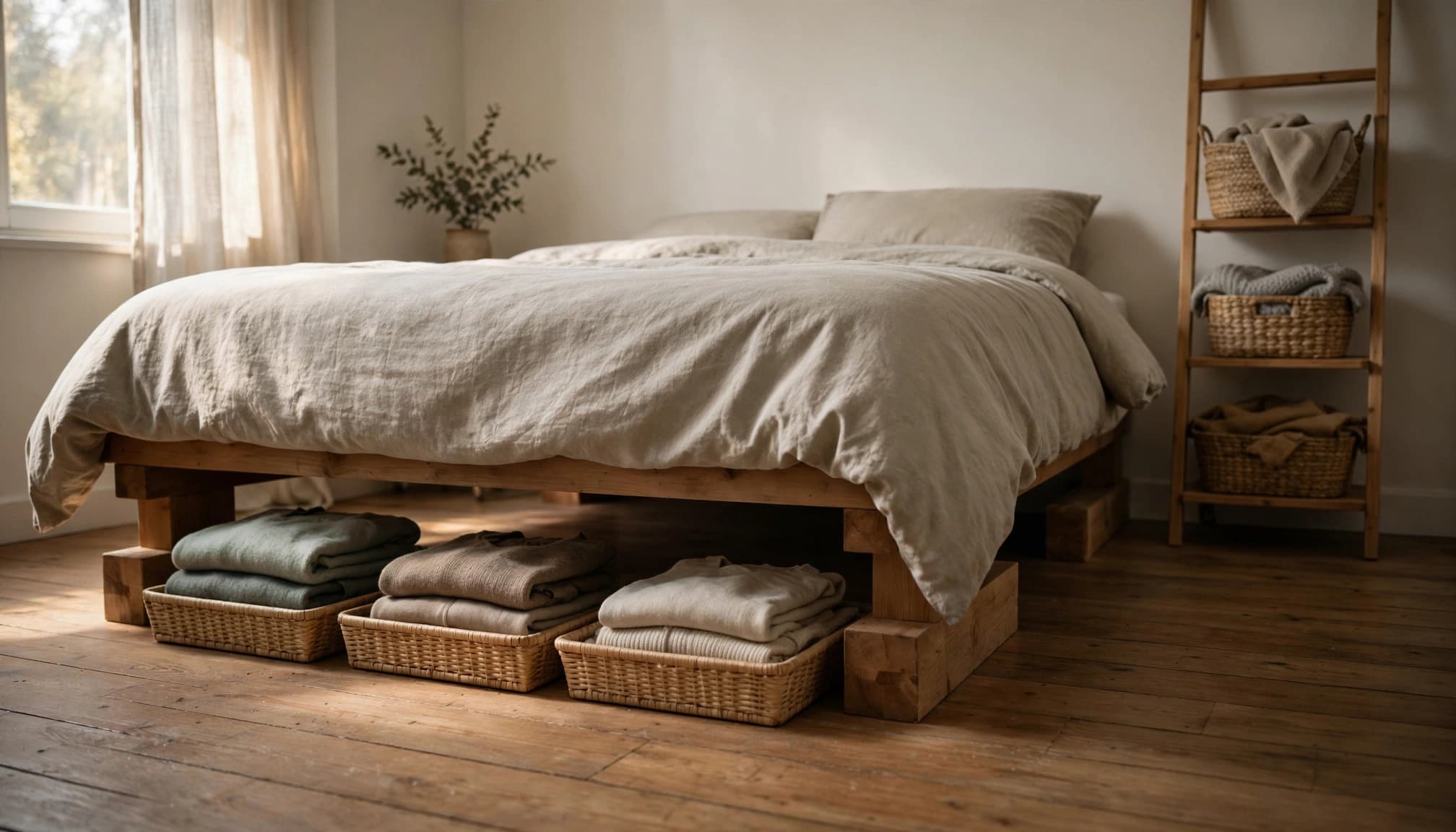
Store Seasonal Items Beneath Your Bed
Measure clearance at the lowest obstruction, not just the side rail. Check whether support legs interrupt the available space. If you use bed risers, remeasure the clearance afterward.
Shallow bins or zippered cases, such as IKEA SKUBB storage cases, can hold seasonal clothing and spare bedding as under-bed storage. Compare current product dimensions before buying.
Wash and fully dry textiles before storage. Keep frequently used items near the edge and leave room to pull containers out.
Bed risers require extra care. Check frame compatibility and the rated load for the bed, mattress, and sleepers. Support every required leg according to the instructions.
Make Better Use of Your Existing Closet
For simple closet organization, a hanging fabric organizer creates compartments without modifying the closet. Check that the existing rail can support its weight alongside your clothes.
Shelf dividers keep folded clothing upright. Stackable bins work best when you can reach the contents without dismantling the whole stack.
A hanging double rod may add space for shorter clothes, but it loads the original rail. Inspect its supports before adding more weight.
Avoid placing heavy bags high above your head. For everyday apartment organization, keep the items you use most at a comfortable height.
Choose Living Room Storage Without Overlooking Safety
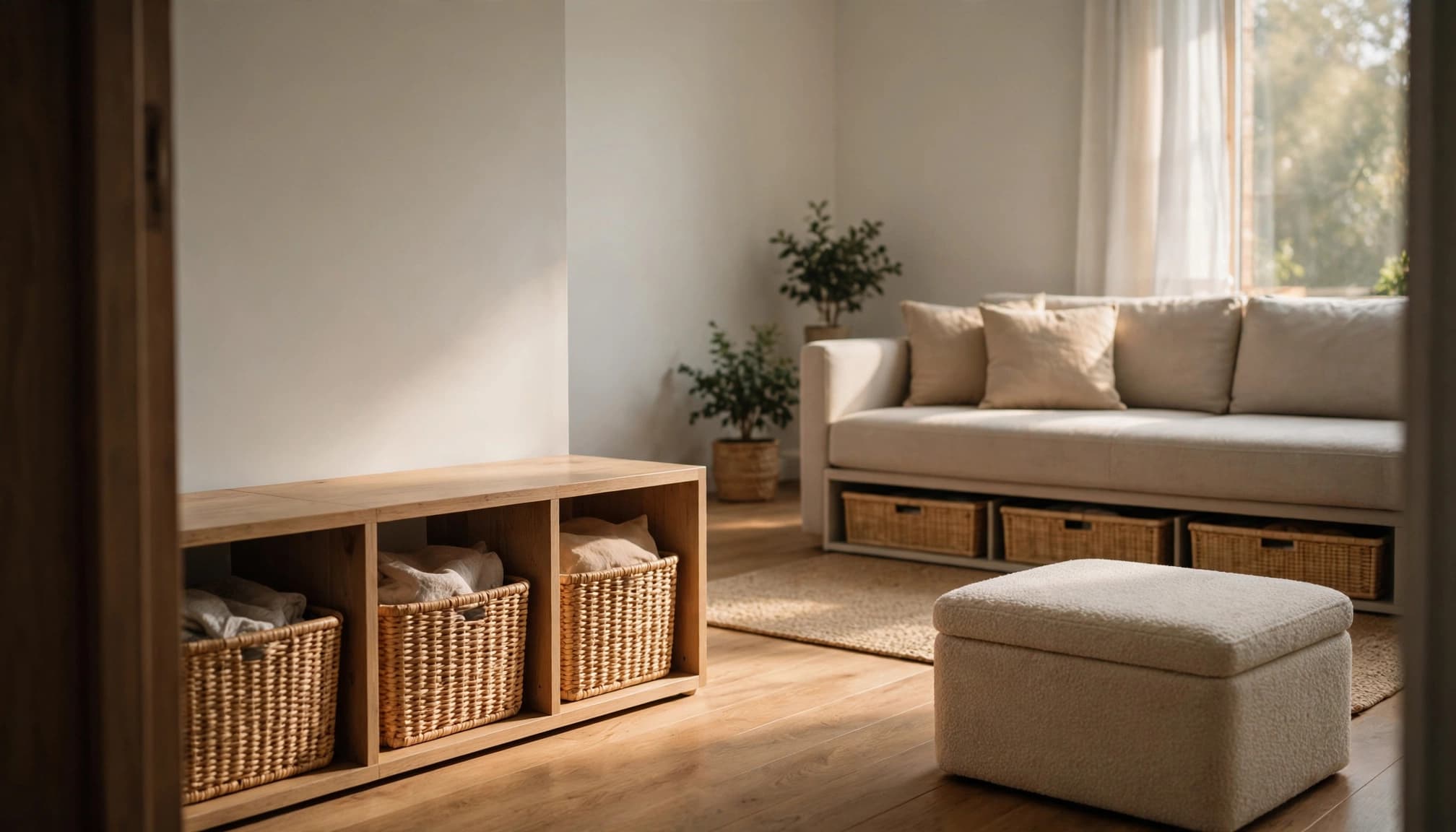
Let Furniture Hold More Than One Thing
A storage ottoman can hold blankets while providing a seat or footrest, making it a useful piece of multi-functional furniture. Check the seating capacity if you plan to sit on it.
Lift-top coffee tables offer hidden compartments, but you need clearance to open them. Keep children’s fingers away from moving hinges.
Measure under-sofa clearance before buying containers. Handles, lids, and wheels can make a bin taller than expected.
Choose furniture around what you need to store. A small compartment won’t help if your main problem is bulky bedding. For small apartment storage solutions, usable interior dimensions matter more than the furniture’s overall size.
Follow Anchoring Requirements
Freestanding furniture isn’t automatically safe without anchoring. Ladder shelves, bookcases, and drawer units may still require wall attachment.
The CPSC’s Anchor It safety guidance recommends anchoring furniture with drawers, doors, and shelves to prevent tip-over injuries.
Follow the furniture manufacturer’s instructions. Putting heavy items on the bottom doesn’t replace required anchoring.
If your lease blocks drilling, ask your landlord for an approved safety installation. Don’t substitute ordinary removable strips for specified furniture anchors. Choose another storage option if you can’t install a unit safely.
Keep Costs Low and Plan for Moving Day
Start with containers you already own. Group belongings by where you use them, then buy an organizer only when it solves a clear problem.
For a short lease, portable baskets, shelf risers, tension rods, and door organizers are usually easier to move than fitted systems. For a longer stay, consider a storage ottoman or adjustable cart that will work in another home.
Standard container sizes can make replacements easier. Avoid buying a large matching set before testing one container in its intended space.
Keep tension rods’ instructions and spare parts together, and label bed risers for the move. Check adhesives, pressure mounts, and door brackets periodically for movement or surface marks.
Before moving out, empty each organizer and follow its removal instructions. Clean contact areas gently. Photograph the surfaces afterward, but don’t assume photos or removable products guarantee your security deposit.
Frequently Asked Questions
Can You Add Shelves Without Drilling?
You can use shelf risers inside cabinets, compatible slide-on baskets, or furniture that doesn’t require wall attachment. Adhesive shelves are another option only when the product supports your intended load and surface.
Include the shelf’s weight when checking capacity. Avoid storing fragile or heavy objects above seating areas, beds, or walkways on removable mounts.
What Should You Buy First on a Small Budget?
Start with the area that causes daily frustration. Measure it, decide what belongs there, and try an existing container first.
A shelf riser may solve crowded dishes. A shallow bin may solve seasonal clothing storage. Buying one suitable organizer helps you test the fit without spending money on products you won’t use.
Make Storage Fit Your Rental
You can add useful storage without drilling by working with the space you already have. Cabinets, door backs, and furniture interiors all offer practical options.
Choose the right fit, then follow load limits and installation instructions. Safe, accessible storage is easier to use every day.
Start with one crowded area. A small improvement that fits your routine is more helpful than filling every available corner.