Shoes, bags, and keys can crowd your apartment door before you’ve even taken your coat off. Practical small entryway storage ideas for apartments give daily essentials a few well-sized homes while keeping the walking path clear.
You don’t need a separate foyer, expensive furniture, or permanent wall fixtures to make the entrance easier to use. A shallow rack, a small tray, and a few suitable hooks may be enough.
Start with what you reach for when leaving or arriving, then choose storage that fits your layout, rental rules, and budget.
Small entryway storage ideas for apartments that keep essentials close
Give your entrance one clear job: holding the things you need when coming and going. If the door opens into your living room or kitchen, use one nearby wall or existing shelf rather than adding furniture across the room.
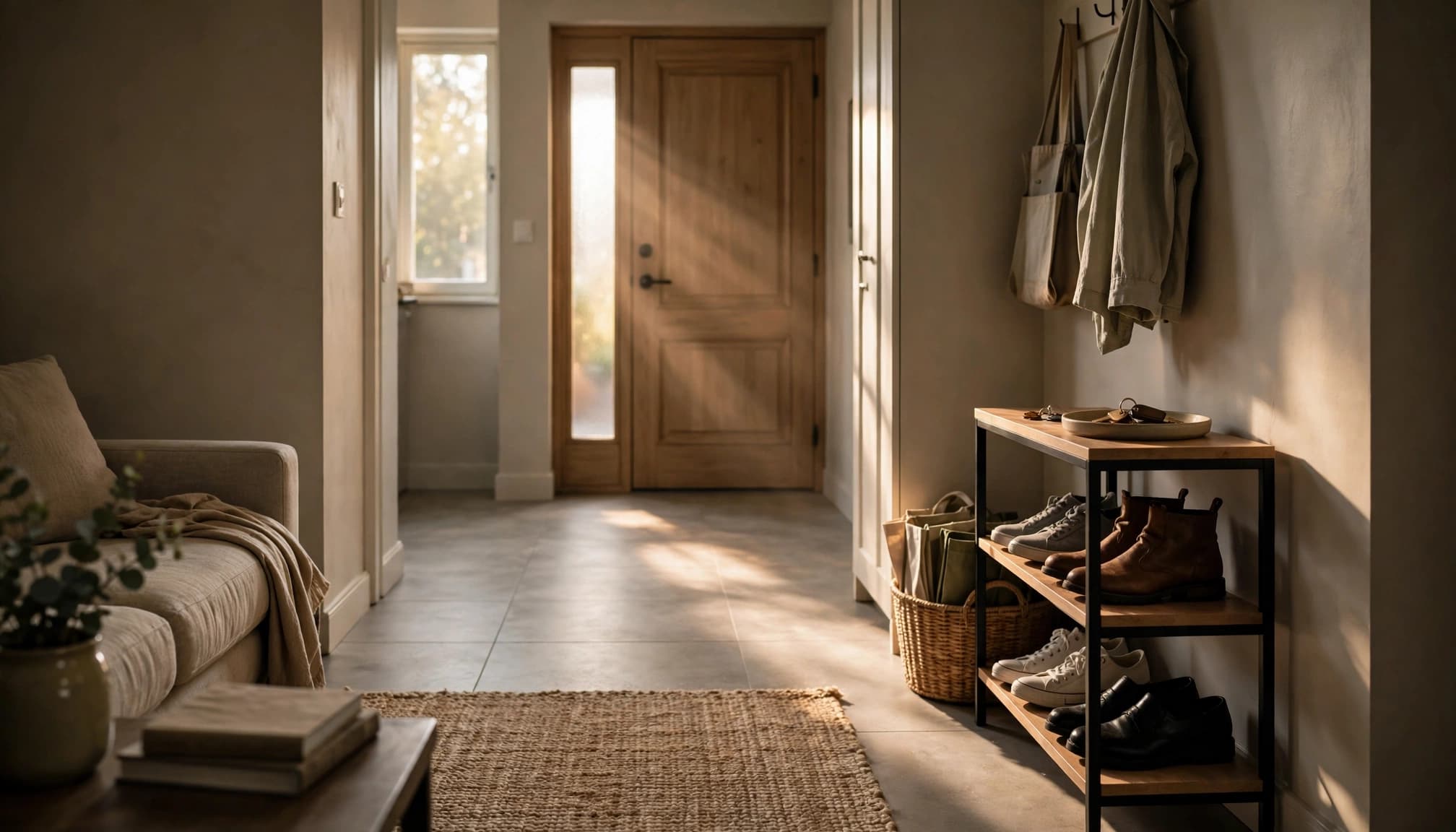
Give shoes, keys, and bags a clear landing spot
Keep frequently worn shoes on a shallow rack or washable shoe tray. Move dress shoes, seasonal boots, and occasional pairs to a closet or under-bed storage so you can retrieve everyday footwear without rearranging everything.
For a freestanding option, IKEA’s TJUSIG shoe rack measures 12 5/8 inches deep. Include the shoes themselves when judging the footprint, since larger pairs may extend beyond a shelf.
Place keys in a small dish or tray on an existing surface. Choose a spot you can reach without setting your bag on the floor.
Use one small basket for gloves or folded reusable bags. Keep your everyday bag on a suitable hook or designated shelf, rather than letting it cover the key tray.
Use vertical and door space without crowding the floor
An over-door hook rack can hold a light jacket or everyday bag without taking up floor space. Pocket organizers work better for smaller items, such as gloves, scarves, and compact umbrellas.
Keep frequently used pockets at a comfortable height. An organizer that requires stretching or moving coats each morning will be harder to maintain.
A narrow freestanding rack is another option when wall storage isn’t suitable. Follow any required anchoring instructions, even if the unit is described as freestanding.
If your entrance opens into another room, the inside of a nearby cupboard door can hold lightweight accessories. Keep hooks and pockets clear of shelves so the door closes properly.
For rentals, follow your lease’s mounting rules and the product’s surface, load, and removal instructions. Adhesive hooks aren’t suitable for every painted surface, and over-door fittings still need closing clearance.
Choose a compact entryway bench that fits your apartment
A bench is useful when you need somewhere to sit while putting on shoes. Choose open shelves for quick access, or covered storage for loose accessories you want out of sight. Either style needs enough room for comfortable use, not just enough wall space. Before you buy, compare storage benches for small entryways by price, depth, and opening style.
Compare small-space benches by footprint and storage style
For a short wall, IKEA’s RAGGBERG bench measures 23 5/8 inches wide. Its open lower shelf suits a small selection of everyday shoes.
Use these assembled dimensions to compare the options.
| Bench | Width × depth × overall height | Storage and practical fit |
|---|---|---|
| IKEA RAGGBERG | 23 5/8 × 13 3/4 × 17 3/4 inches | Open shelf for roughly three pairs; short wall spaces |
| IKEA HEMNES | 33 1/2 × 12 5/8 × 25 5/8 inches | Open shoe storage; useful when depth is limited |
| IKEA TJUSIG | 42 1/2 × 13 3/8 × 19 5/8 inches | Open storage for roughly eight pairs; longer walls |
| Simpli Home Amherst | 48 × 17 × 28 inches | Two covered compartments; larger entryways |
The smallest width doesn’t always give you the clearest walkway. HEMNES is wider than RAGGBERG but shallower, which can matter more in a narrow hall.
For several daily pairs, IKEA’s TJUSIG bench is 42 1/2 inches wide. The larger Amherst offers concealed storage, but its extra depth needs more floor space.
These are options rather than a ranking. Compare current dimensions and product details before buying, since prices and availability can change. Advertised shoe capacity also varies with footwear size.
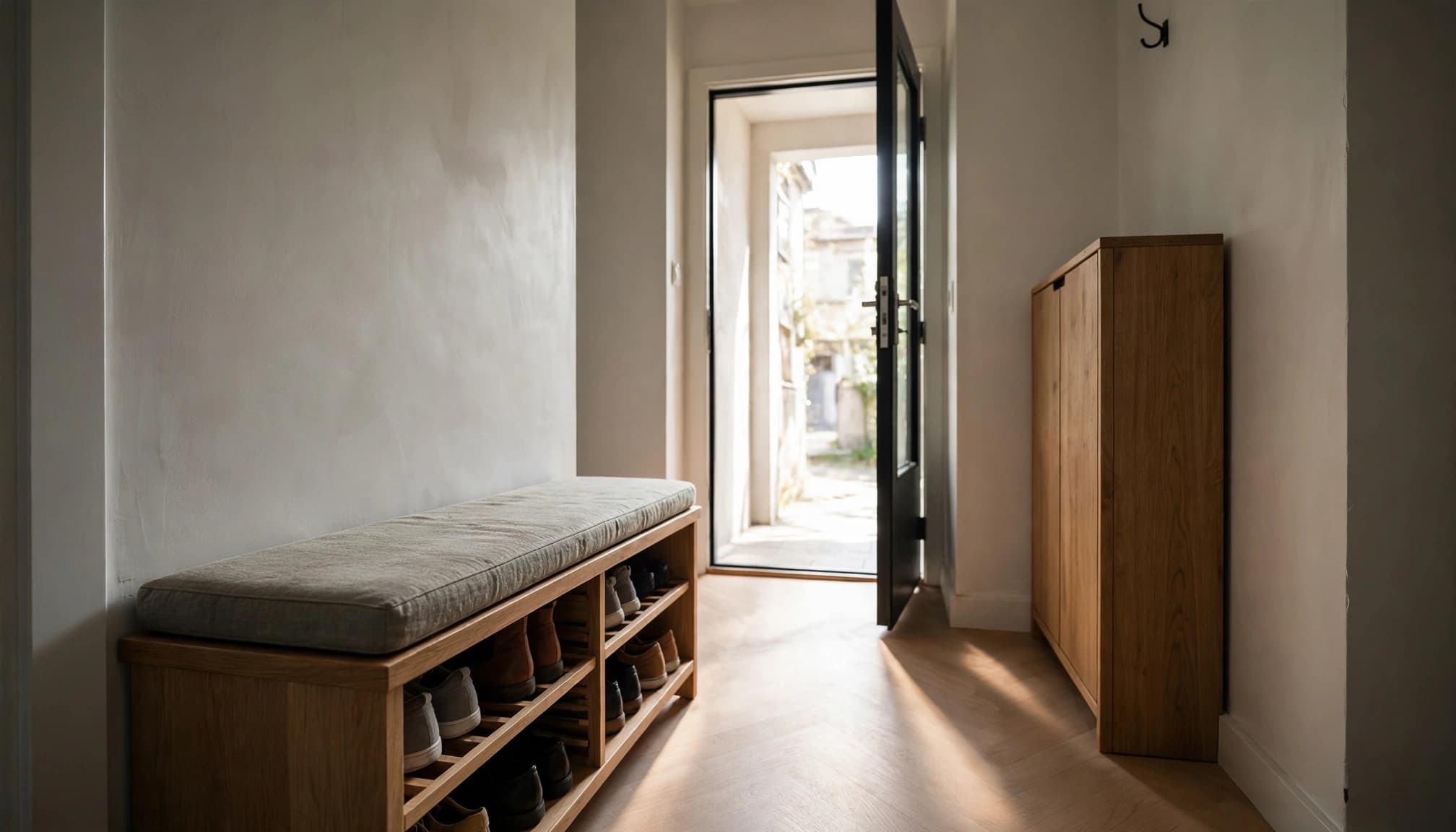
Check the opening clearance before you bring a bench home
Measure usable width, depth, and height, including baseboards, door trim, and nearby fixtures. Overall height isn’t always seat height, especially with raised sides or a back.
Mark the footprint with painter’s tape. Open the entrance door fully, walk past carrying your usual bag, and leave room for your feet while seated.
A bench can fit against the wall but still leave too little room to sit or reach your shoes.
Drawers need space to extend. Lift-up lids need clearance beneath hooks and shelves, and you must remove anything left on the seat before opening them.
Compare shelf height with your tallest footwear. Larger shoes can reduce the number of pairs that fit.
Use the manufacturer’s listed weight limit when deciding whether a bench meets your seating needs. Let wet shoes dry outside closed compartments, and keep the seat free for sitting.
Keep a narrow entryway organized without permanent changes
Try low-cost changes before buying another storage unit. Small entryway storage ideas for apartments work well when they use space you already have, especially in rentals where mounting options are limited.
Start with one recurring problem, such as missing keys or shoes spreading into the hallway.
Make a small rental entry work with what you already own
An unused tray can become your key spot. A clean shoebox can separate gloves on an existing shelf, and a basket can hold folded shopping bags.
Try the container where you plan to use it before buying a replacement. You’ll learn whether the position is convenient and whether the size suits what you carry each day.
If there’s almost no floor space, reserve a small part of an existing shelf near the door. You don’t need to turn the whole shelf into entryway storage.
Inside a nearby cupboard, a lightweight door organizer can keep accessories away from kitchen counters or living room surfaces. Allow room for its contents as well as the organizer itself.
Keep storage inside your apartment rather than extending it into a shared hallway. A space outside your door may be part of another resident’s walking route or the building’s exit route.
Protect your walking path and exit route
Place storage against a wall and keep it outside the main route through your home. Avoid arrangements that make you step around shoes, turn sideways, or move a basket to open the door.
The Los Angeles Fire Department’s home escape guidance advises keeping escape routes and hallways free of clutter and storage. Treat that clear route as a fixed part of your layout.
Leave access to outlets, switches, radiators, and other fixtures. Follow heating equipment’s clearance requirements, and keep bags and fabrics away from heat sources.
In an entrance that opens into a kitchen, avoid placing storage where it interrupts cupboard access or the cooking area. In a living room, keep the route to seating clear.
Remove delivery boxes promptly. They can take over an otherwise useful entrance while waiting to be unpacked or recycled.
Set up a simple routine so clutter does not return
Your storage should make coming home easier. If putting something away takes several steps, adjust the arrangement before adding more organizers.
Use a short routine that everyone in the apartment can follow:
- Keep only current essentials by the door. Choose the shoes, bags, and weather accessories you use regularly. Move out-of-season items and occasional footwear elsewhere, even when the entryway container still has spare room.
- Give each item a reachable home. Put keys where your hand naturally reaches, keep bags on suitable hooks, and make shoe storage easy to use. Agree on the arrangement with anyone who shares the entrance.
- Return belongings after use. Hang your bag, place shoes on the rack, and put keys in their tray when you arrive. Empty receipts and packaging before they become another pile beside the door.
Keep incoming mail separate from keys. A small designated spot can hold mail briefly, but avoid mixing unopened envelopes with the items you need every morning.
Review the setup during your usual tidying routine. Return borrowed household items to their rooms, remove unused bags, and clear the seat if you have a bench.
Notice what repeatedly lands in the wrong place. If your bag always ends up on the floor, its assigned hook may be too high or awkward to reach. Change the location rather than expecting a difficult arrangement to become convenient.
Leave some space unused. A tray filled to the edges or a tightly packed shoe shelf makes returning items harder.
Start with one useful storage change
Clear the entrance, measure the usable space, and try one change that solves a daily problem. You might need a shoe tray, a better key spot, or a shallow bench, rather than a complete furniture setup.
Choose easy access over extra capacity. The entrance should hold what you need without making it harder to walk through your home.
Once that first change works, add another only if there’s a clear need. A few convenient storage spots are easier to manage than an entrance filled with organizers.