Pulling out one frying pan shouldn’t mean lifting every pot you own. Better small kitchen storage starts with giving your everyday cookware easy access, then using the remaining space for pieces you reach for less often. A thoughtful setup can make cooking in a tight space easier.
You can make cramped kitchen cabinets more useful with a freestanding rack, separate lid storage, or a better nesting arrangement. Start by checking what you already have before buying kitchen storage solutions that take up more room than they save.
Start With the Cookware You Use
Keep Everyday Pieces Within Reach
Empty your cookware cabinet and group together the pieces you use regularly. Keep your everyday skillet, saucepan, and most-used pot near your cooking area.
Move occasional-use cookware to a less convenient shelf. A roasting pan you use a few times a year doesn’t need the easiest spot.
Check for duplicate pieces and lids that no longer fit anything. You don’t need to reduce your cookware to a fixed number. Keep what supports the meals you cook, without letting unused pieces block everything else.
Measure the Cabinet and the Cookware
Measure the usable width, depth, and height inside your kitchen cabinets. Check the opening too, since hinges and a center divider can make it narrower.
Next, measure your largest pan including its handle. A rack may fit inside the cabinet while the cookware prevents the door from closing.
For drawers, check the clearance above tall pots and upright lids. Write these measurements down before shopping. Adjustable organizers still need enough room around them to work.
Choose Small Kitchen Storage That Fits Your Layout
For small kitchen storage, choose kitchen storage solutions that fit your layout, available shelf space, and kitchen cabinets.
| Available Space | Practical Option | Check Before Buying |
|---|---|---|
| Wide lower cabinet | Upright pan rack | Handle clearance and rack stability |
| Deep drawer | Dividers and nested pots | Drawer height and weight rating |
| Tall cabinet compartment | Freestanding shelf riser | Load rating and room underneath |
| Corner cabinet | Lazy susans | Pan-handle clearance and whether cookware can rotate without catching |
| Suitable wall | Mounted rail or pot rack | Fixings, permissions, and load limits |
| Narrow floor space | Slim shelving unit or cart | Walking space and tipping risk |
Start with the location closest to where you cook. Moving a frequently used pan across the room may free a cabinet, but it adds another trip during dinner preparation.
Buy one organizer for one clear problem. If lids are causing the clutter, a lid rack may be enough.
Good small-space organization leaves room to remove and return items. Filling every gap can make an arrangement difficult to use.
Store Pans Upright or Nest Them Carefully
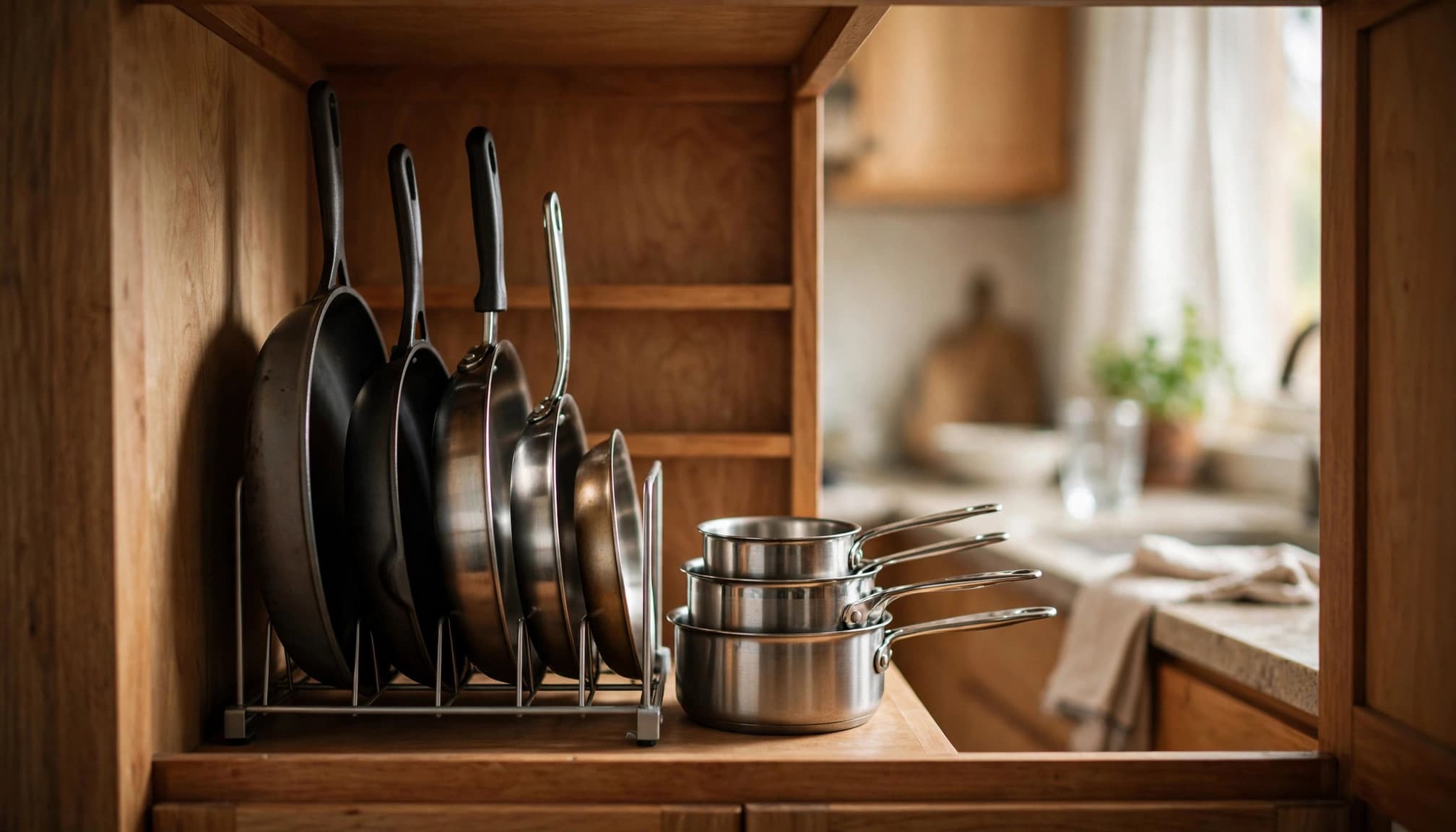
Use an Upright Rack for Frequent-Use Pans
A vertical pan rack lets you take out one skillet without lifting a stack. Look for adjustable spacing if your cookware includes both shallow frying pans and deeper saute pans.
Check that each divider supports the pan securely. Thin racks that lean or slide when loaded won’t make your cabinet easier to use.
Place handles where they don’t catch on hinges or neighboring cookware. Before keeping the arrangement, try removing your largest pan with the cabinet door fully open. It should come out without rearranging the shelf.
Nest Pots Without Scratching Them
Nesting works well when pots fit together comfortably and separate without force. Put the largest piece underneath, then add smaller compatible pieces.
Protect coated surfaces whenever you stack cookware. Farberware recommends a soft cloth, paper towel, or dedicated pan protector between pieces when stacking is necessary.
Keep the stack manageable. If your everyday saucepan sits underneath several heavy pots, move it to its own space.
Leave enough room to lift nested cookware straight out. A tightly packed stack can fit on the shelf but still be difficult to remove.
You can use clean, dry cloths you already own instead of buying protectors immediately.
Give Pot Lids Their Own Space
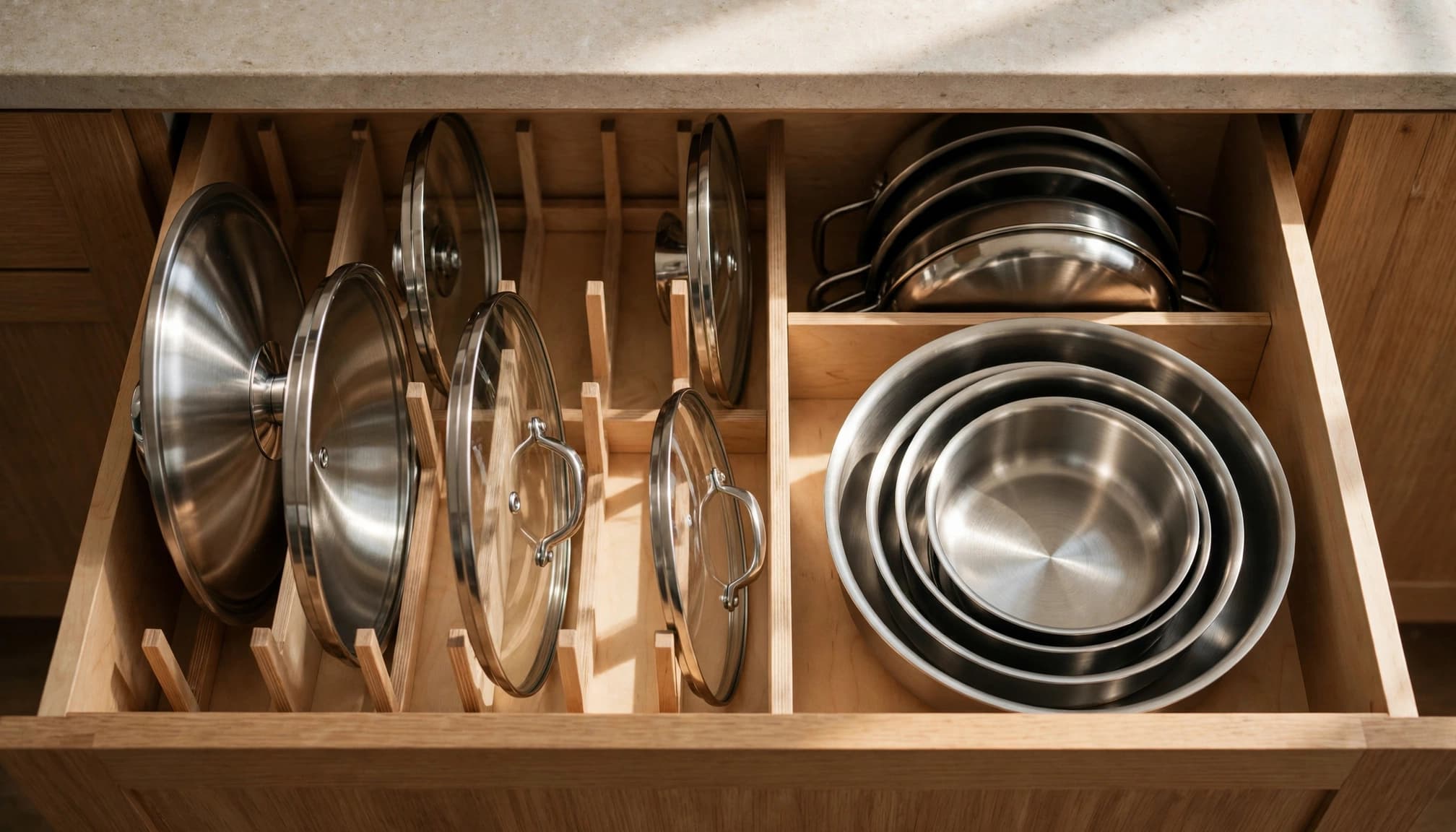
Store Lids Upright in a Rack
Pot and pan lids often create more clutter than the cookware itself. Their knobs prevent neat stacking, and loose lids slide into awkward gaps.
Try a freestanding lid organizer with enough spacing for your thickest lid and its handle. A sturdy plate rack can also work if the lids sit securely.
Keep glass lids separated so they don’t knock together whenever you pull one out. Place the rack beside the pots it belongs to, rather than in a distant cabinet.
Divide a Drawer Into Separate Zones
If you have a deep drawer, use one storage zone for upright lids and another for pots. Adjustable dividers can stop lids from drifting underneath pans.
Arrange lids by size so you can find the right one quickly. Keep handles facing a direction that makes them easy to lift.
Before using an organizer attached to cabinet doors, check the space behind the closed door. Lid knobs can collide with a shelf or pan handle.
Test with the door closed before committing to the layout. Storage attached to a door still uses space inside the cabinet.
Make Deep Cabinets Easier to Use
Deep kitchen cabinets become frustrating when everyday cookware disappears behind larger pots. Keep frequently used pieces near the front and occasional-use items farther back.
A pull-out shelf can improve access, but check its load rating, installation requirements, and usable dimensions. Measure the interior after accounting for the sliding hardware, which takes up space.
If you rent, get permission before installing a screw-mounted system. A freestanding organizer is a simpler option when permanent changes aren’t allowed.
For smaller, lighter cookware, a sturdy tray can help you move several pieces forward together. Don’t load it so heavily that lifting or pulling becomes difficult.
A shelf riser can separate shallow cookware from items above it. Choose one rated for the full load, and check that its legs won’t block larger pots.
Lazy susans are useful for items you can rotate comfortably, but long pan handles can catch against cabinet walls. Test the turning space before choosing one for cookware.
Keep heavy cast iron low and easy to reach. An awkward overhead lift isn’t a helpful space-saving solution.
Use Wall Space Without Crowding the Counter
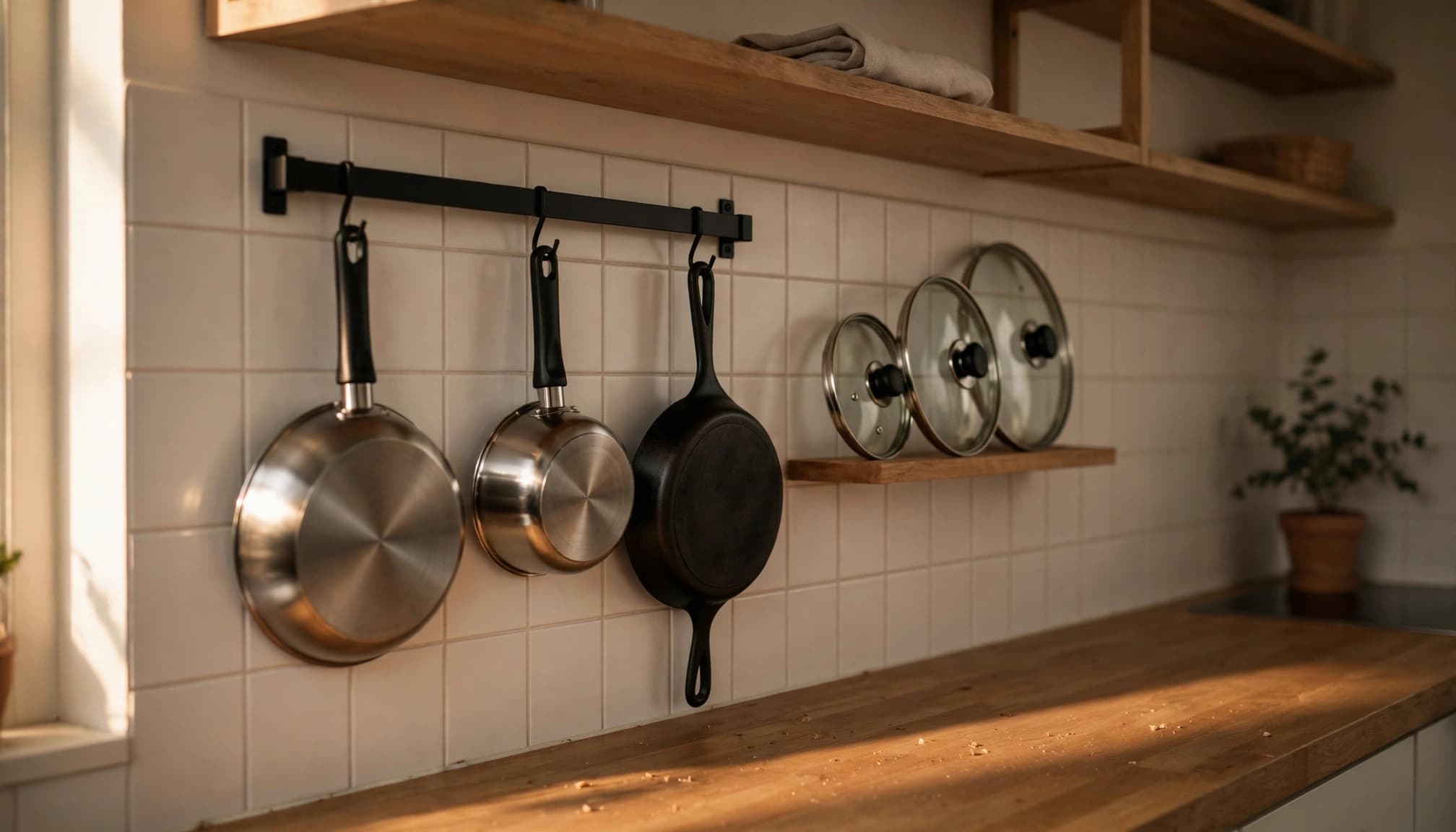
A hanging pot rack can free vertical space and cabinet space when you have a suitable wall and permission to install it. A short rail may be enough for the pans you use most often.
Choose hardware rated for your cookware, and install it with fixings suited to the wall. Include the rack’s weight when assessing the installation.
Keep pans away from places where their handles could catch your shoulder. Avoid blocking switches, outlets, or the space you need for food preparation.
Adhesive hooks need a different approach. Check Command’s product weight limits for the exact hook, rather than assuming all hooks support the same load. A lightweight accessory and a heavy skillet need different support.
When wall mounting isn’t possible, a freestanding shelving unit may provide extra cookware storage. Keep heavy pieces on lower shelves and follow any required anchoring instructions.
Leave the counter below useful. Moving cookware onto the counter with countertop storage can simply relocate the clutter.
Try Renter-Friendly Storage Without Drilling
For renter-friendly storage, start with organizers that stand inside existing cabinets. Pan racks, shelf risers, and drawer dividers can move with you when your lease ends.
Reuse suitable items before buying more. A sturdy plate rack may hold lids, while clean cloths can protect nested pans. Check the fit and stability rather than relying on the item’s original purpose.
Over-cabinet racks hook over cabinet doors without screws, but thick hooks can keep a door from closing properly. Check that the rack doesn’t rub the finish or obstruct neighboring drawers.
If you use removable hooks for suitable lightweight items, follow Command’s application and removal guidance. Surface compatibility, preparation, and waiting times depend on the product.
For example, Command’s clear-hook instructions specify cleaning with isopropyl rubbing alcohol, letting the surface dry, and pressing the strip firmly for 30 seconds. Follow the remaining instructions for that exact product.
Removable hardware doesn’t guarantee damage-free results on every finish. Check your lease and the product’s approved surfaces before applying anything.
These small apartment storage solutions make kitchen organization easier to adjust or move when your lease ends, while keeping cabinets usable.
Key Takeaways for Easier Cookware Storage
- Keep everyday pots and pans within easy reach, with occasional-use pieces farther back.
- Measure handles, lid knobs, cabinet openings, and drawer clearance before buying an organizer.
- Use stable racks and protective layers, and check load limits before hanging or shelving heavy cookware.
Start with the arrangement that solves your most frustrating daily problem. You can add another organizer later if you still need one.
Common Questions About Pots and Pans Storage
Where Can You Store Pots and Pans Without Cabinets?
Use a sturdy shelving unit or cart if it fits without narrowing your walking space. A mounted rail is another option when your wall and installation permissions allow it. Keep heavy cookware low, and follow the furniture manufacturer’s anchoring requirements.
Can You Store Cookware Under the Sink?
You can use a clean, dry section if there are no leaks and enough room around the plumbing. Keep cookware separate from cleaning products. Store only fully dry pieces, and leave access to pipes and shutoff valves.
Should You Buy a Stackable Cookware Set?
Try reorganizing your existing cookware first. When replacement is already needed, removable-handle ranges such as Tefal Ingenio are worth comparing. Check Tefal’s Ingenio Essential instructions before choosing a set, and measure the nested cookware against your available space.
Make Your Cookware Easy to Put Away
A useful storage arrangement lets you take out one pan and return it without rebuilding a pile. Focus on easy access before filling every inch of a cabinet.
Start with your most crowded cookware shelf. Separate the lids, protect nested surfaces, and give your everyday pan a clear place.
When putting things away is simple, keeping a small kitchen organized becomes easier too.