If you have to move three things to reach your coffee mug, your small apartment storage needs a simpler setup. Good storage keeps daily items easy to reach and gives occasional-use belongings a separate home.
You don’t need to organize your whole apartment at once or buy matching containers for every shelf. Start with the spots that slow you down each day, then choose storage solutions that fit your belongings and space. Small space storage in a compact home can include multifunctional furniture.
Start With What You Use Each Day
Before buying organizers, choose one crowded surface or drawer. Sorting a small area is easier than emptying an entire room, especially when you don’t have spare floor space.
Keep Daily Items Close
Store belongings near the place where you use them. Put coffee supplies together, keep your keys beside the entrance, and give phone chargers a spot near your usual charging outlet.
Reserve easy-to-reach shelves and drawers for things you handle daily. Higher shelves and deeper storage can hold guest bedding, holiday decorations, and occasional-use cookware.
Pay attention to what keeps landing on a counter. That pile often tells you where you need a convenient storage spot.
Measure Before You Shop
Measure the usable width, depth, and height of each space. Include hinges, plumbing, shelf brackets, and the room needed to open a container.
For small-space organization, access matters as much as capacity. A box that fits tightly but takes several minutes to remove will become frustrating.
Try simple organizing ideas with an empty shoebox or an existing basket before buying storage containers. You’ll learn what size works before spending money, and you may discover that you already own a suitable organizer.
How Can You Organize a Narrow Entryway?
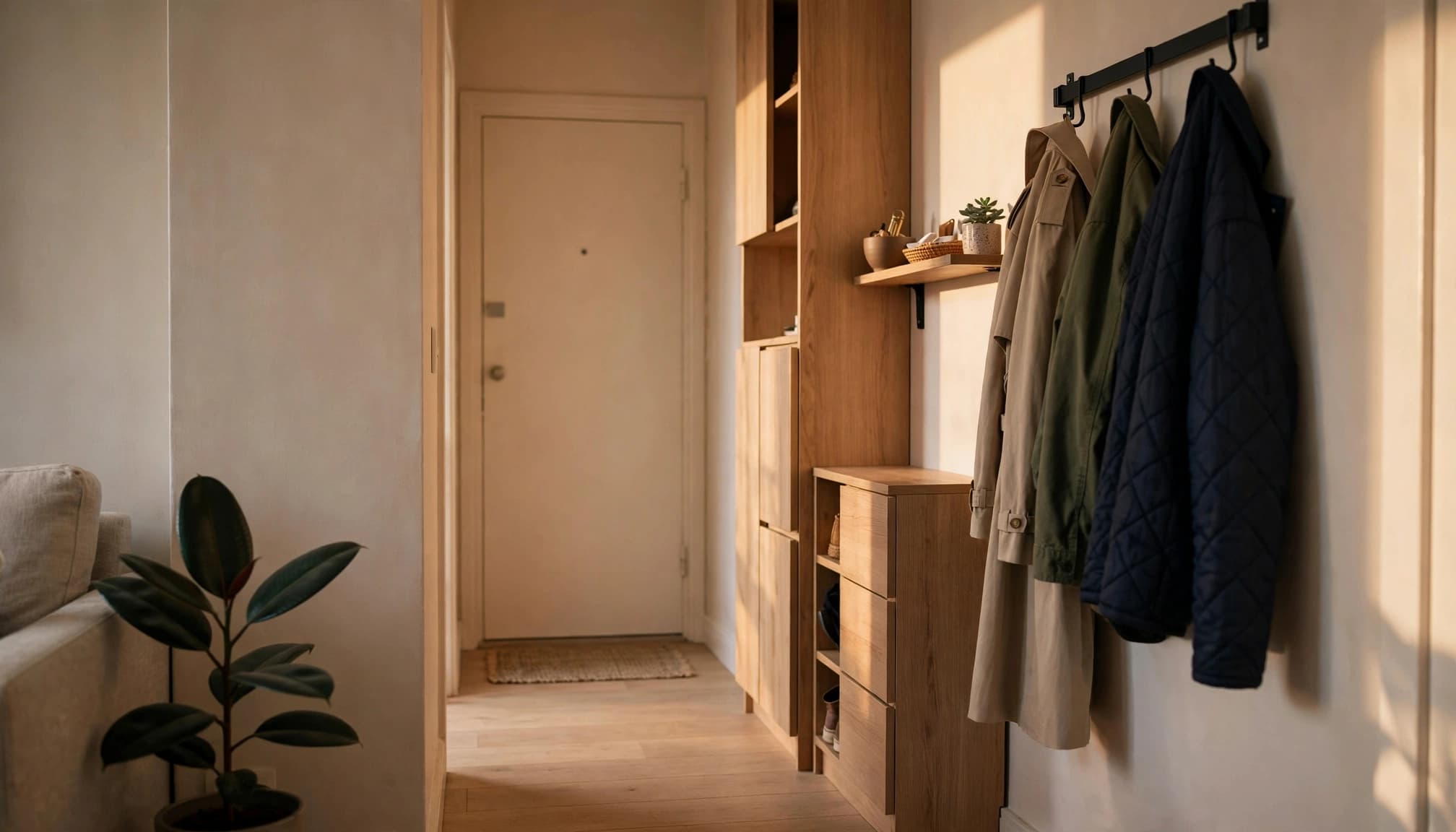
Give your entryway storage a clear job: hold the things you need when leaving or arriving home. Choose shallow shoe cabinets over deeper models, and add a small tray for everyday essentials.
Keep current shoes near the door and move occasional pairs to your closet. If shoe cabinets block a narrow walkway, store only the pairs you wear most often there. Keep umbrellas upright in a narrow container, and use one small basket for gloves or reusable shopping bags.
An over-the-door organizer can hold lightweight accessories when wall mounting isn’t an option. A small pegboard can also help, but get your landlord’s approval before installing one. For a lightweight hook, use command strips only if the surface and product instructions permit it.
Avoid using a tight hallway for bulky packages or overflow furniture. The Los Angeles Fire Department’s home escape planning guidance advises keeping escape routes and hallways clear of clutter and storage.
If your entrance opens directly into your living room, use the inside of a nearby cupboard door for lightweight accessories. You’ll keep the arrival area useful without adding another piece of furniture.
Small Kitchen Storage That Frees Your Counter
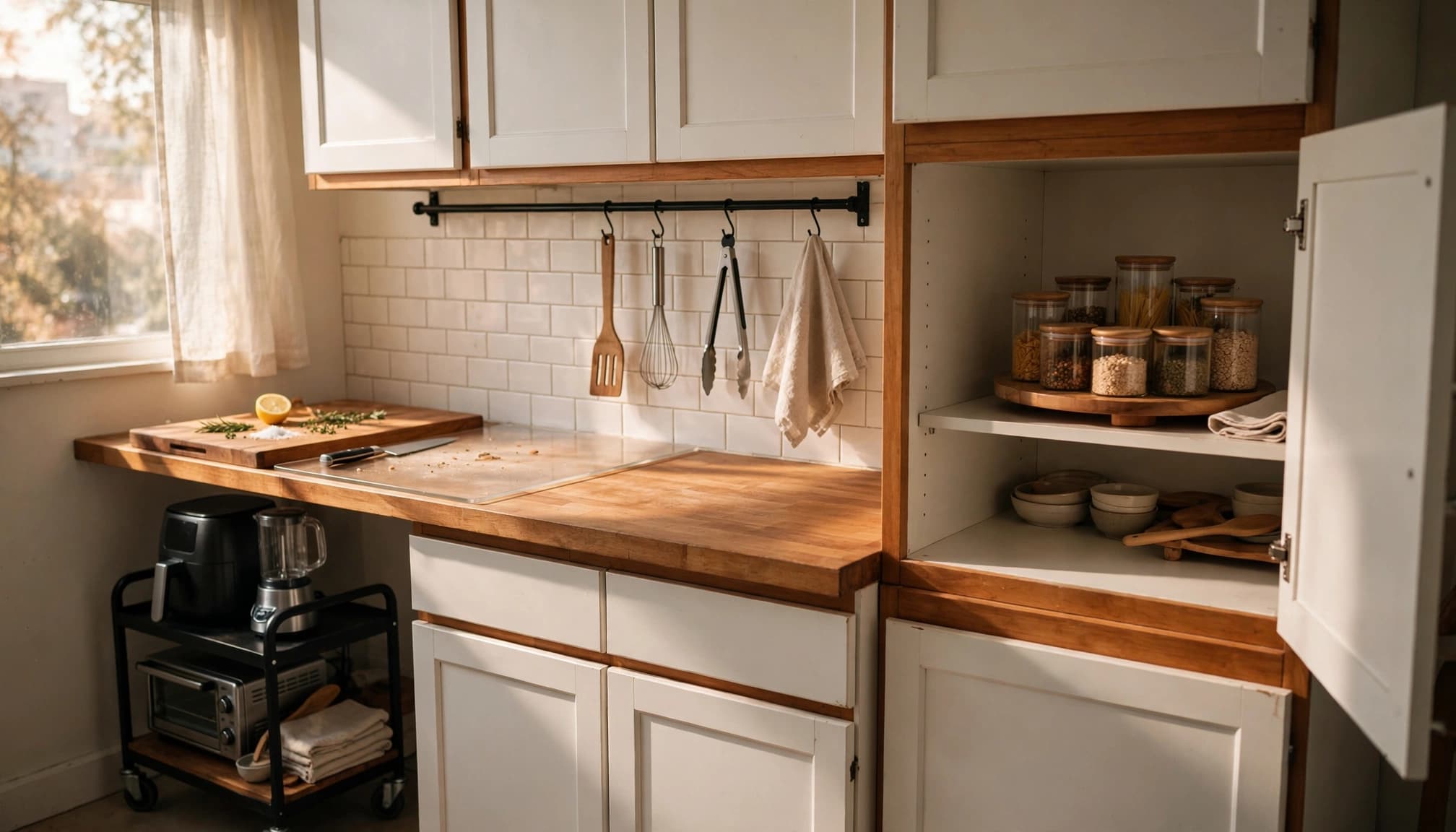
Keep your main preparation area clear for chopping vegetables or setting down groceries. Start by moving items you don’t use every day.
Where Should You Store Kitchen Appliances?
Keep your most-used appliance accessible. Store occasional-use appliances on a lower cupboard shelf where you can lift them without reaching overhead.
Store each appliance with its attachments. A small container beside your hand mixer keeps beaters together and saves you a drawer search.
A rolling cart, such as IKEA’s RASKOG, can add storage if it fits without narrowing your walkway. Use it for appliances and pantry supplies. Move appliances to a suitable surface before operating them, and follow their clearance instructions.
Avoid stacking heavy appliances. You should be able to retrieve one without lifting another first.
Make Cupboards Easier to Reach
Use a shelf riser to separate mugs and plates when there’s unused height inside a cupboard. Store pan lids upright in a rack instead of under cookware.
Lazy susans suit small bottles in a deep cabinet. Measure the turning space, and check that taller bottles won’t hit the shelf above.
Keep frequently used utensils together in a drawer divider. A rail can keep utensils together, while a pegboard can hold lightweight tools. Use suitable hardware, get approval before wall installation, and keep utensils away from heat.
Don’t decant everything automatically. Keep original packaging when containers would waste space or separate food from important cooking and expiry information.
Use Bedroom and Small Closet Storage Together
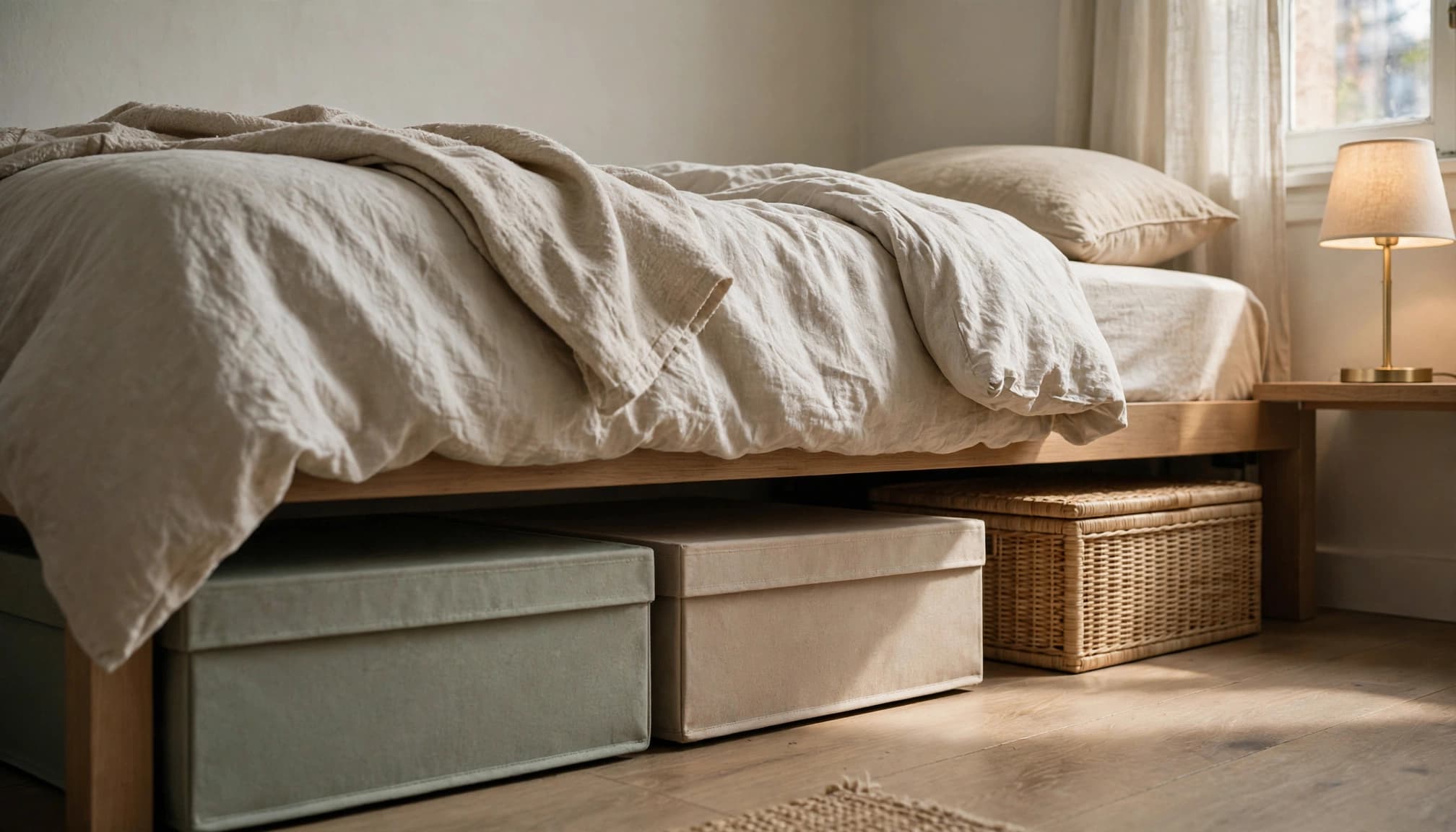
Your bed and closet can share the storage workload. Keep everyday clothing accessible, then use less convenient spaces for bulky or seasonal belongings.
How Do You Maximize Under-Bed Storage?
Measure clearance beneath the bed frame, including any center supports. Check whether you have enough space beside the bed to pull out a container.
Choose storage boxes with lids for spare bedding, or fabric cases for clean, dry clothing. IKEA’s SKUBB storage cases are one option to compare with your available dimensions.
Keep handles facing outward. If several containers fit, group each by purpose rather than filling them with unrelated belongings.
Don’t block heating vents or use under-bed storage for damp laundry. Leave yourself enough access to clean underneath.
Organize a Small Closet by Frequency
Good closet organization starts with keeping work clothes and everyday outfits within easy reach. Use the top shelf for seasonal items, and divide it with bins that you can lift comfortably.
Hanging organizers suit folded T-shirts or lightweight accessories if you have enough hanging width. Shelf dividers help keep folded stacks separate without enclosing everything.
For a hallway closet, use one shelf for household supplies and another for bags or linens. Keep the vacuum accessible rather than tucked behind seasonal boxes.
Rotate clothing when the weather changes. Bring the next season’s clothes forward and return the previous season’s clean items to their storage containers.
Small Bathroom Storage Without Crowded Surfaces
Keep your sink area limited to products you use every day. Put backups together elsewhere so you can see what you already own before shopping.
Under the sink, measure around the drainpipe before choosing drawers or bins. Two narrow pullout organizers may fit better than one wide unit. Keep leak-prone bottles upright and easy to inspect.
Use a small divided tray for grooming tools. Give each household member a separate container when sharing the bathroom, so products don’t spread across every shelf.
For extra towels, consider an over-the-door rack that fits your door and allows it to close properly. Choose bathroom-rated suction accessories only for compatible smooth surfaces, and check them regularly.
Store toilet-paper refills in a dry cupboard rather than beside the shower. Keep cleaning products in their original containers and secure them away from children and pets.
Check medicine labels for storage requirements. A humid bathroom may be unsuitable for products that need a cool, dry place.
Which Renter-Friendly Storage Options Are Practical?
Start with organizers that sit inside existing furniture: drawer dividers, shelf risers, stacking bins, and door-mounted baskets. They make use of vertical space without requiring wall holes.
A tension rod can support lightweight items when the product and mounting surface are suitable. Check that it fits securely, and follow the stated load limit. Don’t use a tension rod for heavy cookware or bulky hanging storage.
Adhesive hooks and command strips can hold light accessories, but removable doesn’t mean suitable for every surface. Check the exact product instructions, surface restrictions, and weight limits before using command strips.
For example, Command’s picture-hanging strip instructions say to wait seven days after painting before applying those strips. Don’t assume picture strips are appropriate for shelves or storage racks.
If you want floating shelves, wall-mounted shelves, or a pegboard, ask your landlord about approved installation first. For floating shelves, choose hardware suited to the wall and expected load.
Tall furniture also needs attention. Follow anti-tip instructions and arrange approved anchoring where required. Freestanding furniture can still need wall attachment for safety.
Choose Furniture That Solves a Specific Problem
Multifunctional furniture helps when you already need the furniture itself. An extra ottoman won’t improve apartment organization if it leaves you stepping around it.
Compare these options against what you need to store. Use the table to find multifunctional furniture that fits your room.
| Furniture | Useful contents | Check before buying |
|---|---|---|
| Storage ottoman | Throws and spare cushions | Space to lift the lid |
| Drawer bed | Bedding and seasonal clothes | Room to open drawers |
| Storage bench | Shoes and shopping bags | Door and walkway clearance |
| Lift-top coffee table | Remotes and charging cables | Lift mechanism and usable compartment |
Choose the piece that replaces something you already need rather than adding another obstacle. A storage ottoman can keep blankets close at hand, but leave enough room to open it.
For an apartment under 500 square feet, clear floor space deserves careful attention. A storage bed may be more useful than a separate chest, but only if its compartments open fully in your room.
Where installation is permitted, floating shelves or wall-mounted shelves can solve a specific floor-space problem by keeping small items off the ground.
A simple space-saving hack is to rearrange existing furniture before replacing it. Moving a bedside table may make under-bed boxes accessible, while repositioning a bookcase can make bookshelf storage easier to reach. A basket inside your current coffee table may also handle loose accessories and improve living room storage.
Keep Track of Items Stored Out of Sight
Hidden storage works better when you can find its contents later. Use a simple note on your phone instead of buying a separate inventory app.
Name each container by location and purpose. An entry such as “Under bed, winter clothing” is enough to start. Add a quick photo before closing the lid.
For cables, store each with its matching device when possible. Keep spare cables in one divided box, and label unfamiliar ones before you forget what they belong to.
Group gift wrap, tape, and scissors together in storage baskets. Store seasonal decorations by occasion so you can retrieve one container without opening every box.
Update your note when something moves. Keep it brief enough that you’ll maintain it.
An inventory saves searching only when its location details stay current. Update the location as you put an item away.
Key Takeaways
- Keep daily items near where you use them, and reserve deeper storage for occasional belongings.
- Measure usable space and opening clearance before buying boxes, carts, or storage furniture.
- Choose renter-friendly storage carefully, follow installation instructions, and keep exits clear for clutter-free living.
Start with one recurring problem, such as lost keys or crowded cookware. A useful small apartment storage solution should make that daily task easier.
Frequently Asked Questions
How do I start organizing a small apartment?
Choose one crowded spot that slows you down each day, such as a drawer or entryway surface. Sort it first, then give daily items a convenient place near where you use them.
What should I measure before buying storage?
Measure the usable width, depth, and height, including hinges, plumbing, and shelf brackets. Check that you can open and remove the organizer without blocking a walkway.
How can renters add storage without drilling?
Try drawer dividers, shelf risers, stacking bins, or door-mounted baskets inside existing furniture. Check product instructions and surface restrictions before using adhesive hooks or command strips.
Where should I store items I don’t use often?
Use higher shelves, deeper cupboards, or under-bed containers for seasonal belongings and occasional-use items. Keep daily essentials in easy-to-reach spots so you can find them quickly.
Make Everyday Items Easier to Find
You don’t need to fill every empty corner to improve storage. Convenient places for daily belongings and clear homes for everything else make clutter-free living easier.
Choose one crowded spot, measure it, and test a simple organizer you already own. Build your setup around easy access, and you’ll spend less time moving things out of the way.