An awkward living room corner can become useful with right-sized furniture, better lighting, or organizers that fit your routine. Start with how you use the room, and keep walking paths clear before adding anything.
Practical corner shelf ideas work best when you know what needs a home, rather than buying a shelf to fill space. Your corner may need only a lamp or a comfortable chair, especially if those belongings already have a home elsewhere.
First, give the area one clear job and measure the space you can actually use.
Key Takeaways
- Measure a corner’s usable width, depth, and height, then account for doors, outlets, windows, and nearby seating.
- Give the corner one main purpose, such as accessible book storage, reading light, or a comfortable reading spot.
- Choose shelves and furniture that fit the space and leave room to walk, sit, open drawers, and reach stored items.
- Test an existing lamp, table, plant, or basket in the corner before buying anything new.
- Follow installation and anchoring instructions, and keep cords, heating outlets, and ventilation openings clear.
How to Style an Awkward Corner in Your Living Room
Measure the corner’s usable width and depth, then note any height restrictions. Baseboards can stop furniture from sitting flush against a wall, while windowsills and sloped ceilings can limit taller pieces. For corner shelving ideas, check floating corner shelves for usable depth and wall support, and confirm rental rules before drilling.
Also note nearby outlets, door swings, and the edge of your sofa. A corner can look spacious when empty but offer little usable room once you account for these features.
Before buying, outline the proposed furniture footprint with painter’s tape suitable for your floor. Walk around it, open nearby doors, and sit in the closest seat. Include the space that drawers or lids need when open.
Choose a purpose before adding furniture
Choose the problem you want the corner to solve. If books collect beside the sofa, accessible shelving makes sense. If the room feels dim where you sit, better lighting may help more than another piece of furniture.
For a reading corner, prioritize a seat you can use comfortably. For a plant corner, consider the available daylight and access for watering. Keep your main purpose specific enough to guide what belongs there.
A corner becomes a catch-all when you keep adding unrelated items because there’s still room. Give it one main function, then let any decoration support that function.
Our approach to organizing everyday belongings starts with the items you use and the effort needed to reach them. Apply that same thinking here: everyday items need convenient access, while occasional belongings can occupy less accessible shelves.
Keep the layout easy to move through
Place deeper or bulkier furniture along the wall rather than projecting into the room’s main route. Then walk between the entrance and seating as you normally would. You shouldn’t need to turn sideways or step around a new obstacle.
Pay attention to how the corner affects nearby seating. A shelf beside a sofa should leave room to sit down and reach the seat comfortably. Likewise, a chair needs room for your feet and for standing up.
Shelving and cabinets need working room beyond their closed footprint. Open a cabinet door fully, pull a basket out, or extend a drawer before deciding the arrangement fits.
If your sofa sits away from the wall, avoid filling the gap behind it automatically. A console or shelf only helps when you can reach it without squeezing through. Keep the corner empty if furnishing it would narrow a route you use throughout the day.
Living Room Corner Shelf Ideas and Other Space-Saving Options
Choose furniture that uses available height or replaces something your room already needs. This keeps the corner useful without adding another surface to manage.
Match the option to the shape of the space, rather than choosing whichever piece offers the most shelf space. Also consider what you’ll see from the sofa: a unit that fits on the floor can still feel crowded beside a window.
Use these comparisons to narrow your choice.
| Corner condition | Option to consider | Main limitation |
|---|---|---|
| Narrow floor area with usable height | Slim shelf | Stability and access |
| Open corner beside seating | Compact reading chair | Space to sit and stand |
| Small gap beside a sofa | Side table with drawers | Drawer-opening room |
| Bright corner with little storage need | Plant and lamp | Light, watering, and cord placement |
The useful choice solves a room problem while leaving enough space to use it comfortably.
Use a narrow shelf, corner unit, or cube storage
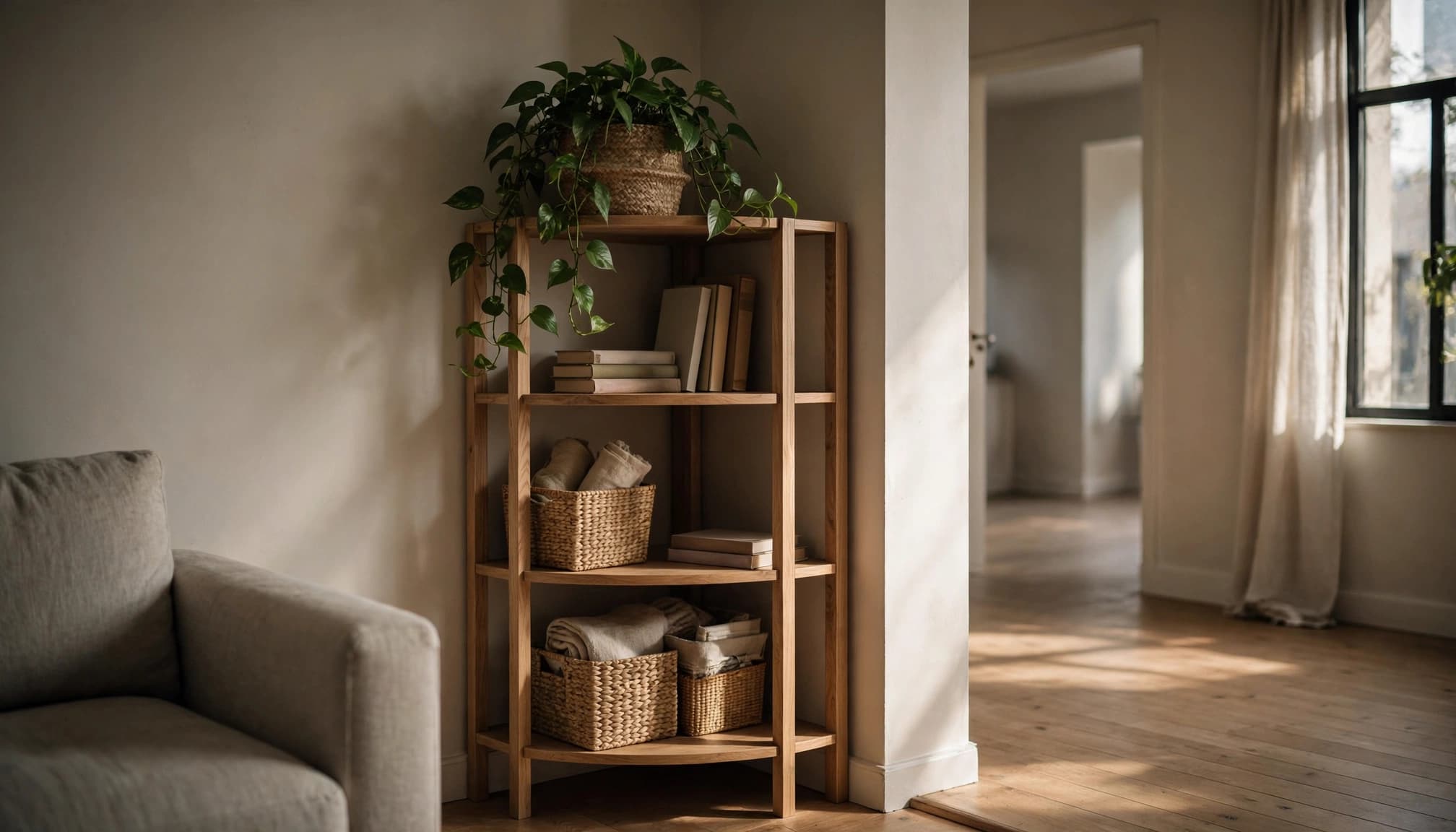
Slim freestanding corner shelves use little floor depth, while corner shelving units shaped for the wall junction can offer more shelf space but may limit access to larger items. Wall-mounted floating shelves, including floating corner shelves, free floor space but need suitable supports and careful installation.
For corner shelving ideas, compare shelf depth, height, and visibility. Tiered corner shelves can add display space, while open shelving keeps belongings easy to see and reach. Choose a depth that fits what you plan to place there.
In a kitchen, shallow corner shelving can suit a coffee nook, while deeper corner pantry shelving fits larger containers. In a bathroom, keep frequently used toiletries within reach and choose material suited to the room. Store less-used toiletries on higher shelves.
A slim unit can also replace a bulky nightstand in a bedroom if its footprint and access work for your routine. Measure the objects or containers you plan to store, including handles. A basket that fits inside a compartment still needs room to pull out.
To style corner shelves without a crowded appearance, leave some shelf space unfilled. Keep current reading material within easy reach, and avoid stacking unrelated belongings behind it.
Wall-mounted shelves save floor space, but they need suitable supports and installation. Freestanding furniture also needs attention: the CPSC’s furniture tip-over prevention guidance addresses the risks of unsecured furniture. Follow the unit’s anchoring instructions rather than assuming that standing on the floor makes it safe.
Create a reading nook or a simple display
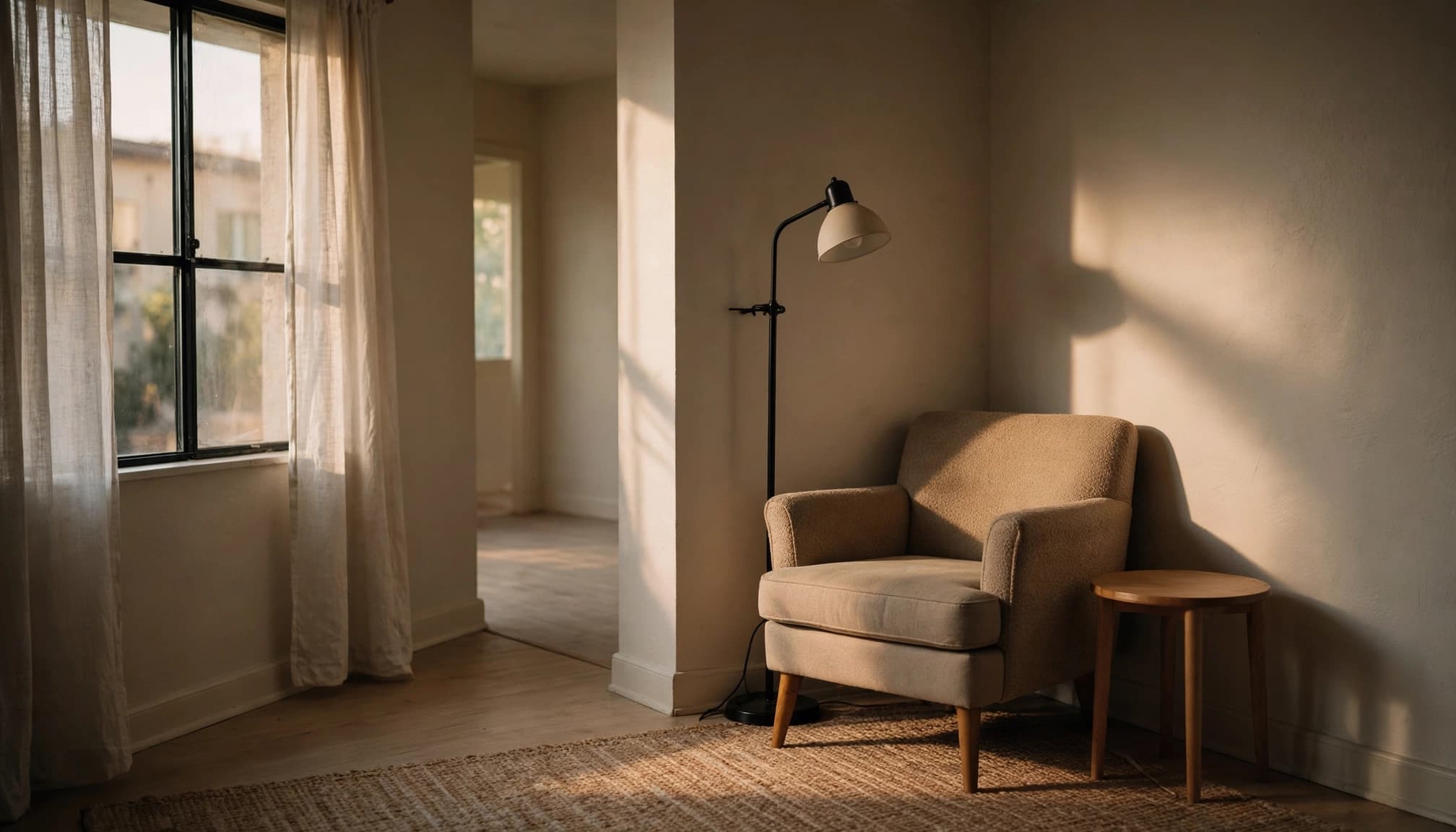
A compact chair and small side table can turn an unused corner into a reading spot. However, the chair must work in its everyday position. If you have to drag it into the walkway whenever you sit down, the corner isn’t a good fit.
Look beyond the chair’s width. Its arms and back can project into nearby space, and you need room to stand without bumping the table. Position the reading light where it illuminates your book without putting its base in your path.
For a tighter corner, group potted plants with a lamp or display scented candles instead. Different heights give the arrangement shape without requiring several decorative objects. Choose plants for the available daylight, and keep their pots accessible for watering.
You can also leave the floor more open by using a lamp alone. A corner doesn’t need storage or seating when its most useful job is improving the room’s lighting.
Add hidden storage without another bulky piece
Hidden storage makes the most sense when it replaces furniture you already need. A side table with drawers can replace an open table beside your sofa. A storage ottoman can hold throws while providing the footrest you were already using.
Match the opening style to your routine. Remotes and charging accessories belong in a compartment you can reach easily. Spare cushions or guest blankets can go somewhere that takes longer to open.
Measure the usable interior, not just the outside of the furniture. Thick sides, hinges, and lifting mechanisms reduce capacity. Also account for the room needed above a lid and in front of a drawer.
Keep the top easy to clear. An ottoman covered with a tray and decorative items becomes inconvenient for everyday storage. Reserve that compartment for occasional-use belongings, or simplify what sits on top so opening it doesn’t become another task.
Make Your Corner Work for Your Budget, Rental, and Routine
Start with rearranging, then spend only where the corner still needs help. You don’t need matching furniture or a fully styled display to make the room easier to use.
Standard rectangular bookshelves stick out awkwardly in a corner, blocking traffic. Something to consider instead is a space-saving corner option like the Sunmory 4-Tier Rotating Bookshelf Tower.
Engineered with a unique, stable hexagonal frame, it features a smooth, full 360-degree rotation that turns a tight, dead corner into an interactive display center. Customer reviews emphasize that it’s remarkably easy to put together without specialized tools, has a clean and stylish design, and holds a significant amount of items (fitting up to 80-100 medium books easily). It is an ideal, low-profile fit to clear up small-space living room clutter. You can view the Sunmory Rotating Tower on Amazon to check out its finishes and dimensions
For rentals, separate removable organization from furniture installation. Baskets inside an existing cabinet don’t alter the building, but a tall bookcase may still require wall anchoring. Your choice needs to suit both the room and its safety requirements.
No-purchase layout options
Move an existing lamp, plant, basket, or side table into the corner before shopping. Use the setup for a few days, including evenings when the room is busiest.
The same test works in a second bedroom: try an existing table as a nightstand before buying a new piece.
Notice what becomes easier and what becomes annoying. A lamp may improve reading but leave its switch awkward to reach. A basket may contain throws but get pushed aside whenever someone sits down.
Remove anything that makes the room harder to use. Then identify the remaining need precisely, such as a shallower table or a basket that fits an existing shelf.
If you do buy furniture, compare its total cost, including delivery, with adapting what you own. Measure the route into your home as well. Tight stairs and hallway turns can make an otherwise suitable piece difficult to bring inside.
For inexpensive hidden storage, reuse sturdy boxes inside a cabinet. A fitted fabric cover can conceal a suitable open shelf, provided it stays clear of ventilation and doesn’t trail onto the floor.
Check access, stability, and daily upkeep
Keep frequently used switches and outlets accessible. Place lighting where its cord can stay outside walking routes, and don’t pinch cables behind doors or moving furniture parts.
Leave heating outlets and ventilation openings unobstructed. Fabric covers, baskets, and stored belongings shouldn’t block them. Furniture near a window also needs to leave blinds or curtains usable.
Follow the manufacturer’s anchoring and assembly instructions. The CPSC provides a furniture anchoring demonstration to help prevent tip-over injuries. If your rental doesn’t permit a unit’s required anchoring, choose another solution rather than leaving it unsecured.
Finally, make the corner easy to maintain. Give each basket or drawer a defined purpose, and leave enough room to put things away without careful repacking.
Keep shelf surfaces accessible for dusting and plant pots reachable for watering. If tidying the corner repeatedly requires moving furniture, simplify the arrangement. A useful setup should reduce the work of keeping your living room comfortable.
Frequently Asked Questions
How do I choose the right corner shelf?
Measure the usable width, depth, and height, and check what you need to store. Compare shelf depth, visibility, and access, and leave enough room to move through the living room comfortably.
Are floating corner shelves a good choice for a living room?
Floating shelves free up floor space and can suit a corner with limited room. Check that the wall has suitable support, follow installation instructions, and confirm rental rules before drilling.
How can I make a living room corner useful without buying furniture?
Try moving an existing lamp, plant, basket, or side table into the corner and use the setup for a few days. Keep items that make the room easier to use and remove anything that gets in the way.
How do I keep a corner shelf or storage unit safe and accessible?
Follow the furniture’s assembly and anchoring instructions, and leave room to open doors, drawers, or lids. Keep cords out of walking routes and don’t block switches, outlets, heating outlets, or ventilation openings.
Make One Useful Change First
Measure the corner, choose its main purpose, and test one suitable item before adding more. Start with furniture or accessories you already own so you can learn what works without spending immediately.
The strongest corner shelf ideas give belongings an accessible home while protecting usable floor space. Keep the arrangement that makes your room easier to live in, even if that means leaving part of the corner empty.
We only recommend top-rated, affordable products you can trust. As an Amazon Associate, I may earn from qualifying purchases through the affiliate links above at no extra cost to you. Thank you for supporting our work.