You can organize pet supplies in a small apartment by keeping walking gear near the door, separating food from health supplies, and giving toys one easy-to-reach home. Start with the items you use every day, then move spare supplies and seasonal clothing out of the way.
You don’t need a dedicated pet cabinet or matching baskets to get started. A few well-placed containers can keep your dog’s belongings manageable without taking over your home. Begin with your daily routine, then choose organizers that fit the space you already have.
Key Takeaways
- Keep leashes, harnesses, and attached poop bags together near the door, outside the walking path.
- Give toys an accessible basket, and store unused toys in an underbed box for rotation.
- Give food, treats, health products, and care supplies separate storage spots so you can find each category easily.
- Try existing containers before buying organizers, and measure the space needed to open or remove them.
Organize Pet Supplies Around Your Daily Routine
Start with one crowded spot instead of emptying every cupboard. Gather the pet supplies that collect there, then separate everyday essentials from occasional-use items.
Your current leash belongs near the entrance. A spare harness, extra bowls, and winter clothing don’t need the same convenient position. Keeping these groups apart makes daily supplies easier to find.
Before choosing an organizer, measure the usable width, depth, and height. Account for door hinges, fixed fittings, and room to pull out a container. A container that fits tightly in a cupboard may still be awkward to use.
Try the arrangement with a box you already own and use it through your normal routine before replacing it. Our guide to small space storage for everyday tasks shows how to measure the space and test a setup before you buy.
If your entrance also holds shoes, bags, and keys, reserve a small section for your dog. Our small entryway organization ideas for apartments can help you share that space without crowding the doorway.
Set Up a Walk-Ready Zone by the Door
Your walking station should hold what you need before and after a walk. Keep it small enough that you can see everything without searching.
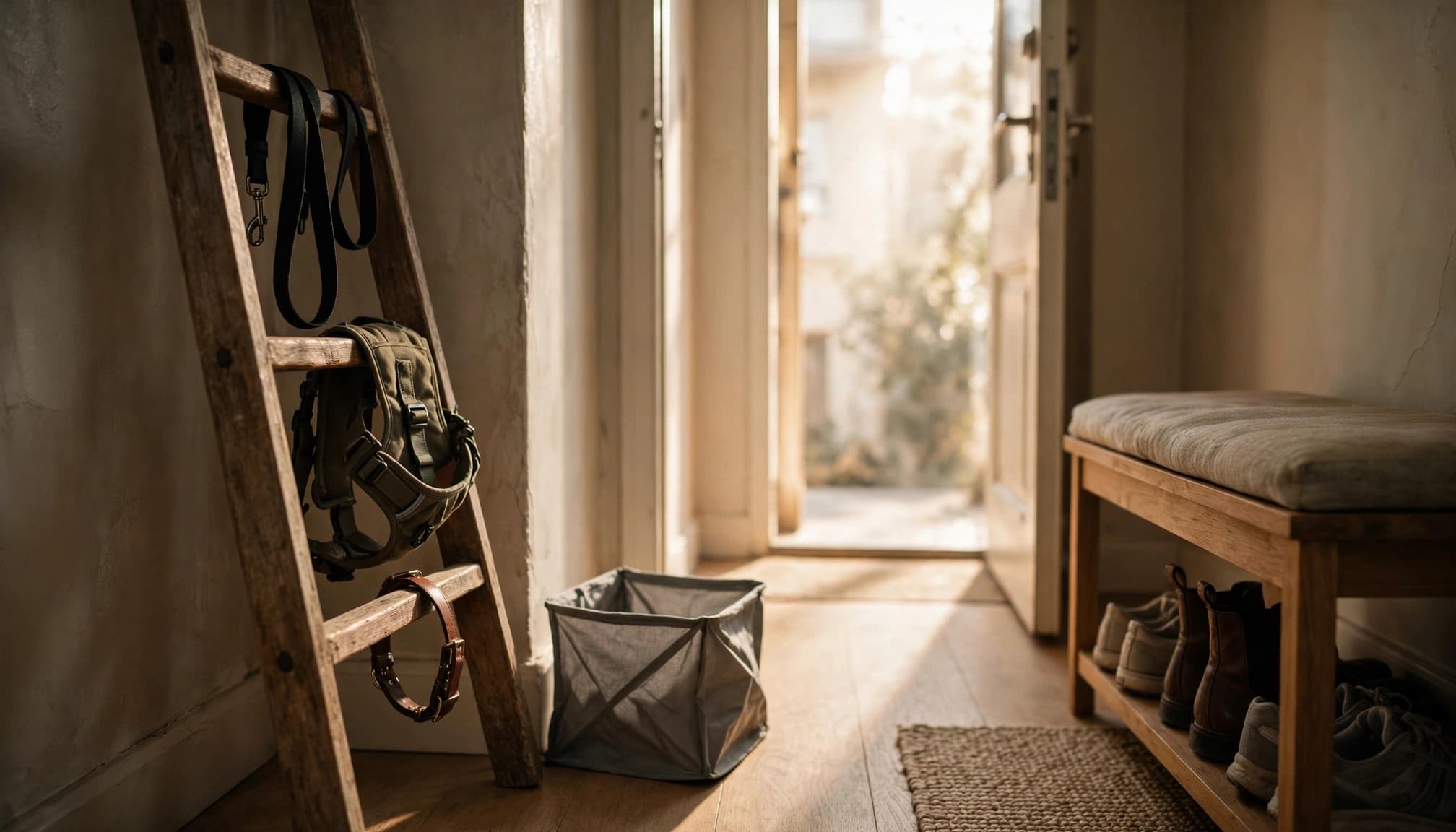
Hang Leashes and Harnesses Within Reach
Hang the leash and harness separately so the straps don’t become tangled. Keep a spare collar elsewhere if you rarely use it.
Command hooks are an option when drilling isn’t allowed. A single wall hook can hold either item on a compatible surface. Use either option only within its stated limits. Removable adhesive can still damage some finishes.
A wall-mounted coat-hanger rack works where permanent mounting is permitted. A decorative leaning ladder offers several hanging points, but use it only where it can stand securely and meet its mounting requirements.
Our renter-friendly options without drilling offer other solutions when adhesive options don’t suit your walls.
Keep Bags and Paw-Care Supplies Together
Clip a poop-bag dispenser to the leash or harness instead of leaving loose rolls on a counter. A harness-mounted dispenser keeps the bags with your dog. Keep attachments clear of the leash connection and your dog’s movement.
Place a collapsible cloth cube near the entrance for a towel and a washable ball. Keep paw wipes and paw wax in their closed packaging, beyond your dog’s reach if chewing is a concern.
Give each item a simple position inside the cube. Hang a damp towel separately rather than putting it straight into enclosed storage.
Choose Toy Storage You Can Reset Quickly
Toy storage needs to suit both your room and your dog. A setup that takes several steps to open is unlikely to stay convenient during everyday play.
Choose an Open Basket or a Closed Bin
An open basket lets your dog choose a toy and makes cleanup straightforward. Keep it within easy reach of the main play area.
A toy box works well for toys you bring out during supervised play. It also keeps spare toys separate from the everyday selection.
If you find yourself digging through a deep container, try a clear plastic bin on a rolling storage cart. You can see the contents without emptying it. Park the cart against a wall where it won’t interrupt a walking route.
Rotate Toys Into Underbed Storage
Keep a smaller selection available and place the rest in an underbed box. When your dog loses interest, swap some of the stored toys into the everyday container. Previously stored toys may feel interesting again without adding more to your collection.
Choose a box you can pull out without moving other furniture. Otherwise, rotation becomes another task that’s easy to postpone.
Expect your dog to scatter toys again, especially during puppyhood. Plan for a quick return to their container rather than keeping every toy put away throughout the day.
Give Food and Treats Separate Storage Spots
Keep dog food in one designated pantry area or a dedicated bin near your other pet-food supplies. A pantry basket can group packaged food in one cupboard compartment.
AAFCO’s pet-food handling guidance recommends, where possible, keeping food in its original container inside a clean, dedicated plastic container with a lid. It also advises keeping pets away from areas where you prepare or keep pet food.
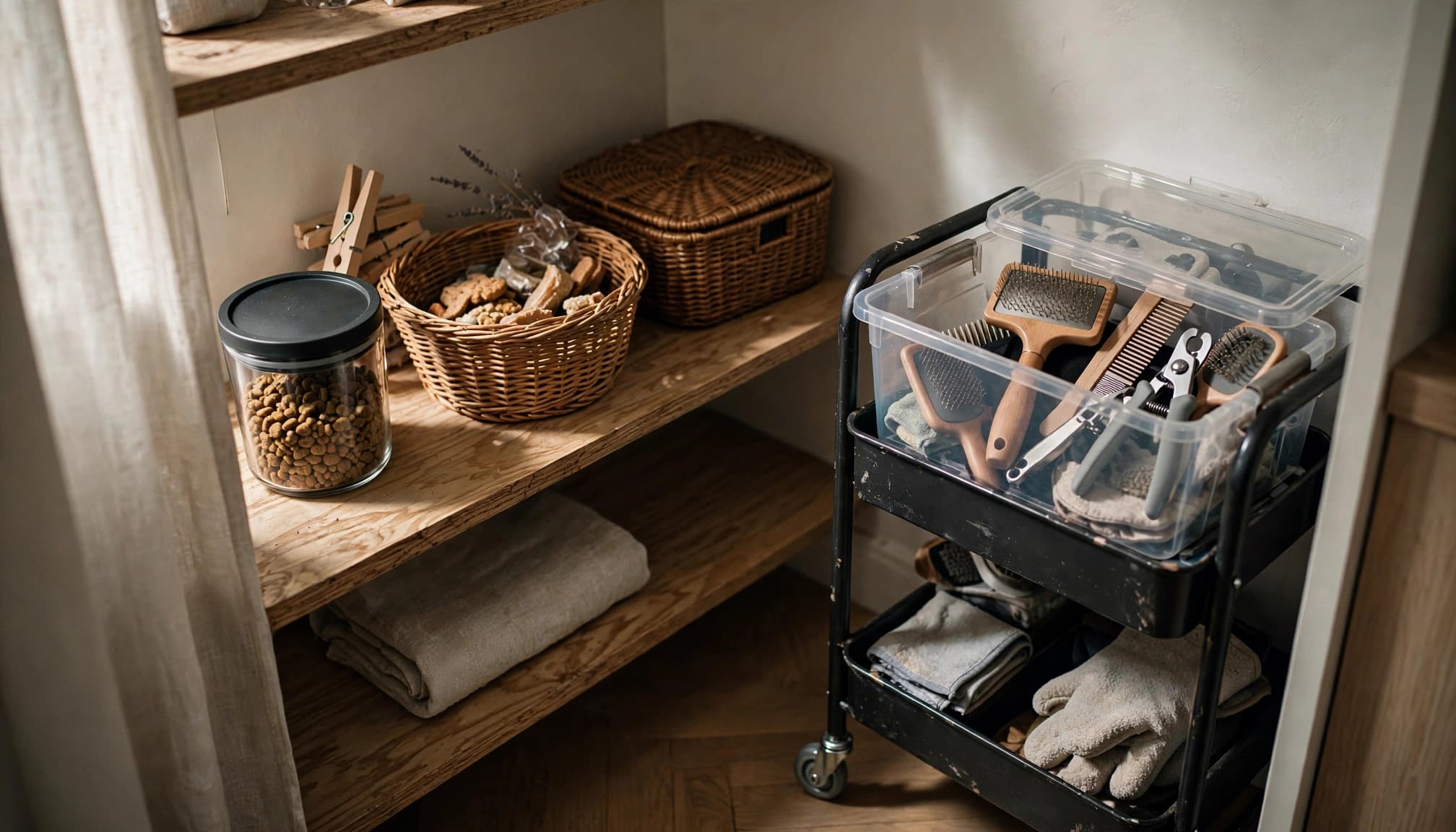
Give treats a separate home on a shelf or in a cupboard compartment. Use the fridge for treats that require refrigerated storage. Keep the daily supply easy for you to reach without leaving it accessible to your dog.
Avoid spreading partly used packages across several cupboards. One dedicated section makes it easier to see what you already have before shopping.
In a small kitchen, use an existing cupboard or shelf before adding another floor-standing unit. Our guide to organizing a pantry without built-in shelves offers practical ways to group supplies in limited space.
Measure the food package as well as the container. Keeping the original packaging means the container must accommodate the bag, not only the loose food.
Separate Medication From Grooming Supplies
Care items are easier to manage when each category has a clear home. Keep treatments separate, even when they share one cabinet.
Put Medication in Its Own Secured Space
Use a dedicated organizer for flea-and-tick treatments, heartworm products, and other prescribed items. Keep it inside a secured cupboard, away from pets and children.
Leave products in their original packaging so the name, directions, and expiry information stay with them. Don’t mix loose doses into a treat jar or everyday care caddy.
Follow each product’s label, since a damp bathroom cupboard may be unsuitable. Check the heartworm label for temperature requirements and expiry directions.
Group Grooming and Dental Supplies on One Shelf
Reserve one labeled section for a brush, grooming tools, toothbrush, dental supplies, and extra poop bags. Use small containers within it to keep the toothbrush apart from loose accessories.
A clear plastic bin lets you see smaller items without digging. If you use a rolling cart, give these items their own compartment and keep treatments elsewhere.
For a small bathroom, a portable care caddy can work better than spreading pet products across the sink area. Return it to its spot after use so it doesn’t become a permanent countertop pile.
Use Storage Furniture for Seasonal and Spare Items
A bench or ottoman near the entrance can hold dog supplies while giving you somewhere to sit when putting on shoes. Choose one because you need the seating, rather than adding furniture solely to hide a small pile.
Keep the seat clear. For a lift-up design, allow enough room above the lid and around nearby coats. Drawers also need space to open without blocking the entrance.
Our space-saving furniture for studio apartments can help you choose dual-purpose pieces that fit your layout.
Store a winter coat, rain jackets, and PJs in a bottom bin on a cart. Keep the current season’s clothing accessible and put the rest farther back.
Small closet space can also accommodate a separate box of spare collars, travel accessories, and occasional-use supplies. Shallow drawers can keep seasonal items separate from travel accessories. Give the box a clear purpose so it doesn’t become a catch-all for items you no longer need.
Keep the Setup Easy to Maintain
A short reset helps your setup stay useful. After a walk, return the harness to its hook and leave the bag dispenser attached to the leash. Put the towel back once it’s dry.
When you bring home supplies, place them with their existing category rather than starting another pile. Keep backup poop bags with care and refill supplies, and add paw wax to that spot when you restock. Move a roll to the dispenser when needed.
Pay attention to anything that repeatedly lands somewhere else. If the harness always ends up on a chair, its hook may be awkward to reach. Move the hook closer to where you naturally remove it.
Small-space organization works best when putting something away takes little effort. Adjust the position or container before buying a larger organizer. More capacity won’t help if the current setup is inconvenient.
Frequently Asked Questions
Where Should You Store Extra Pet Bowls?
Keep spare bowls together in an existing cupboard near the feeding supplies. Stack them only if their shape allows easy removal. Leave the everyday bowls in their usual feeding area rather than putting them away after each use.
What If Your Apartment Has No Entryway?
Use a small section of an existing shelf or cupboard near the entrance. A compact walk kit can share that space with your everyday belongings. Keep the pet section contained so it doesn’t spread across the kitchen counter or living room.
Do You Need a Dedicated Pet Storage Cabinet?
You don’t need a separate cabinet if your existing furniture can hold the supplies comfortably. Start with suitable hooks, one toy basket, and divided cupboard space. Consider another cabinet only when it solves a clear problem without narrowing your walking routes.
Make Pet Storage Fit Your Home
The easiest way to organize pet supplies is to give everyday items convenient homes and keep occasional-use belongings separate. Your setup can be simple, affordable, and built around containers you already own.
Start with the spot that slows you down most, whether that’s the leash pile or the toy-covered floor. A quick, easy reset matters more than matching organization throughout your apartment.