Gardening supplies storage in a small apartment works best when you keep only useful gear, match each item to a compact home, and leave your walkways clear. A slim cabinet, a few hooks, or a lidded tote can hold more than a crowded pile by the door.
You don’t need a shed or a permanent wall system to stay organized. Start with what you own and where you garden, then choose storage that fits your space, budget, and rental rules.
Key Takeaways
- Sort supplies by how often you use them, then measure the space before buying an organizer.
- Keep soil, damp tools, and garden chemicals separate from food, toiletries, and everyday household items.
- Use lidded containers, narrow cabinets, or removable organizers when drilling isn’t allowed.
- Choose wall or ceiling hooks only when the mounting surface and hardware can safely support the load.
- Keep the price and size of larger potting furniture in perspective. A compact apartment may need a cart or small table instead.
Plan Your Gardening Supplies Storage Around Your Routine
First, gather your gardening items in one place. Separate hand tools, watering gear, containers, soil, and plant-care products. This makes it easier to see what you need to store and what takes up space without helping your routine.
Measure the space you can actually use
Measure the usable width, depth, and height of a closet shelf, cabinet, balcony corner, or spot beside a window. Include door swings, handles, and room to pull out bins. A container can fit inside a cupboard but still be frustrating if you can’t remove it easily.
If you’re considering a rack or freestanding cabinet, mark its footprint on the floor with painter’s tape. Walk past it and open nearby doors before you commit. In a small home, storage only helps if it doesn’t make daily movement harder.
Sort gear by where and how often you use it
Keep everyday items, such as pruning shears and a small watering can, within easy reach. For indoor plants, keep a small watering can and plant-care items near the plant stand. Store occasional-use pots or spare gloves higher up or in a deeper bin. Clean and dry tools before putting them away, especially if they’ll sit in a closed container.
Avoid keeping garden supplies in small kitchen storage or beside bathroom toiletries. Soil and plant-care products need a separate, suitable spot. If you use the entryway, limit storage to a tidy container or a few small items so equipment doesn’t narrow the walkway.
Choose Storage That Fits Your Apartment
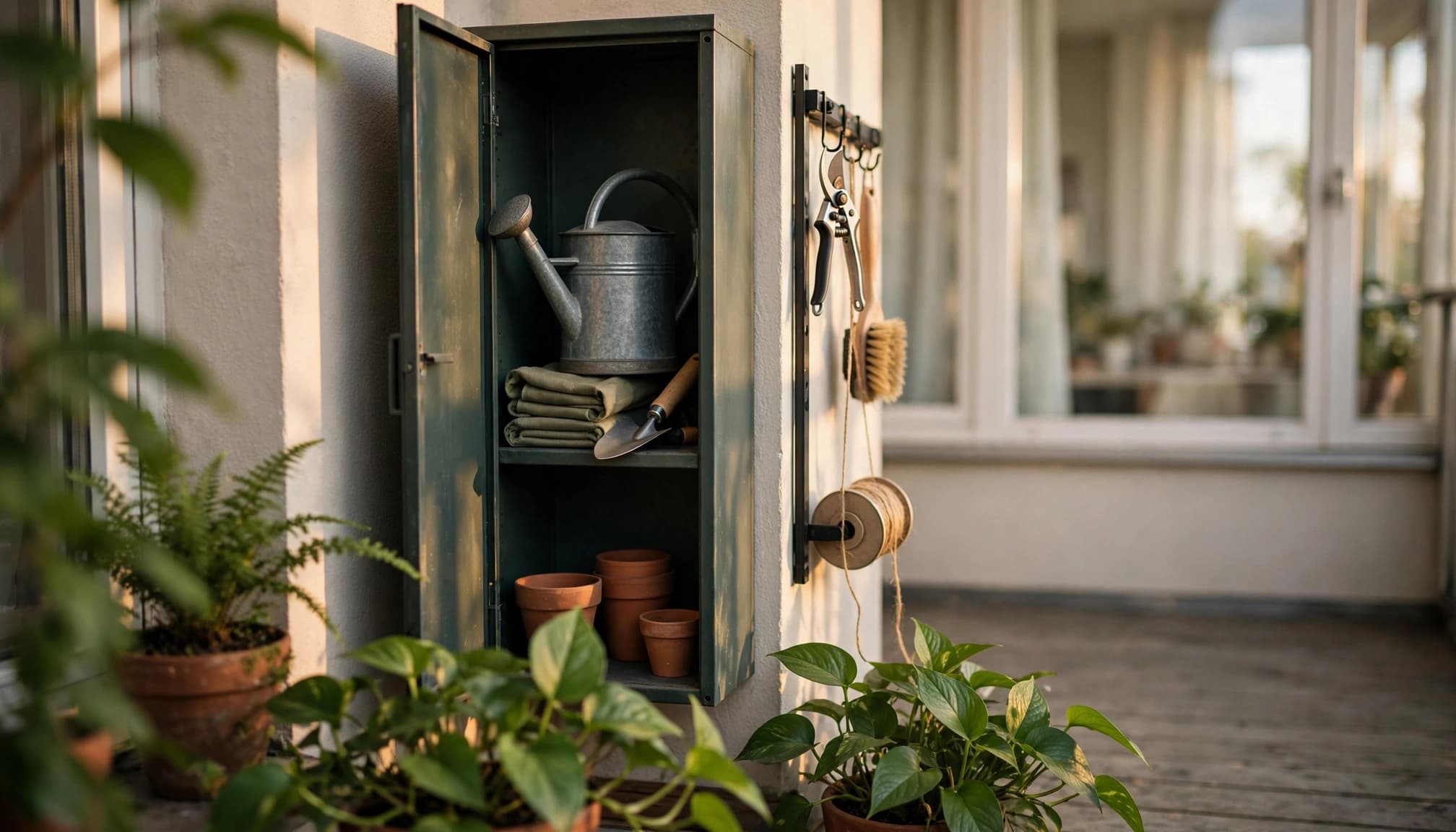
For renter-friendly storage, start with the shelves, cupboards, and furniture you already have. A lidded plastic bin can contain gloves and hand tools on a closet shelf. A shallow tray can keep a watering can and plant labels together on a balcony. Reuse a clean box or basket first, then buy an organizer only if the trial setup doesn’t fit.
A narrow freestanding cabinet can keep supplies out of sight, while a small rolling cart or compact storage rack makes tools easy to move between rooms. A plant stand with a lower shelf keeps frequently used items close to indoor plants. Give the cart a parking spot before filling it, or it can become an obstacle in a tight kitchen or living area.
For small-space organization, place supplies near the spot where you use them. Keep balcony gear together in one outdoor storage spot, or put a compact kit near an indoor plant area. Don’t let a storage unit block a window, heater, door, or access to other belongings. Your garden storage setup should make gardening easier, not take over the room.
If you rent, review storage ideas that don’t require drilling before attaching hooks or brackets. Removable options still have surface, weight, and installation limits, so follow product directions.
Compare Wall-Mounted Hooks, Racks, and Shed Kits
If you have a private garden shed or a permitted wall with exposed studs, a stud mounted garden tool organizer can keep long-handled tools off the floor. A single tool hook works for one item; racks hold rakes, shovels, and hoes, while kits combine pieces for a larger setup. These options provide garden tool storage in a private shed or potting shed, while a garage organizer may suit a shared garage better than an apartment.
A complete kit costs more upfront than individual hooks, but it can group yard tool storage and shelving in one purchase.
Mount heavy tools to a suitable structure
Stud-mounted organizers can hold heavy-duty yard tools when you secure them to appropriate framing with suitable hardware. Drywall alone isn’t a safe mounting point for heavy tools. Follow the organizer’s installation directions and stated load limits, and place heavier equipment on lower hooks.
For an apartment renter, a permanent wall system may not be practical or permitted. In that case, use a freestanding rack or a compact floor cabinet rather than risking wall damage or a loose organizer.
Use Small Hooks for Awkward Equipment
Smaller organizers can handle gear that doesn’t fit neatly on a rake rack. A compact hook rack or single tool hook can hold awkward equipment. Ceiling mounted weed wacker hooks cost $19.75, and a weed wacker organizer rack is listed at $16.50. Check ceiling clearance before installing weed wacker hooks so you can lower the tool without hitting furniture or people.
Ceiling hooks can hold bulky equipment, including bikes, only if the ceiling structure and product are rated for the load. Check for suitable joists and mounting hardware, and leave enough clearance to lift items down safely. In a shared garage, a garage organizer can keep gardening gear apart from other storage and utility items.
A rack may be useful for larger shared items, but it can be overkill for a few hand tools. For compact garden tool storage in an apartment, one tote or a small shelf may take less effort and space.
Decide Whether a Potting Workstation Fits
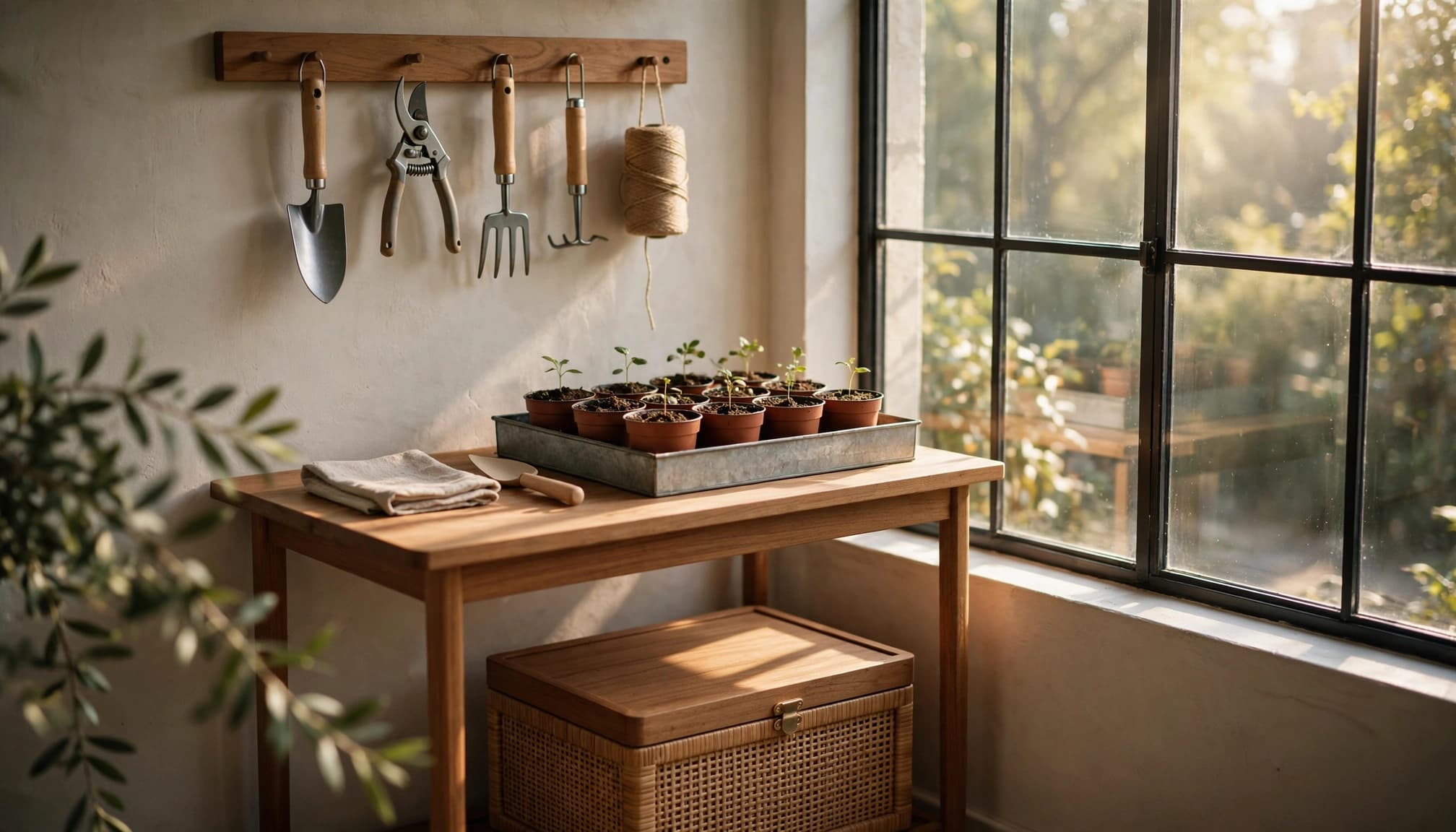
A teak workstation gives you an organized surface for planting, potting, and crafting. It can also support outdoor kitchen tasks and other hands-on projects. These pieces are large and expensive, which makes them less practical for many small apartments.
A much more affordable option is a Potting Bench. We recommend the Yaheetech Console Table. Very reasonable priced, available in 3 different trims and highly rated.
Protect Outdoor Items Between Uses
If your apartment has a balcony, use outdoor storage in a dry, sheltered spot away from rain and direct sun. A closed cabinet can keep small tools together, but don’t put damp items inside. Let tools dry first, and keep plant-care products in their original containers, away from children and pets.
Outdoor furniture covers shield seating and cushions from the elements between uses. That protection can help keep patio pieces in good condition season after season. Store outdoor furniture covers when they’re dry, separate from soil and tools.
A storage ladder can hold blankets and throws during colder months. It can be useful in a small home when it replaces another bulky storage piece, but it isn’t a substitute for a cabinet that protects equipment from weather. Choose each piece for the job it can handle.
Frequently Asked Questions
Can you use a teak workstation for things other than gardening?
Yes. A teak workstation can support planting and potting, and also suits crafting and other hands-on tasks. A tall workstation may also work for outdoor kitchen use. In a small apartment, measure carefully and decide whether the surface will earn the floor space it takes. But they also range between $1,800 and $2,200.
Do outdoor furniture covers help protect patio pieces?
Yes. Covers shield outdoor seating and cushions from weather between uses, helping you keep them in good condition over multiple seasons. They’re useful for outdoor furniture, but they won’t keep gardening tools dry inside a damp storage area.
Are stud-mounted garden tool organizers strong enough for heavy tools?
They can be, when installed into suitable framing with the correct hardware and within the organizer’s stated load limits. Don’t rely on drywall alone for heavy tools. If you can’t mount into an appropriate structure or your lease prohibits it, choose freestanding storage.
Are shelf brackets better than racks for small garden supplies?
They suit different items. Racks and hooks hold long tools, hoses, and ladders, while shelf brackets support loose supplies in bins or trays. In an apartment, a freestanding shelf or existing cupboard may be a better fit than a wall-mounted shed system.
Keep Your Gardening Setup Small and Easy to Use
Start with the supplies you use most, then give them a dry, accessible home that fits your apartment. A few hooks or a small cabinet can be enough, while a workstation makes sense only when you have room and will use its surface regularly.
Measure before buying, keep walkways clear, and choose mounting systems that suit your walls and rental rules. The best setup is the one that lets you put tools away easily and find them again when it’s time to care for your plants.
We recommend the WorkPro Garden Tool Bag. Has 10 pockets with a shoulder strap. Available in various colors to fit your preferred style. This affordable, yet highly rated bag, will more than do it for most small spaces.
We only recommend top-rated, affordable products you can trust. As an Amazon Associate, I may earn from qualifying purchases through the affiliate links above at no extra cost to you. Thank you for supporting our work.