To organize toys in a small apartment, give everyday toys one accessible home near where your child plays. Keep less-used toys in existing closets or under-bed storage, and choose containers your child can help put away.
You don’t need a separate playroom or another large cabinet. You need easy access, clear walking routes, and a collection that fits the space available.
Start by sorting what you own, then build a setup around your family’s daily routine.
Key Takeaways
- Use existing furniture and suitable containers before buying more storage.
- Keep everyday toys accessible, with separate storage for occasional activities.
- Choose storage that leaves doors, drawers, and walking routes clear.
- Follow furniture anchoring instructions, and don’t assume an ordinary storage chest is suitable for children’s toys.
Start by Reducing and Grouping Toys
Before choosing small apartment storage solutions, gather the toys scattered across your main living area. Work on one category at a time if sorting everything would cover the floor.
Our room-by-room decluttering checklist can help you separate toy clutter from belongings that need another home.
Group Toys by How Your Child Uses Them
Keep building toys together, place pretend-play accessories near their main set, and return puzzle pieces to their matching boards or boxes. These practical groups make choosing an activity easier.
Avoid sorting every small item into a separate compartment unless your child finds that helpful. A container of toy vehicles usually takes less effort to maintain than separate boxes for cars, trucks, and buses.
Remove broken toys that can’t be repaired. Set aside outgrown items for donation if they’re clean, usable, and complete enough for another child to enjoy.
Separate Everyday Favorites From Occasional Activities
Keep frequently chosen toys in your main storage area. Put activities that need adult help, such as painting supplies, in a separate location you control.
Also identify bulky toys that rarely get used. Give each one a clear place, or decide whether it still belongs in your apartment.
Give Toys a Home in the Living Room
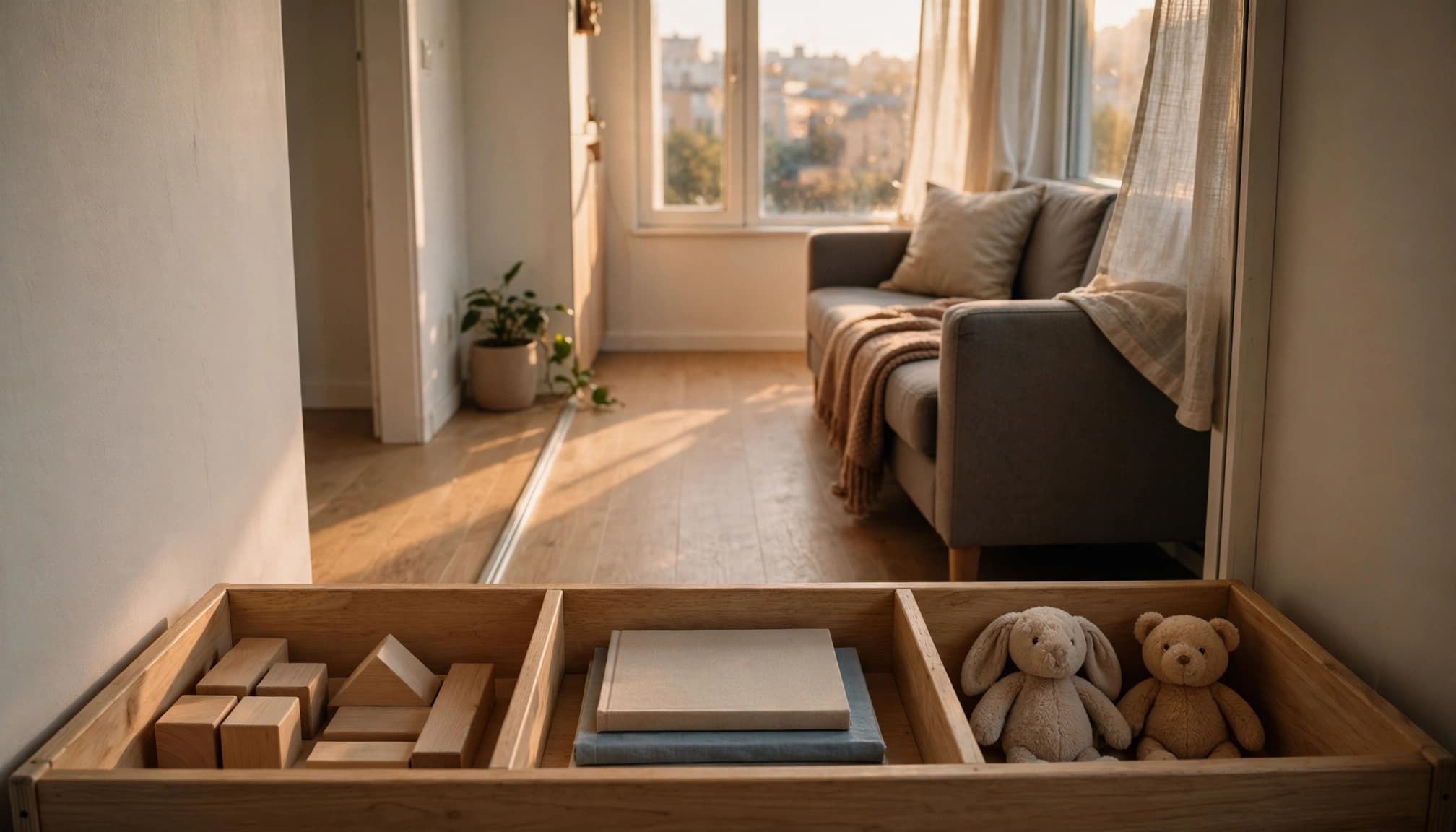
Reserve one defined area for daily toys rather than spreading baskets throughout the apartment. A section of an existing cabinet or a low shelf can be enough.
Keep Daily Toys Within Reach
Choose a spot your child can reach without climbing or moving furniture. Put heavier toys low down, and leave enough room to remove each container easily.
If your dining table doubles as a play surface, keep the current activity in a portable basket. Return the basket to its shelf before meals instead of relocating loose pieces around the room.
A small book basket beside the sofa can also keep current reads nearby without taking over the coffee table.
Use Hidden Storage Selectively
Reserve deeper or less convenient compartments for games and toys you use less often. Our hidden living room storage ideas explain how removable boxes can divide large compartments.
Be careful with trunks and lift-top furniture. The U.S. Consumer Product Safety Commission’s warning about storage and toy chests describes how automatically latching lids can trap children inside.
For independently accessed toys, open containers avoid that lid hazard.
Keep Toy Organization Simple in a Small Apartment
Choose containers after grouping the toys, rather than buying a matching set and trying to fill it. Reuse suitable baskets or sturdy boxes first so you can test the arrangement without spending money.
For blocks and vehicles, a shallow open container lets your child see more of the contents. Deep bins work better for bulky soft toys than for small pieces that disappear at the bottom.
Keep a puzzle or construction set together when its pieces belong to one activity. However, you don’t need to preserve oversized retail packaging if a smaller suitable container holds the complete set.
Add a simple picture label for a child who doesn’t read yet. Use a photo of the actual contents rather than a broad label that could describe several bins.
Leave enough empty space for your child to return toys without arranging every piece precisely.
If a container repeatedly overflows, reduce its contents or change the grouping. Adding a second basket elsewhere often makes cleanup more confusing.
Use Closets and Overlooked Corners
Small closet storage works best when toys use genuinely available space. Don’t squeeze them into a shelf that already makes getting dressed difficult.
Give Existing Shelves a Specific Job
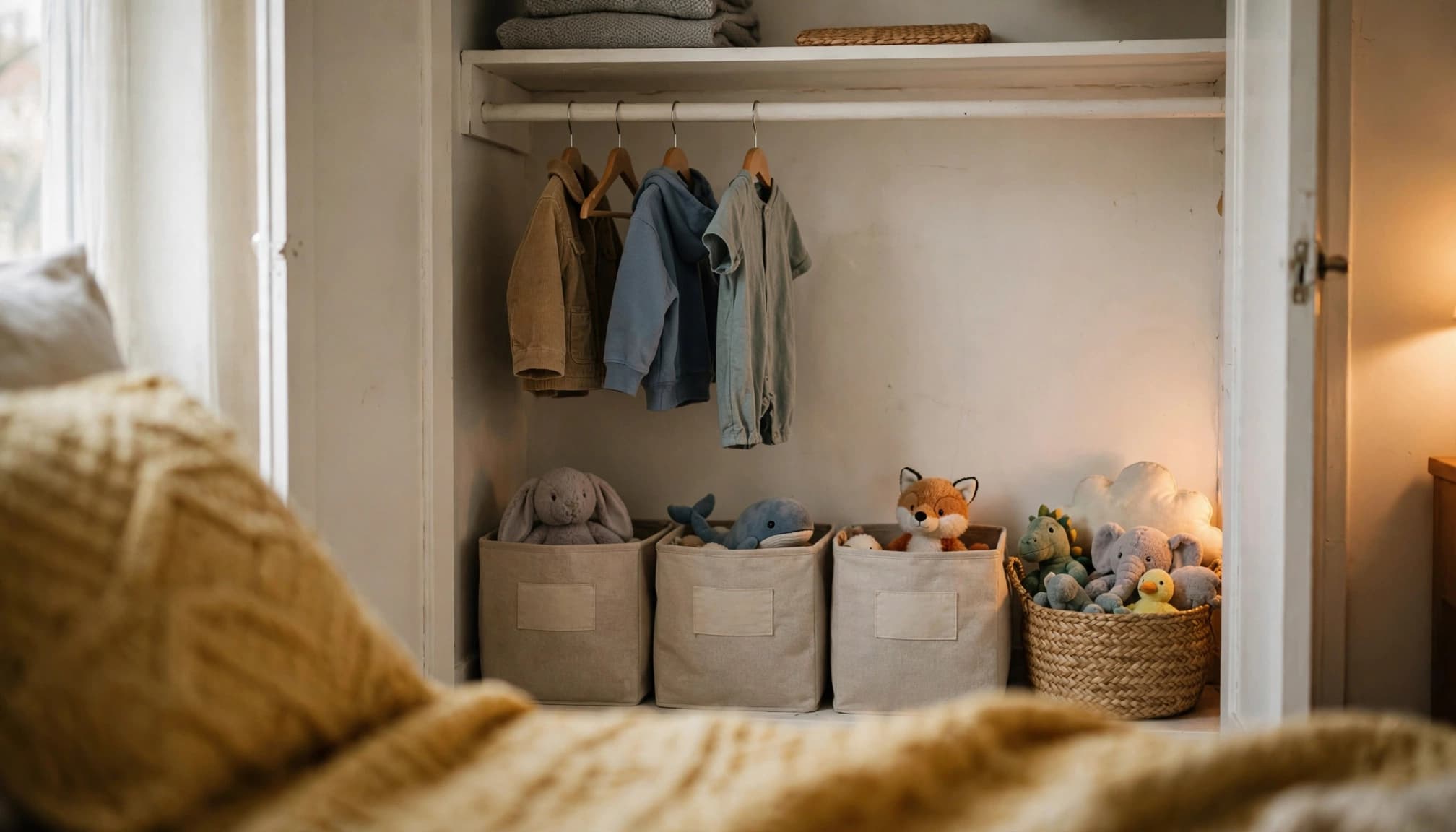
Use one reachable closet section for toy containers instead of scattering them between clothes and household supplies. Keep the front edge clear enough to lift each container out.
Reserve higher storage for lightweight, occasional-use items that an adult retrieves. Don’t place favorite toys overhead where they might encourage climbing.
A narrow corner can hold one basket of soft toys, provided it doesn’t obstruct a door or walking route. A container that fits tightly but is difficult to remove won’t help daily organization.
Use Under-Bed Space for Less-Used Toys
Under-bed storage is a great way to keep rotation toys, board games, and seasonal playthings organized without taking up valuable closet space. Choose shallow, covered bins to protect toys from dust, and consider containers with wheels so children can easily access their belongings.
Measure the clearance beneath the frame, including center supports. Then allow room beside the bed to pull the container out fully.
If accessing the box means moving a bedside table every time, use it for genuinely occasional items. Everyday toys need a more convenient home.
Choose Renter-Friendly Storage That Fits
Start with removable organizers inside furniture you already own. A box in a cupboard or a basket on an existing shelf doesn’t require alterations to the building.
Our renter-friendly storage without drilling covers options for door backs, cabinet interiors, and other overlooked spaces.
For a door organizer, allow room for both the hooks and the filled pockets. The door must close normally, and hanging contents shouldn’t interfere with nearby furniture.
Freestanding furniture may still require anchoring. Follow the manufacturer’s anchoring instructions; if your rental doesn’t permit the required installation, choose another solution.
Before adding a storage unit, mark its footprint on the floor. Include the space needed to open drawers and remove bins. These space-saving solutions should make your apartment easier to move through, not create another obstacle.
Keep Toy Storage Safety in Mind
A container’s appearance doesn’t tell you whether it’s appropriate for children. Ordinary storage ottomans and decorative chests shouldn’t automatically become toy boxes.
Keep tiny pieces away from children who still put objects in their mouths. In a mixed-age household, give an older child’s small-piece sets a separate, adult-controlled storage location.
Also protect the routes you use throughout the day. Toys and bins shouldn’t block exits, door swings, or access to heating equipment.
Entryway storage is best reserved for items needed at the door. Avoid turning a narrow entrance into overflow parking for bulky ride-on toys.
Build a Cleanup Routine Your Child Can Follow
Make cleanup a short, predictable part of changing activities. Before dinner, for example, return loose toys to their assigned containers and clear the table.
Give younger children one concrete task, such as putting vehicles in their basket. You can handle matching puzzle pieces or sorting anything that needs adult attention.
Allow an unfinished construction project to stay on a designated tray if you have somewhere safe to put it. This keeps loose pieces together without requiring every activity to end immediately.
For toy rotation, keep a smaller selection available and swap a set when your child stops choosing it. You don’t need a strict calendar.
After using the arrangement for a week, notice what repeatedly lands on the floor. Move its container closer, simplify the category, or reduce the contents. Small-space organization works better when putting toys away requires fewer decisions.
Frequently Asked Questions
How Many Toy Bins Do You Need in a Small Apartment?
Use enough containers to separate the activities your child uses, but avoid buying a fixed number before sorting. Each bin needs a defined home and contents that fit comfortably. If bins occupy walking routes or stack beyond easy access, reduce the collection before adding more.
We Recommend: 13 inch Animal Cube Bins. These are available in various patterns and rated 4.9 with 100’s of purchases.
Another excellent choice is this Large Collapsible Toy Chest with Flip Lid. Available in several different patterns your child will love.
How Can You Organize Toys Without Buying Furniture?
Use a reachable section of an existing cupboard, a suitable basket beneath a side table, or available closet space. Test these small-space storage ideas with containers you already own. Buy a replacement only when you know what size and opening style would improve the setup.
Where Should Large Toys Go Without a Playroom?
Give each large toy a parking spot against a wall or in suitable closet space. Keep doors and furniture accessible. If you must move a toy several times every day to use the room, reconsider its location or whether it fits your home’s available space.
Make Toy Storage Easy to Use
You can organize toys without a playroom by keeping daily activities accessible and giving less-used toys a separate home. The strongest setup uses your existing space without making shared rooms harder to use.
Start with one crowded area and suitable containers you already own. Keep what supports easy cleanup, then adjust anything your child struggles to put away. A workable home for each toy matters more than matching baskets.
We only recommend top-rated, affordable products you can trust. As an Amazon Associate, I may earn from qualifying purchases through the affiliate links above at no extra cost to you. Thank you for supporting our work.