In a small apartment, the wrong piece of storage furniture can make your studio feel smaller. Good studio apartment storage frees up room for everyday essentials without blocking your usual paths.
A few space-saving pieces can organize sleeping, cooking, and entry areas while keeping small spaces comfortable. Start with your layout, then choose furniture that solves a real storage problem.
Key Takeaways
- Measure your walkways and awkward corners before buying furniture.
- Choose space-saving, dual-purpose furniture, such as a storage bed or a cube shelf that separates zones.
- Use lidded containers under the bed for clean, easy-to-reach seasonal storage.
- Add wall and door storage only where it fits your lease, surfaces, and daily routine.
Plan studio apartment storage around your daily routine
Before you shop, look at how you move through the apartment. Clear routes between the entry, bed, kitchen, and bathroom should guide your apartment organization and choice of organization solutions. Storage furniture that holds a lot but blocks one of those paths may cause more frustration than it fixes.
Measure the floor you need to keep open
Mark out the bed, sofa, and kitchen work area first. Then measure the remaining space for storage furniture. Leave enough room to open drawers, pull out bins, and walk past the bed without turning sideways.
Pay special attention to odd corners, sloped ceilings, and wall sections that stop short of a doorway. A tall shelf may fit on paper but feel bulky next to a narrow entry. A low bench or a slim rolling cart may be a better fit.
Measure the route into your apartment, too. Hallways, stairwells, and tight turns can make large furniture difficult to bring inside.
Give each zone a clear purpose
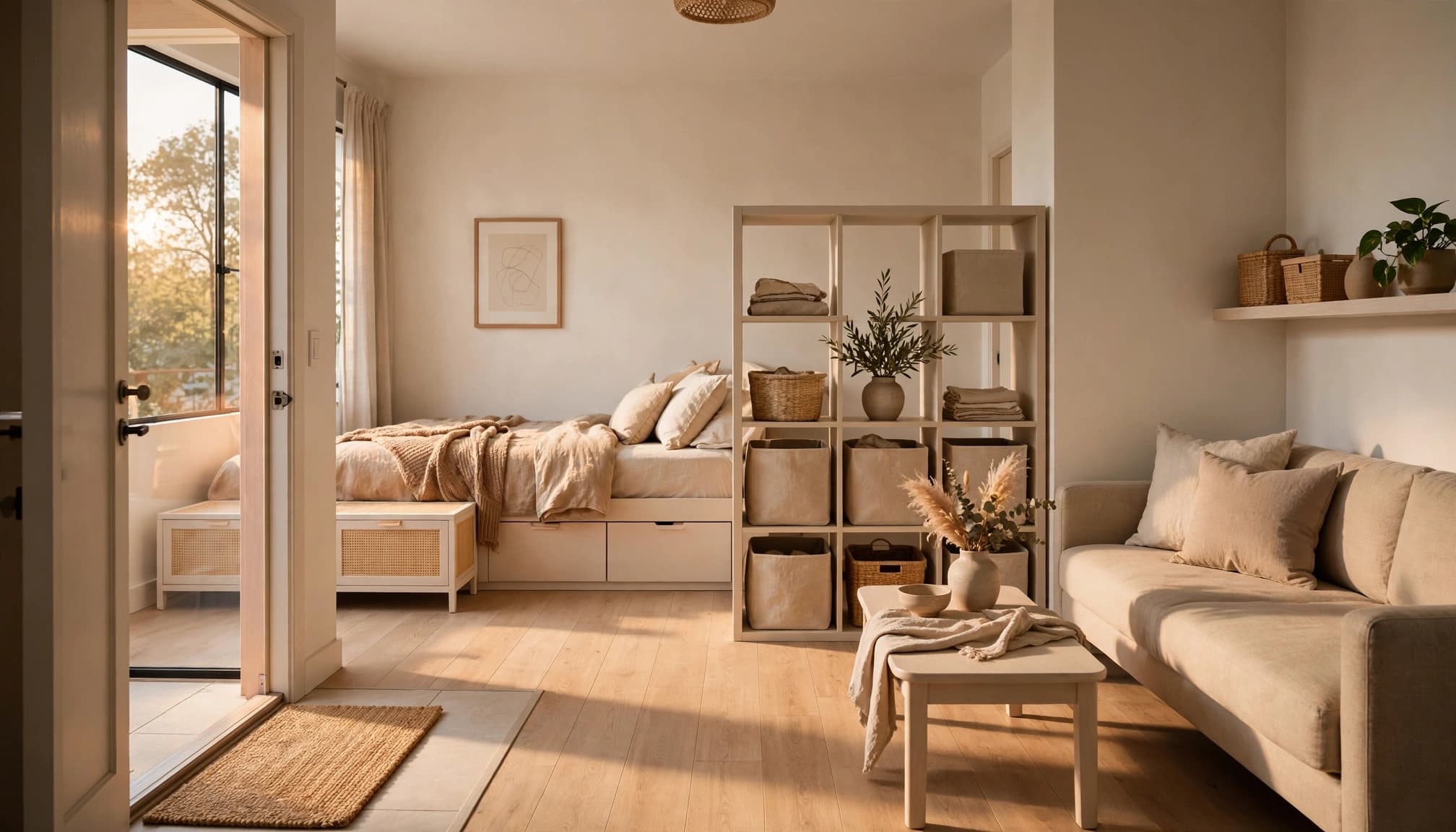
In a studio under 400 square feet, one piece of furniture can help define a zone without adding a wall. A row of storage cubes between the bed and sofa can hold folded clothes on one side and books or baskets on the other.
Keep the middle of the room as open as you can. Place deeper pieces against walls, and use smaller furniture near walkways. This simple layout makes small spaces feel easier to use, even when storage is limited.
Choose furniture that earns its floor space
The most useful storage solutions for a small apartment handle a daily need while keeping extra items out of sight. In small spaces, choose space-saving storage furniture or dual-purpose furniture that stores everyday items without adding another surface to manage.
Pick dual-purpose furniture for the main zone
A storage bed can replace a dresser if its drawers fit your room and open fully. If a storage bed sits close to a wall, drawers on both sides may not be practical. A lift-up base or under-bed bins could work better, depending on the bed design and available clearance.
A storage ottoman can hold blankets, spare pillows, or items you use in the living area. Choose one that also works as a footrest or extra seat. A drop-leaf table can provide a dining surface when needed and fold away when you want more open floor space.
Avoid buying a piece just because it contains storage. If it duplicates another item or becomes a catchall for clutter, it may not earn its footprint.
Use a cube shelf as storage and a room divider
A low cube shelf can serve as one of your room dividers, with storage cubes for baskets, books, and folded clothing. IKEA’s KALLAX shelf unit has nine compartments and measures 44 1/8 by 44 1/8 inches. Check the dimensions of the exact model and compare them with your available floor space.
Keep a divider low enough to preserve light and sightlines. If you choose a taller shelf, follow the manufacturer’s stability instructions and check whether it needs to be secured. Ask your landlord before making any permanent changes.
Make under-bed storage easy to reach and keep clean
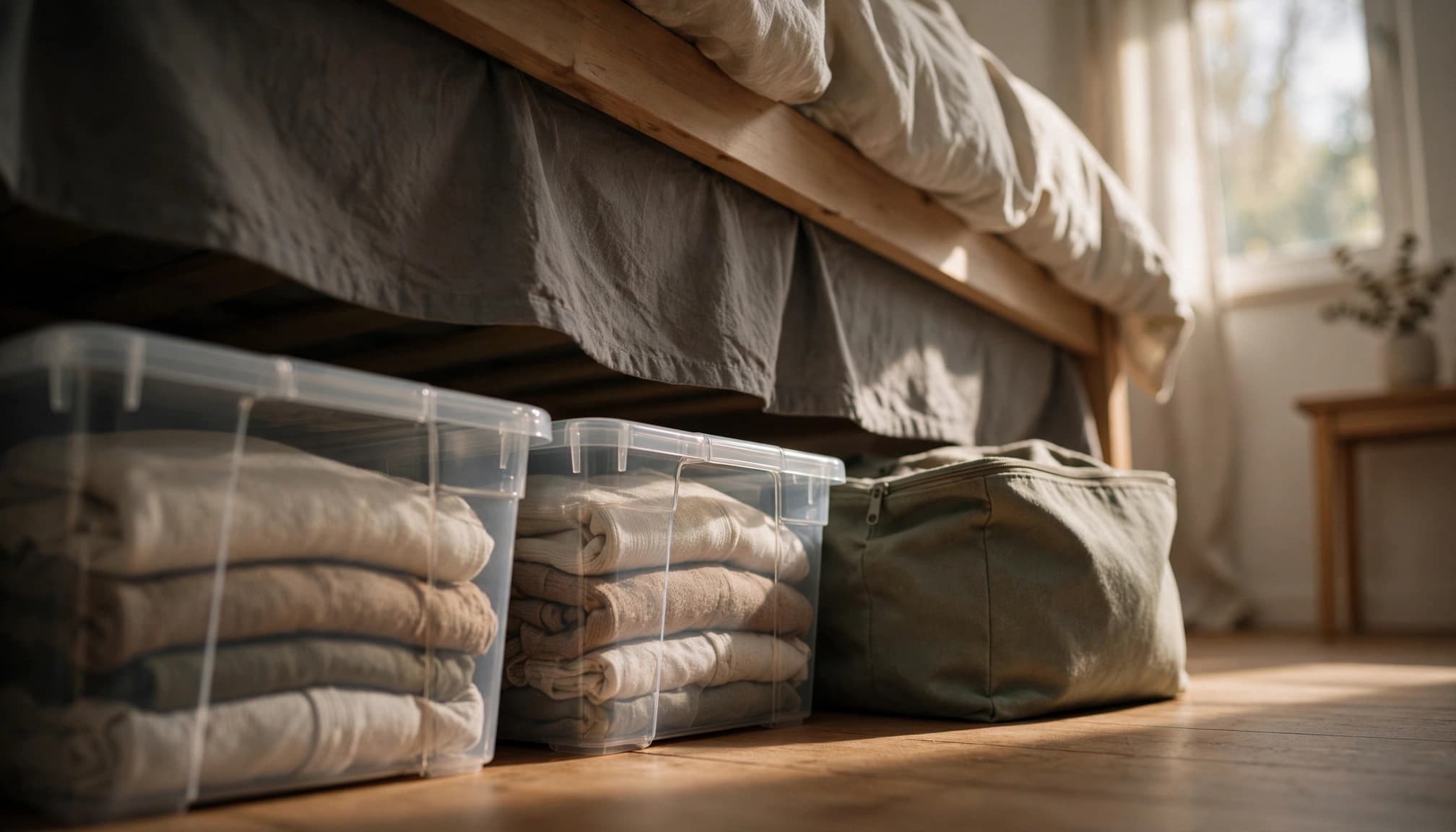
Under-bed storage can hold extra bedding, off-season clothing, or shoes you don’t wear often. First, measure the clearance from the floor to the bed frame. Then check the height and width of bins, including their lids and wheels. If you use bed risers, check the bed’s stability and follow the product guidance before raising the frame.
IKEA’s under-bed storage options come in different styles and sizes for beds with varying clearances. Its VARDÖ box measures 25 5/8 by 27 1/2 inches, but you still need to check whether it fits your bed and the space around it.
Reuse suitable containers for DIY storage, and store clothes in clean, dry containers with lids. Plastic containers can help keep dust off your belongings, while fabric bags may suit items you want to compress. Avoid storing damp clothing, and leave enough space to pull each container out without moving half the room.
Don’t use under-bed storage for things you need every morning. Keep daily shoes and clothes in a more accessible spot, and reserve the hidden space for occasional-use items.
Add vertical storage without filling every wall
Using vertical space can free floor space, but a wall crowded with shelves can make a small room feel busy. Floating shelves are one option, but check installation and lease rules first. Start with things you reach often, then choose a wall, door, or freestanding rack.
Use renter-friendly hooks and narrow organizers
Removable hooks can hold lightweight items such as keys, hats, or a small bag. Check the package for the product’s weight limit and surface instructions. 3M’s guide to using Command strips explains how to apply picture-hanging strips, but always follow the specific directions for the product you buy.
Over-the-door organizers can hold shoes, cleaning supplies, or small accessories without using a shelf or drawer. Check that the door can close properly with the organizer in place. Tension rods may also add hanging space inside a closet or cabinet, as long as they’re fitted securely and don’t interfere with the door.
Make a small closet work harder
For small closet storage, use one section for hanging clothes and the remaining vertical space for folded items or labeled bins. Adding tension rods can create a lower hanging area for shorter clothing, if the closet layout allows it.
Keep heavier items on a stable shelf or the floor. Store less-used belongings higher up, but leave a clear route to anything you need regularly. These space-saving choices help you find things without adding another chest of drawers.
Solve kitchen and entryway storage problems
Kitchen counters and entryways can collect clutter quickly because both areas handle everyday items. Give each one a small, defined storage zone before adding furniture.
Add kitchen storage without blocking the walkway
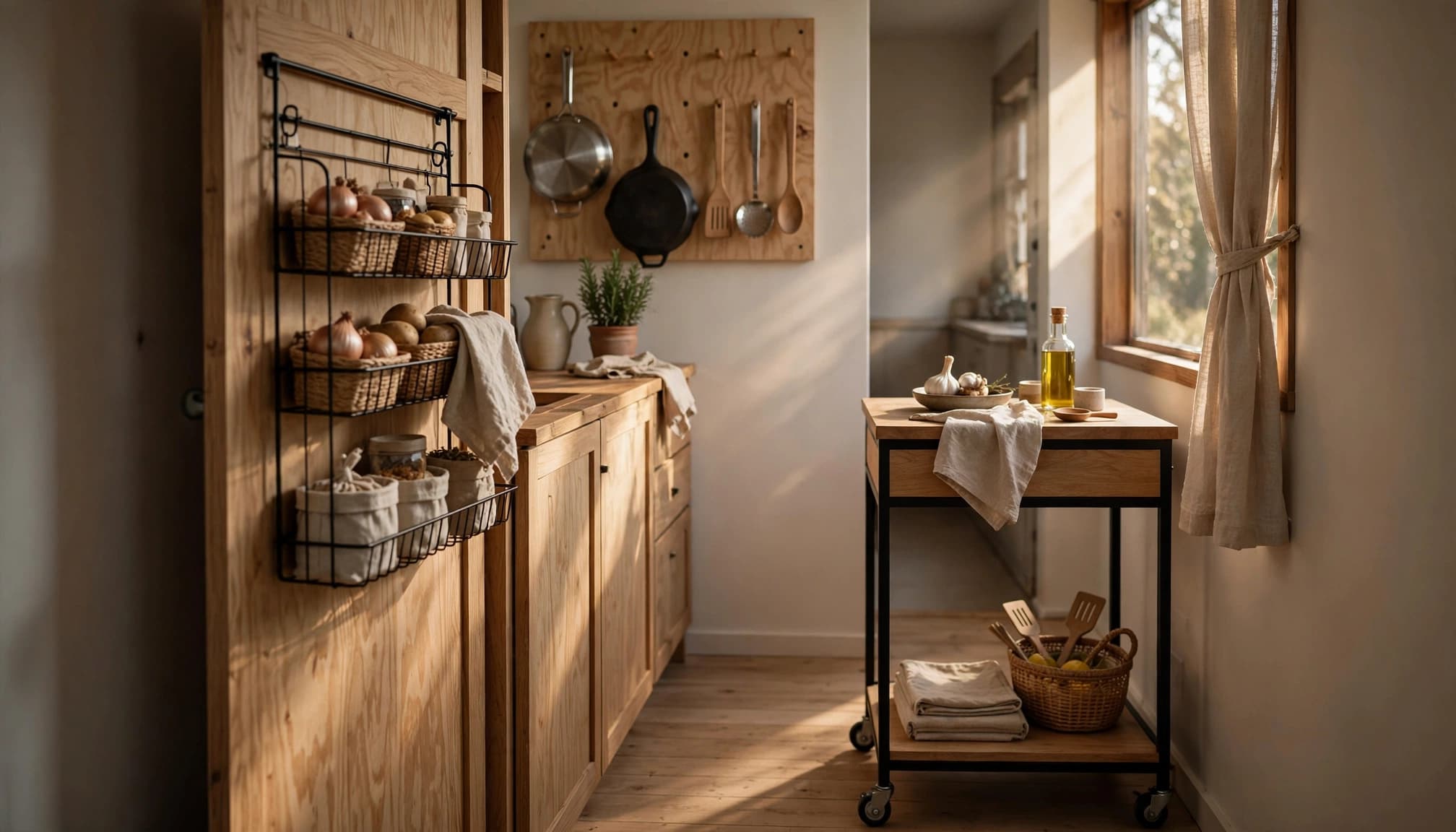
If your counter space is limited, use a wall-mounted rack or shelf for items you reach often. A pegboard can hold a few pans and utensils, while an over-the-door rack may work on a pantry or cabinet door. Check the door’s clearance before adding anything.
A narrow rolling island can provide extra prep space and storage, but only if it leaves room to pass through the kitchen. Choose a rolling island that can move out of the way when you’re done. Use it for a small set of kitchen essentials rather than letting it become another permanent pile.
For small kitchen storage, keep the countertop clear enough for cooking. Store bulky appliances elsewhere if you use them only occasionally.
Create a compact landing spot by the door
Entryway storage can be as simple as a shoe tray, a few hooks, and a narrow bench with a shelf underneath. If you don’t have a separate entry, use one small section of wall near the door. Keep keys and bags there so they don’t spread across the kitchen counter or sofa.
For a tight space, a vertical shoe rack may take up less room than a cabinet. Limit the number of shoes by the door to the pairs you use most. Store the rest in a closet or under the bed.
Decide what to buy and what to make
DIY storage solutions can cost less when you already have suitable containers or materials. A low-cost DIY storage option is reusing sturdy boxes or baskets inside a closet, adding a tension rod, or placing baskets on an existing shelf.
Retail furniture makes sense when you need a specific size, a finished look, or drawers that slide smoothly with daily use. Compare the listed dimensions with your room, and check how much space the item needs when open. A low-cost shelf that doesn’t fit the corner can become an expensive mistake.
Start with one problem area at a time, especially in small spaces, instead of replacing several pieces at once. If your clothes are overflowing, solve that first. If the main issue is kitchen counter space, measure for a narrow cart before shopping. This keeps your budget focused on practical space-saving solutions.
Frequently Asked Questions
What furniture works best in a studio apartment?
Start with a storage bed that includes drawers or fits bins underneath. Add a shelf or ottoman only if it serves another purpose, such as dividing the room or providing a seat. Choose pieces that fit your measured layout and don’t block drawers or walkways.
Is it practical to store clothes under the bed?
Yes, if the space is dry and you use clean, covered containers. Keep frequently worn clothes within easy reach, and check stored items now and then. Don’t put damp clothing or textiles in a sealed container.
How can you add wall storage without drilling?
Use removable hooks or strips within their stated limits, or try over-the-door organizers and tension rods. Check product directions, door clearance, and the rules in your lease before you install anything.
How do you organize a small kitchen with almost no counter space?
For better kitchen storage, move rarely used appliances off the counter and store everyday tools on a rack or pegboard. Consider a rolling island if it won’t block the walkway. Keep the remaining counter space open for food preparation.
Make every storage piece count
The best studio apartment furniture solves a specific problem while keeping your everyday paths clear. Measure first, choose pieces that do more than one job, and use hidden storage for items you don’t need each day.
You don’t need to furnish every corner. A bed, shelf, or small cart that fits your routine can make apartment organization easier.