The space beneath your bed can free up a crowded closet, but only if you can reach what you store there. Useful under bed storage containers fit your bed’s clearance, protect belongings from dust, and are easy to pull out.
For most bedrooms, a zippered fabric case suits seasonal clothes, while a lidded plastic bin works well for spare bedding. Start with measurements, then choose a container that fits what you need to store.
Key Takeaways
- Choose fabric cases for lightweight clothes and linens, and rigid bins when you need more support.
- Measure beneath the side rail and around supports before buying storage bins, leaving room for handles, lids, and wheels.
- Use rolling containers for heavier loads or bedding you retrieve regularly.
- Store only clean, fully dry textiles, and check beneath your bed for moisture when storing off-season clothing.
A container that fits comfortably and pulls out easily is more useful than one that fills every available inch.
Which Under-Bed Storage Containers Fit Your Needs?
Your storage routine matters as much as container size. Think about whether you’ll open it every week or only when the seasons change.
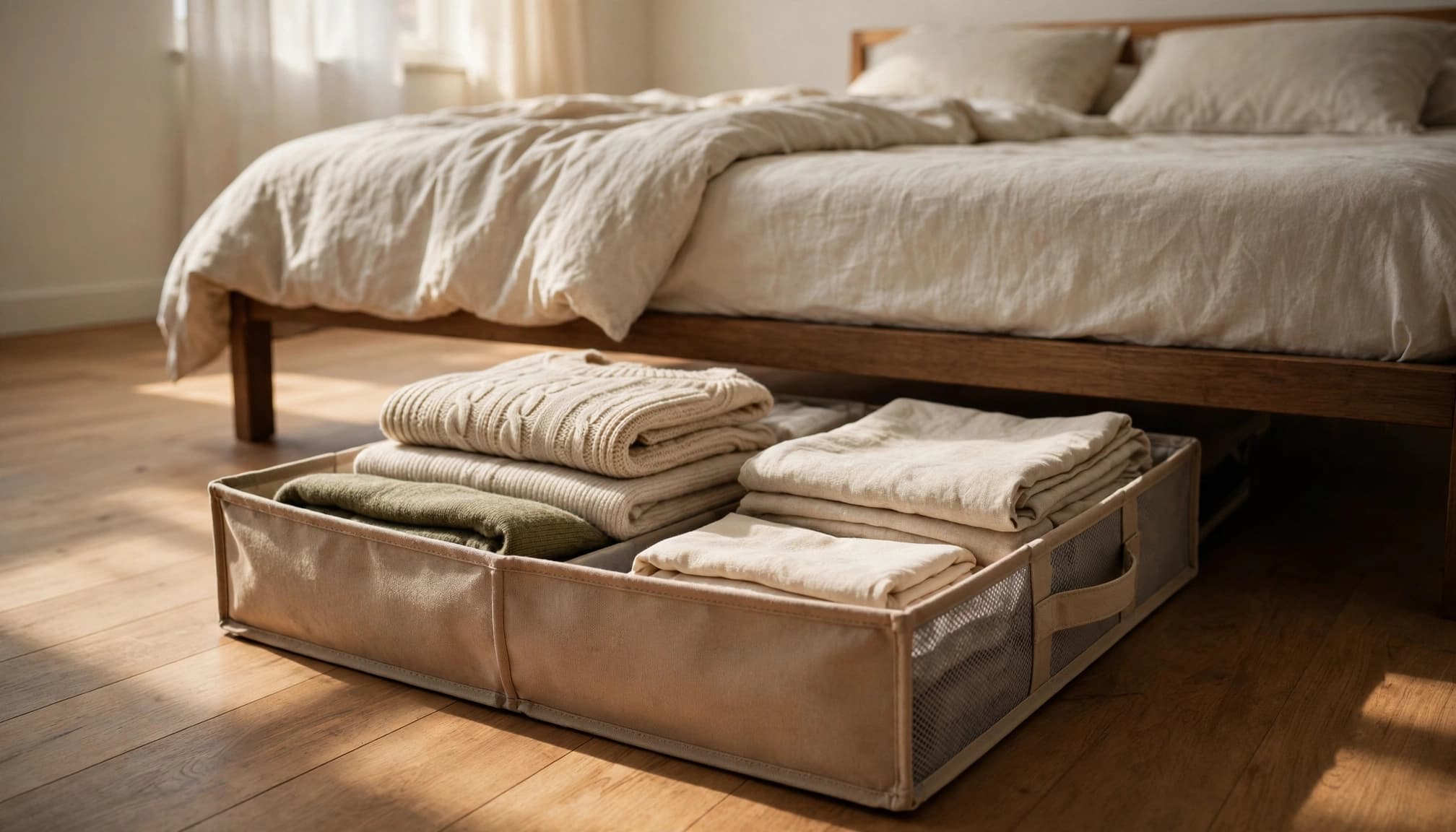
Fabric Cases for Seasonal Clothes
A fabric storage bag works well for lightweight clothes, such as sweaters and folded pajamas, as well as spare sheets. These bags are lightweight, and some styles fold away when empty.
Choose a storage case with a supported base, accessible handles, and a zippered closure. These features help it keep its shape when you pull it out. Avoid overfilling it, since a bulging top can catch beneath the frame even when the listed height looks suitable.
Lidded Plastic Bins for Structure
A rigid plastic storage bin provides a firm base and a lid for dust protection. A clear window also helps you find a sheet set without opening several containers.
The Spruce’s clothing-storage review highlights the durability of a basic hard-plastic under-bed option. Remember that a standard plastic container lid doesn’t establish an airtight or waterproof seal.
Rolling Containers for Easier Access
Wheels are useful when you store several blankets together or retrieve bedding regularly. A rolling storage bin moves without dragging its entire base across the floor.
Check wheel casters as part of the overall height measurement. Small wheels may be harder to move across thick carpet, so consider your flooring before paying extra for them. An open rolling basket needs a separate cover.
Four Practical Options for Clothes and Bedding
These bed storage boxes offer a useful starting point for small-apartment storage, including bedding storage for linens and blankets. For a space saving fit, compare their exterior dimensions with your available footprint before ordering.
All dimensions below are listed as length × width × height, in inches.
| Container | Exterior Dimensions | Useful For |
|---|---|---|
| IKEA SKUBB, large | 35.5 × 20.75 × 7.5 | Seasonal clothes and larger bedding bundles |
| IKEA SKUBB, small | 25.5 × 20.75 × 7.5 | Separate clothing categories and spare sheets |
| The Container Store Our Long Under Bed Box with Wheels | 35.625 × 18.25 × 6.5 | Bedding you want to roll out |
| The Container Store Our Under Bed Box | 27.125 × 15.625 × 6.125 | Compact, rigid storage for folded textiles |
The main difference is height: the plastic options are lower, while both SKUBB sizes need clearance above 7.5 inches.
For a straightforward fabric option, the larger IKEA SKUBB case is suitable for seasonal clothes, linens, pillows, and covers. Its polyester fabric and polypropylene insert provide a lightweight structure, and IKEA describes it as protecting contents from dust.
Choose the smaller SKUBB storage case when you want separate containers for different categories. It has the same height as the larger version, so it won’t solve a low-clearance problem.
The Container Store’s long wheeled box is a practical pick for easier movement. Its polypropylene body gives bedding a firm base.
The compact Our Under Bed Box suits shorter storage spaces. Its clear polypropylene body helps you identify contents, but don’t assume it has wheels, ventilation, or an airtight seal.
How Do You Measure Under-Bed Storage Space?
Measure the space you can actually use, rather than relying on your bed’s advertised height. A frame can have plenty of room in the middle but a much lower opening along the side.
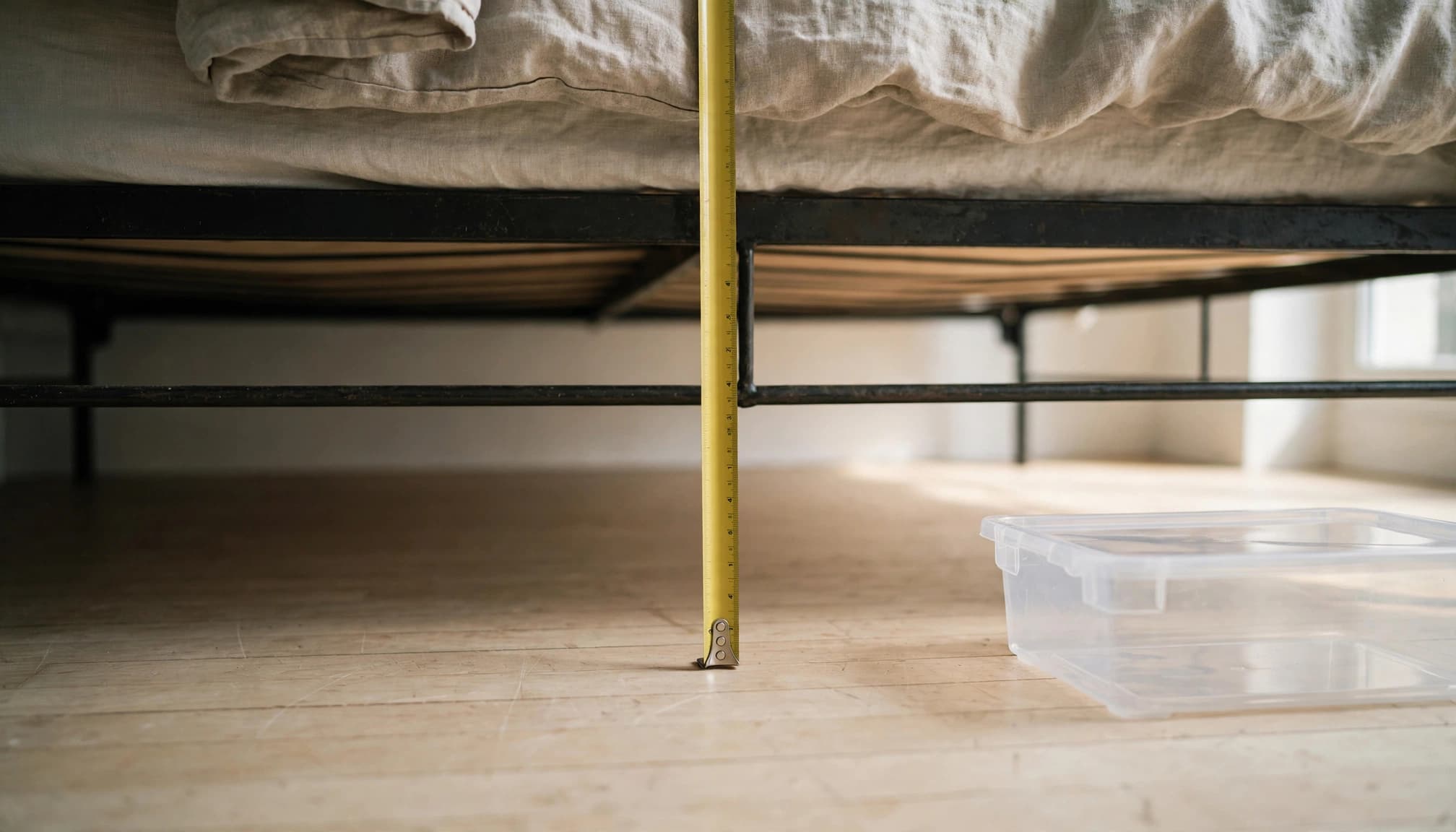
Check the Lowest Entry Point
Measure from the floor to the bottom of the side rail. Consumer Reports’ under-bed storage guide recommends this measurement rather than measuring to the mattress-support base.
Repeat the measurement near brackets, center supports, and other hardware. If your bed has a metal frame, its rails or supports may affect clearance. Your container must clear the lowest point along its route. Leave some extra space instead of choosing a bin that matches the opening exactly. Include the closed lid and wheels when comparing heights.
Measure the Footprint and Pull-Out Space
Next, measure the usable width and depth between bed legs and supports. Treat each clear area as a separate space if a center leg divides the underside.
Check the room beside the bed, too. A long box may fit underneath but be awkward to remove beside a dresser. Exterior dimensions tell you whether a container fits; usable interior dimensions tell you whether your folded bedding fits inside. Ask the retailer if that measurement isn’t listed.
What Clothes and Bedding Belong Under Your Bed?
Under-bed storage works best when you give each container a clear purpose. Sorting first also keeps you from buying storage for things you no longer use.
Keep Seasonal and Occasional Items Together
Off-season clothing, spare sheet sets, and guest blankets are sensible choices. Move these items out of your everyday closet so you have more room for what you wear now.
Fold a complete sheet set together before storing it. Keep winter sweaters in a separate container rather than spreading them across several bags. You’ll have fewer places to search when colder weather arrives.
If small closet storage is your main problem, start with the bulkiest items you use least often. A closet organizer can help with hanging pieces.
Make Frequent Items Easy to Reach
Keep a regularly used blanket near the edge of the bed. Put occasional guest bedding farther back, provided you can still retrieve it without moving furniture.
Use a short label on the outward-facing side, such as “Guest Sheets” or “Winter Clothes.” A clear window helps, but a label saves you from identifying every folded item.
Use separate shoe storage for shoes and boots, keeping them away from clean textiles. Dirt and odors don’t belong in your bedding container.
How Do You Prevent Moisture Under Your Bed?
A storage lid helps with dust, but it doesn’t fix a damp bedroom. Moisture control depends on dry belongings and the conditions around them.
Pack Only Clean, Fully Dry Textiles
Wash or clean clothes and bedding as their care labels require. Let them dry completely before packing, including thicker seams and quilted sections.
The EPA recommends keeping indoor humidity below 60%, ideally between 30% and 50%. A small hygrometer can help you check the room rather than guessing.
If something gets wet, remove it from storage promptly. EPA guidance recommends drying wet materials within 24 to 48 hours. Don’t pack damp items into either fabric bags or sealed bins.
Keep the Area Accessible for Checks
Leave enough room to inspect and clean beneath the bed. Follow your mattress and bed manufacturer’s guidance on ventilation, air circulation, and clearance.
Don’t assume containers beneath a bed will cause mold, or that a particular container will prevent it. Check for condensation, damp flooring, musty smells, or moisture on the container base during seasonal changes.
An airtight container can trap moisture already inside it. Dry textiles and a dry room still matter.
If you find dampness, remove the stored items and address the moisture source before putting them back.
How Can You Keep the Purchase Affordable?
Buy one container first. Test it with the actual clothes or bedding you want to store before ordering a matching set.
Check whether the price includes the lid, wheels, or any required insert. Compare delivery costs and return terms as well, particularly for large plastic boxes.
For renter-friendly storage, standalone containers are a simple place to start because they don’t require drilling or changing the bed frame. Built-in storage drawers, including under bed drawers designed for a specific frame, need a compatibility check before purchase.
Avoid paying for features you won’t use. Wheels can help with regular access, while a lightweight fabric case may be enough for a seasonal clothing change. The useful upgrade is the one that makes your routine easier.
Common Questions About Under-Bed Storage
Are Fabric Bags or Plastic Bins Better for Dust?
Both can provide dust protection when properly closed. Choose a zippered fabric case for lightweight clothing, or a lidded plastic bin when you want more structure and visibility.
Neither material alone tells you whether the container is airtight. Check the product’s closure details rather than assuming that rigid plastic provides a sealed environment.
Can You Store a Bulky Comforter Under a Low Bed?
Check its folded thickness against the container’s usable interior height. A large-capacity bin can still be too shallow for a thick comforter.
Vacuum sealing bags can reduce volume, but check the bedding manufacturer’s care guidance before compressing filled bedding. If compression isn’t suitable, use the under-bed space for sheets and choose a deeper storage area for the comforter.
Choose Storage You’ll Be Comfortable Using
The best under bed storage containers fit your frame, suit your belongings, and are easy to retrieve. Easy access matters more than filling the entire underside of your bed.
Start with one measured space and one clearly grouped category. Once you’ve checked the fit, closure, and pull-out route, you can add more storage with confidence. Your closet gains room without making spare bedding harder to find.
Pingback: Small Home Decluttering: A Simple Room-by-Room Plan