You can keep shoes under your bed in a clean, dry organizer that fits comfortably and pulls out easily. If your closet is crowded, this gives seasonal and occasional pairs a useful home without adding another rack.
Under bed shoe storage keeps occasional pairs accessible without taking up more bedroom floor space. Measure the space, sort your shoes, and choose storage that suits their size and shape. Start with the pairs you need to move out of your closet, while keeping daily shoes somewhere easier to reach.
Key Takeaways
- Measure the clearance, width, depth, and pull-out space under your bed before choosing an organizer. Include handles, wheels, and lids in its exterior dimensions.
- Store seasonal and occasional shoes under the bed, and keep everyday pairs somewhere easy to reach. Clean and dry shoes before putting them away.
- Choose a shallow bin, zippered fabric case, or rolling organizer based on your bed clearance, shoe shapes, and how often you’ll retrieve the shoes.
- Label containers, leave room to slide them out, and check for dampness or damage when you retrieve shoes.
How to Organize Shoes Under Your Bed
Before buying storage, clear the space beneath your bed and gather the shoes you want to put away. You’ll get a better fit when you plan around your actual footwear and the parts of the bed that interrupt the space.
Measure the clearance and the pull-out space
Measure vertically from the floor to the lowest obstruction beneath your bed. The side rail may look high enough, but a center beam, bracket, or support leg can limit where a container fits.
Next, measure the usable width and depth between the legs. Treat areas divided by supports as separate storage spaces. A long organizer won’t slide across a center leg, even if there’s plenty of empty floor beyond it.
Measure the storage organizer’s exterior dimensions, including handles, wheels, or lid edges, to check that every protruding part fits beneath the bed.
Measure beside the bed, too. Your container needs somewhere to go when you pull it out. Include nearby dressers, nightstands, closet doors, and any bedroom door that opens toward the bed.
Use painter’s tape to mark the proposed container footprint on the floor. Then picture pulling that full shape into the room. You should be able to open it and reach the shoes without lifting it onto the bed.
Leave a little space above the filled organizer rather than choosing something that barely clears the frame. Soft cases can bulge, and lids need room to pass beneath obstructions.
If you use bed risers, choose ones compatible with the frame and its loaded weight. Support every required leg according to their instructions, then remeasure the clearance.
Sort shoes by how often you wear them
Keep everyday shoes in the spot where you already put them on and take them off. If a small entryway rack works for your daily sneakers, there’s no need to move them under the bed.
Good candidates for under-bed storage include seasonal sandals, occasional dress shoes, and footwear you use for particular activities. Group similar pairs together so you can bring out one category when you need it.
Before assigning space, set aside shoes you no longer wear. Separate pairs that need repair, and remove anything too uncomfortable to use. Buying another organizer won’t make those shoes more useful.
Keep wet boots, muddy trainers, and dirty soles away from the clean pairs you’re preparing to store. Give those shoes a separate cleaning and drying spot before they join the collection.
Lay your remaining pairs on the floor in a single layer. This helps you see their real footprint and whether one shallow container will be enough.
For a DIY fit test before buying an organizer, place the shoes in a clean, shallow storage box and slide it beneath the bed. Treat the box as a test, not necessarily the best long-term storage.
You should be able to remove a pair without lifting several others. If the arrangement requires stacking shoes across one another, reduce the number in that container or divide them between smaller organizers.
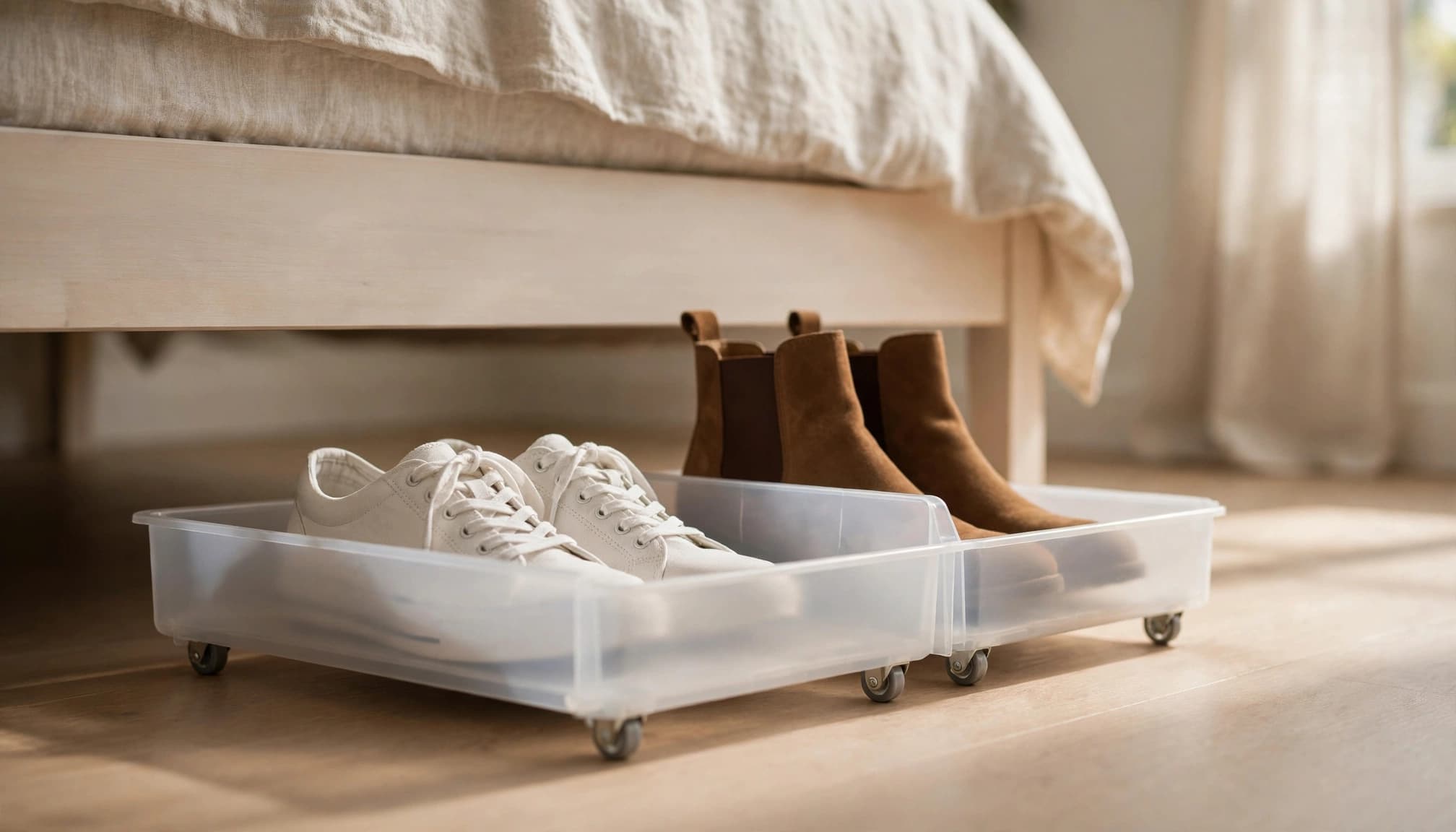
Our Top Recommendation: Futego Under Bed Storage with Wheels. These can hold both shoes as well as clothes, come in a 2 pack and are see through (as well as highly rated and reviewed).
If You Need Even More Storage Space: The Extra Long 39.4″ Lijiai Under Bed Storage holds nearly 2x as much as the Futego. Again, see through top, lockable wheels, highly rated and reviewed with 100’s of purchases. Great for shoes, but also holds clothes/bedding and whatever else you might need extra storage for.
Under-Bed Shoe Storage Ideas for Small Bedrooms
Choose underbed shoe storage based on clearance, shoe shape, budget, and how often you’ll open it. A simple container that slides out comfortably is more useful than an oversized organizer that blocks your walkway.
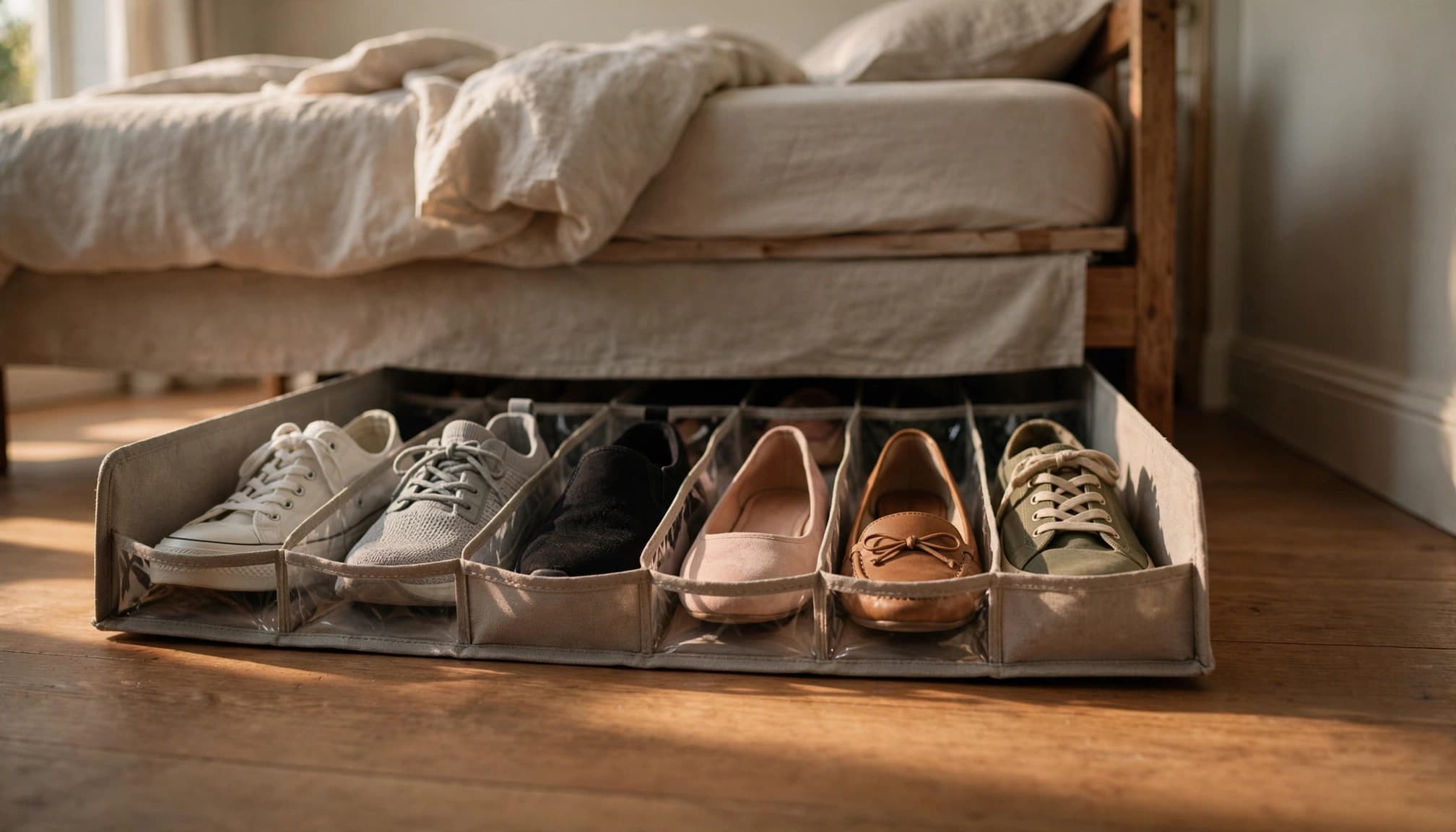
Choose between shallow bins, fabric cases, and rolling organizers
Lidded plastic bins provide a firm base and keep shoes covered. Clear plastic sides make pairs easier to identify, although an outward-facing label still helps when the container sits in shadow.
A fabric storage case with a zippered cover is lightweight and flexible. It’s useful for seasonal pairs and folds away when empty. A supported base helps it keep its shape as you pull it out. If you prefer recycled polyester, check the material label rather than assuming every case uses it.
A rolling shoe organizer is easier to move when loaded. Small wheels can struggle on thick carpet, however, and an open rolling tray needs a separate cover if dust protection matters.
Use this comparison to narrow your choice.
| Storage type | Useful for | Main limitation |
|---|---|---|
| Shallow lidded bin | Structured storage and keeping shoes covered | A rigid shape needs clear space around supports |
| Zippered fabric case | Lightweight seasonal shoes | A soft base can sag when loaded |
| Rolling organizer | Pairs you retrieve regularly | Wheels add height and need a suitable floor |
Choose the option that matches your access needs before paying for extra features.
Use full exterior dimensions, including handles, lids, and wheels. Interior space matters, too: thick walls and fixed dividers leave less room for larger shoes. Capacity labels such as “12-pair” and “48 pairs” are rough guides, so check the interior dimensions against your actual footwear.
For a budget-friendly start, reuse a suitable clean storage box or buy one organizer before committing to a set. Our guide to under-bed containers for clothes and bedding covers these storage formats if you’re planning separate under bed storage for shoes and textiles.
Fit sneakers, flats, boots, and special-occasion shoes
Arrange shoes by height and shape rather than trying to give every pair an identical compartment. Flat sandals need less vertical room than bulky sneakers, while ankle boots may need a deeper section.
Place pairs heel-to-toe when that helps them sit neatly together. Keep the uppers free of pressure, and avoid pressing dirty soles against delicate fabric or pale leather.
Adjustable dividers are helpful when your collection includes several shoe sizes or styles. Fixed compartments work only when your actual shoes fit comfortably inside them. An advertised pair count isn’t a useful guide if your sneakers are wider than the slots.
Keep taller boots upright where clearance allows. If the shafts must bend sharply to fit, give those boots another home rather than forcing them into a shallow case. If you have mostly taller boots and regular shoe storage bins don’t fit that need, take a look at our article on small entryway shoe storage. We go over some options that allow for plenty of height, vs storing tennis shoes and sneakers under the bed.
Keep special-occasion shoes in their own compartment or suitable shoe bag. Avoid stacking heavier footwear on top of straps, bows, or structured toes. Each pair should come out ready to wear, without needing its shape restored.
Keep Stored Shoes Clean, Dry, and Easy to Find
A good organizer makes storage easier, but shoe care and placement keep the setup useful. You don’t need expensive accessories. Clean footwear, dry conditions, and a clear arrangement do most of the work.
Clean and dry shoes before putting them away
Brush loose dirt off soles before bringing shoes into your bedroom storage area. Clean the uppers according to their material and care instructions, then let everything dry fully.
Pay attention to thicker tongues, padded collars, and the spaces beneath removable insoles. The outside can feel dry while moisture remains inside. Give recently worn footwear time to air out with good ventilation, especially smelly shoes, before sealing it in a case and trapping odor or moisture.
Haldens’ shoe-care guide advises storing shoes clean and dry and keeping them away from strong heat. Don’t try to speed drying by placing footwear beside a heater. Florsheim’s drying guidance recommends a cool location out of direct sunlight.
Before storing shoes, check beneath the bed and inside each container for bugs. Look for damp flooring, condensation, or a persistent musty smell. A lid reduces dust, but it doesn’t fix damp conditions.
The EPA recommends keeping indoor humidity below 60%, ideally between 30% and 50%. If the space beneath your bed stays damp, address the moisture problem before using it for shoes.
Keep footwear separate from clean bedding and clothing, even when everything shares the same under-bed area. Separate containers keep grit and shoe odors away from textiles.
Label containers and leave room to slide them out
Put a short label on the side that faces into the room. “Dress shoes,” “Summer sandals,” and “Winter boots” are easier to recognize than a vague label such as “Shoes.”
A clear lid or window helps, but you shouldn’t need to pull out every container to identify its contents. If several people share the storage area, include each person’s name on their container.
Face handles outward and keep the more frequently used pairs near the accessible edge. Place genuinely off-season footwear farther back only when you can still retrieve it without dismantling the arrangement.
In a bedroom with access on just one side, several smaller containers may be easier to manage than one wide case. Give each a clear route out rather than placing one directly behind another.
A container should come out without moving the nightstand, lifting another bin, or unpacking shoes onto the floor.
Avoid packing containers so tightly together that handles disappear between them. Leave enough room to grasp each handle and guide the organizer past the bed legs.
Keep heating vents clear and preserve access for cleaning. When you retrieve shoes, check for unexpected moisture or damage to the container.
If returning a pair starts to feel awkward, adjust the arrangement. Moving a divider or removing one bulky pair may be enough to make the storage easy to use again.
Frequently Asked Questions
How do I measure for under-bed shoe storage?
Measure the height from the floor to the lowest obstruction, then measure the usable width and depth between bed legs and supports. Check the organizer’s full exterior dimensions, including handles, wheels, and lid edges, and make sure there’s room to pull it out.
Which shoes should I store under the bed?
Seasonal sandals, occasional dress shoes, and shoes for particular activities are good choices. Keep everyday shoes easy to reach, and clean and dry footwear before storing it.
What type of organizer works best under a bed?
Shallow lidded bins keep shoes covered and provide a firm base, while zippered fabric cases are lightweight and fold away when empty. Rolling organizers are easier to move when loaded, but their wheels add height and may struggle on thick carpet.
How can I keep stored shoes clean and dry?
Brush off loose dirt, clean the uppers according to their care instructions, and let shoes dry fully before putting them away. Check the floor and containers for dampness, and don’t use a lid as a solution to moisture.
Start With Measurements and the Shoes You Wear
Useful under-bed shoe storage gives occasional pairs a clean, dry home while leaving everyday footwear easy to reach. Accessibility matters more than filling every inch, especially when your bedroom already has limited walking space.
Measure beneath the lowest part of your bed and sort your shoes before choosing a container. You’ll have a clearer idea of what fits, what belongs there, and whether an organizer you already own can do the job.
Also, check back regularly for deals. I never quote prices as they change constantly, but this highly rated VatFott Adjustable Under Bed Storage 2 pack is worth adding to a watchlist. These are the kind of sales I personally try to follow. Anytime I can save money, along with getting a great product, makes me pretty happy. So it’s worth checking at least semi regularly. Build a watchlist and wait for a big Prime Sales day.
We only recommend top-rated, affordable products you can trust. As an Amazon Associate, I may earn from qualifying purchases through the affiliate links above at no extra cost to you. Thank you for supporting our work.