When your kitchen table doubles as a workspace, even a small pile can interrupt your day. Small home decluttering works best when you clear one manageable area and give everyday belongings a reliable home.
You don’t need matching baskets or a minimalist lifestyle. You need usable space and storage that’s easy to maintain.
Start with the room causing the most daily frustration, then work through the checklist at your own pace.
Key Takeaways
- Declutter your home one drawer, shelf, or corner at a time.
- Remove unwanted belongings before buying storage products.
- Keep frequently used items within easy reach.
- Leave sentimental decisions until you’ve handled simpler categories.
- Finish each session by removing donations and putting retained items away.
Make Small Home Decluttering Manageable
Set aside 15 minutes to declutter your home. Choose a finishable task, such as clearing the shoe rack. These decluttering tips start small: don’t empty a whole room onto the floor.
Set Up a Simple Sorting System
Use bags or storage containers you already own for donations, recycling, and rubbish. Set aside anything that belongs elsewhere, but return it before your session ends.
Keep your decisions practical. Ask whether you use the item, whether it works, and whether you have room for it.
If you plan to sell something, choose a listing deadline. Unsold items need a next step, such as donation, rather than an indefinite place beside your front door.
Gather Related Items Before Deciding
Check nearby rooms for duplicates before deciding what stays.
Marie Kondo’s KonMari Method sorts by category, beginning with clothes, followed by books, papers, miscellaneous items, and sentimental belongings.
You can borrow that category check while working room by room. Gather all your reusable shopping bags, for example, before choosing which ones fit your entryway.
Clear the Entryway and Living Area
These shared areas of your living space often collect belongings without a clear destination. Start with walking routes and the surfaces you use every day.
Give Arriving Items a Home
Remove shoes you don’t currently wear, empty shopping bags, old receipts, and coats belonging elsewhere.
Choose one landing spot for keys and one contained place for incoming mail. Keep only regularly worn shoes near the door.
For renter-friendly entryway storage, use vertical space with an over-door hook rack or choose a narrow freestanding shoe rack. Check that doors still open fully.
If family members leave belongings in different places, agree on reachable spots together. A storage system needs to be easy for everyone using it.
Edit Shared Surfaces
Clear the coffee table and sofa first. Return dishes, gather loose cables, and check whether electronics still have their matching chargers.
Keep current books, working remotes, and regularly used games nearby. Move occasional items into a cupboard.
A storage ottoman is multi-use furniture that can hold blankets or toys if it replaces furniture you already need. Check its internal dimensions and lid clearance before buying.
Use one existing basket for shared toys, then choose favourites that fit comfortably.
Make Small Kitchen Storage Easier
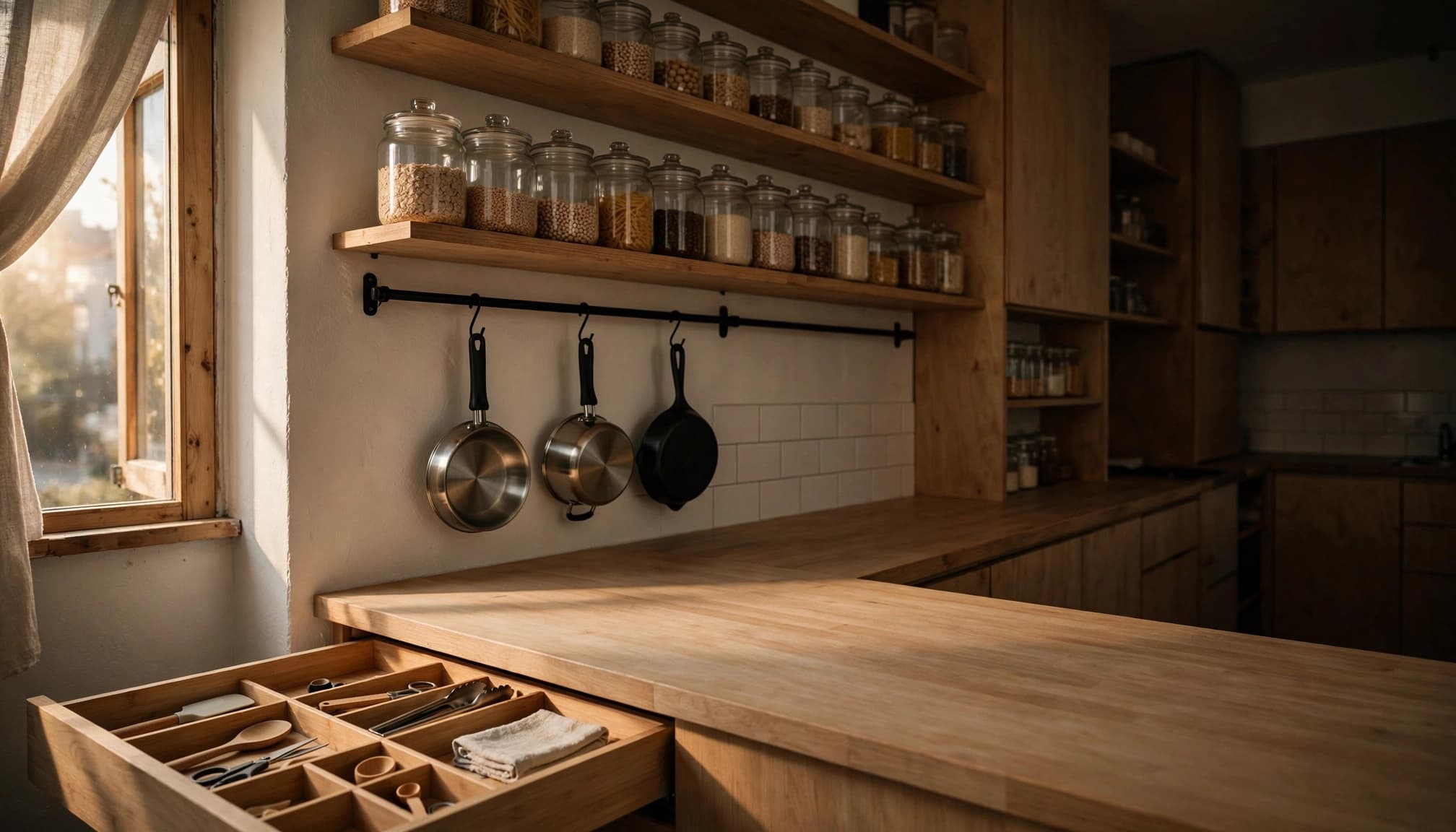
For practical kitchen organization, start with the counter where you prepare food. Keep it usable while you sort one drawer or cabinet at a time.
Check Food and Cooking Tools
Group similar pantry foods so you can see what you already have. Check packaging, condition, and dates before deciding what needs using or discarding.
Match containers with their lids. Recycle or discard damaged pieces according to local guidance, and remove sizes you never use.
Compare duplicate utensils against your cooking habits. Keep enough for the meals you make, including any genuine dietary or household needs.
Move rarely used appliances off the counter when you have a suitable cupboard. Keep heavy appliances somewhere you can lift them safely.
Put Everyday Items Within One Easy Reach
Use a simple one-step approach: make frequently used items easy to take out and return. Avoid arrangements that require moving several objects first.
Store mugs near your kettle, cooking utensils near food preparation, and dishwashing supplies near the sink.
Before adding another shelf, check whether you can reach and return each item without unpacking the cupboard.
Small kitchen storage products should solve a measured problem. A shelf riser may help with stacked plates. A shallow divider can separate utensils without adding another countertop container.
Declutter the Bedroom and Closet
Your bedroom needs enough clear space for sleeping, dressing, and moving around comfortably. Start with clothing, then check bedside surfaces.
Sort Clothes by What You Wear
Gather clothes from laundry baskets, hooks, and other rooms before sorting. Keep items that fit your current life, including workwear, comfortable basics, and genuinely needed occasion clothing.
Separate anything needing repair. Choose a realistic repair date so unfinished tasks don’t return to the wardrobe unnoticed.
For better closet organization, group clothing by type. Store folded items where you can see them, and avoid packing shelves so tightly that removing one garment disturbs everything.
Leave space for clean laundry to return. An arrangement that only works while half your clothes are in the wash needs adjusting.
Rotate Seasonal Items Safely
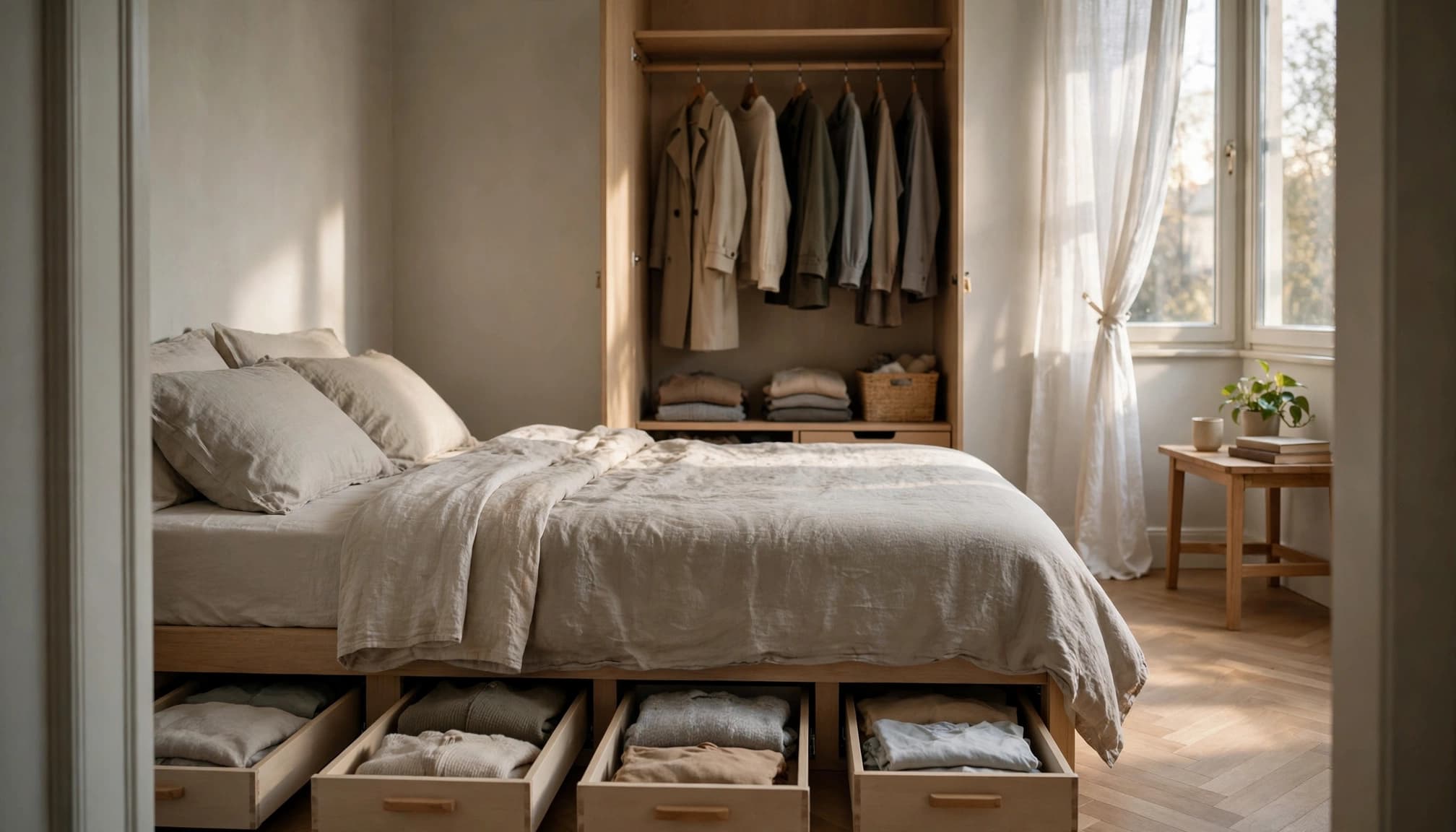
Store seasonal clothing clean and completely dry. Follow garment care instructions, and avoid compressing delicate items that could lose their shape.
Choose a dry storage location. Measure beneath the bed before buying under-bed storage drawers, including the space needed to pull them out.
Keep bedside storage limited to what you use at night. Return spare toiletries, paperwork, and unrelated electronics elsewhere.
If you’re replacing a cabinet, a bed with built-in drawers can serve as multi-use furniture instead of adding another piece.
Simplify Small Bathroom Storage
Bathroom cupboards fill quickly with opened products and forgotten extras. Clear one shelf at a time, keeping the sink available.
Check Products and Supplies
Discard empty containers and check product labels for expiry or after-opening guidance. Keep products you use rather than retaining every unfinished bottle.
Group unopened backups separately. Check that supply before shopping so you don’t buy another bottle hidden behind the first.
Review medicines using their labels and local disposal guidance. Don’t leave them somewhere damp or accessible to children simply because a bathroom cabinet has space.
Keep Daily Items Easy to Reach
Give each person a small, defined area for everyday toiletries. Shared supplies can stay together.
A narrow caddy or removable drawer tray can help with small bathroom storage. Use the cabinet you have before adding floor-standing furniture.
Keep pipes, shutoff valves, and ventilation clear. Check beneath the sink for leaks before returning belongings.
Store spare towels elsewhere if the bathroom cupboard is consistently damp.
Choose Storage That Fits Your Home
To organize a small space, measure what’s left and the available storage space before buying. Small apartment storage solutions work best when they match both.
Check width, depth, height, and opening clearance. An over-door organizer needs room for the door to close. Under-bed storage needs clear floor space beside the bed.
For renter-friendly storage, check your lease before attaching anything to walls. Follow adhesive products’ surface instructions and weight limits.
Use vertical space carefully. Keep light, occasional items higher and daily essentials at a comfortable height. Follow furniture manufacturers’ anchoring instructions, especially around children.
Awkward corners can hold narrow furniture, but walking routes need to stay clear. Test the footprint with tape before buying.
A container that fits the cupboard can still be awkward if its lid won’t open inside it.
Reuse suitable boxes first. You can upgrade later if the arrangement works.
Handle Sentimental Items Without Rushing
Keep sentimental belongings out of your first decluttering session. They require different decisions than worn-out utensils or empty packaging.
The KonMari approach to sentimental items places them last, after you’ve practised making decisions with other categories.
Choose a comfortable storage limit, such as one existing box for personal keepsakes. Select the items you most want to revisit.
Photograph bulky objects when the photograph preserves what matters to you. You can still keep the original when it has lasting personal value.
Ask other household members before donating shared or inherited belongings. Don’t decide for someone else because their items occupy space.
For uncertain items, use one temporary container with a review date. Keep it separate from confirmed donations. You can pause a difficult decision without letting every undecided object return to the room.
Keep Apartment Organization Working Day to Day
A simple home organization routine can start with a 10-minute evening reset. Return everyday belongings, clear one useful surface, and check whether donations have left the home.
Give outgoing items a destination and a date. Keep donation bags away from exits and walking routes while they wait.
When an area repeatedly becomes messy, adjust the arrangement. A laundry basket closer to where you change may work better than repeated reminders.
Keep storage easy for your household to use. Children’s everyday belongings need reachable homes, and shared drawers need clear divisions.
Before buying something new, check where it will live and whether it duplicates an item you own.
Small-space organization becomes easier when putting something away requires little effort. Leave enough room to use your storage comfortably.
Make Your Next Small Space Easier to Use
You can make progress without finishing every room at once. A clear counter, accessible drawer, or tidy entrance gives you a useful place to start.
A clutter-free home supports easy everyday use, so you don’t need to fill every available gap. Keep what supports your routine and give it a practical home.
Choose one manageable area today. Finish it completely, then move on when you’re ready.
Frequently Asked Questions
How Do You Declutter a Small Apartment Without Feeling Overwhelmed?
Choose one task with a clear finish, such as sorting one drawer. Keep enough time to put retained items away before stopping.
Clutter can feel stressful, and Psychology Today’s discussion of clutter and mental load explores that connection. You don’t need to declutter your home in one weekend.
If you get stuck, begin with easy decisions: empty packaging, broken items you won’t repair, or belongings that already have homes elsewhere.
What If You Don’t Have Enough Storage After Decluttering?
Check how often you use each remaining category. Move occasional belongings away from prime daily storage, while keeping them accessible enough for their purpose.
Then assess unused cupboard height, suitable under-bed space, and furniture that could serve two functions.
If everything is difficult to reach, another organizer may add complications. Keep the room usable and choose storage ideas for small homes that support your routines.
Pingback: Small Apartment Storage Ideas for Every Room