If you have to move three things to reach one shirt, your closet needs a simpler setup. Small closet organization works best when everyday clothes are easiest to reach, with storage that fits your daily routine.
You don’t need matching bins or a new closet system for a budget-friendly setup that makes getting dressed easier. Start by checking your space and storage needs, then give each clothing category a practical home.
Start With an Inventory and Useful Measurements
Before you buy closet organizers, find out what needs a home and where it can fit. This keeps you from adding storage that creates another obstacle.
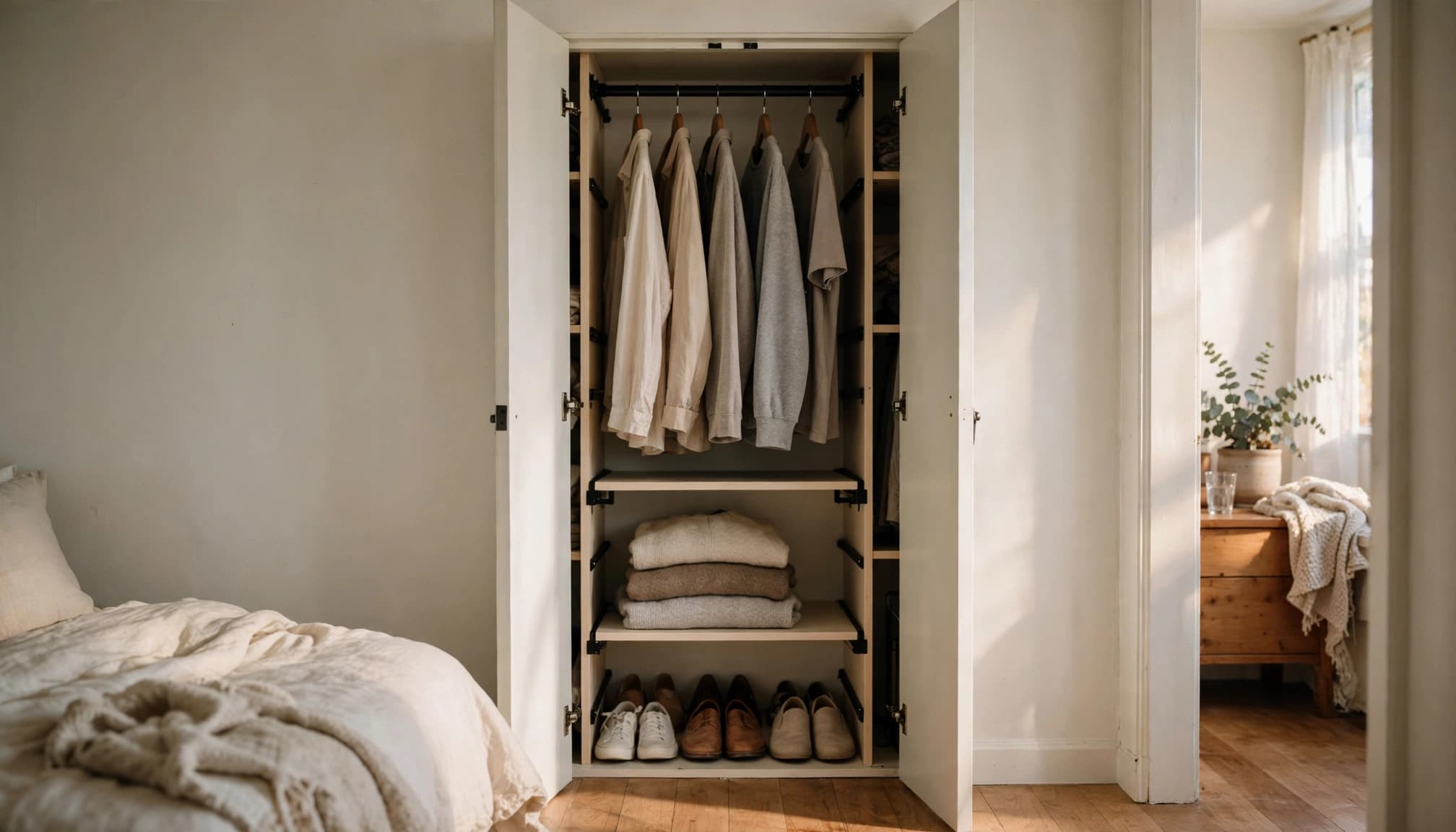
Sort Clothes by How You Use Them
Empty your closet and group similar items together. Separate work clothes, casual clothes, exercise wear, sleepwear, and occasional outfits.
Then check each group for clothes that no longer fit, need repairs, or don’t suit your routine. Set those aside for a clear next step rather than returning them automatically.
You don’t need to reach a fixed clothing count. Your goal is to see what you use and how much room each category needs. Keep daily clothes together while you plan.
Measure Access, Not Just Interior Space
Record the closet dimensions, including interior width, depth, and height. Measure the rod length, shelf depth, and space between the rod and floor.
Next, measure the door opening. In reach-in closets, check whether sliding doors block part of the closet or hinged doors swing into nearby furniture.
Note baseboards, sloped ceilings, and pipes that limit usable space. Keep storage clear of heat sources.
Storage bins can fit on a shelf but still be difficult to use if you can’t pull them through the door opening.
Take your measurements with you when shopping, including the clearance needed to open drawers or lift bin lids. Use them to plan an organization system, compare modular systems, or decide whether a custom closet solution is warranted.
Give Everyday Clothes the Most Accessible Space
Your closet should support your daily routine. Keep clothes you wear often where you can see and reach them without moving other items.
Put Frequent Favorites Within Easy Reach
Keep everyday shirts, trousers, and work outfits near the center of the rod or beside the easiest door opening. Place folded basics on reachable shelves.
In reach-in closets, use the less accessible side for occasional clothing. This lets you reach regular outfits without shifting the doors repeatedly.
If you share a closet, give each person a clear section. Divide it by clothing type so everyone knows where clean laundry belongs.
Keep your next outfit near the rest of your everyday clothes.
Move Seasonal Items Out of the Way
Reserve high shelves and awkward corners for seasonal items you won’t need soon. Store other seasonal items in storage bins under the bed to free up floor space.
Store only clean, fully dry clothes. Choose containers that fit your available space and protect the contents.
Keep transitional pieces nearby if your weather changes often. You might still need a light sweater when heavier winter clothing moves elsewhere.
Avoid moving overflow to another crowded room. Small apartment storage solutions work better when each storage area has a clear purpose.
Decide Which Clothes to Hang and Which to Fold
Different clothes need different storage. Choosing the right method helps you use limited rod and shelf space without making laundry harder.
Hang Clothes That Need Their Shape Protected
Hang button-down shirts, blouses, dresses, and clothing that wrinkles easily. Keep long garments together so you can use the space beneath shorter pieces.
Slim hangers can reduce the bulk created by a mix of thick hangers. Choose non-slip surfaces for slippery fabrics and suitable support for heavier items.
Avoid putting several everyday garments on one hanger. That can make the bottom item harder to retrieve.
Leave enough space to slide hangers along the rod. If every shirt is wedged tightly in place, remove less-used pieces before buying more accessories.
Fold Soft Basics Into Manageable Groups
Fold T-shirts, jeans, sweatshirts, and knitwear when shelves or drawers suit your layout. Fold heavy sweaters to avoid stretching them on hangers.
Keep shelf stacks low enough that you can remove one item without disturbing the others. Shelf dividers can help separate neighboring categories.
For drawers, use drawer dividers to keep folded basics separated. In shallow bins, arrange items upright when the fabric holds its shape so you can see several at once.
Don’t force one folding method onto everything. A soft cardigan may work better in a small stack than standing upright in a bin.
How Can You Use Vertical Space Without Drilling?
For reach-in closets, removable modular systems can use vertical space without permanent shelving. Choose additions that suit your clothing mix and existing supports.
Add a Second Rod or Hanging Shelves
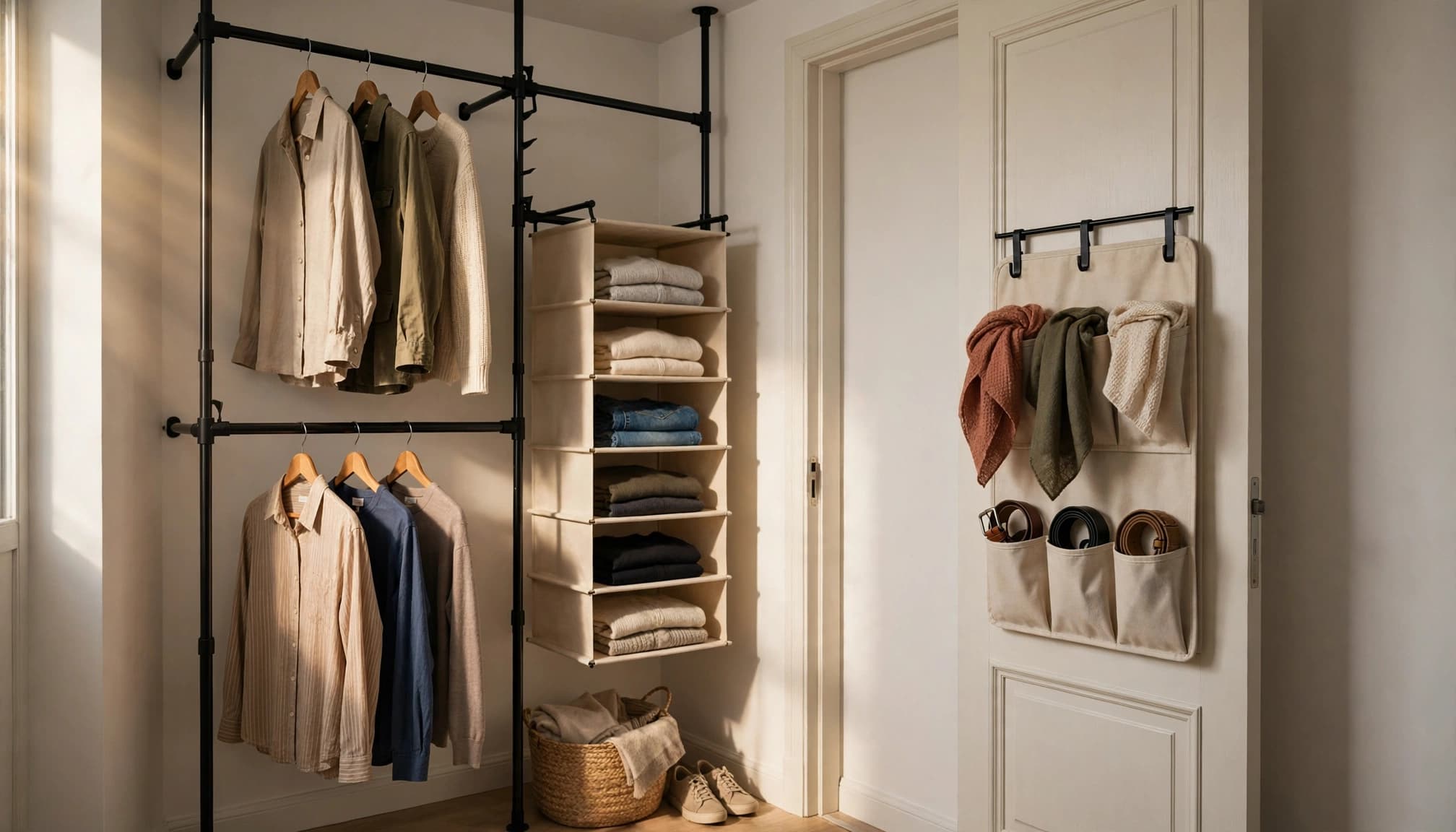
A hook-on second rod is worth considering when most of your clothes are short. Measure the hanging length of your actual garments before choosing one.
Leave a separate section for dresses and long coats. Otherwise, the lower rod can get in their way.
A fabric hanging organizer offers shelf-like storage for lightweight folded clothes. It also takes up rod width, so compare that trade-off before installing it.
Check the organizer’s load limit and the condition of the existing rod. Add storage only where the supporting structure can handle it.
Use over-the-door organizers for lightweight accessories
Choose over-the-door organizers for scarves, belts, and other small accessories. Check the hook thickness, door clearance, and pocket depth before buying.
Sliding and bifold doors need extra care because their movement can interfere with an organizer. Open and close the door fully while checking your layout.
Command hooks are another option for lightweight items. Follow the instructions for surface preparation, weight limits, and removal.
Review your lease before making changes. Removable products aren’t a guarantee against damage, and a freestanding organizer may be a better choice for your rental.
Keep Shoes and Small Accessories Contained
Small accessories are easier to manage when each category has a defined home. For practical accessory storage, choose containers that make contents easy to see or reach.
Divide Socks, Underwear, and Jewelry
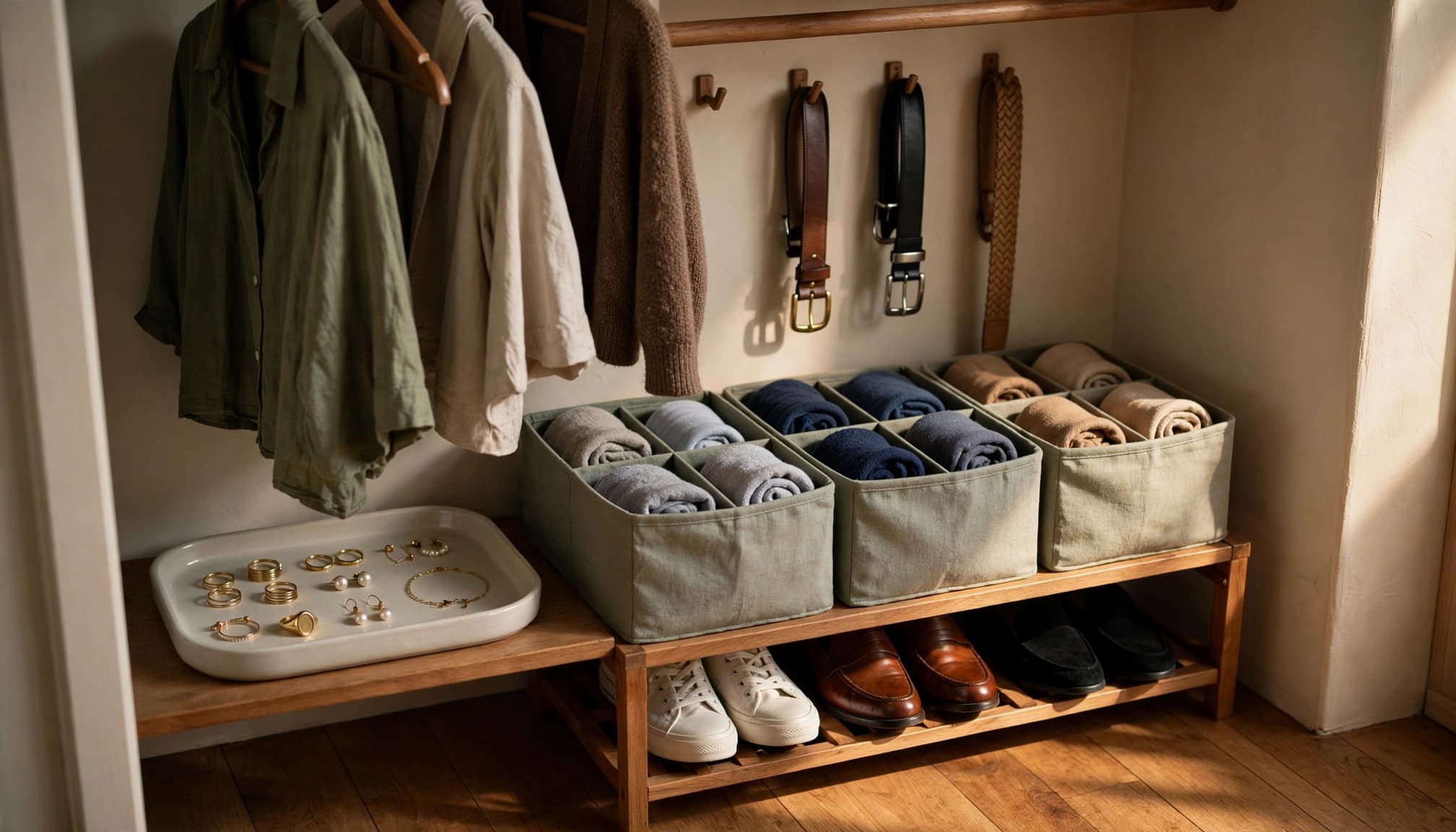
Use drawer dividers or shallow divided storage bins to separate socks, underwear, and exercise accessories. Check the drawer’s interior height before choosing inserts.
A slim set of drawer dividers can separate small jewelry from other drawer contents.
Keep everyday jewelry in a shallow tray with separate spaces. Store necklaces in individual compartments or on appropriate hooks to prevent tangles. For lightweight accessories, command hooks can work on a clean, compatible surface. Check the weight limit before hanging anything.
Belts can hang on a small organizer or sit loosely rolled in a divided container. Choose whichever method makes them easiest to return.
Repurposing a suitable box or tray is a budget-friendly option. Small-space organization doesn’t require every container to match.
Give Everyday Shoes a Clear Landing Spot
Place frequently worn shoes on low shoe racks if they fit beneath your clothing. Check that longer garments won’t brush against them.
Keep occasional pairs in a less accessible area. Don’t fill the closet floor with stacked boxes that you must move every morning.
If your everyday shoes already belong in entryway storage, keep that arrangement. There’s no need to duplicate their home inside the closet.
Leave room to retrieve a pair without lifting another. Tall boots may need a separate spot rather than being squeezed onto a short shelf.
Choose Organizers That Solve One Clear Problem
Set a budget after sorting and measuring your closet dimensions. Buy for a specific wardrobe storage need, such as separating folded shirts with drawer dividers or adding accessible hanging space.
When comparing organizers from IKEA, Target, Walmart, or The Container Store, check measurements, assembly requirements, and return policies. For reach-in closets, confirm each option fits your layout and works with storage bins you already own. Don’t assume a furniture-system accessory will fit an existing closet.
Use this comparison to narrow your options.
| Option | Useful When | What to Check |
|---|---|---|
| Hanging or freestanding organizer | You need removable storage | Load limits, lost rod space, and tipping risk |
| Adjustable modular systems | You want components you can rearrange | Installation method, compatibility, and total component cost |
| Professionally installed custom closet solution | You need a fitted layout | Written quote, property permission, and removal requirements |
Compare the complete cost, including delivery, hardware, tools, and installation. Modular systems offer adjustable components, but check how each piece affects the total cost. For a rental, a custom closet solution may require permission, a written quote, and a removal plan.
Start with the smallest budget-friendly change that addresses your main problem. Lightweight command hooks may be enough for one small storage need.
Rolling racks are useful only if you have room outside the closet. Measure the clothing rack’s footprint and keep walkways clear. More storage shouldn’t make your bedroom harder to use.
Make Small Closet Organization Easy to Maintain
A useful setup needs to work on ordinary laundry days. Keep even modular systems simple enough that putting clothes away feels straightforward.
Group by Category Before Using Color
Start with clothing type: shirts together, trousers together, and exercise wear together. This gives every item a predictable destination before you use color coding.
Then arrange colors within each group if that helps you scan your clothes. Color coding can make a particular shirt easier to spot, but it shouldn’t separate related items.
Use labels for containers whose contents aren’t visible. A short label such as “Gym Clothes” is enough.
Keep categories broad enough to follow easily. You don’t need separate containers for every minor clothing variation.
Check the Layout After Laundry Day
After using the closet for a week, notice what gets left out. A pile often points to storage that’s too full or inconvenient.
If clean shirts stay on a chair, their shelf may be difficult to reach. Drawer dividers can help separate folded shirts if a drawer is overcrowded. If shoes gather beside the rack, its spaces may not suit the pairs you wear.
Adjust that part of the system before adding another organizer.
Return empty hangers to one spot, use command hooks to put lightweight accessories back in place, and keep a laundry basket accessible. Leave some spare room for clean clothes returning from the wash. Small closet organization is easier when storage isn’t filled to its limit.
Key Takeaways
- Give everyday clothes the easiest-to-reach space, and move occasional items to less accessible areas.
- Measure door clearance as well as interior dimensions before choosing organizers.
- Use removable storage carefully, with attention to load limits, installation instructions, and rental rules.
- Test your layout through a normal laundry cycle before buying more.
Frequently Asked Questions
How can I organize a small closet on a budget?
Start by sorting your clothes and measuring the space before buying anything. Repurpose boxes or trays you already own, then add an organizer only to solve a specific storage problem.
How do I make a small closet feel bigger?
Keep everyday clothes easy to reach and move seasonal items to a less accessible shelf or another suitable storage area. Use vertical space where it fits, while leaving enough room to slide hangers and retrieve items.
What should I hang versus fold in a small closet?
Hang clothes that wrinkle easily or need their shape protected, such as dresses and button-down shirts. Fold soft basics and heavy sweaters when shelves or drawers make them easier to store and reach.
How can I organize a small closet in a rental?
Consider removable or freestanding storage, and check your lease before making changes. Follow product instructions and weight limits, since removable products can still damage surfaces.
Build a Closet That Supports Your Daily Routine
Your closet is easier to use when each everyday item has an accessible home. Start with what you wear, then choose storage that fits your space and routine.
You don’t need to complete every change at once. Fix the spot that slows you down most, use it for a week, and adjust until getting dressed takes less effort.