When several people use one bathroom, the problem usually isn’t a lack of effort. It’s that everyone needs the same sink, shower, and storage at the same time. A practical system for shared bathroom organization gives each person a clear place for daily items and makes cleanup easy to share.
You can start with the storage you already have. Set zones first, then add only the organizers that solve a specific problem. Here’s how to make a small shared bathroom easier to use.
Key Takeaways
- Give each person a defined spot for toiletries, towels, and shower products.
- Measure around pipes, doors, and fixtures before buying storage.
- Use removable organizers where they fit, and follow their installation and weight limits.
- Set a simple daily reset and a rotating cleaning schedule.
Set Up Zones Before You Buy Storage
Start by grouping bathroom items by owner and use. Put daily toiletries, shared supplies, backups, and cleaning products into separate groups. This quick sort shows what needs to stay within reach and what can be stored elsewhere.
Give everyone a personal space
For practical bathroom organization, assign each person a shelf, drawer section, tray, or labeled bin. Use small containers for one person’s everyday products, while shared items such as hand soap stay in a common spot. If the bathroom is tight, use different colors or shapes so each person can find their things without reading labels.
Keep backups outside the busiest area when you can. In a small apartment, extra shampoo or towels may fit better on a dry closet shelf than under a crowded sink. These small-space storage ideas help keep the bathroom focused on what you use each day.
Make the setup fit your routine
Give frequently used items the easiest spots to reach. Place occasional-use products higher or farther back, and keep heavy items lower. If children share the bathroom, make their towel hooks and everyday containers easy to reach without help.
For more sorting ideas, see how to organize a bathroom without a linen closet.
Choose a Sink Setup That Fits the Room
A double bathroom vanity gives each person a separate sink area and storage under the sink. Vanities are available as wall-mounted or freestanding units, so you can choose a style that fits the room and the plumbing.
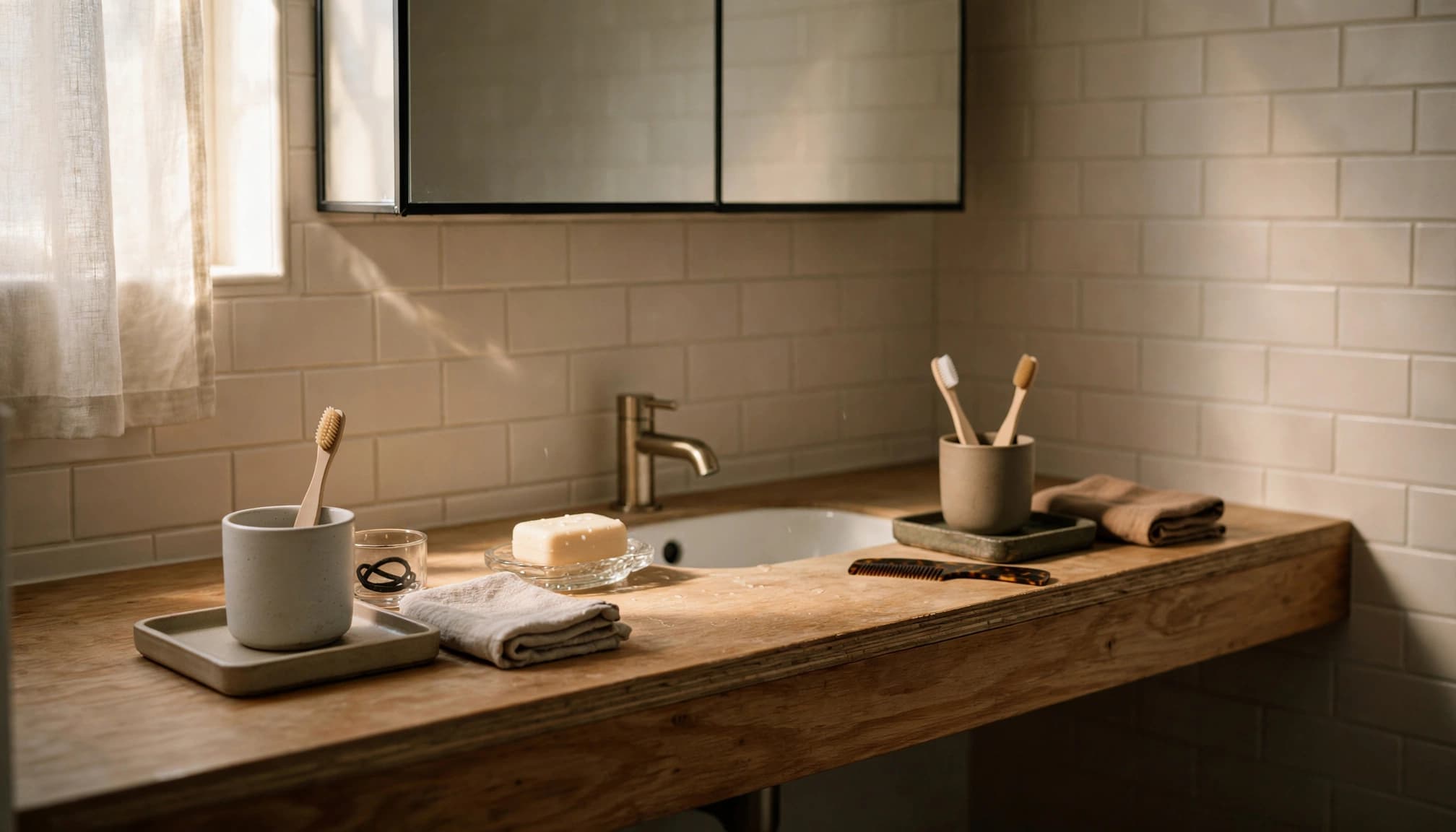
Compare a double bathroom vanity with separate sinks
One double bathroom vanity is usually less expensive than two separate sinks in the same style. It’s also more compact and often easier to install. Two separate sinks give you more flexibility in spacing and placement, which can help when the existing plumbing or room layout doesn’t suit one large vanity.
A trough sink is another option when several people need access to one basin. Trough sinks can accommodate multiple faucets and come in different styles, including stone. Depending on the model, they can sit on an existing countertop, mount to a wall, or be freestanding.
Before choosing a layout, measure the room and check the clearance around the sink and available counter space. The NKBA bathroom planning guidelines include planning space in front of a lavatory.
Use a medicine cabinet to add storage
A medicine cabinet combines a mirror with built-in storage, so you may not need to buy a separate mirror and storage cabinet. A wider cabinet or a pair of cabinets can give two people their own mirror areas. A recessed model sits inside the wall and takes up less room on the surface of the wall.
Clear Counter Space Before Adding More
Remove empty containers and products you no longer use. Put occasional-use items in a cabinet or on a shelf, and keep only daily essentials on the counter. This is often enough to make the sink area work better for two people at once.
Divide the remaining counter into personal zones. A tray, cup, or small bin can keep each person’s toothbrush and face products together. Leave a shared area for soap and other items everyone uses. If you’re still short on space, look for a shelf or cabinet that fits the wall before considering a countertop renovation. Renovation is the last option, not the first fix.
Organize Under the Sink Without Drilling
The cabinet below the sink is useful bathroom storage for cleaning supplies and backups, but pipes and valves take up room. Measure the cabinet opening, depth, and clear areas around the plumbing before choosing bins. Keep shutoff valves accessible, and leave enough space to spot moisture or reach a leak.
Use a tension rod to free cabinet floor space
A tension rod fitted under the sink can hold a paper towel roll. You can also hang bottles by their nozzles to move them off the cabinet floor. Check that the rod fits securely and doesn’t block plumbing access.
Two rods set at the same height can make a simple shelf for towels or other lightweight items. Use this setup only when the rods fit firmly, and keep stored items within their weight limits.
Choose organizers that fit around pipes
Small removable bins or narrow drawer organizers can use the open space beside the plumbing. Make sure each shelf or container slides out without hitting pipes, hinges, or the cabinet door. Keep products upright, and store cleaning supplies away from children and pets.
For renter-friendly storage, try organizers that sit inside the cabinet before adding anything to the wall. You can also find more over-the-toilet storage ideas for small bathrooms when the cabinet is full.
Give Each Person a Shower Spot
When shower products belong to everyone, bottles tend to spread across the tub edge. Give each person a shower basket or caddy and keep only current-use products in the shower. Store unopened backups somewhere dry.
Pick a removable caddy for a small shower
A removable corner organizer can hold frequently used bottles without taking up the floor of the shower. One suction-cup corner organizer described in a DIY setup holds 6.5 lb and has drainage holes. Suction accessories need a compatible surface and secure placement, so follow the product’s instructions and load limit.
In a small shower, removable caddies are especially useful. Each person can take their basket out when they’re finished, leaving more room for the next person.
Reduce mix-ups with labeled bottles
Amber pump bottles for shampoo, conditioner, and body wash can keep the shower looking less crowded. Label each bottle clearly so people know what’s inside. Don’t transfer products if doing so removes important use or safety information from the original packaging.
Make Towels Easy to Hang Up
A single towel rack may not give everyone enough space. One family replaced a rack that held two towels with six separate hooks, so each child had a clear place to hang a towel.
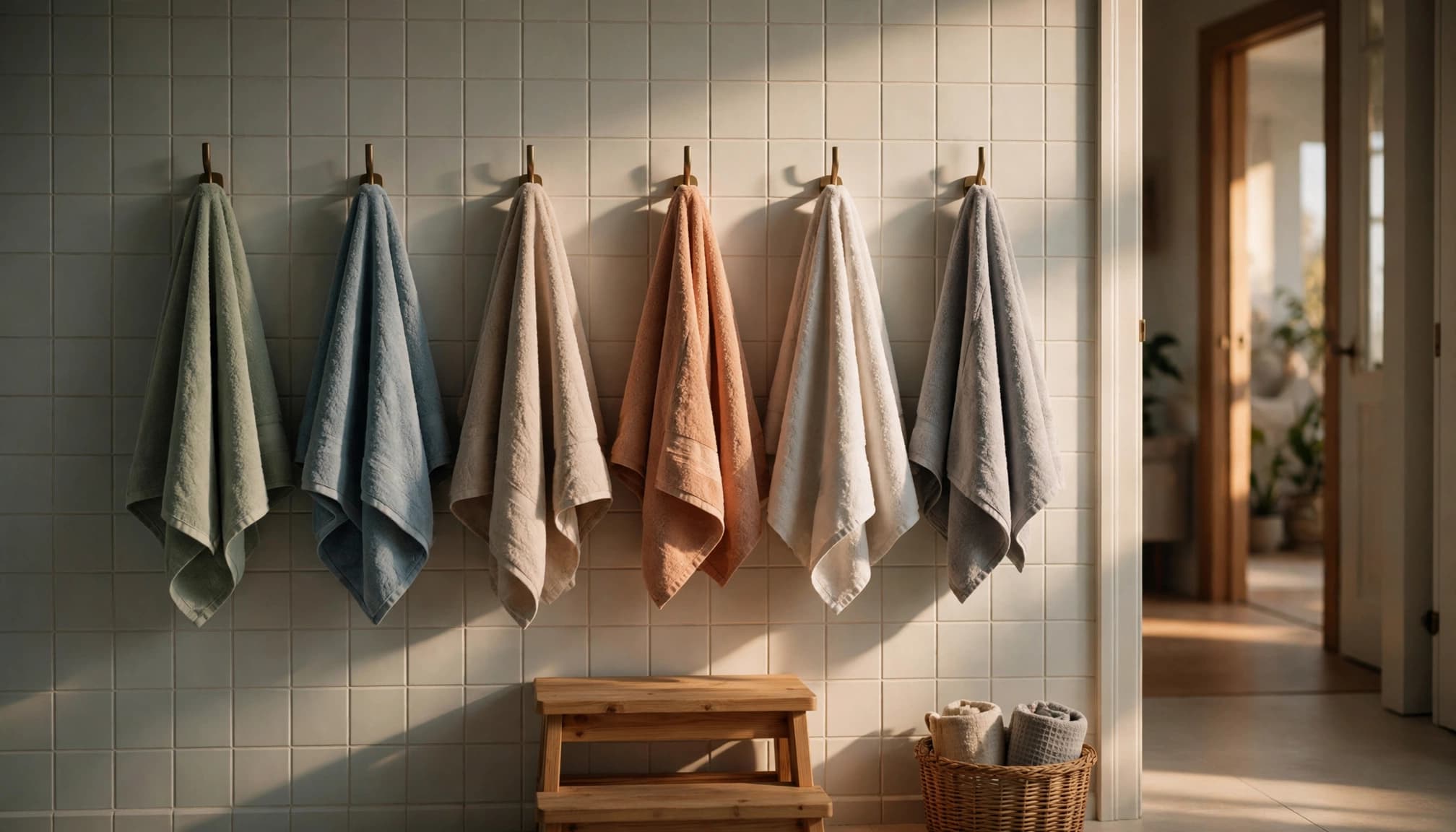
Give each person a hook
Place hooks where everyone can reach them. Separate hooks give each person a spot, unlike the shared towel rack. Children are more likely to put towels away when hanging one up is simple. A Command hook is a renter-friendly option for keeping a towel off the floor. One hook in the referenced setup was rated for 4 lb, but that rating applies only to that product. Follow the surface and weight instructions for your model.
Keep clean and used towels separate
Give clean towels a dry shelf or basket, and hang used towels where they can spread out and dry. If the bathroom stays humid, store extra clean towels in another dry area instead of filling the bathroom with linens.
Divide Drawers Into Clear Sections
Small plastic containers, also called drawer organizers, can separate toothbrushes, toothpaste, floss, hairbrushes, and hair bows. Give each child a defined drawer section, with personal containers for individual items and separate containers for shared supplies. This makes it easier for children to find what they need and put it back in the right place.
Choose washable containers for spots where spills are possible. Keep makeup and products that need a dry environment away from plumbing and damp areas. If a drawer is shallow, use small trays rather than stacking items where they’re hard to reach.
Set a Routine for Busy Mornings and Cleaning
Bathroom organization works best when everyone knows where their things go. Agree on simple rules: return personal items to their zone, clear the sink after use, and hang towels after bathing. If two people need the mirror at the same time, give each a section of counter space and keep shared items in the middle.
Make a morning plan that feels fair
If several people leave at the same time, agree on a short order or give each person a specific time window. Keep the products each person needs for the morning together in an easy-to-reach tray or basket. A clear counter and separate shower caddies make it easier for one person to get ready while another uses the sink.
Share cleaning jobs
A shared bathroom usually needs more frequent attention than a bathroom used by one person. Set a cleaning schedule with clear roles, such as wiping the counter, cleaning the sink, and restocking cleaning supplies. Rotate tasks so one person doesn’t end up doing the same job every time.
A quick daily reset can include putting items away and wiping visible spills. A weekly clean is a practical starting point for many households, with extra attention whenever surfaces get dirty. The CDC’s home cleaning guidance advises cleaning household surfaces when they’re visibly dirty or as needed.
Frequently Asked Questions
How can you organize a shared bathroom so everyone has dedicated storage?
Give each person a drawer section, shelf, tray, or basket. Keep shared supplies in a separate area, and store backups elsewhere if space is limited.
What does “two rooms with a shared bathroom” mean?
It usually means two bedrooms or guest rooms use the same bathroom instead of having a private bathroom for each room. Both occupants need a clear place for personal toiletries and towels.
How do you organize counter space when two people use the bathroom together?
Put away items you don’t use every day, then give each person a small tray or defined area. Keep shared soap in a central spot and store backups in a cabinet or on a shelf.
How often should you clean a shared bathroom?
There isn’t one cleaning schedule for every household. A quick daily reset and a weekly cleaning rotation are a simple starting point. Restock cleaning supplies as needed, and clean surfaces sooner when they’re visibly dirty.
How can you organize under the sink without drilling?
Use a tension rod or removable bins that fit around the pipes. Measure first, keep valves accessible, and follow each product’s installation instructions and weight limits.
Make the Bathroom Easier for Everyone to Use
You don’t need a major remodel to make a shared bathroom feel more organized. Give each person a clear home for daily items, keep the counter and shower limited to what’s in use, and choose storage that fits around the room’s existing fixtures.
Start with one problem area, such as the sink or towel rack. Once everyone knows where their things belong, the daily reset takes less time and the room works better for the whole household.