To organize mugs in a small kitchen cabinet, keep everyday cups within easy reach, separate occasional pieces, and adjust shelf spacing before adding organizers. The most useful mug storage ideas give each cup enough room to come out without disturbing its neighbors.
You don’t need matching mugs or a new cabinet. We recommend starting with easy access, then adding storage only where it solves a clear problem. First, decide which mugs deserve your most convenient shelf.
Key Takeaways
- Keep your everyday mugs near the kettle or coffee maker, with occasional cups on a less convenient shelf.
- Measure handles, cabinet openings, and lifting clearance before choosing an organizer.
- Try adjustable shelves or an existing tray before buying a riser or hanging rack.
Start With the Mugs You Actually Use
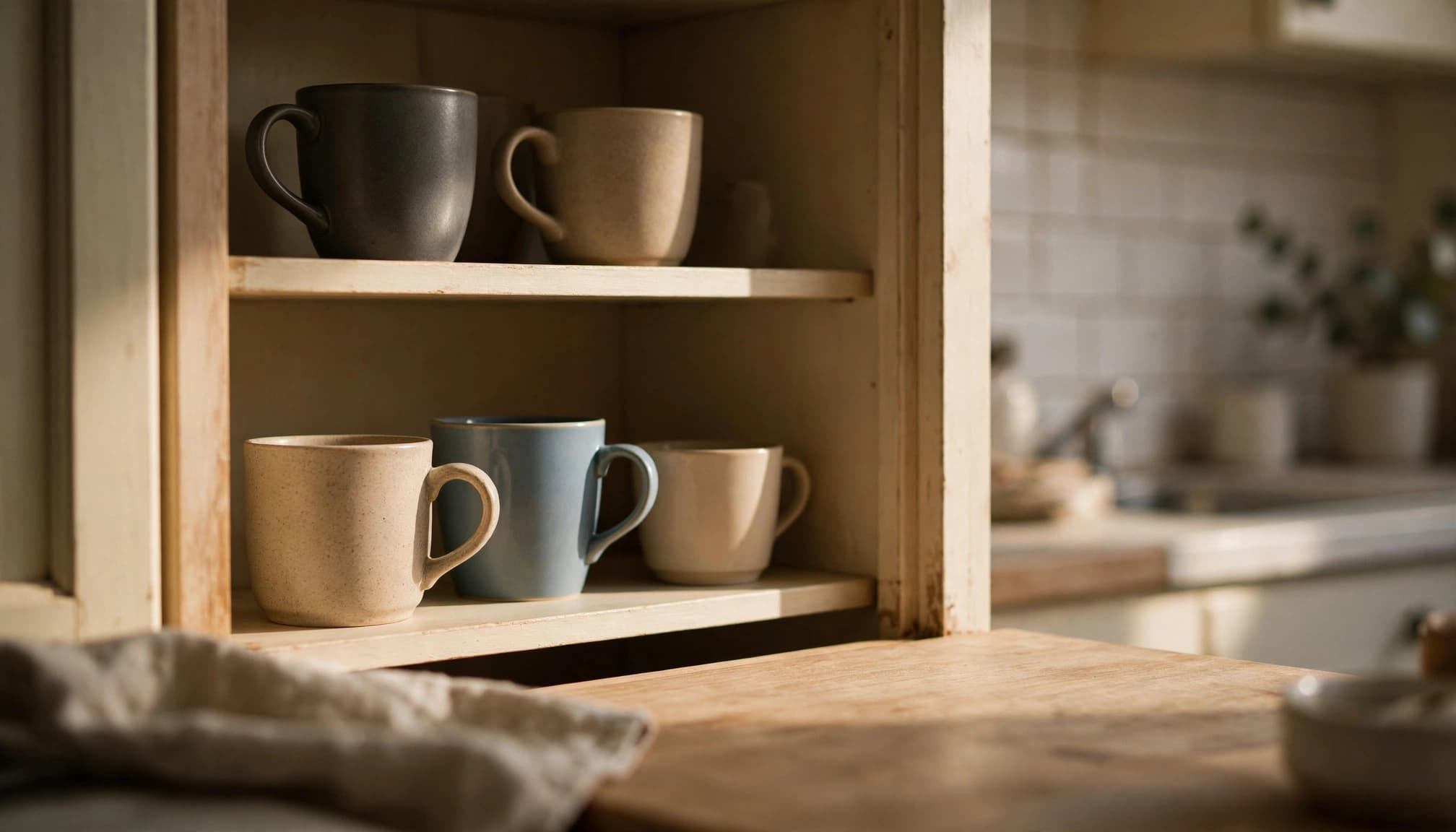
Empty just the mug cabinet, leaving enough counter space for preparing food. Bring in cups from the dishwasher, drying rack, and other rooms so you can see the whole collection.
Choose Everyday Mugs by Your Washing Routine
Keep a practical everyday group based on your household and how often you wash dishes. Someone who runs a dishwasher less frequently needs more cups than someone who washes one after each drink.
Separate mugs you enjoy using from those you repeatedly pass over. A handle that’s uncomfortable or a cup that doesn’t fit beneath your coffee machine shouldn’t occupy the easiest spot.
Remove damaged mugs from everyday use rather than trying to squeeze them back into the arrangement.
Separate Keepsakes and Occasional Cups
Guest cups, holiday mugs, and sentimental pieces don’t all need prime cabinet space. Keep occasional drinkware together on a suitable higher shelf, without building heavy stacks overhead.
A keepsake you never drink from can live with other sentimental belongings. However, avoid simply moving an unsorted pile into another crowded cupboard.
If neighboring shelves also need attention, our small-home decluttering checklist helps you work through one manageable area at a time.
Measure the Cabinet and Your Largest Mug
Useful small kitchen storage starts with the space you can actually reach. A mug may fit inside a cabinet yet remain awkward to remove through its opening.
Allow for Handles and Hinges
Measure the usable shelf width, depth, and height. Include anything that narrows the opening, such as hinges, shelf supports, or a center divider between doors.
Next, measure your tallest mug and your widest mug, including its handle. Those measurements matter more than the cup’s capacity.
Leave room above each mug to lift it clear. If you’re considering a riser, allow for its platform thickness and supports as well. The space beneath it must accommodate your hand, not only the cup.
Adjust Existing Shelf Heights First
If your cabinet has adjustable shelves, try moving one before buying anything. Tall gaps above short cups often leave useful storage space unused.
Group taller latte mugs on one shelf and shorter cups on another. This lets you reduce unnecessary headroom without forcing every shelf to accommodate the tallest item.
Keep the supports level and fully seated. Then return the mugs and close the doors. A shelf arrangement only works when cups clear the opening during normal use.
Choose Mug Storage Ideas That Solve One Problem
Buy for the inconvenience you’ve identified. A riser helps with unused height, while a tray helps bring smaller cups forward. Neither automatically improves every cabinet.
Add a Shelf Riser for Wasted Height
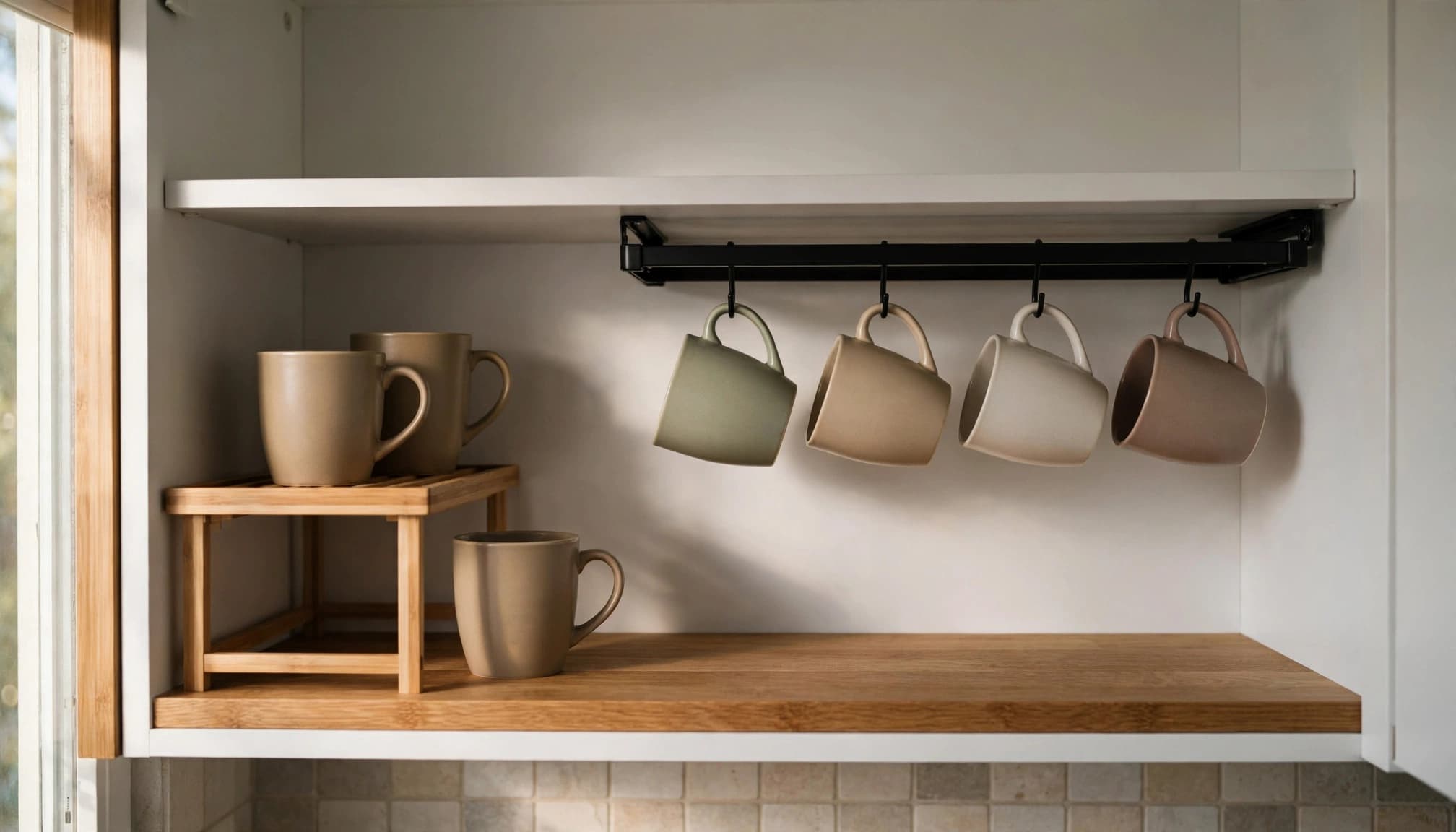
A freestanding riser creates a second surface without attaching anything to the cabinet. Choose one that stands securely, with legs that leave useful space underneath.
Put frequently used mugs where you can retrieve them without reaching around the riser’s legs. Avoid balancing cups near its edges.
If mugs share the cupboard with dinnerware, our guide to organizing plates and bowls helps keep those groups accessible too.
Use a Shallow Tray for Deep Shelves
A washable, low-sided tray can bring smaller mugs forward together. Start with one you own, provided it’s sturdy and easy to lift.
Keep mugs in a single layer and avoid packing handles tightly together. Deep baskets hide cups and can become heavy when filled with ceramics.
Allow enough counter space to set the tray down. If pulling it out requires clearing your preparation area every morning, individual mug storage will probably work better.
Can You Hang Mugs Without Drilling?
Yes, a suitable slide-on under-shelf rack can hold mugs without permanent installation. However, it needs enough clearance above the shelf for its bracket and below it for hanging cups.
Choose a rack intended for mugs. Place cups so their bodies don’t knock together, and keep the hanging area clear of items underneath. Heavy stoneware often fits more comfortably on a shelf.
Be cautious with adhesive hooks. Command Medium Utility Hooks have a listed capacity of 3 pounds, but that rating doesn’t make them suitable for every cabinet surface or mounting direction.
Don’t treat a vertical-wall rating as permission to attach a hook beneath a shelf. For a straightforward renter-friendly storage option, choose a freestanding riser instead.
A hanging rack only adds useful space when you can remove a mug without bumping the shelf, neighboring cups, or cabinet door.
Our no-drill storage ideas cover other removable options when cabinet hardware would interfere with your setup.
Arrange Mugs Around Your Daily Routine
Once you’ve chosen the layout, give each type of cup a clear home. Consistent placement makes putting clean dishes away easier, especially in a shared kitchen.
Keep Everyday Cups Near the Kettle
Use a cabinet near your coffee maker or kettle when the location also suits unloading dishes. Keep mugs away from rising steam and leave appliance ventilation clear.
Place your most-used cups toward the front at a comfortable height. Reserve deeper corners for occasional pieces rather than hiding another daily group behind them.
Keep heavier mugs where you can lift them comfortably. Don’t move everyday cups to an awkward high shelf just to accommodate a rarely used appliance.
Give Different Shapes Separate Spaces
Line up similar mugs together, but don’t force a matching arrangement. Wide soup mugs and narrow espresso cups may need different shelf positions.
Turn handles consistently where that improves access. In some cupboards, angling handles slightly makes better use of width than pointing every handle sideways.
Keep travel mugs and their lids together in a separate section. Our water bottle storage guide offers arrangements for taller drinkware that would otherwise crowd ceramic cups.
Avoid nesting mugs unless their design allows secure stacking.
Test the Full Cabinet Before Buying More
Return everything that normally shares the cupboard before deciding the setup is finished. An empty-cabinet trial can hide problems that appear once plates and glasses return.
Take out your largest mug, then put it back. Repeat with a cup at the rear. Close the doors slowly and notice whether handles, brackets, or neighboring items interfere.
For door-mounted storage, remember that a loaded holder projects into the cupboard. Hooks over the door’s top edge can also prevent full closure or rub the finish.
Use the arrangement through your normal washing routine before adding another organizer. You may discover that a tray needs lower sides or a riser blocks your favorite cup.
Finally, leave a little unoccupied space. A cabinet packed to its limit is harder to maintain when clean mugs return at different times.
Frequently Asked Questions
Should You Store Mugs Upright or Upside Down?
Either position can work on a clean shelf once mugs are completely dry. Upright storage keeps the drinking rim off the shelf, while upside-down storage covers the opening.
Choose the position that suits the mug’s shape and stability. A narrow rim or uneven decorative edge may not provide a secure base when inverted.
Is Stacking Mugs a Good Space-Saving Solution?
Stack mugs only when their design supports it. Unstable stacks make lower cups harder to retrieve and put ceramic rims in contact with other pieces.
For ordinary mixed mugs, an adjustable shelf or stable riser provides separation without resting one cup inside another.
How Do You Organize Mugs in a Very Narrow Cabinet?
Start with a single accessible row and adjust shelf heights for different cup sizes. Position handles so they don’t obstruct neighboring mugs.
A bulky rack may consume more usable width than it adds. If cups remain crowded after sorting, move occasional mugs elsewhere rather than forcing a second row you can’t reach.
Keep Your Mug Cabinet Easy to Use
A practical mug cabinet gives everyday cups comfortable, direct access. Fewer awkward stacks and better shelf spacing often help more than another storage accessory.
Start with the mugs you use, then solve one measured problem at a time. The finished arrangement should make returning a clean cup just as simple as taking one out.
We only recommend top-rated, affordable products you can trust. As an Amazon Associate, I may earn from qualifying purchases through the affiliate links above at no extra cost to you. Thank you for supporting our work.