When your clean towels have nowhere to go, even a tidy bathroom can feel crowded. The most useful bathroom storage ideas give everyday supplies a clear home and keep extras out of your way.
You don’t need a bathroom renovation to make small bathroom storage work, but you do need to check what fits before buying organizers. Start with what you keep, then assess your walls, door, and floor space. Check the space under the sink too, then choose practical storage solutions.
Key Takeaways
- Sort bathroom supplies into daily essentials, backups, and items that can be stored elsewhere before buying organizers.
- Measure wall, under-sink, door, and floor space carefully, and check that storage won’t block plumbing, fixtures, or walkways.
- Keep clean towels in a dry place and let used towels dry fully with enough airflow.
- Choose storage that’s easy to reach, clean, and maintain; use existing containers where they already work.
Start With What Your Bathroom Needs to Hold
Before adding shelves or baskets, empty your existing storage and group everything by use. This simple bathroom organization step helps you choose organization ideas that fit the towels, toiletries, and bathroom accessories you need to store.
Sort Like With Like
Put hair products together, gather dental supplies, and stack your clean towels in one place. Keep cleaning products separate from personal-care items, following their storage instructions.
Before shopping, declutter your room by removing empty containers and unusable products from the bathroom. Set aside items you don’t use, and check whether unopened products are suitable for donation locally.
Next, look for duplicates. Several open bottles can take up space you need for everyday items. Finish suitable products before opening replacements, rather than combining bottles or transferring products without their labels.
Separate Daily Supplies From Backups
Keep your toothbrush, face wash, and other daily essentials within easy reach. Spare shampoo and unopened soap can sit higher, farther back, or outside the bathroom.
Decide how many clean towels you need between laundry days. Store that working supply nearby and move guest linens or extra sets to another dry storage area.
Your bathroom doesn’t need to hold every bathroom-related item. In a small apartment, a basket on a bedroom closet shelf can hold spare towels without crowding your vanity. Give that basket a fixed purpose so it doesn’t become another mixed pile.
Which Bathroom Storage Ideas Fit Your Wall Space?
Look over the toilet, beside the mirror, and along unused wall sections. Vertical space can hold supplies without adding another object to the floor. Lightweight hanging organizers may suit a clear wall area.
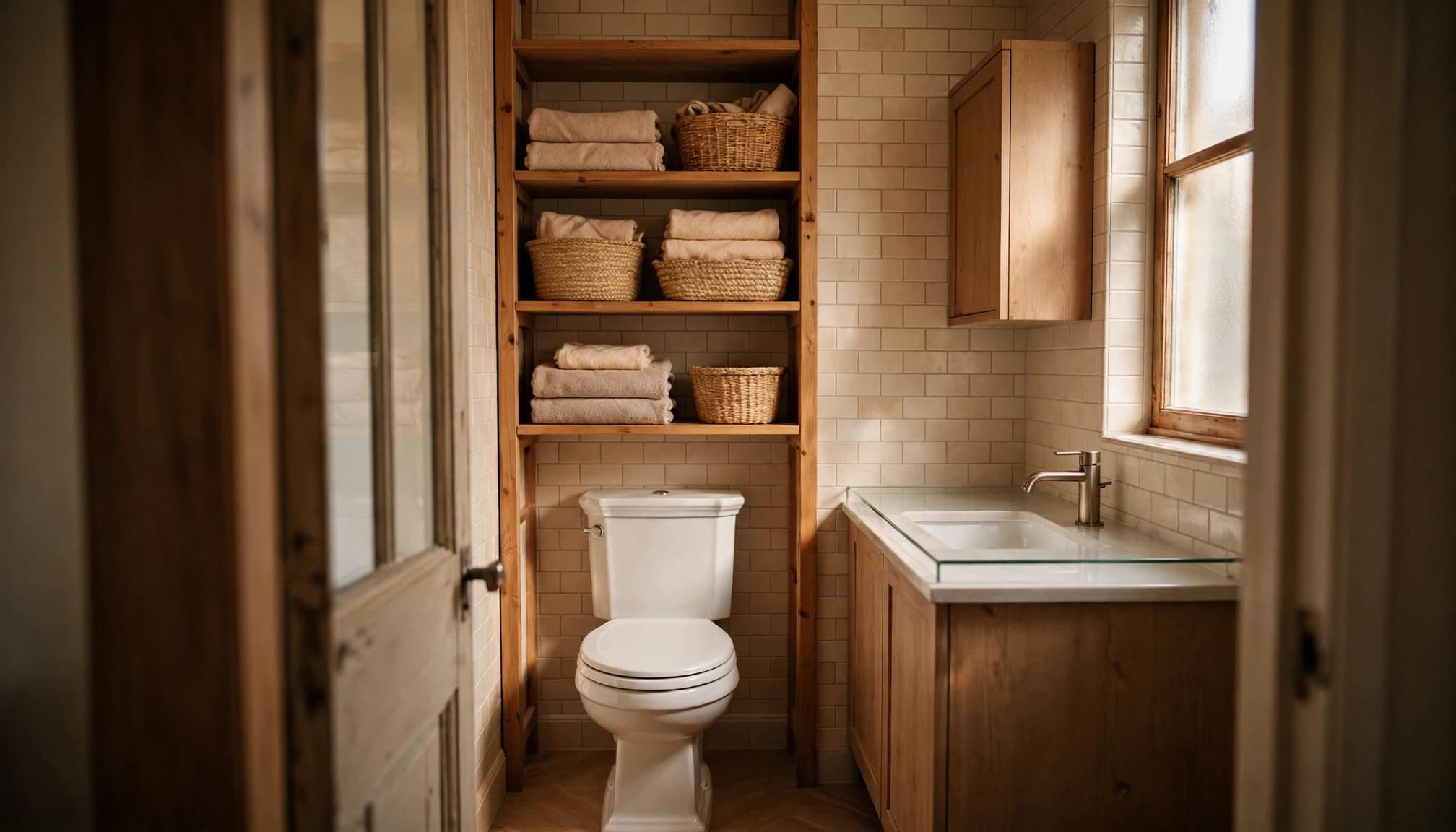
Check the Space Above the Toilet
Floating shelves work well for folded towels and lightweight baskets. Wall cabinets give you enclosed storage when you prefer to keep supplies out of sight.
Before choosing either, check the toilet tank, lid, and flush controls. Leave enough room to remove the tank lid and reach anything that needs maintenance.
Measure shelf depth as well as width. Position floating shelves so they don’t project too far and make the toilet uncomfortable to use.
For installation, follow the product’s mounting instructions and load limits. Check the wall construction and use the required hardware. If you aren’t sure where pipes or wiring run, get help before drilling.
Work Around Windows and Narrow Layouts
A window above the toilet doesn’t rule out wall storage. Check the space beside it rather than covering the glass or blocking the opening.
In a narrow galley bathroom, shallow storage is usually more practical than deep shelves. Keep projecting corners away from the route between the door, sink, and shower.
Avoid filling every wall. Choose a storage position you can reach comfortably and clean easily. Anything above comfortable reach should hold occasional supplies, not products you use each morning.
Make Storage Under the Sink Fit Around the Plumbing
Your bathroom vanity may have useful space on either side of the pipes. Measure each area under the sink separately instead of treating the cabinet as one open box.
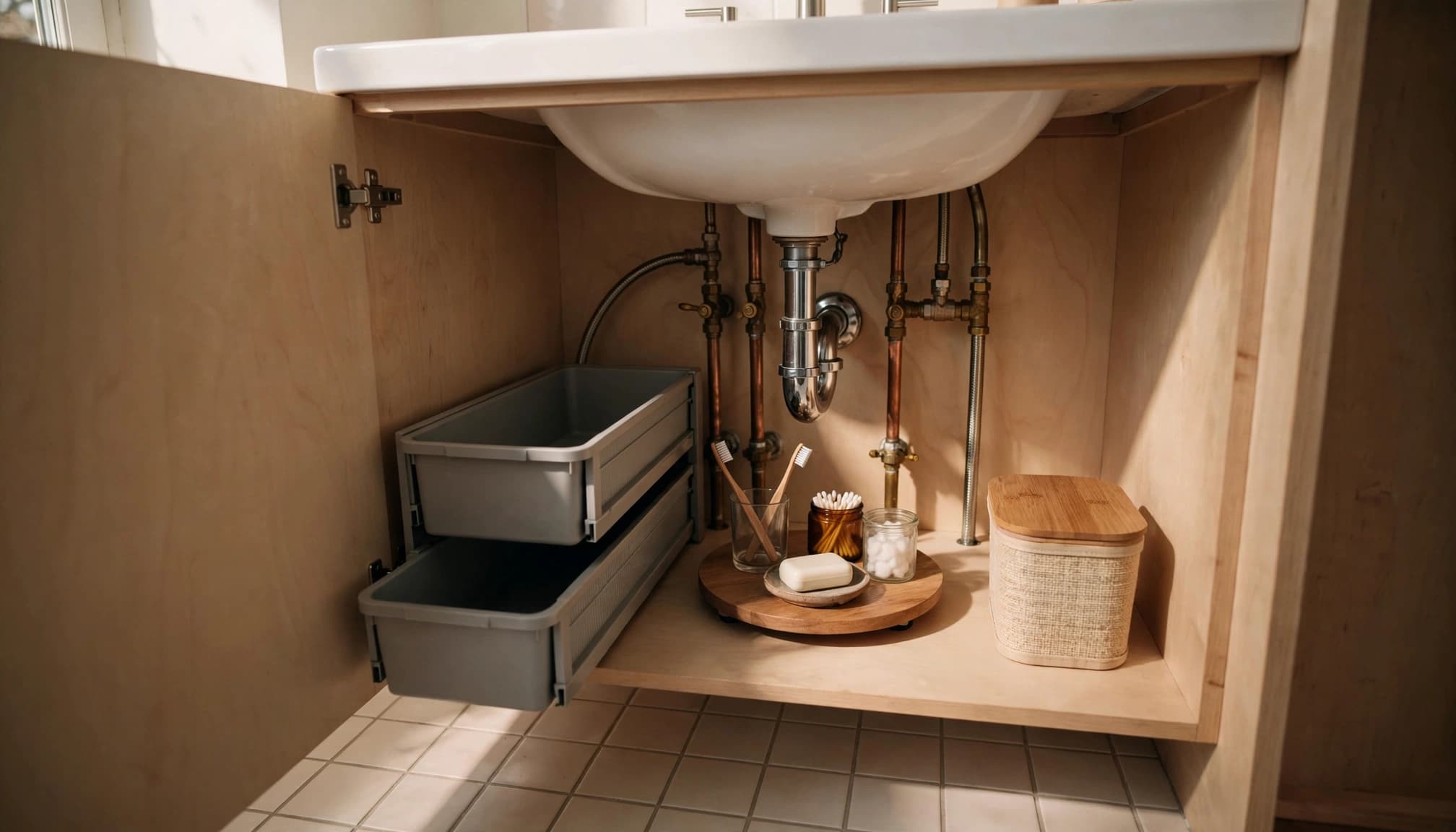
Measure the Obstacles First
Check the cabinet opening, internal depth, pipe positions, and door hinges. Remember that an organizer must pass through the opening, not simply fit inside.
Narrow removable drawer organizers are often easier to position than one large organizer. Stackable drawers can use the height beside the plumbing, as long as they open without hitting pipes or hinges.
Leave shutoff valves and plumbing connections accessible. Don’t wedge containers against pipes or cover the whole cabinet floor with tightly packed supplies. You need to spot moisture and remove items easily if there’s a leak.
An organizer that fits inside the cabinet can still be unusable if its drawer can’t clear the doorway.
Give Each Container One Purpose
Use separate storage containers for hair care, dental backups, and cleaning supplies. Choose washable storage where spills are possible, and keep products upright.
A second set of drawer organizers can help fit supplies around pipes. A slim hanging organizer on the inside of a cabinet door can hold lightweight items, provided it clears the hinges.
A lazy Susan can help you reach bottles in a broad, clear section of the cabinet. Check its full rotation before buying, since nearby pipes can stop it turning.
Keep frequently used supplies at the front. Put unopened replacements farther back, but avoid deep stacks that require unpacking the cabinet.
Reserve makeup storage for a suitable dry vanity area, away from plumbing and places where products could get wet.
If you have a pedestal sink, a washable sink skirt can conceal a small container where space permits. Keep fabric clear of damp flooring and don’t restrict access to the plumbing.
Add Renter-Friendly Storage to Doors and Showers
No-drill options can add small bathroom storage, but each still needs a fit check. Review your lease and the product instructions before attaching anything to a surface.
Use the Door Without Blocking It
Over-the-door hanging organizers can hold brushes, dry toiletries, or lightweight supplies. Check that their hooks fit your door thickness and that the door closes fully.
Test the door’s complete swing, too. Hanging pockets shouldn’t hit the sink, catch on towel rails, or interfere with the latch.
Over-door towel hooks are another option when you lack a towel rack. Spread towels out rather than piling several on one hook.
Adhesive hooks need a suitable surface, correct preparation, and the recommended curing time. Check both the load rating and removal instructions. A removable product can still damage an unsuitable finish.
Keep Shower Supplies Inside the Shower
A shower caddy keeps shampoo and body wash close to where you use them. Choose a position that doesn’t interfere with shower controls or the showerhead.
Tension rods need surfaces and dimensions that match their instructions. Check them regularly for movement, especially in a damp area.
Hanging organizers for the shower can include S-hooks or baskets, but attach them only to supports designed for their load. Don’t assume your existing shower-curtain rod can carry extra bottles.
Use holders that drain rather than trapping water around products. Keep only your current shower supplies here; unopened replacements belong in dry storage. This also makes it easier to wipe the shower without moving a collection of bottles.
Choose Freestanding Storage That Leaves Room to Move
A narrow freestanding unit is a space saving option for small bathroom storage when your bathroom has no cabinet space. Measure the available footprint with the door open, and leave clear access to fixtures.
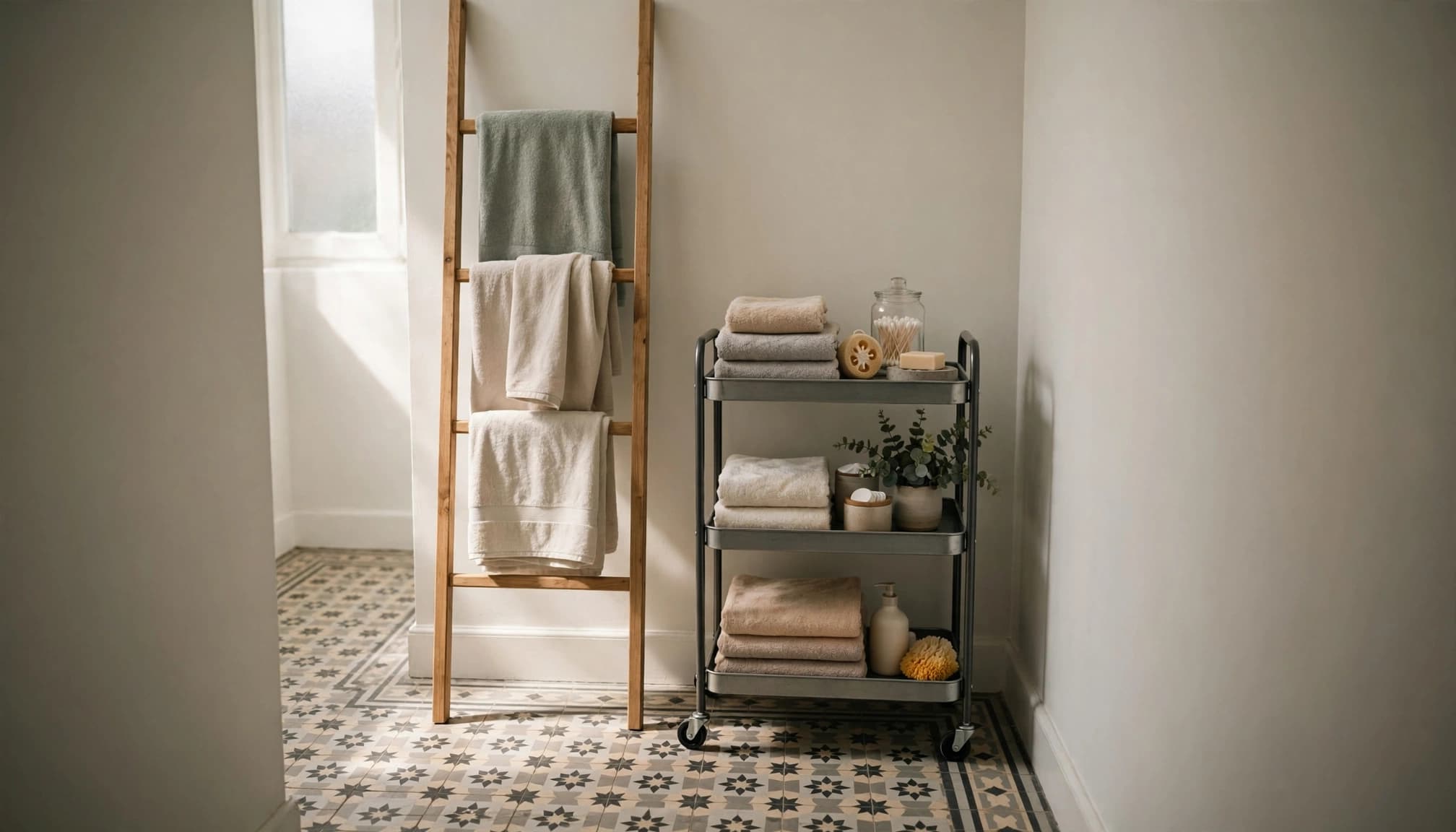
Compare these options against the space you have.
| Storage option | Useful for | Check before choosing |
|---|---|---|
| Slim rolling cart | Toiletries and spare supplies | Wheel clearance and somewhere to move it |
| Towel ladder | Towels that need room to hang | Stability and enough space around the base |
| Narrow cabinet | Enclosed towel and supply storage | Door clearance and anchoring requirements |
Choose the piece that solves your main storage problem without narrowing your walkway. A narrow cabinet can provide enclosed storage without a remodel, much like linen cabinets.
A bar cart you already own can hold bathroom supplies if its finish suits the room’s conditions. Use decorative baskets or removable containers to group small items, choosing baskets that tolerate moisture and are easy to clean.
A decorative ladder needs more thought than its slim appearance suggests. Its base projects into the room, and towels need space around them to dry. Follow its placement and securing instructions.
Freestanding doesn’t always mean renter-friendly. Some tall furniture requires wall anchoring, so check before buying.
For a budget-conscious setup, try existing storage bins or a suitable small shelving unit first. Spend on the missing function rather than replacing containers that already work.
Keep Clean Towels Dry and Easy to Reach
Without a linen closet, towel storage needs two separate spaces: somewhere for clean towels and somewhere for used towels to dry.
Keep clean towels away from shower spray and damp surfaces. Avoid storing them under the sink if leaks or moisture could damage them.
Fold towels to fit your shelf or container instead of forcing a large stack into a narrow basket.
Rolling towels can suit a deep basket. Folding them flat may work better on shallow shelves. Try both with the towels you own before choosing new storage.
Used towels need airflow. Hang them spread out on a towel rack or suitable rack, and let them dry before placing them in a hamper.
Don’t fill every shelf with linens. Leave enough space to lift out a towel without pulling down the pile.
If your bathroom stays humid despite ventilation, store most clean towels elsewhere. A dry bedroom cupboard or closet shelf can hold extras in dedicated storage containers. Keep only the supply you expect to use soon in the bathroom.
When you store toilet paper, choose a position protected from splashes. An enclosed container can keep spare rolls together, but it shouldn’t sit where water collects.
Keep Your Small Bathroom Storage Easy to Maintain
Good bathroom organization should be simple to maintain after a busy morning. If returning an item takes several steps, move it or its container.
Use a short weekly reset to keep supplies manageable:
- Return loose products to their assigned spaces and wipe the surfaces underneath.
- Check backup supplies under the sink and in your storage containers before adding anything to the shopping list.
- Remove empty packaging and put freshly washed towels back in their designated spot.
Set a clear limit for each category. Once your backup-soap bin is full, you don’t need another basket for soap.
Keep a little empty space in drawers and containers. It makes items easier to lift out and gives you room to clean.
If an area keeps becoming cluttered, check what lands there. A hairbrush left beside the sink may need a more accessible home, not a reminder to tidy.
Good small-space organization supports your routine. Change the arrangement when your routine changes.
Frequently Asked Questions
How do I organize a bathroom with no linen closet?
Separate daily supplies from backups, then give each category a designated home. Store extra towels or unopened products in another dry area if the bathroom can’t hold them comfortably.
Where should I store clean towels in a small bathroom?
Keep clean towels away from shower spray, damp surfaces, and possible leaks. If the bathroom stays humid, store most towels in a dry bedroom cupboard or closet shelf and keep only a working supply nearby.
What can I store under a bathroom sink?
Use the clear areas around the pipes for grouped supplies in removable organizers or containers. Keep shutoff valves and plumbing connections accessible, and leave room to spot moisture or remove items if there’s a leak.
What are renter-friendly ways to add bathroom storage?
Over-the-door organizers, suitable adhesive hooks, and some shower caddies can add storage without drilling. Check product instructions, door clearance, surface suitability, and load limits before installing anything.
Make Your Bathroom Easier to Use
You can organize a bathroom with no linen closet by separating daily supplies, backups, and towels that need to dry. Choose bathroom storage ideas for your layout, with floating shelves where wall space allows, and keep fixtures accessible.
Start with one problem area, measure it carefully, and use what you already have where possible. A clear place for each item makes your bathroom easier to use and easier to keep tidy.
Pingback: Small Home Decluttering: A Simple Room-by-Room Plan