An unused corner can give your small home useful storage without drilling. You can choose freestanding shelves, tension-pole units, or lightweight adhesive shelves when the surface and load are suitable.
The right option depends on what you need to store and how much space you can spare. A shelf that clears your bathroom counter might be too shallow for books or too awkward beside your bed.
Start with usable space, then choose a setup that makes belongings easier to reach and put away.
Key Takeaways
- Choose a freestanding tower, tension-pole unit, or adhesive shelf based on the items you need to store, the available space, and the surface or support required.
- Measure the corner, containers, nearby doors, outlets, and walking paths before choosing a shelf.
- Follow product instructions and load limits. Secure freestanding furniture when required, and use adhesive shelves only on suitable surfaces for light items.
- Test the location with a container you already own before buying a shelf, and keep the setup only if it makes a daily task easier.
No drill corner shelf ideas for small rooms
Finding the right no-drill shelf ideas for small rooms begins with understanding your space. Each shelf type solves a different problem. Freestanding floor shelves provide storage, tension-pole options depend on suitable contact surfaces, and stick-on options suit only light loads.
Use a freestanding corner tower for books and baskets
A narrow corner tower suits books, folded accessories, or baskets that need a permanent home. Open shelves keep those belongings visible, so you don’t have to search behind closed doors.
Choose shelf depth based on your belongings. Paperbacks need less depth than large cookbooks, while baskets need clearance for their handles. Triangular units can narrow toward the back, so their widest edge doesn’t tell you everything.
We also have an article about Awkward Corners that’s worth a read.
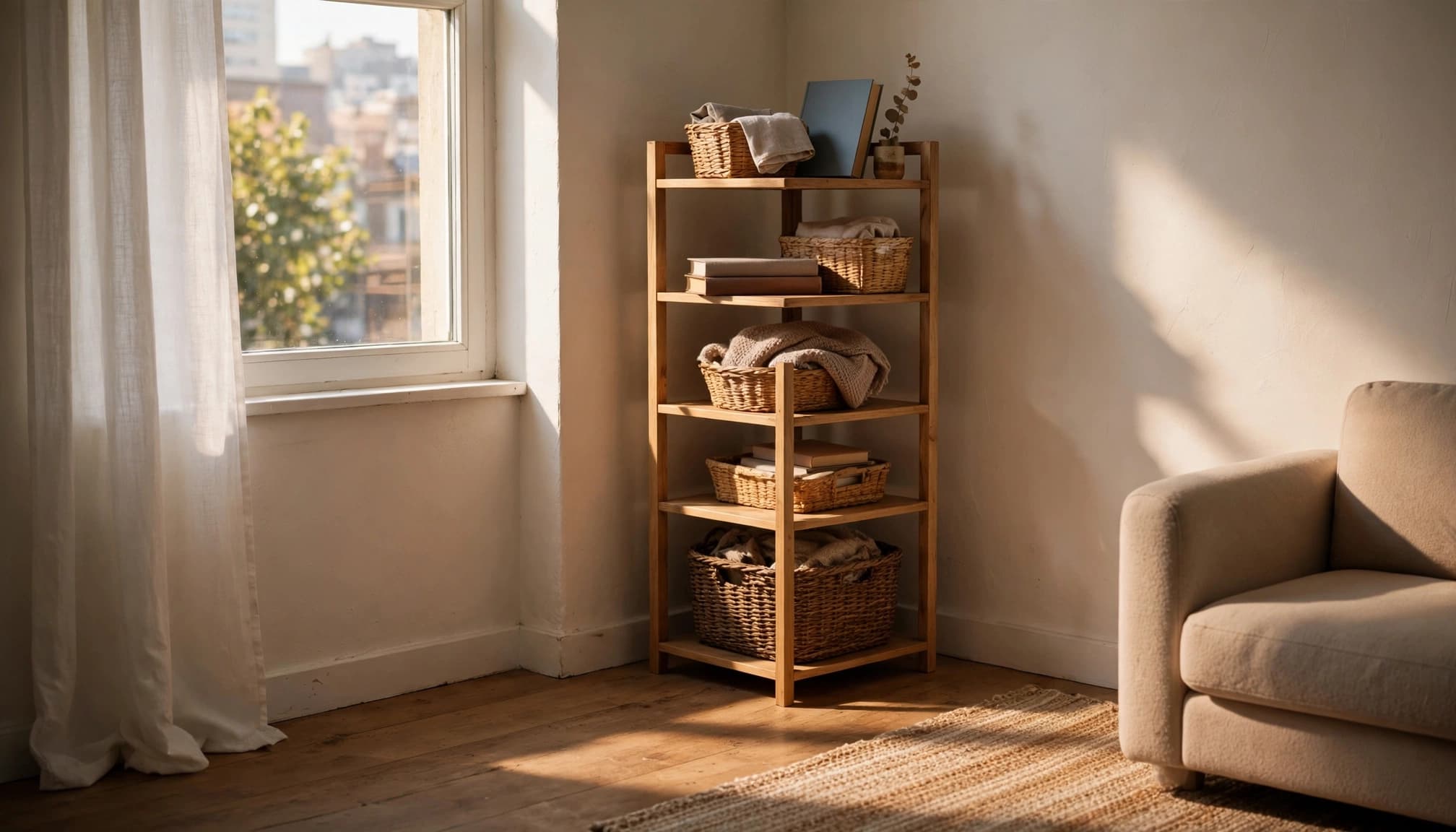
Place heavier items on lower shelves and keep the base on a level surface. A small footprint doesn’t guarantee stability. Follow all assembly and anchoring instructions, including any requirement to attach the unit to a wall. Choose another option if you can’t complete that installation. Leaning shelving also needs to be secured if the instructions require it.
Try a tension-pole shelf where the floor and ceiling allow it
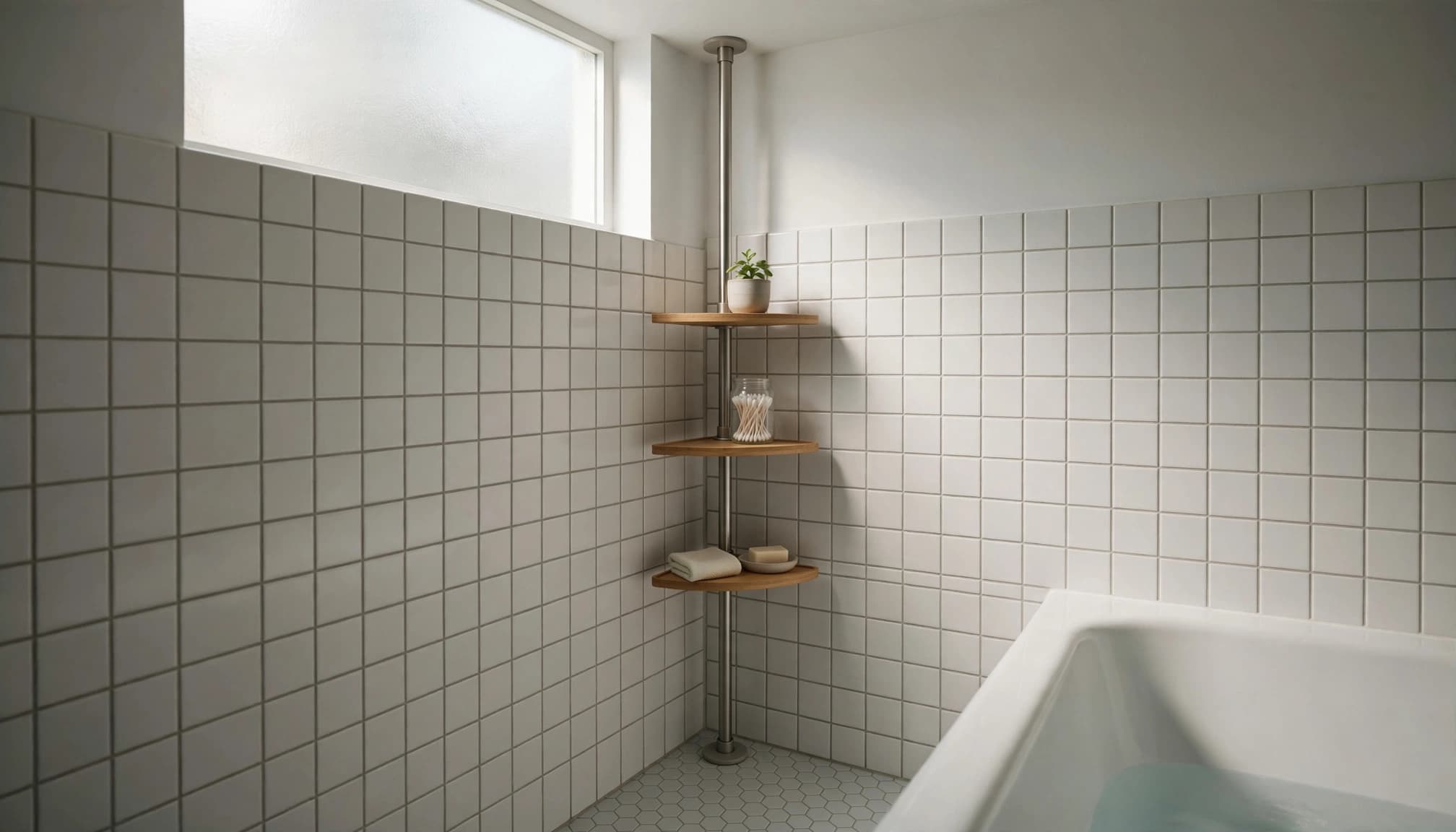
A tension-pole shelf can suit a tight bathroom corner where a conventional bookcase would take too much floor space. Adjustable trays can separate everyday toiletries instead of leaving bottles around the sink or bathtub.
The pole needs the ceiling height and contact surfaces specified for that product. Measure the distance between its intended contact points, then follow the installation directions. Don’t assume a suspended ceiling, sloped surface, or flexible panel can support the pressure.
Choose a model intended for the room’s conditions, particularly near water. Keep each tray within its stated load limit, and distribute contents as instructed. A pole only works where both ends have suitable support.
Choose adhesive shelves only for light items and suitable walls
A stick-on corner unit suits lightweight toiletries or small accessories when the product permits the intended surface and load. It isn’t a substitute for sturdy shelving that holds books, appliances, or heavy containers.
Surface requirements vary. For example, 3M Command’s guidance calls for matching the product to the item’s weight and surface, with application to a clean, smooth area. Its instructions don’t make every product suitable for every painted wall.
Use a unit designed for stick-on mounting rather than adding general-purpose strips to an ordinary shelf. Follow its preparation, waiting-time, and removal instructions. Also account for how the rating treats the unit’s own weight. Adding extra strips doesn’t establish a higher safe capacity.
A narrow picture ledge or display ledge can hold a few light items, but check its weight rating. Some no drill floating shelves can work as a wall shelf only when the intended surface, installation instructions, and capacity suit the item.
Match a no-drill corner shelf to your room and routine
Choose what belongs in the corner before choosing the shelf. Otherwise, you can gain storage while creating another place for unrelated belongings to collect.
Keep everyday items within easy reach
Use low or middle shelves for belongings you reach for regularly. In a bathroom, that might mean face wash and your current toiletries. Store lightweight, less-used supplies higher up, where reaching them won’t interrupt your morning routine.
Beside a sofa, keep your current reading material near the front. Don’t stack unrelated belongings behind it. In a bedroom, a slim shelf can replace a bulky nightstand only if you can comfortably reach what you need from bed.
For a kitchen coffee corner, shallow shelving can hold small supplies without projecting far into the room. Larger pantry containers need more depth and stronger support, so they usually call for a suitable freestanding unit.
Our approach to storage that fits daily routines starts with that same question: how much effort does it take to retrieve something and return it?
Measure around doors, outlets, and walking paths
Measure the usable width along both walls, the available depth, and the height. Baseboards can push a unit forward, while windowsills may prevent taller furniture from sitting where you expect.
Next, include the space needed to use the shelf. A basket must slide out without hitting a chair. Nearby drawers and doors need to open fully, and outlets must remain accessible.
Measure your containers too, including handles and lids. A basket that technically fits can still be frustrating if you have to tilt it every time you remove it.
Mark the proposed footprint with painter’s tape suitable for your floor. Then walk your normal route, sit in the nearest seat, and open nearby doors. Keep the corner empty if furnishing it forces you to squeeze past an obstacle.
Check rental rules and shelf safety before you set it up
No-drill doesn’t automatically mean rental-approved. Bonding products can affect finishes, and pressure-mounted units still need suitable surfaces. Renters should check local rental laws and the lease before choosing an attachment method. Ask your property manager what the lease allows, then compare it with the product’s installation instructions. 3M Command instructions don’t establish universal rental approval.
1 of the coolest things we found, that really saves space, are these Invisible Floating Bookshelves.
Know when a freestanding shelf still needs an anchor
Some freestanding furniture requires wall anchoring to reduce tip-over risk. A unit’s ability to stand upright during assembly doesn’t replace the safety installation described by its manufacturer.
The U.S. Consumer Product Safety Commission’s Anchor It! safety guidance addresses injuries caused by falling furniture and televisions. Take required anchoring seriously, particularly in homes where children can climb or pull on units.
If your rental rules prevent the required installation, choose another storage option. Ordinary removable adhesive strips aren’t a replacement for specified furniture anchors.
Keeping heavy belongings on lower shelves doesn’t replace required wall anchoring.
You can use baskets inside existing furniture or choose another product whose installation requirements you can meet. Don’t leave a tall unit unsecured simply because it fits the corner well.
Protect surfaces and avoid risky shelf placement
Ask your property manager for written confirmation before any permitted drilling or repair. Check whether the lease allows you to patch small nail holes or screw holes, and whether a patch can restore the finish. Surface damage may affect a security deposit, depending on the lease and move-out process.
Follow the load limit for each of the unit’s shelves or trays, along with any total limit for the unit. A small container can still be heavy when filled, especially with liquids.
Keep heavy or fragile belongings away from positions above beds or seating. Light-duty removable units are a poor choice for glass jars above your pillow, even when the arrangement looks tidy. Adhesive hooks can hold light items, but they can still affect finishes. Check each product’s surface requirements and load limit before use.
In damp rooms, choose materials and finishes intended for those conditions. Leave enough room to wipe units and dry splashes rather than packing containers tightly together.
Keep cords outside walking routes and leave heating outlets and ventilation openings clear. Also avoid arrangements that invite climbing, such as placing appealing belongings high above a child’s reach. Everyday storage should remain accessible without using the unit as a step.
Test one corner shelf setup before buying more
You don’t need to furnish every empty corner. First, test whether storing something there improves a task you already do. A corner that looks unfinished may still provide useful breathing room beside furniture.
Use this sequence to keep the purchase focused:
- Give the corner one clear purpose. Choose a specific problem, such as books piling beside the sofa or toiletries crowding the sink. Move unrelated belongings elsewhere so they don’t determine the size of your new shelf.
- Try a container you already own. Place a basket or sturdy box within the proposed footprint. This tests the location and the amount of storage you need. It doesn’t test a future shelf’s load capacity, stability, or mounting method.
- Use the arrangement during your normal routine. Notice whether you can retrieve belongings, return them, and clean around the container without moving furniture. Then buy only if a shelf would solve a problem the temporary setup leaves unresolved.
For books, gather the collection intended for that corner before shopping. Compare its size with usable shelf dimensions rather than judging capacity from a room photograph. Leave space to remove one book without disturbing everything beside it.
For toiletries, separate open products from unopened backups. You may need only a small accessible tray, with extra supplies stored somewhere dry. That can reduce both the shelf size and the load.
Also consider maintenance. Baskets should have defined contents, and shelves should remain reachable for dusting. Leave some space unfilled so putting things away doesn’t require careful repacking.
If the test repeatedly sends you across the room for something you use nearby, change the location. If the container blocks movement, reduce its footprint or skip the corner. Keeping an awkward space clear can be more useful than buying a shelf that creates another daily obstacle.
Frequently Asked Questions
What type of no-drill corner shelf should I choose?
Choose a freestanding tower for books, baskets, or other items that need more support. A tension-pole shelf needs suitable floor and ceiling contact points, while an adhesive shelf is for light items on surfaces approved by its instructions.
How do I know whether a corner shelf will fit?
Measure the usable width along both walls, the depth, and the height. Also check baseboards, windowsills, nearby doors and drawers, outlets, walking paths, and the dimensions of the containers you plan to store.
Are no-drill shelves safe for rental homes?
No-drill doesn’t automatically mean rental-approved. Check your lease and ask your property manager about attachment methods, then follow the product’s installation requirements.
Do freestanding corner shelves need to be anchored?
Some freestanding units require wall anchoring to reduce tip-over risk. Follow the manufacturer’s instructions, and choose another storage option if you can’t complete a required installation.
What should I put on an adhesive corner shelf?
Use adhesive shelves only for light items, and check that the product is rated for the surface and the item’s weight. Follow its preparation, waiting-time, load, and removal instructions.
Make Your Corner Useful Without Adding Clutter
A useful corner shelf gives belongings a convenient home without taking away space you need to move. Measure the corner and its contents, then choose a freestanding, tension-pole, or stick-on option that suits the load and setting.
Keep safe installation and easy access ahead of appearance. Follow anchoring requirements, respect load limits, and leave room to remove items comfortably.
Try one small setup before buying more. Keep the arrangement that makes your routine easier, even if part of the corner stays empty.
Our Recommendation:
With nearly 4,000 purchases and a remarkably high rating on Amazon, customer reviews emphasize that these steel brackets are incredibly sturdy and functional. Owners report that each shelf confidently holds up to 25 pounds of weight, easily supporting thick, heavy hardcovers like the DSM-5. Buyers absolutely love how it displays books as floating wall decor, turning any dead wall corner into a clean, modern design piece. Check out the Storage Maniac Invisible Bookshelves.
We only recommend top-rated, affordable products you can trust. As an Amazon Associate, I may earn from qualifying purchases through the affiliate links above at no extra cost to you. Thank you for supporting our work.