Store baking sheets upright in a stable rack if your cabinet has enough height. Otherwise, use a short, protected stack on a low shelf or in a suitable drawer. Good baking sheet storage lets you remove the pan you need without lifting everything above it.
You don’t need a larger kitchen or permanent dividers to improve access. Start with the sheets you use most, then match the arrangement to your cabinet’s usable space.
Key Takeaways
- Measure the cabinet opening and interior, including hinges, shelf supports, and room to remove a pan.
- Choose an upright organizer when your sheets fit comfortably on edge; use a short stack when height is limited.
- Keep everyday sheets accessible, separate scratch-prone surfaces, and store pans only when they’re cool and dry.
- Start with removable organizers and existing shelves before considering permanent changes.
Measure Before Choosing Baking Sheet Storage
A rack can fit inside a cupboard yet be awkward to load through the doorway. Measure the route into the cabinet as carefully as the space inside it.
Measure the Opening and Usable Interior
Record the cabinet’s clear width, depth, and height. Then account for anything that reduces that space, including door hinges, a center frame, and projecting shelf supports.
For upright storage, measure between the supporting shelf and the shelf above. However, don’t assume a pan that barely clears the top will be easy to remove. Leave room to lift or slide it out without scraping the cabinet.
Also consider the door’s movement. A divider positioned beside a hinge may fit when the door is open but obstruct it when closed.
Measure Your Largest Sheet, Including Its Rim
Measure the outside edges of your baking sheets, including rolled rims and handles. The cooking surface dimensions alone won’t tell you whether a pan fits.
Next, hold your largest sheet in the proposed position. Try sliding it straight out, then returning it. If you must tilt it sharply around a hinge, another orientation may work better.
An adjustable shelf may solve the height problem without another purchase. Before moving it, account for the dishes or cookware above it. You don’t want easier access to baking sheets to create an awkward stack elsewhere.
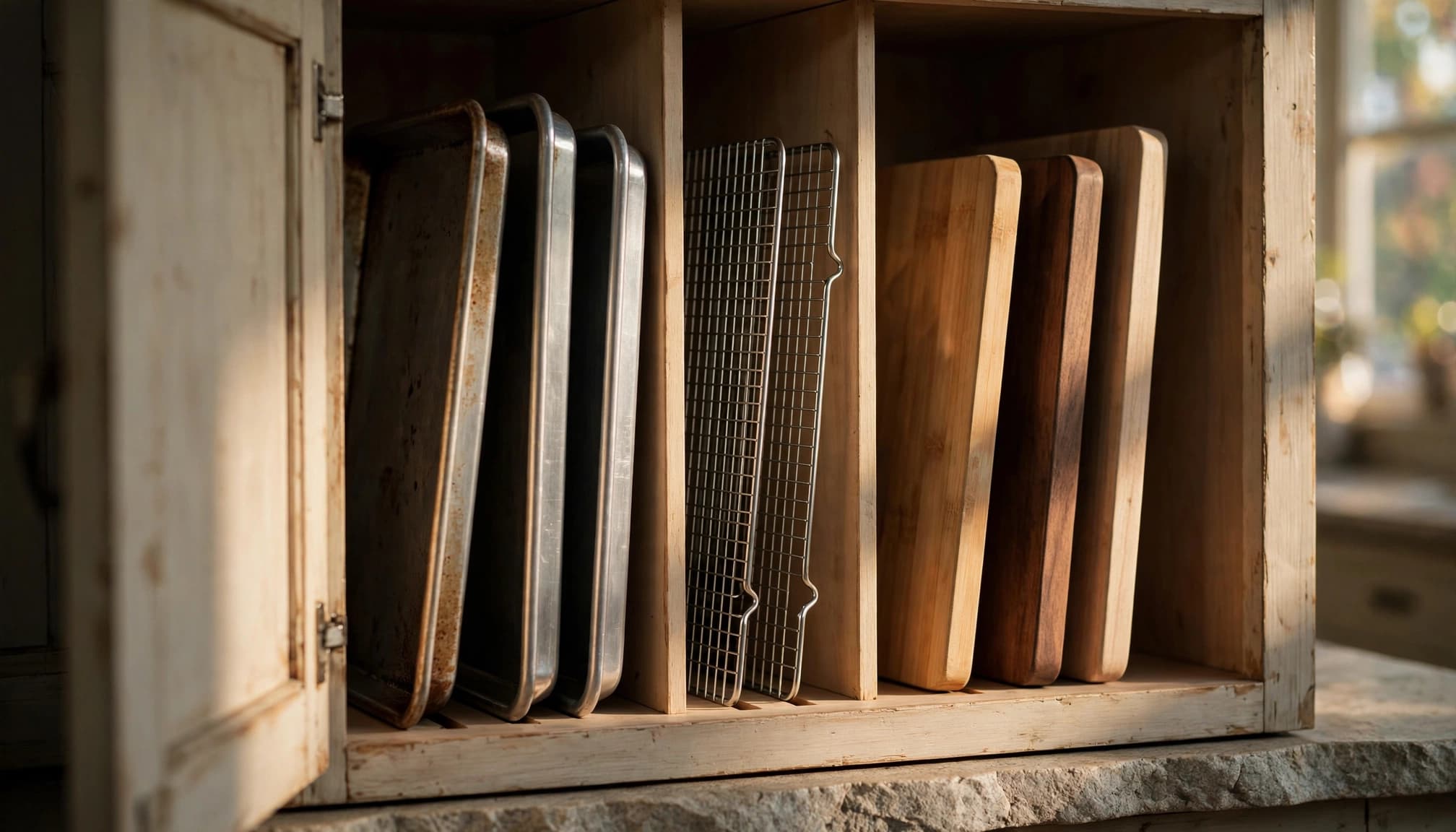
Store Sheets Upright When You Have Enough Height
Upright storage suits a cabinet where sheets can stand securely and slide out independently. It works especially well when a horizontal pile buries your most-used pan.
Choose a Rack That Supports the Whole Sheet
Use a freestanding organizer intended for trays, pans, or similar flat kitchen items. Choose openings wide enough for the thickest rolled rim, rather than squeezing pans between dividers.
The base should remain steady as you remove a sheet. If the organizer shifts or tips during that movement, change its position or choose a more suitable design.
Cabinet organizers include options for pans and lids. Compare organizer shapes with your measurements, rather than assuming any kitchen rack will suit a large baking sheet.
Separate Items That Catch on Each Other
Cooling racks and cutting boards can share the same storage area when each piece has adequate support. However, crowded slots make access harder.
Give a wire cooling rack its own space if it catches on pan rims. Likewise, separate a thick wooden board that pushes neighboring sheets sideways.
Position smaller trays where you can see and grasp them. A small sheet hidden behind a larger one can become just as inconvenient as the bottom pan in a stack.
Independent access matters more than fitting every flat kitchen item into one rack. Leave a slot empty if that makes the rest easier to use.
Use a Short Stack When the Cabinet Is Low
A low shelf doesn’t automatically need replacing. If upright sheets won’t fit, a short horizontal stack can make better use of the space you already have.
Keep the Stack Manageable
Nest compatible sheets without forcing their rims together. Keep your everyday pan on top, even if that means storing a rarely used larger sheet elsewhere.
For coated or easily scratched bakeware, place a clean, dry pan protector or soft cloth between surfaces. Keep these separators flat so they don’t bunch beneath the rims.
Avoid piling roasting dishes or heavy cookware on top. You should be able to retrieve a sheet without unloading unrelated equipment onto the counter.
Also keep the stack away from the shelf edge, where a projecting rim could catch clothing or get knocked.
Use a Drawer When It Offers Better Access
A drawer can bring flat bakeware toward you, but its interior must accommodate the full sheet. Drawer sides and sliding hardware reduce usable space.
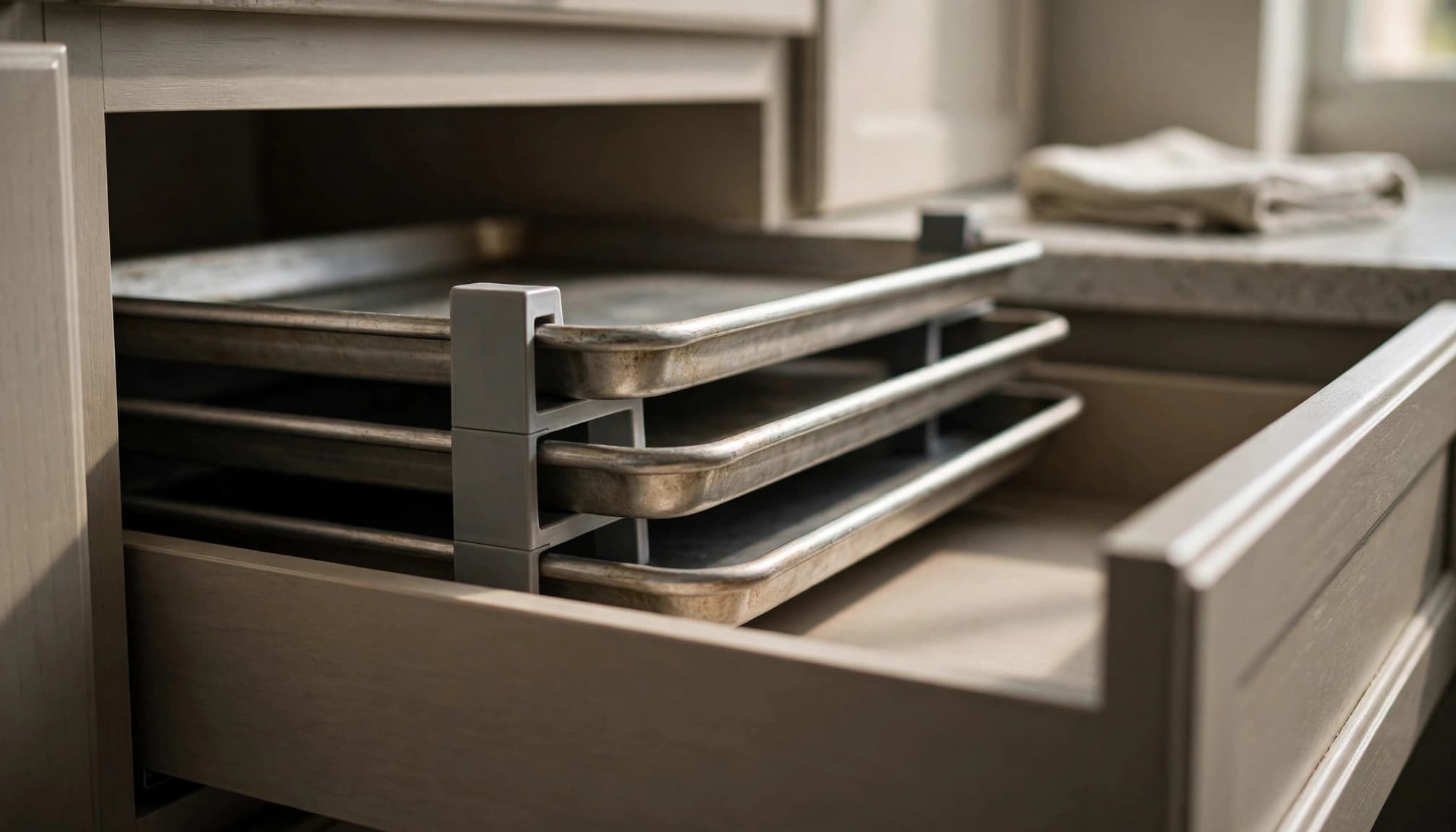
Measure the drawer with your pans inside before adding dividers. Our guide to choosing deep drawer organizers explains how projecting parts affect fit.
Use the drawer’s stated load limit, and keep its contents below anything that could catch as it closes. A divider helps only if it prevents movement without blocking your grip or taking up needed space.
Choose Renter-Friendly Storage Without Drilling
For rental kitchens, start with an organizer that sits inside an existing cupboard. A freestanding rack or removable drawer insert can move with you and doesn’t require holes in the cabinetry.
Before buying, try a suitable organizer you already own. A sturdy plate rack may accommodate smaller trays if its openings support them securely. However, a lightweight file sorter isn’t automatically suitable for metal bakeware. Avoid anything that bends, tips, or has rough edges against the pans.
Test the arrangement through normal use before purchasing more pieces. Remove your largest sheet, return it, and close the door. Then repeat with neighboring cookware in place. An empty-cabinet trial can hide access problems that appear once everything goes back.
Over-cabinet holders need more thought. Their hooks occupy space above the door, while the loaded holder projects into the cupboard. That can interfere with shelves or prevent the door from closing.
For a deeper cupboard, a pull-out system can improve access, but its runners consume space and may require screw mounting. A freestanding rack is the simpler starting point when permanent installation isn’t allowed.
Our no-drill rental storage ideas cover other removable options. For baking sheets, keep the goal narrow: give the pans a stable home without damaging cabinet surfaces or crowding adjacent storage.
Keep Everyday Sheets Near the Front
A storage arrangement should reflect how you cook, not just the size order of your pans. Put your everyday roasting sheet in the easiest position, even if a less-used tray is smaller.
Separate Daily Bakeware From Occasional Pieces
Keep regular-use sheets near your food-preparation area when cabinet space allows. Reserve less convenient shelves for holiday trays or specialty bakeware you rarely reach for.
Before reorganizing, remove pieces you no longer use. Keep useful duplicates, such as matching sheets you regularly use together, rather than applying an arbitrary limit.
Also separate bakeware from unrelated overflow. A hand mixer or stack of food containers shouldn’t block the only route to your daily pan. Our small appliance storage ideas can help you rearrange those neighboring items without sacrificing preparation space.
Give Related Supplies Their Own Place
Cabinet organization guidance recommends dividers to create zones for supplies such as foil and baking paper. Use that same zoning principle around your bakeware.
Keep parchment and reusable baking mats nearby, but don’t wedge their boxes into the pan rack if they obstruct removal. Store silicone mats according to their care instructions, without forcing sharp folds.
If pots and lids crowd the same cupboard, our small-kitchen cookware storage ideas offer ways to separate them. Small kitchen storage works better when each group remains accessible without moving another group first.
Frequently Asked Questions
How Do You Store Baking Sheets Without an Organizer?
Use a short stack on an existing shelf, with your most-used sheet on top. Protect scratch-prone surfaces with clean, dry separators. If the shelf is adjustable, repositioning it may create enough room without adding another accessory.
Can You Store Baking Sheets in the Oven?
We recommend a cabinet or drawer instead. Oven storage means moving the pans before cooking and creates a risk of preheating with stored items inside. An oven drawer isn’t automatically a storage drawer either; some are broilers or warming drawers.
How Do You Stop Baking Sheets From Sliding?
For stacked sheets, a suitable nonslip shelf liner can reduce movement. For upright sheets, use stable dividers that support each pan. Don’t rely on neighboring cookware to hold a loose sheet in position, because removing that cookware changes the support.
Can You Put Baking Sheets Away While They’re Damp?
Dry them first, especially around rolled rims where water can collect. Let pans cool before returning them to a cupboard, too. Damp pans can transfer moisture to separators and shelves, while trapped moisture can encourage rust on susceptible metal.
Make One Baking Sheet Easy to Reach
Start with the pan you use most. Give it a place where you can remove it and put it back without rebuilding a pile.
Then arrange the remaining bakeware around your cabinet’s actual limits. Upright dividers help when height allows, while a short stack suits lower spaces. The useful measure of better storage is whether putting a clean sheet away feels as straightforward as taking it out.
Our Top Recommendation: Check out this Simple Housewares expandable Pan Rack. Comes with 7 or 10 slots and it’s adjustable for different sizes for both baking sheets and pots and pans. It’s an affordable and easy way to get started on a much more efficient use of your kitchen space.
We only recommend top-rated, affordable products you can trust. As an Amazon Associate, I may earn from qualifying purchases through the affiliate links above at no extra cost to you. Thank you for supporting our work.