To store water bottles in a small kitchen cabinet, keep everyday bottles upright in a pull-forward bin or lay them in a rack that stops them rolling. Choose your water bottle storage around the cabinet’s usable space, and leave enough room to grab one bottle without disturbing the others.
Tall bottles, wide handles, and loose lids can make a cupboard feel full before you’ve used its available space. Start by sorting your collection and measuring the opening, then choose the simplest setup that fits your routine.
Key Takeaways
- Keep everyday bottles within easy reach, and move occasional-use bottles to a less convenient shelf.
- Use a washable bin for upright storage or a supported horizontal rack where shelf height is limited.
- Give lids and straws a nearby home, and put everything away completely dry.
Sort Your Bottles and Measure the Cabinet
Buying an organizer first can leave you with something that fits the shelf but blocks the door. Start with the bottles and the space they actually need.
Keep the Bottles You Regularly Use
Gather bottles from cupboards, bags, and the drying rack. Match each one with its lid and any removable straw before deciding what belongs in the cabinet.
Keep your regular work, school, and exercise bottles accessible. Occasional-use bottles can go higher or farther back. Set aside unwanted duplicates and damaged pieces rather than arranging the cupboard around them.
You don’t need a matching collection. Different shapes work together when each bottle has a stable place. If dishes occupy the shelf you need, our guide to organizing plates and bowls can help you rearrange the neighboring space.
Measure the Opening, Not Just the Shelf
Measure usable width, depth, and height, including hinges, shelf supports, and any center divider. The cabinet opening may be narrower than the interior.
Next, stand your tallest bottle in place. Allow room to lift it over a bin’s front edge, not simply enough space to stand beneath the shelf above.
For handled bottles, include the handle in the footprint. Also leave room to grip the bottle or pull the bin forward. A tightly wedged organizer creates another daily obstacle.
Choose a Water Bottle Storage Method That Fits
Match the organizer to the problem you’re solving, rather than filling every available inch.
| Cabinet problem | Practical option | Main trade-off |
|---|---|---|
| Bottles disappear at the back | Pull-forward washable bin | Needs a clear path through the opening |
| Bottles tip into one another | Divided upright bin | Dividers reduce usable space |
| Shelf height goes unused | Stackable horizontal bottle rack | Each opening must accommodate your bottles |
| Small bottles are hard to reach | Turntable | Circular storage leaves unused corners |
Choose the smallest addition that improves access. A large organizer can hold more bottles yet make the whole cabinet harder to use.
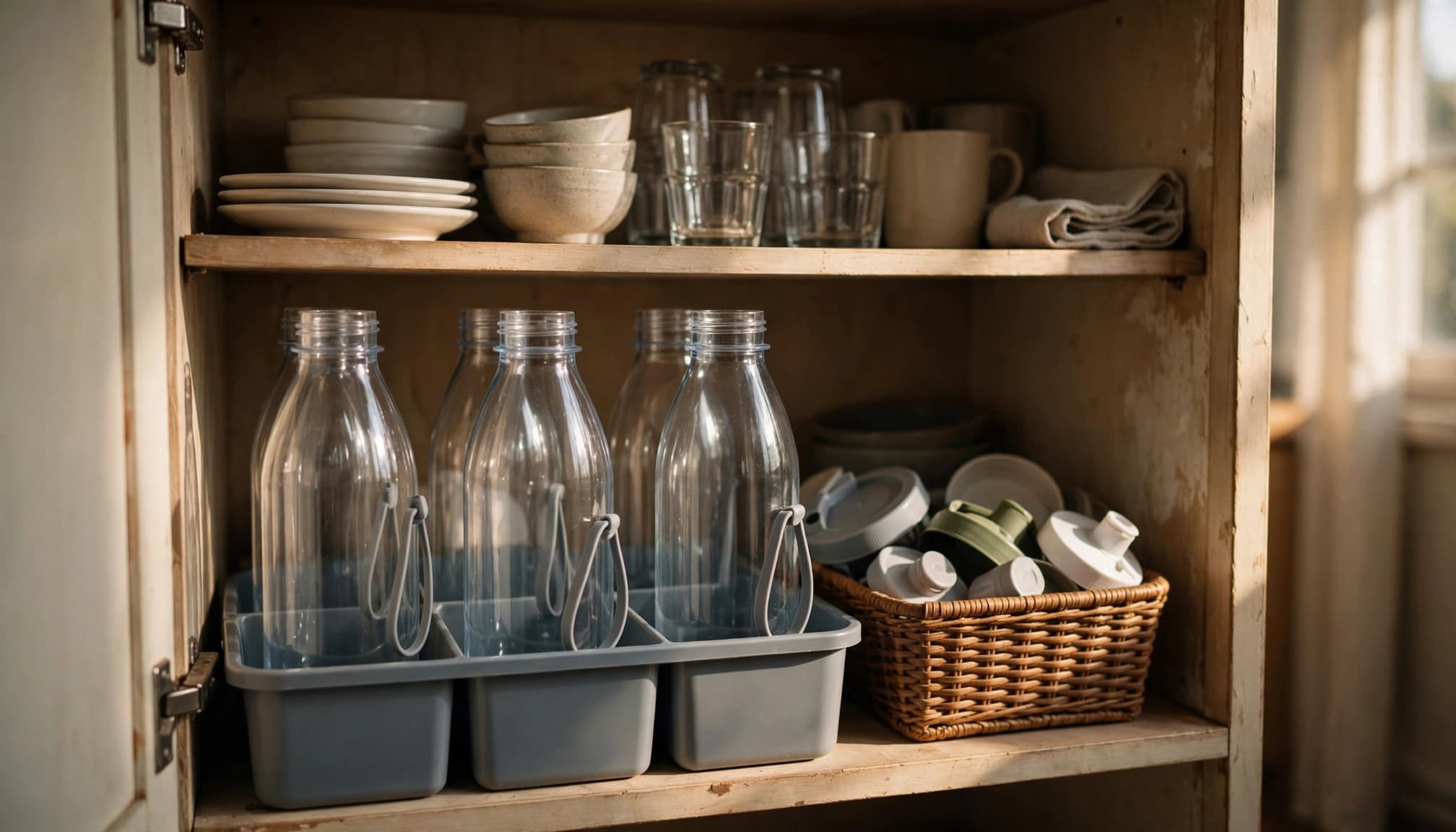
An upright bin suits a mixed collection because it doesn’t require every bottle to fit a shaped cradle. Choose low sides when you need to lift bottles out under a shelf. Higher sides provide more support, but they also require more lifting clearance.
A horizontal rack works well when tall bottles won’t stand comfortably. However, its slots must support the bottle body without catching handles or bulky lids.
Turntables suit smaller bottles in an unobstructed cabinet. Allow room for the entire rotation, including projecting handles. They’re less useful when a narrow opening makes bottles difficult to remove.
Use Drawers and Low Shelves for Wide Bottles
Horizontal storage can help when cabinet height is the main restriction. Store only empty, completely dry bottles this way.
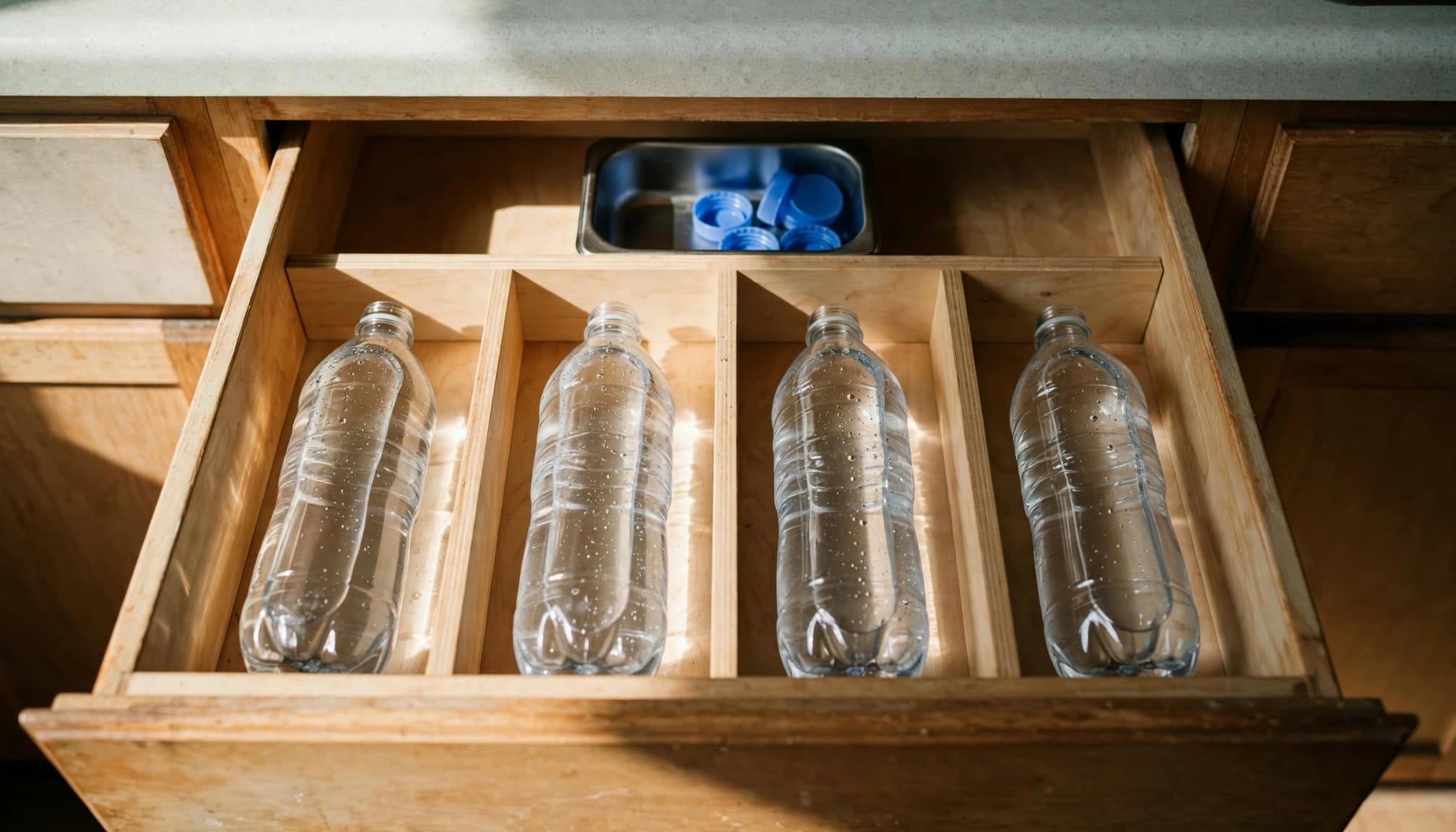
Lay Bottles in Separate Channels
In a suitable drawer, use removable dividers or a bottle rack that prevents rolling. Position bottles so their bases or openings remain visible when you open the drawer.
Leave space around handles and drinking spouts. Packing bottles tightly can make removing one pull its neighbor along.
Before settling on the layout, close the drawer gently with everything inside. A bottle may lie below the drawer’s sides yet still catch the frame above.
Use Supported Racks on Low Shelves
On a low shelf, a freestanding bottle rack gives each bottle its own resting place. Avoid balancing loose bottles in a pyramid, because removing a lower bottle can shift the others.
Our Top Recommendation: Check out the SPOSPO Water Bottle Organizer. It’s highly rated and comes in several configurations, from a 2-pack that holds up to 6 bottles to a 4-pack for even more storage. The 2-pack starts at under $20 (and is currently on sale for $15.99 at the time of this writing). Here’s a bonus: it doubles as a wine rack, too! Because sometimes we need storage for more than just water. 🙂
Use stackable pieces only when they’re designed to connect or stack securely. An improvised upper tier can slide as you remove bottles.
Also consider the lowest position. If reaching it means crouching and moving nearby cookware, an upright pull-forward bin may be more convenient.
Keep Lids and Straws Beside Their Bottles
Loose accessories can consume as much attention as the bottles themselves. Give them a defined space within the same storage zone.
Choose Between Attached and Separate Lids
Once everything is dry, keeping a lid loosely attached makes matching pieces easy. This works when the assembled bottle still fits comfortably beneath the shelf.
Separate lids suit cabinets with limited height. Keep them in a shallow washable tray beside the bottles, with unusual lids grouped near their matching bottle.
During washing, give threads and caps attention too. One Green Bottle’s care guidance recommends cleaning these areas along with the bottle interior, using a bottle brush or soft sponge.
Contain Small Parts Without Overcomplicating Them
Use a divided tray for removable straws, seals, and other accessories that belong to your bottles. Keep long straws flat if standing them upright would block the shelf above.
Avoid creating a separate tiny compartment for every piece. You need enough separation to find things, not an organizer that takes longer to maintain than the bottles.
The same principle helps with food container and lid storage: keep matching parts nearby, but leave enough room to browse and return them easily.
Make the Setup Affordable and Rental-Friendly
Start with a washable basket or tray you already own. Try it through your usual washing and refill routine before buying a replacement. You’ll learn whether lower sides, a handle, or a narrower shape would help.
Freestanding racks and removable drawer dividers are practical renter-friendly storage choices because they don’t need holes in the cabinetry. Our no-drill storage ideas cover other removable options for compact homes.
Be cautious with over-cabinet baskets. Their hooks occupy space above the door, while the basket projects into the cupboard. They can collide with shelves or prevent full closure.
Test the loaded cabinet, not just the empty organizer. Remove your largest bottle, put it back, and close the door with neighboring items in place.
A successful trial costs nothing when you’re rearranging what you already own. Matching containers can wait until the layout works.
Put Bottles Away Clean and Completely Dry
Keep drying separate from storage. A cupboard is the bottle’s final home, not the place to finish drying it.
After washing, leave bottles and removable parts on a clean drying rack with room for air circulation. Don’t place damp bottles in a closed bin or screw a lid onto a wet interior.
NBC News describes a bottle-cleaning routine using warm, soapy water and a sponge or bottle brush, followed by rinsing and drying. A narrow opening needs a brush that can reach the interior.
Wash the storage tray when it collects dust or residue, then dry it before returning the bottles. A removable bin makes this easier than a fixed organizer with inaccessible corners.
For small kitchen storage, keep the drying area temporary so it doesn’t permanently take over your food-preparation counter. Once each piece is dry, return it to its assigned place.
If the cabinet repeatedly overflows after washing day, reconsider the collection or arrangement. The system needs space for the bottles you own, including those usually in use.
Frequently Asked Questions
Is It Better to Store Water Bottles Upright or Horizontally?
Upright storage is simpler for mixed shapes and handled bottles, provided the shelf has enough clearance. Horizontal storage suits low shelves and drawers when a rack or divider stops bottles rolling.
Choose the position that lets you remove one bottle easily. Neither arrangement helps if you have to unpack the surrounding cupboard.
Can You Put Every Water Bottle Lid in the Dishwasher?
There’s no single dishwasher rule for all lids. Bottle materials and removable components differ, so don’t treat every piece alike.
For example, CamelBak’s lid-cleaning guidance describes top-rack dishwasher cleaning or handwashing with warm, soapy water for caps, spout caps, tethers, and bite valves. That guidance doesn’t establish dishwasher suitability for another brand’s parts.
How Do You Stop Bottles Falling Over in a Deep Cabinet?
Use a divided bin or a pull-forward basket with sides that support the bottles. Keep taller, heavier bottles where you can grasp them comfortably.
Also avoid placing a frequently used bottle behind several others. Pulling the whole group forward is easier than reaching over a row and knocking bottles aside.
What If You Don’t Have Room for a Bottle Organizer?
Reserve a narrow section of an existing shelf and stand bottles in a single accessible row. Move occasional-use bottles elsewhere before adding storage hardware.
You can also adjust a movable shelf or repurpose a suitable drawer. Protect the counter space you need for cooking rather than making it permanent bottle overflow.
Keep Everyday Bottles Easy to Reach
Useful water bottle storage gives each bottle and its parts a place that’s easy to reach and easy to maintain. The right setup may be a basket you own, a supported rack, or a divided drawer.
Start with one accessible storage zone and test it during everyday use. Keep the arrangement that lets you take out a bottle, return it, and close the cabinet without rearranging everything else.
We only recommend top-rated, affordable products you can trust. As an Amazon Associate, I may earn from qualifying purchases through the affiliate links above at no extra cost to you. Thank you for supporting our work.