To set up an apartment recycling station, give accepted recyclables a reachable container near where you unpack groceries or clear up. Choose a spot that protects your food-preparation space and lets you carry the container out without rearranging the kitchen.
You don’t need matching bins or a cabinet renovation. Start with a washable container you already own, then use the steps below to choose its location and make the setup easy to maintain.
Key Takeaways
- Match your station’s categories to your building’s collection arrangement.
- Measure the space needed to open, remove, and carry containers, not just their footprint.
- Try existing baskets or tubs before buying renter-friendly storage.
- Keep counters and walking routes usable, then build emptying into your normal kitchen routine.
Decide What Your Station Needs to Hold
A useful station reflects your household’s recycling needs. Extra compartments take up space when they don’t have a clear purpose.
Match the Collection Categories
The EPA’s recycling basics guidance explains that communities don’t all collect the same recyclable materials. That means a generic set of sorting labels won’t suit every apartment.
Use your building’s collection categories as the basis for your container labels. Keep the wording short and visible where you place items, rather than hidden underneath a lid.
Avoid adding a compartment because an organizer comes with one. Every section needs enough usable space and a clear reason to be there.
Notice What Accumulates Between Trips
Look at the packaging that collects during your ordinary cooking and shopping routine. Then consider how often you pass the building’s collection area.
If you can empty a container during a regular trip downstairs, you may not need much kitchen capacity. However, a longer carrying route can make comfortable handles more useful than an attractive finish.
Keep the full container’s weight in mind, too. A large bin loses its convenience if you struggle to lift it through a cupboard opening.
Where Should Your Apartment Recycling Station Go?
Choose the location before choosing the organizer. Good small kitchen storage preserves the space you need for cooking.
Use a Cupboard Near Your Cleanup Area
An accessible lower cupboard can keep recycling out of sight without occupying the floor. Choose one you can reach during cleanup without moving cookware first.
If the cupboard is crowded, reduce the pile before adding another container. Our ideas for organizing food containers and lids can help you reclaim space occupied by mismatched pieces.
An under-sink cupboard can work when the container clears the plumbing and leaves valves accessible. Keep enough room to lift the container out, rather than wedging it behind pipes.
Choose an Open Nook When Cabinets Are Full
A narrow space beside an existing cabinet can be more convenient than an overloaded cupboard. However, the bin must stay clear of appliance doors and your normal route through the kitchen.
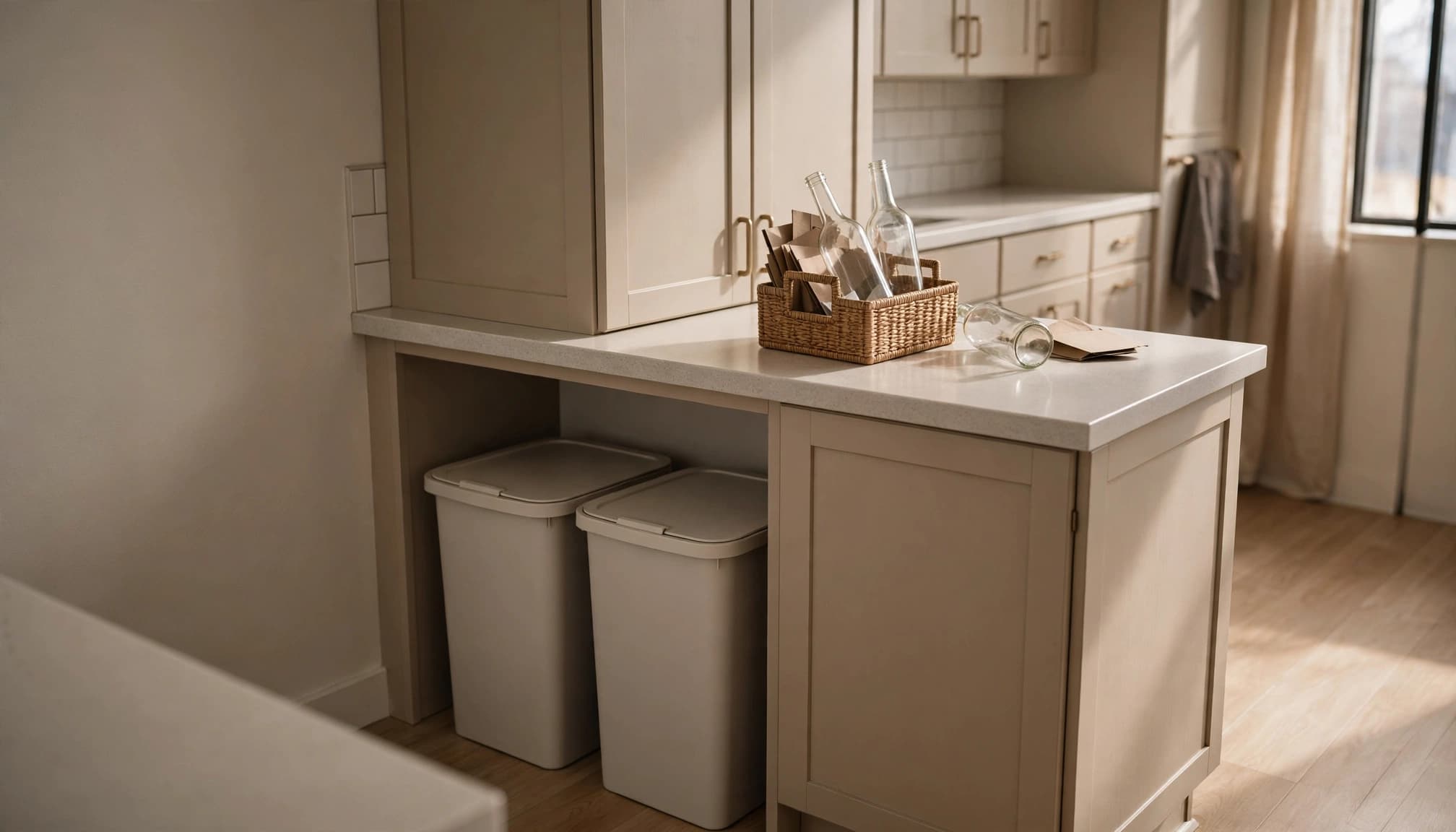
A cart only helps if it has a permanent parking spot. Our space-saving furniture for studio apartments offers other ways to combine storage without crowding the room.
Avoid turning your chopping area into a permanent collection point. If temporary recycling routinely spreads across the counter, move its container closer.
Measure for Opening, Lifting, and Carrying
Measure the usable opening, including hinges and anything projecting into the space. Then allow room for your hands, handles, and lid movement.
Different locations create different access problems.
| Location | Space to measure | Access test |
|---|---|---|
| Inside a cupboard | Interior space and door opening | Lift the container out with neighboring items in place. |
| Beside a cabinet | Full footprint, including handles | Open adjacent doors and walk past normally. |
| Inside a drawer | Interior space and clearance above | Close the loaded drawer without catching its contents. |
| In a stacked setup | Container height and access opening | Remove the lower container without unloading the upper one. |
The arrangement needs to work when loaded, not only when the organizer is empty.
Before buying, place a suitable box or existing tub in the proposed location. Open the dishwasher, reach for your usual pans, and carry the container toward the exit.
Also consider cleaning access. You should be able to remove the container and reach the surface beneath it without dismantling the station.
Choose Renter-Friendly Recycling Storage
Start with removable pieces inside existing storage. These small apartment storage solutions let you change the arrangement without committing to new fittings.
Try Loose Bins Before Installed Pull-Outs
A washable tub or handled basket can function as a simple pull-forward container. Choose one you can remove comfortably without scraping the cupboard or catching its contents on a shelf.
Installed sliding systems add another consideration because their fittings occupy space and may require screws. For a rental, a loose container is an easier starting point.
Our guidance on small-space storage for everyday tasks follows the same approach: make daily access easier before adding equipment.
Use Vertical Space Without Losing Access
Stacking containers can help when floor space is limited, but the lower container still needs a usable opening. Avoid a setup that requires lifting a loaded upper bin every time you add something below.
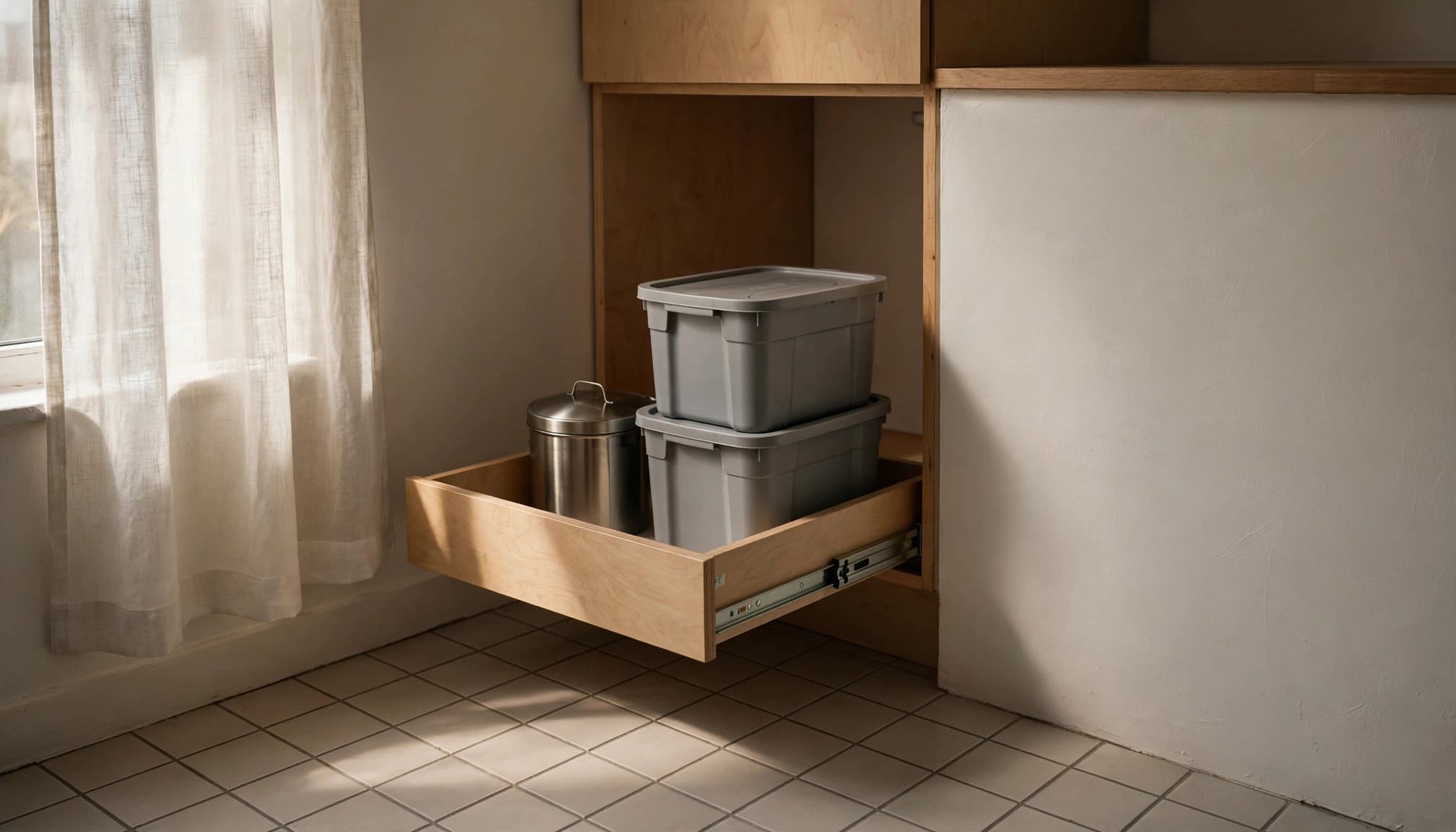
Keep the arrangement stable and manageable. Tall stacks aren’t worthwhile if they wobble or make carrying awkward.
Over-cabinet baskets also need clearance inside the cupboard. Their hooks can interfere with the door, while their loaded contents can collide with shelves. Test the door with neighboring items in place.
Set Up a Simple, Low-Cost Sorting Area
Begin with what you own. A washable storage tub with an intact interior may be enough for your first version.
Use this short setup sequence:
- Place your trial container in the chosen location and add clear category labels.
- Use it through your normal shopping and cooking routine, without creating a second overflow pile.
- Replace it only if you can name a practical improvement, such as easier handles or better access.
When comparing organizers, look beyond the outside dimensions. Thick walls and unnecessary dividers reduce the usable interior. Removable inserts can be helpful, but only when they make sorting or emptying easier.
Labels don’t need to be elaborate. Plain wording on removable tape is enough for a trial, provided the tape suits the surface.
Also avoid buying a complete matching set before trying one container. A replacement should solve a problem you’ve noticed, rather than introduce several new storage pieces.
The EPA’s guidance on recycling and reuse places reducing and reusing ahead of recycling. That principle fits the setup itself: keep using a suitable container instead of replacing it for appearance alone.
Make Emptying Part of Your Kitchen Routine
Give the station a clear stopping point. When its contents interfere with closing the lid or removing the container, empty it rather than starting another pile beside it.
Connect the trip to something you already do, such as leaving for work or taking out household waste. However, keep the container in its designated spot until you’re ready to carry it out.
Don’t leave recycling beside the front door as a reminder if it narrows the entrance. Entryway storage needs to leave room for arriving, leaving, and opening the door fully.
If you use a dedicated carrying bag, give it one nearby home. Our ideas for keeping reusable bags organized can help prevent spare bags from filling the kitchen counter.
Finally, wipe the container when it needs attention and let it dry before returning it. A simple lift-out design makes this easier than a station with several fixed compartments.
Adjust the Setup Before Adding More Storage
After using the station, notice which action causes friction. A recurring pile usually gives you a more useful clue than an attractive organizer photograph.
If items collect beside the container, its opening may be inconvenient or its location too far away. If you avoid emptying it, the container may be awkward to carry.
Solve that particular problem first. Move the bin within reach, remove an unnecessary divider, or choose a smaller container you can lift comfortably.
Meanwhile, protect neighboring storage. Recycling shouldn’t make your everyday pans harder to reach or push groceries onto the counter. Good apartment organization improves the whole task, including what happens before and after you use the bin.
Once the arrangement works, you can decide whether a neater-looking container is worth buying. Appearance is easier to judge after you know the shape and access you need.
Frequently Asked Questions
How Do You Hide Recycling in a Tiny Kitchen?
Use an existing lower cupboard or deep drawer with enough room to remove the container. A loose washable tub is a simple starting point. If hiding it requires moving several objects every time, an accessible open nook may work better.
Do You Need a Separate Bin for Every Material?
The number of containers should follow your building’s collection categories. More compartments aren’t automatically helpful. Choose the fewest containers that support that arrangement without creating confusion, and avoid letting an organizer’s design dictate your entire setup.
Can You Create a Recycling Station Without Buying Anything?
Yes, if you already own a suitable washable container. Try it in the intended location through everyday use. You may find that you need only a label, or discover that a different handle or opening would justify a replacement.
What If There’s No Spare Floor or Cupboard Space?
Start by reclaiming one small section of existing storage. Remove unused container pieces or relocate occasional-use nonfood supplies to a suitable spot elsewhere. Keep the recycling container accessible, and protect the counter area you need to prepare meals.
Keep Your Recycling Station Easy to Use
A workable apartment recycling station needs a convenient home and containers you can handle comfortably. Easy access matters more than a matching set or a hidden installation.
Start with an existing tub, test it with the kitchen fully loaded, and adjust the part that causes trouble. The setup is doing its job when you can put recycling away and carry it out without disrupting the rest of your kitchen.