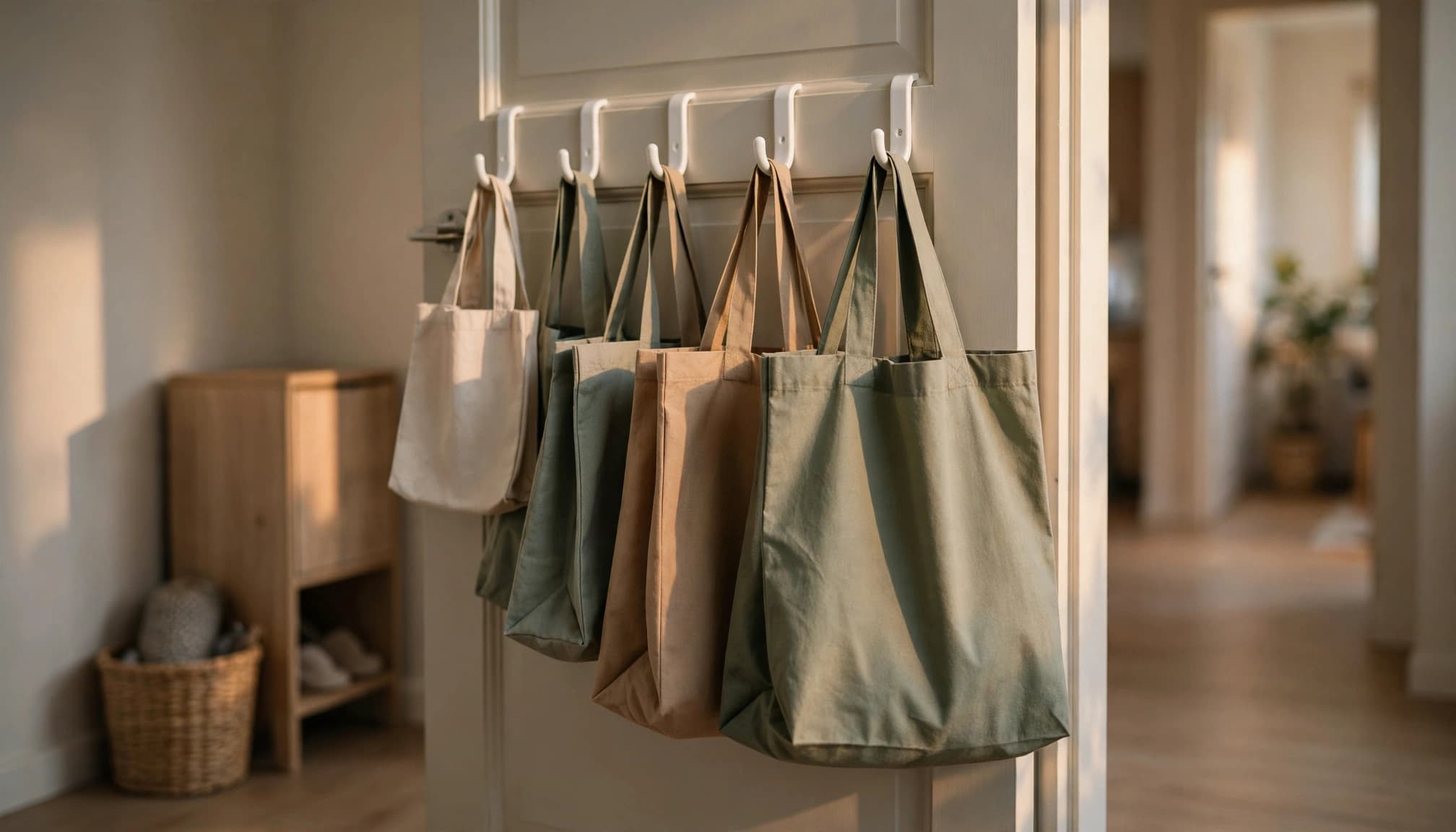
Keep reusable bags together in a reachable basket, drawer, or door organizer near where you leave home. Good reusable bag storage makes bags easy to return, so they don’t collect on counters or disappear inside other belongings.
In a small apartment, you can often use part of an existing shelf instead of adding furniture. Start by gathering your bags, then choose a spot that fits your shopping routine and the space you already have.
Key Takeaways
- Gather your bags before choosing storage, so you can see what you actually use.
- Keep your regular shopping bags accessible, with occasional-use bags stored separately.
- Try an existing basket or box before buying an organizer, and leave room to retrieve it comfortably.
Sort Your Bags Before Assigning Storage
Bring together the bags scattered through your kitchen, coat closet, and other storage spots. Empty receipts and unrelated belongings before deciding which bags deserve your easiest-to-reach space.
Sorting first prevents you from buying a larger organizer simply to accommodate bags you rarely choose.
Keep Your Regular Shopping Bags Together
Set aside the bags you reach for during your usual shopping trips. Consider which ones are comfortable to carry and which sizes suit what you bring home.
Keep these together rather than splitting them among several cupboards. You’ll be able to pick up your shopping bags without searching through a collection of beach totes and event giveaways.
If bags already have different jobs, preserve those distinctions. Your everyday tote doesn’t need to share the same container as every reusable bag you own.
Move Occasional-Use Bags Out of the Main Spot
Give less-used bags a separate place on an existing shelf or inside a cupboard. Keep useful extras, but don’t let them bury the bags you need regularly.
Our small-home decluttering guide uses the same approach: gather related items before deciding what stays.
Use your available storage as a boundary. When the container becomes difficult to use, review its contents before expanding into another drawer.
Where Should You Keep Reusable Bags in a Small Apartment?
Choose the location based on when you remember your bags. A tidy container across the apartment won’t help much if you pass it only after returning from the shops.
Use the Entryway When You Shop on Foot
If you leave through the front door carrying your bags, place them near your other leaving-home essentials. A basket on an existing shelf can work without taking up more floor space.
Keep bags beside your key tray rather than over it. You’ll avoid having to lift the bags every time you need your keys.
For a narrow entrance, our apartment entryway storage ideas offer ways to keep everyday belongings accessible while preserving the walking path.
Use the Kitchen When That’s Your Natural Return Point
If you unpack groceries in the kitchen, a nearby drawer or cupboard may make putting bags away easier. Choose a spot you can reach without moving cookware or food containers.
For small kitchen storage, protect the countertop space you need for preparing meals. A basket that permanently occupies your chopping area creates another inconvenience.
If your kitchen isn’t near the exit, build bag pickup into your departure routine. Keep the storage visible when you collect your shopping list, rather than hiding it behind rarely used appliances.
Choose Reusable Bag Storage That Fits Your Space
Match the container to both your bags and the available space. Avoid choosing an organizer first and then rearranging useful cupboards to accommodate it.
These options suit different access needs.
| Storage option | Useful location | Main consideration |
|---|---|---|
| Open basket or box | Existing entryway or closet shelf | Leave room to reach inside or lift it out. |
| Drawer divider | Kitchen or hallway drawer | Keep bags clear of the drawer’s closing edge. |
| Hanging pocket organizer | Suitable cupboard or interior door | Allow clearance for the pockets and their contents. |
| Larger bag holding smaller bags | Shelf or cupboard | Keep the opening accessible and avoid packing it tightly. |
The useful choice is the one you can reach and use without rearranging nearby belongings.
Before shopping, measure the usable width, depth, and height. Include hinges, shelf supports, and the space your hand needs around the container. Our guide to small apartment storage for everyday items explains why access matters as much as capacity.
Try a clean shoebox or an unused basket first. Carry out your normal routine with it before deciding whether you need a different shape, a handle, or a lower opening.
Keep Folded Bags Contained in a Drawer or on a Shelf
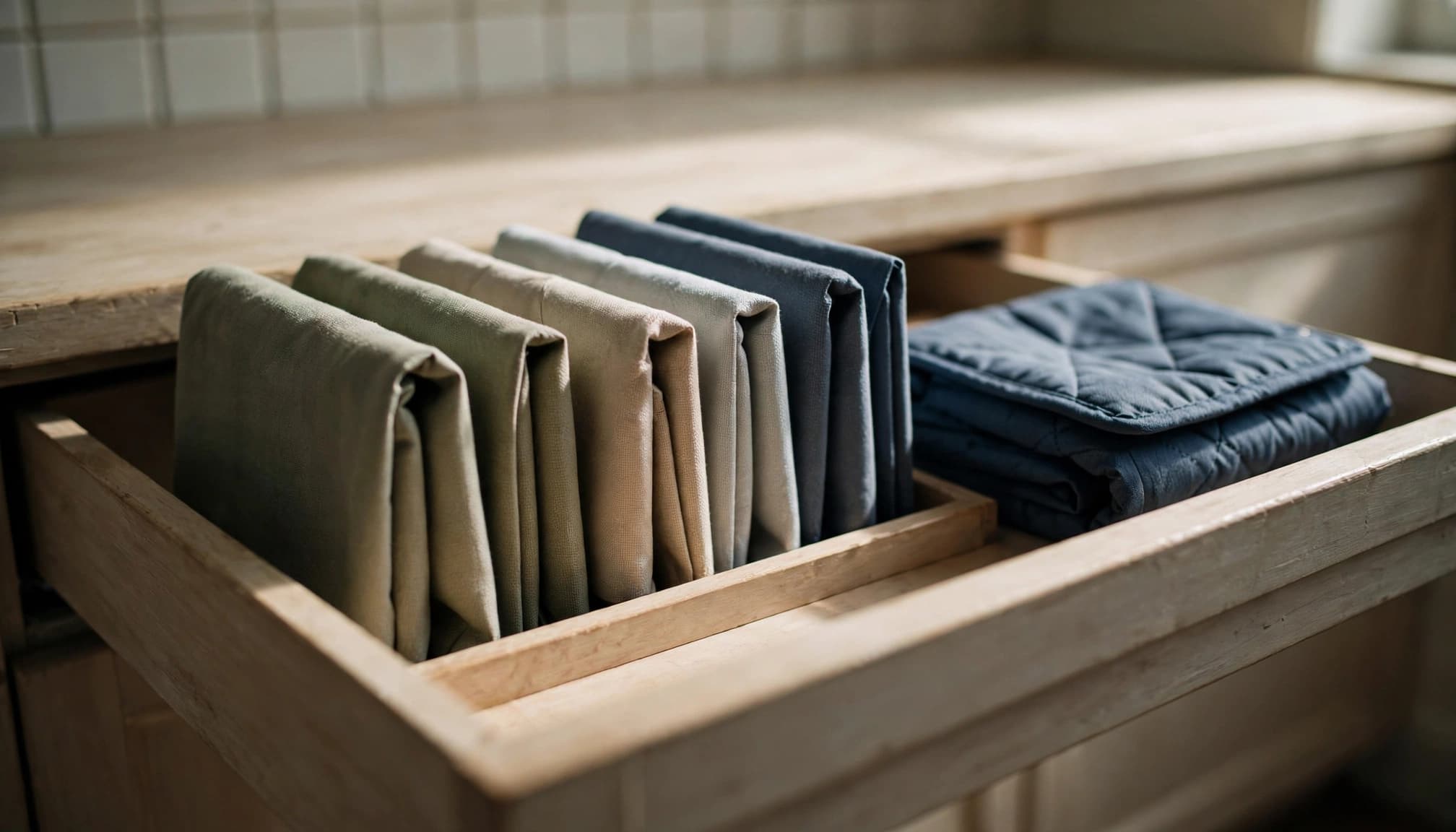
A drawer can hide bags neatly, but loose bags still spread into surrounding space. Use a divider or small open container to give them a defined home.
Arrange folded bags so you can identify and remove the one you want. Avoid putting your most-used bag underneath a stack that needs rebuilding whenever you shop.
On a shelf, use a container you can pull forward comfortably. Leave its opening uncovered instead of placing unrelated items on top.
For small closet storage, reserve a reachable section rather than pushing bags behind hanging coats. If you need to shift clothing every time, the location adds work.
A container can fit the shelf and still be awkward to use. Leave enough working room to reach inside and remove it.
The same principle runs through our storage solutions for small spaces: choose storage around the task you want to make easier. Matching containers can wait until the arrangement works.
Make Door Storage Work Without Permanent Changes
Door storage can free shelf space, but it needs enough clearance to work properly. Treat the loaded organizer as part of the door’s footprint.
Start With Existing Storage in a Rental
For renter-friendly storage, begin with loose containers inside furniture you already own. A basket on a cupboard shelf doesn’t require attaching anything to the walls.
If you need hanging storage, choose a suitable door-mounted organizer and follow its installation instructions. Removable hooks aren’t suitable for every surface, and rental restrictions still apply.
Our guide to renter-friendly storage without drilling covers ways to use cabinet interiors and door backs without adding permanent fixtures.
Leave Room for Doors and Movement
Allow space for the organizer’s contents, not just its empty frame. Bags can project farther into a cupboard or hallway than you expect.
Make sure the door opens fully and closes without squeezing bags against shelves. Handles shouldn’t catch on nearby hardware or drag across the floor.
Keep bags away from the entrance’s walking route. If a hanging arrangement interferes with coats or blocks access to something you use daily, return to a shelf container instead.
Build a Return Routine That Prevents Another Pile
Storage stays useful when putting bags away takes little effort. If returning a bag requires opening several containers or moving a stack, simplify the arrangement.
Use this sequence after unpacking:
- Remove receipts, packaging, and anything that belongs elsewhere.
- Return your regular shopping bags to their designated container.
- Put occasional-use bags back in their separate storage spot.
Agree on the location with anyone who shares your home. Everyone should be able to retrieve and return the bags without needing another person to reorganize them.
Avoid turning the bag container into a general holding area. Mail, spare gloves, and unrelated totes can quickly hide the shopping bags underneath.
If bags repeatedly land somewhere else, pay attention to that location. Moving the container closer may solve the problem more easily than adding another organizer.
Keep any temporary landing spot separate from food-preparation surfaces and seating. A storage routine shouldn’t depend on clearing the kitchen counter or sofa before you can use it.
Common Questions About Storing Reusable Bags
How Do You Store Reusable Bags When You Have No Entryway?
Use part of a nearby cupboard, a kitchen drawer, or a reachable closet shelf. You don’t need a separate piece of entryway furniture.
Choose the spot you naturally pass before leaving. If the closest cupboard is crowded, reserve a small section and remove unrelated overflow rather than squeezing bags behind other items.
A shared room can still have a clearly defined bag-storage spot. The important part is keeping it accessible.
Can You Keep Reusable Bags Inside Another Bag?
Yes, provided you can reach the contents easily. Place the larger bag on a shelf with its opening accessible, and keep regularly used bags near the opening.
Avoid adding bags until the outer bag becomes difficult to search. If you have to empty everything to find what you need, separate regular shopping bags from occasional-use ones.
This option is worth trying before buying a dedicated organizer because it uses something you already own.
What If Your Reusable Bags Don’t Fit in a Drawer?
Use a shelf basket or suitable hanging spot instead. Bags with different shapes don’t all need to fit the same drawer.
Keep the bags you use together near one another, even if a larger tote needs its own hook or shelf space. Choose storage that accommodates the bags without forcing the drawer closed or taking over space needed for other everyday items.
Keep Your Bags Ready for the Next Trip
Useful bag storage gives your regular shopping bags an accessible home. Choose a spot that fits your route through the apartment and stays clear of everyday work surfaces.
Start with a container you already own. If you can grab your bags easily and return them without rearranging anything, you have a setup worth keeping.