You can organize shoes in a small entryway by keeping everyday pairs beside one wall, outside the door swing and walking route. Choose storage by its usable depth, including shoes that stick out and drawers that open.
In a narrow entryway, the right organizer holds everyday pairs without narrowing the walking route. You don’t need a larger organizer for your whole collection. Start with the space your door and daily routine need, then choose a cabinet, rack, or bench that fits.
Key Takeaways
- Measure the door swing and walking route before choosing furniture, and include the space needed to open drawers or retrieve shoes.
- Choose a shallow cabinet for concealed storage, a low open rack for easy access, or a bench when you also need seating.
- Keep only regularly worn shoes near the entrance. Follow required instructions, even when furniture is described as freestanding.
Measure the Door Swing Before Buying Storage
Mark the Space You Actually Have
Open your front door fully and note where its edge travels. Keep shoe storage outside that arc, including handles, baskets, and shoes projecting beyond shelves.
Measure usable wall width, available depth, and nearby trim or baseboards. Include access to switches, outlets, and heating equipment.
Next, mark the proposed footprint with painter’s tape. Walk past carrying your usual bag, bend down to reach a shoe, and open any nearby doors. These movements reveal problems that a measurement alone can miss.
Keep storage inside your home rather than extending it into a shared hallway or building exit route.
Work Backward From Walking Space
For planning, aim for about 36 inches of clear walking width where your layout allows. Keep any required exit clearance intact.
Subtract the walking space you need from the hallway’s narrowest width. What remains is your maximum storage projection, including baseboard gaps and protruding footwear.
If that leaves less than 8 inches, focus on a shallow wall mounted unit or move shoes into a nearby closet. A deeper rack won’t become practical simply because it’s narrow across the front.
Opening clearance matters too. Flip-down compartments need room in front, while a bench needs space for your feet when seated.
Compare Small Entryway Shoe Storage Options
Use footprint, footwear size, and installation needs to narrow your choices.
| Storage Type | Footprint or Depth | Practical Capacity | Installation |
|---|---|---|---|
| Shallow cabinet | Under about 8 inches for suitable models | Shallow STÄLL holds 8 to 12 pairs | Wall attachment required |
| Narrow vertical tower | Small base, dimensions vary | Depends on shelf width and tier count | Assembly; anchoring may be required |
| Compact corner rack | Some models occupy about 10 x 10 inches | Six-tier versions provide six shelves; larger shoes may overhang | Assembly; follow anchoring instructions |
| Compact shoe bench | RAGGBERG measures 23 5/8 inches wide by 13 3/4 inches deep | About three pairs on its open shelf | Assembly and clear seating space |
A Bissa shoe cabinet is another slim-frame option to compare. Check the specific model’s usable depth before relying on it in a tight walkway.
Choose a cabinet when hiding shoes matters most. An open rack makes daily access easier, while a tower uses height when wall width is limited. A storage bench is worth the extra depth when you also need a place to sit.
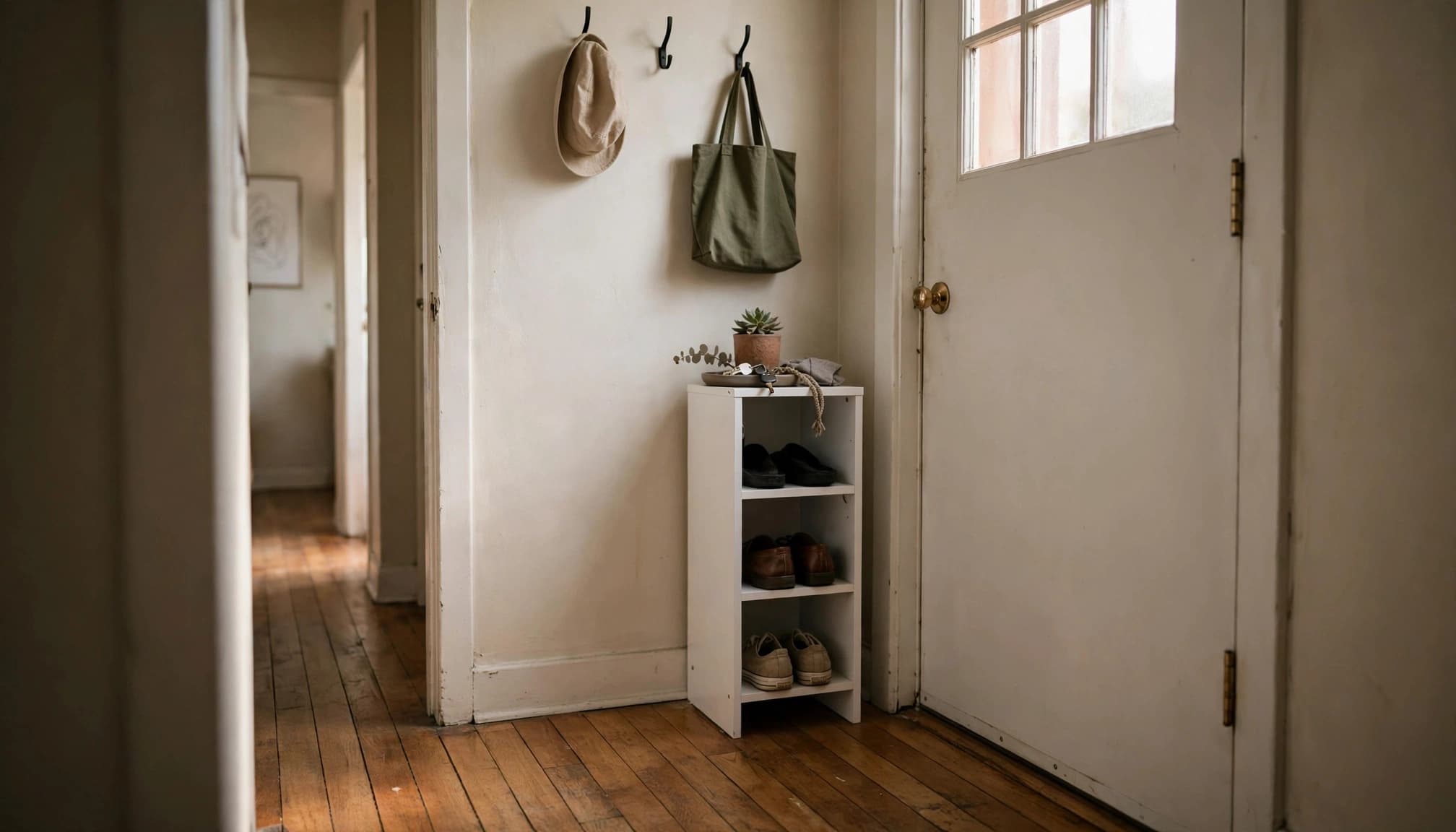
Treat advertised pair counts as a starting point. Bulky sneakers take more room than flip-flops, and tall boots need extra shelf height. Choose storage around your largest everyday footwear, rather than assuming every pair will fit like the display shoes.
Choose a Slim Shoe Cabinet Without Losing Access
Read the HotcoS Dimensions Literally
The HotcoS Narrow Shoe Cabinet listing gives dimensions of 39.37 inches deep, 9.45 inches wide, and 47.24 inches high. At that stated depth, it isn’t suitable for many shallow halls.
Its flip-down drawer includes an anti-tip kit, and the listed maximum top load is 50 kg. A top-load rating doesn’t remove the need for tip-over protection. The word “narrow” alone doesn’t establish whether furniture will fit beside your door.
Use Racks and Towers When Open Access Works Better
Build Upward Without Crowding the Floor
Vertical shoe towers suit tight apartment entryways when you have height but little wall width. An eight-tier rack, such as options sold through Wayfair, adds shelves without requiring a long wall.
Compact six-tier bamboo corner racks can occupy about 10 x 10 inches, giving them a small footprint. Include the shoes themselves when judging their space, especially if adult footwear extends beyond the shelves.
Stackable racks offer another way to add capacity. Stack only shoe racks designed to connect, stay within their stacking limits, and follow any anchoring requirements. Loose racks balanced on one another aren’t a safe substitute.
Choose Rental Storage by Installation Needs
Wirecutter’s freestanding alternatives include the Seville Classics 3-Tier Resin Slatted Shoe Rack and Yamazaki Home 6-Tier Shoe Rack.
The Seville Classics rack accommodates up to 12 pairs, with nine on its shelves and three underneath. Its stackable design provides additional vertical storage.
A low freestanding shoe rack may be simpler than a cabinet that requires wall mounting. However, freestanding furniture may still need anchoring.
If your rental rules prevent required anchoring, choose a different product rather than leaving it unsecured. Adhesive strips aren’t a substitute for furniture anchors. Our no-drill rental storage ideas cover other ways to use existing space without permanent changes.
Make the Setup Easy for Everyone to Use
Give Children Simple, Reachable Storage
A kid-friendly setup with open shelves and low baskets removes the extra step of opening a compartment. Low, open cubbies keep everyday shoes within reach, so children don’t have to climb or move another pair.
A bench, one basket per person, and suitable wall hooks create a straightforward family system. Use hooks for bags and coats so they don’t cover the seat or spill into the walkway.
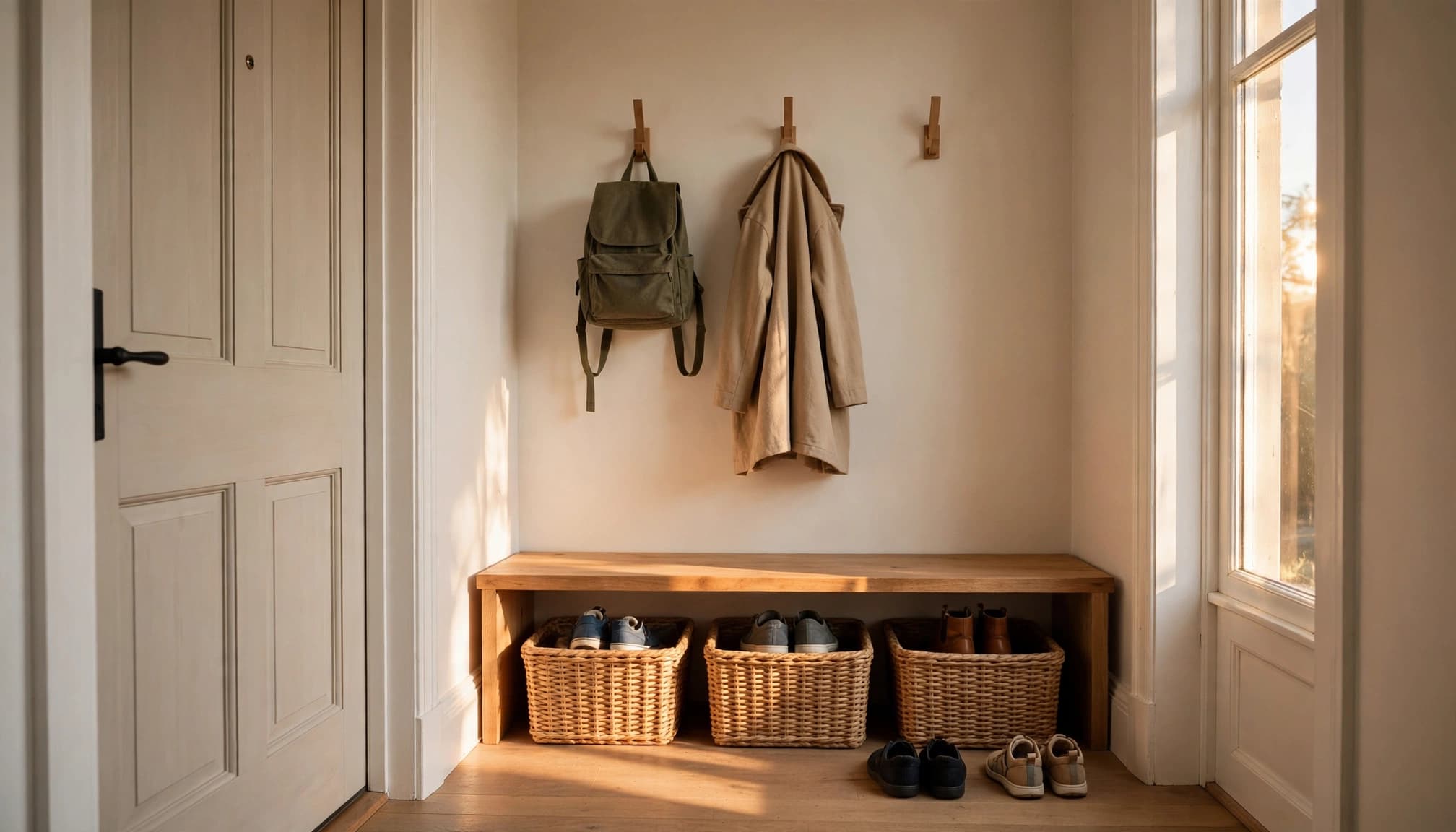
Choose low, easy-access storage without fold-out shelves when those extra steps discourage use. Keep taller furniture against the wall and anchored as instructed.
Our small-entryway bench options compare open and concealed designs. Hidden lower shelves or baskets work well when they slide out without blocking the entrance.
Give Wet Shoes a Separate Landing Spot
Rain-soaked shoes and muddy boots need an easy-to-clean surface. IKEA’s shoe-storage guide recommends metal racks for these conditions.
Place a washable tray underneath to catch water and grit. Keep wet footwear out of closed cabinets until it dries, and avoid leaving moisture against wood or absorbent baskets.
Tall boots may need their own floor-level spot instead of a short shelf. Keep that spot contained, rather than letting boots spread beyond the rack.
Leave the bench seat clear for sitting. A seat covered with bags stops being useful storage furniture, even when its lower shelves are organized.
Frequently Asked Questions
How Many Pairs Should You Keep by the Door?
Start with one or two regularly worn pairs of shoes per person, then adjust to your actual space. Keep seasonal boots, dress shoes, and occasional footwear elsewhere.
Leave enough room to remove and return a pair without rearranging the shelf. If shoes need stacking across one another, reduce the number stored there before buying another organizer.
A budget conscious Entryway Rack that gets the job done? We recommend the Amada 3 Tier Shoe Rack. Consumer reviews compliment it’s sturdiness and ease of assembly.
Can a Shoe Bench Work in a Tiny Entryway?
Yes, when it leaves room to walk, sit, and reach the lower storage. Depth often matters more than width.
The IKEA HEMNES bench is 12 5/8 inches deep, compared with the RAGGBERG’s 13 3/4 inches. A longer, shallower bench can therefore suit a narrow hall better than a shorter, deeper one. Covered compartments also need opening clearance.
What Comes in a Furniture Anti-Tip Kit?
Kits commonly use brackets or straps and screws to connect furniture to the wall. Wall anchors may be included, but kit contents vary.
The attachment must suit the wall material and furniture instructions. A supplied kit doesn’t mean every included fastener suits every wall. Required anchoring remains necessary even when the cabinet feels stable while empty.
Keep the Door Clear and the Routine Simple
The most useful shoe storage fits both your entryway and the way you come home. Measure the door swing, protect the walking route, and choose enough capacity for everyday footwear.
Start with one clear landing spot for shoes, then give bags and keys their own reachable homes. A shallow cabinet, accessible rack, or well-sized bench can make a small entrance easier to use without filling every available corner.
Depending on your desired aesthetics, we recommend this Shoe Bench. It comes in 2 or 3 tiers and customer reviews point out that it’s easy to assemble, sturdy and that it’s appearance looks very nice. Some use them for shoes while others use them to hold gaming consoles. Check out the Excefur Shoe Bench Here.
We only recommend top-rated, affordable products you can trust. As an Amazon Associate, I may earn from qualifying purchases through the affiliate links above at no extra cost to you. Thank you for supporting our work.