You can organize a small entryway without a closet by using wall hooks, shallow shoe storage, and one landing spot for keys. Keep everyday belongings near the door and move occasional-use items elsewhere.
For small entryway organization without a closet, vertical space is usually your biggest opportunity. Start with the walking route, then choose the arrangement that fits your entrance.
Key Takeaways
- Keep your door swing and walking route clear, including space to open storage compartments.
- Use walls for coats and bags, and reserve floor space for everyday shoes or needed seating.
- In an open living room, use a round entry table as a focal point and landing spot.
Plan Small Entryway Storage Without a Closet
Before buying furniture, give your entrance a clear job: support arriving home and leaving again.
Sort by What You Use at the Door
Gather everything collecting near the entrance. Keep your current coat, everyday bag, and regularly worn shoes nearby. Move seasonal footwear and spare accessories to another storage area.
Notice where things already land. Keys on the kitchen counter suggest you need a reachable tray closer to the door. A bag covering the nearest chair needs a suitable hook or shelf.
Try an existing basket or clean shoebox for smaller belongings. Our room-by-room decluttering checklist can help you relocate items that don’t belong at the entrance.
Measure Access, Not Just Furniture
Measure usable width, depth, and height. Include baseboards, projecting handles, and room to retrieve belongings. Open the front door fully before marking a possible furniture footprint.
Also allow room for your feet when sitting on a bench. Drawers and flip-down shoe compartments need opening space beyond their closed dimensions.
For accessibility context, the 2010 ADA design standards address clear routes and doorway maneuvering space. These aren’t universal requirements for every private home, but they highlight why furniture depth alone doesn’t establish usable access.
A cabinet can fit against the wall and still be awkward to use when its open compartment blocks the entrance.
Narrow Hallway: Build Up Along One Wall
Keep storage on one side of a narrow entryway whenever possible. This leaves a more direct route through the space.
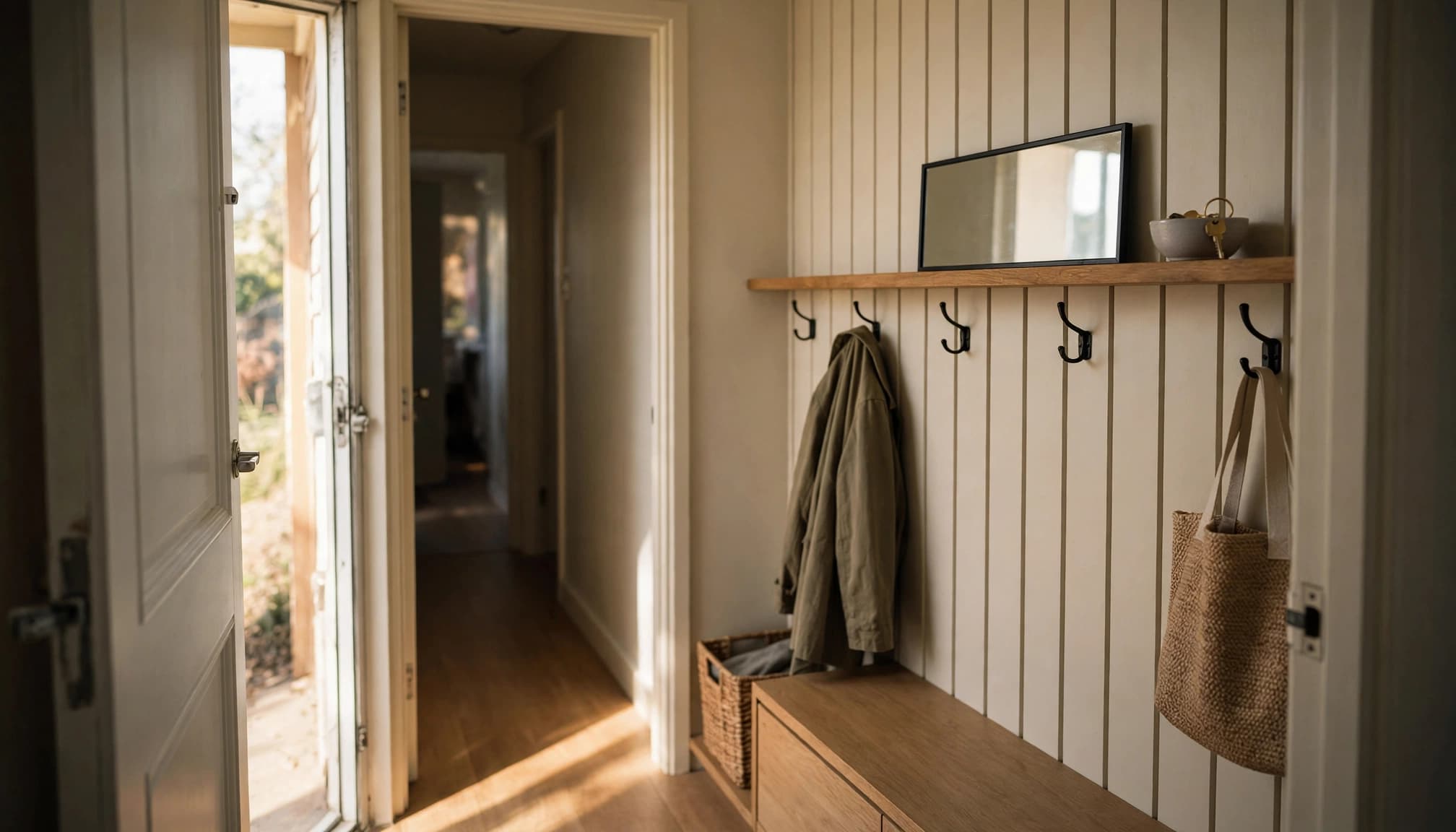
Give Coats and Bags a Vertical Home
For everyday coat storage, start with three to five sturdy hooks near the door, choosing the number that fits your household. Position them outside the door swing, including the space occupied by hanging coats and bags.
On a long, plain wall, board and batten adds texture without requiring another furniture piece. Use vertical battens beneath a thick horizontal top board to define the storage area. The hooks still need secure mounting suited to their loads.
Keep only current outerwear here. Several bulky winter coats on one hook can project farther into the hallway than you expect.
Combine Hidden Storage With a High Shelf
A slim storage bench gives you somewhere to sit while concealing dry shoes and purses. Inside, use a small basket or cube organizers to separate gloves and hats. Leave the seat clear so you can use it.
Above the board-and-batten ledge, a long wood floating shelf uses otherwise empty wall space. Add a little greenery, a horizontal mirror, and a small key bowl if it’s comfortably reachable. Otherwise, keep keys on the lower ledge.
Our compact entryway bench options compare open and concealed designs. This arrangement moves coats off nearby chairs and gives loose shoes one contained home.
Open Living Room Entrance: Define a Landing Spot
When your front door opens directly into the living room, a small landing area can establish an entryway without adding a divider.
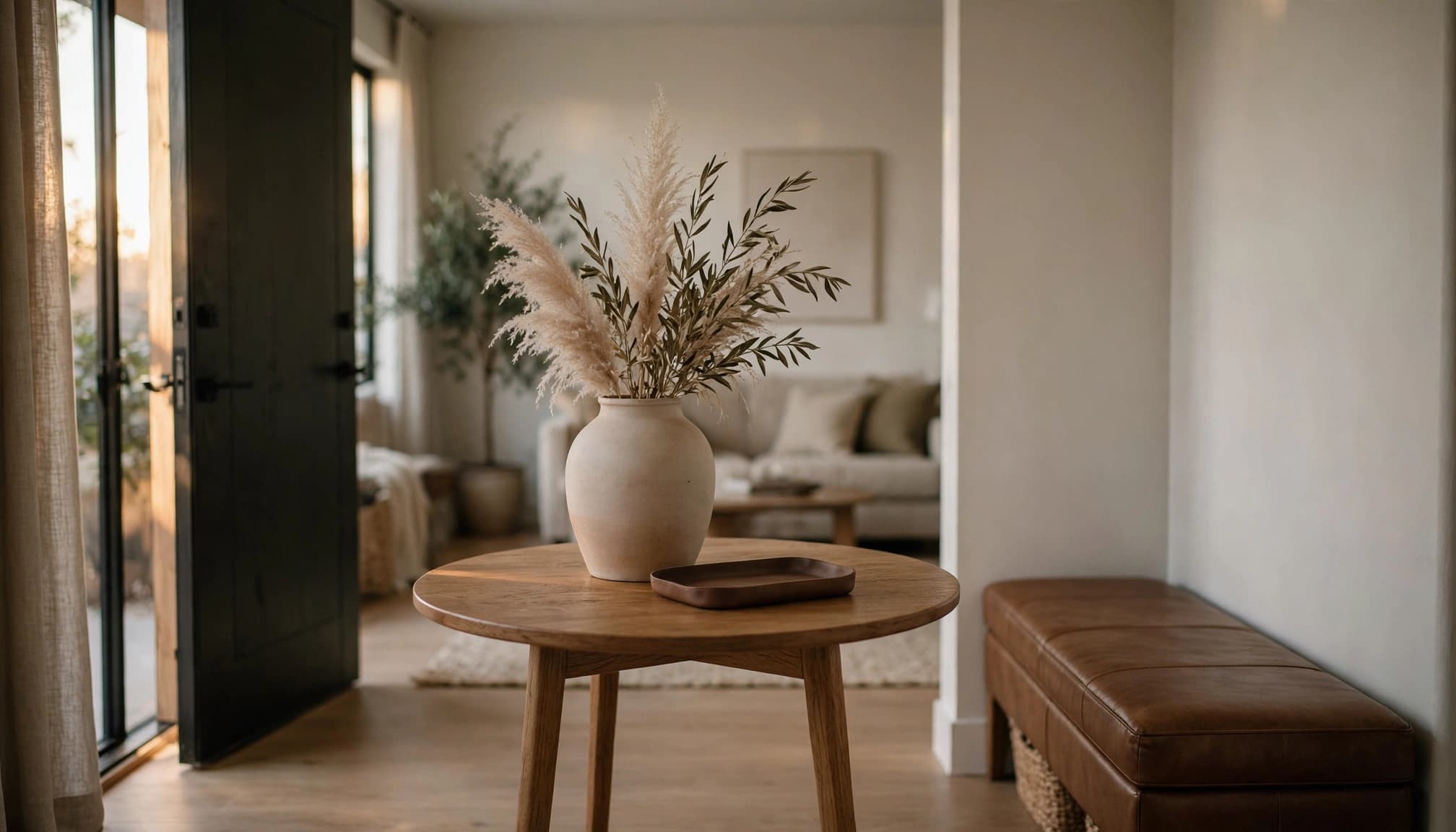
Use a Round Table Only When Circulation Allows
A small-to-medium round entry table can define the open entrance as a focal point. Place a large vase near its center and a tray for keys near the edge you approach. If you already own a console table, use its surface instead of adding another table.
However, a round table needs usable space around it. Skip this option if you must turn sideways or take an awkward detour when carrying groceries. A small section of an existing shelf can provide the same landing function.
Keep the tray limited to everyday pocket items. Incoming packages and stacks of mail will quickly overwhelm a small tabletop.
Replace a Console With a Storage Bench
If a console table already occupies the wall near your door, consider replacing it with a leather storage bench. You gain seating and concealed shoe storage without automatically adding another piece of furniture.
Choose a wipeable finish suited to everyday use. Then consider access: lift-up lids need clear space above, while drawers need room in front.
Keep wet footwear out of the closed compartment until it dries. Our small entryway shoe storage ideas cover alternatives when enclosed storage doesn’t suit your routine. The aim is a living-room entrance with a clear arrival spot and usable seating.
Garage-to-Kitchen Entrance: Contain the Drop Zone
At a kitchen entry, use the wall beside the door to create a compact mini mudroom that keeps arriving belongings off food-preparation surfaces.
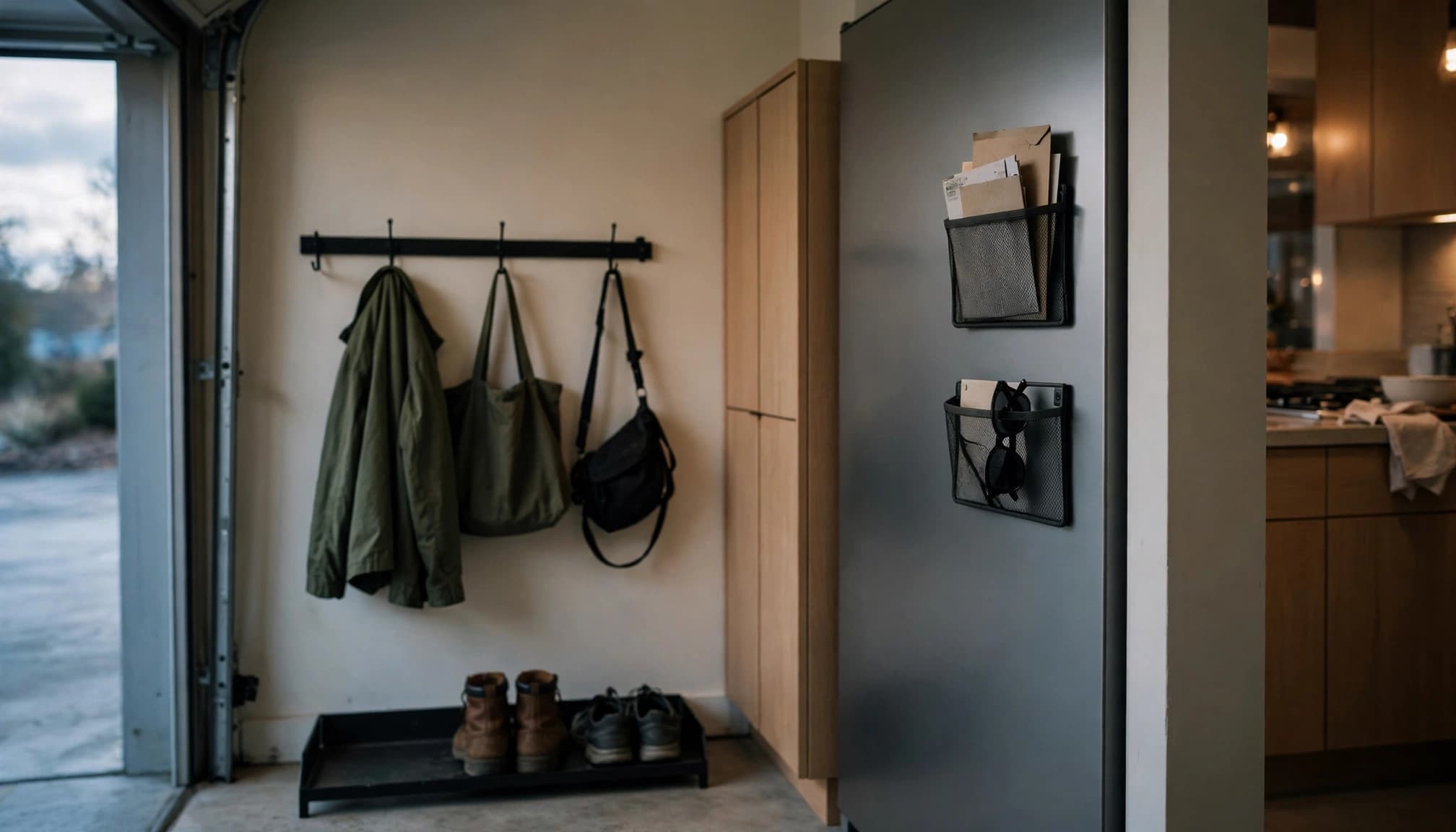
Pair a Narrow Rail With a Boot Tray
Install a narrow rail or suitable wall hooks beside the door for your everyday coat and bag. Place a simple boot tray below, outside the door swing.
Choose the tray around the shoes you use daily, rather than your entire collection. Tall boots may need their own floor-level space because they won’t fit beneath a short rack.
Let muddy or rain-soaked footwear dry here before moving it into closed storage. A washable tray also keeps grit contained instead of spreading it across the kitchen floor.
Use the Fridge Side and Nearby Gap
If the layout allows, a slim cabinet about 28 inches wide beside the fridge can provide closed storage. Treat that width as a starting idea, not a guaranteed fit. Account for appliance doors, handles, and required ventilation space.
Use the cabinet for gloves, reusable shopping bags, and other departure essentials. A small catchall bowl on top can keep keys off the cooking counter.
On a magnetic fridge side, a mail pocket and small magnetic basket can hold incoming envelopes and sunglasses. Keep both shallow so they don’t crowd the passage. This creates a contained drop zone rather than another kitchen-counter pile.
Make the Setup Rental-Friendly and Affordable
You don’t need to recreate every feature in a finished entryway photograph. Start with the smallest change that solves your recurring problem.
Try Existing Storage Before Buying
An unused tray can become your key spot. A basket can separate gloves inside an existing cupboard. Test these through your normal routine before buying matching organizers, so you don’t add more clutter than you need.
If there’s almost no floor space, reserve part of a nearby shelf or cupboard for entryway storage. Inside-door pockets can hold lightweight accessories when they don’t interfere with closing.
For more arrangements using existing space, our apartment entryway storage ideas offer alternatives to adding another cabinet. Spend on the missing function, such as seating or a reliable coat hook, rather than replacing useful containers.
Choose No-Drill Options by Their Limits
An over-door rack can hold suitable lightweight belongings, provided the door closes and latches freely. Stop using it if the bracket causes scraping or interferes with locks or hinges.
Removable hooks also need compatible surfaces and loads within their stated limits. Command’s hook and strip instructions specify cleaning with isopropyl rubbing alcohol rather than household cleaners that leave residue.
However, adhesive hooks aren’t substitutes for furniture anchors. Follow required anchoring instructions, even for freestanding furniture. If your rental rules prevent required anchoring, choose a different storage piece.
One of the easiest quick fixes are for your keys. I know I have misplaced mine more often than I’d like to admit. Check out this top rated adhesive key holder and eliminate that as an issue.
Frequently Asked Questions
What If There’s No Wall Space Beside the Door?
Use a small section of the nearest existing shelf or cupboard. Give keys one tray and keep lightweight accessories together in a removable container.
An over-door organizer may help if it doesn’t interfere with closing, latching, or safe exit. Avoid adding a freestanding coat rack when its base would narrow the walking route.
Can a Storage Bench Fit in a Narrow Entryway?
A bench works when you have room to walk past, sit down, and access its storage comfortably. Its full usable footprint matters more than its width alone.
Tape out the footprint before buying. Then include drawer travel or lid clearance. If sitting leaves your feet across the only route, a shallow shoe organizer may be more practical. For more practical ideas, we recommend this article on making everyday storage easier.
Which Magnetic Organizers Work Beside a Refrigerator?
A magnetic mail pocket suits incoming envelopes, while a small magnetic basket can hold sunglasses or folded shopping bags. Both need a suitable magnetic surface and loads within their stated limits.
Some refrigerator surfaces aren’t magnetic. Also keep organizers clear of appliance ventilation, door movement, and the route through your kitchen.
Keep Your Entryway Focused on Daily Use
A useful entryway holds what you need at the door without making movement harder. Easy access matters more than maximum storage capacity.
Start with your most persistent pile, then give those belongings a reachable home. Add a bench, cabinet, or shelf only when it improves that routine and leaves the entrance clear.
We only recommend top-rated, affordable products you can trust. As an Amazon Associate, I may earn from qualifying purchases through the affiliate links above at no extra cost to you. Thank you for supporting our work.