To organize the cabinet under a small kitchen sink, remove what doesn’t belong, measure around the plumbing, and group essentials in removable bins. Good under-sink organization leaves clear access to the shutoff valves and makes everyday supplies easy to retrieve.
You don’t need matching containers or a cabinet renovation. In a compact kitchen, a washable basket and fewer backup bottles can make a useful difference. Start by deciding what deserves space before choosing an organizer.
Key Takeaways
- Keep only suitable, regularly used supplies beneath the sink, with hazardous products secured away from children and pets.
- Measure the cabinet opening and clear spaces around pipes before buying storage.
- Choose removable containers that let you reach supplies and inspect the plumbing without unpacking everything.
Empty the Cabinet and Decide What Belongs
Empty the cupboard while keeping bottles upright and children and pets away. Once you can see the floor and back corners, you’ll have a clearer picture of both the space and its condition.
Reduce Duplicates Before Adding Storage
Separate everyday kitchen-cleaning supplies from unopened replacements and products used elsewhere. Put unrelated belongings back in their proper places rather than buying a larger organizer to hold them.
Keep one working supply of items such as dishwasher detergent, spare sponges, and trash bags. If bulk refills crowd the opening, move them to another suitable storage area.
Our guide to small-apartment cleaning supply storage can help you give those extra products a practical home. Keep cleaners separate from food, medicines, and personal-care products wherever you relocate them.
Decide Whether Cleaners Can Stay Here
A low cabinet needs secure storage when children or pets could reach it. Poison Help’s prevention guidance advises keeping household cleaners in locked cabinets or out of children’s reach.
If this cupboard can’t provide suitable protection, use it for nonhazardous supplies and move cleaners to secure storage elsewhere. Accessibility for adults shouldn’t mean easy access for children.
Also leave electrical appliances out of this cupboard. A dry cabinet away from plumbing and cleaning liquids is a better home for a blender or hand mixer.
Plan Under-Sink Organization Around the Plumbing
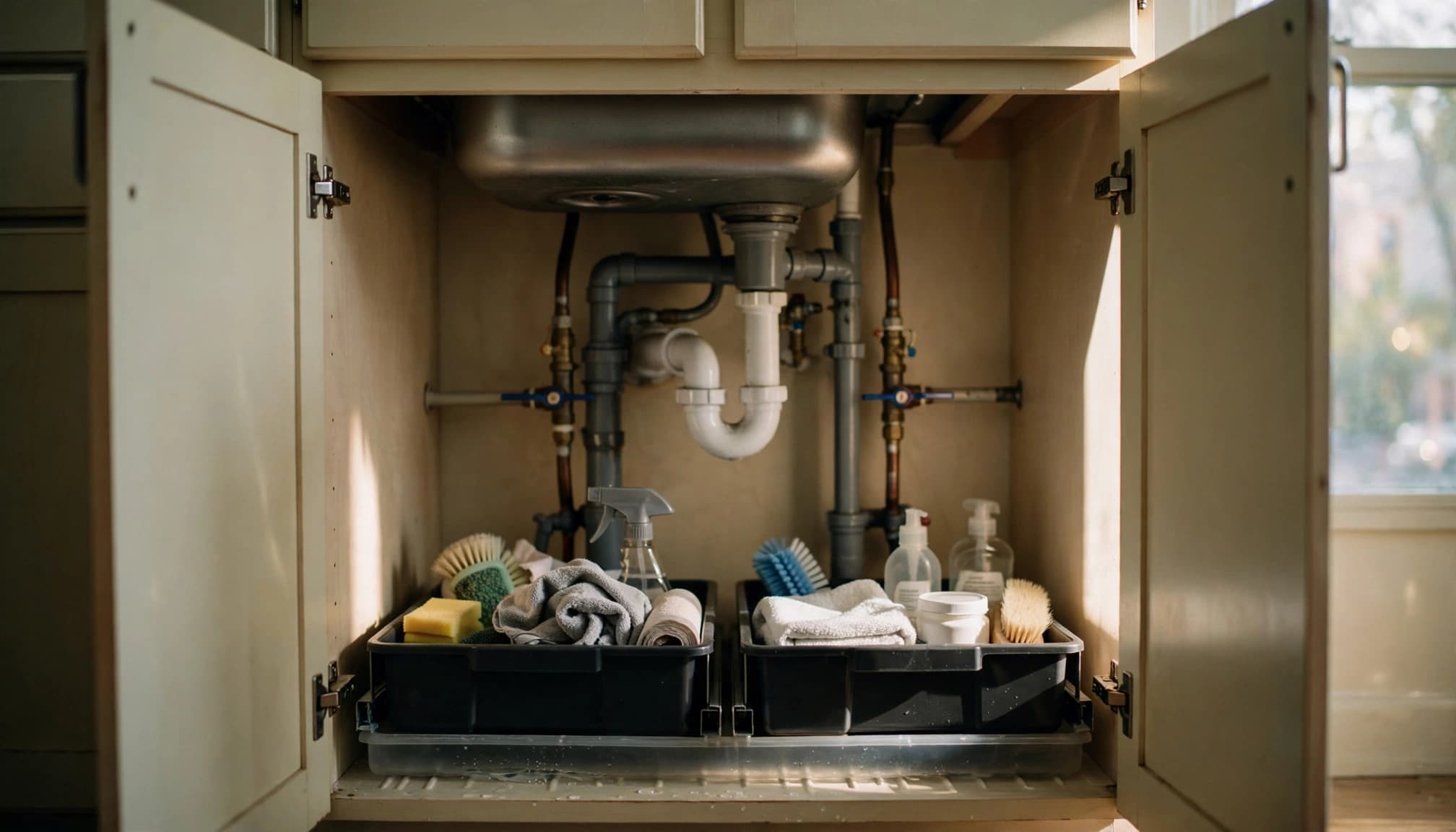
Treat the cabinet as several usable pockets rather than one rectangular box. The drainpipe, sink bowl, and any garbage disposal determine which storage shapes will work.
Measure the Clear Spaces Separately
Record usable width, depth, and height on each side of the plumbing. Include the space below the curved drainpipe, often called the P-trap, and beneath the sink bowl.
Measure your tallest bottle with its spray head attached. A shelf can clear the bottle body yet catch the nozzle whenever you put it away.
If the plumbing sits off-center, use the larger open area for your main organizer. Matching storage on both sides isn’t necessary. Two different-sized bins can use an awkward footprint more effectively.
Include the Opening and Moving Parts
Measure the doorway separately from the cabinet interior. Hinges and a center divider can prevent a basket from passing through an otherwise roomy cupboard.
For a pull-out organizer, allow room for its full travel. The drawer must clear the door edge and nearby bottles.
A cardboard footprint helps you test placement before buying. Keep valves reachable, and leave enough room to remove containers during repairs.
A bin that fits inside the cabinet can still be unusable if it can’t pass through the opening when loaded.
Choose an Organizer That Solves Your Main Problem
Start with the access problem you notice most. Bottles disappearing at the back call for a different solution than loose sponges or unused height beside the drain.
These options suit different cabinet layouts.
| Organizer | Useful For | Main Constraint |
|---|---|---|
| Handled caddy | Supplies carried together | Loaded weight and handle access |
| Narrow pull-out | Bottles in a deep cupboard | Door clearance and drawer travel |
| Two-tier organizer | Open height beside pipes | Shelf and bottle clearance |
| Small turntable | Bottles in a clear area | Unobstructed rotation |
| Washable open bin | Loose supplies and backups | Easy removal through the opening |
Choose the simplest option that improves retrieval. Extra compartments can consume space without making supplies easier to reach.
Use Pull-Outs for Hard-to-Reach Depth
A narrow sliding organizer helps when you regularly kneel down and reach behind other bottles. However, a wide drawer can collide with a central drainpipe.
Two narrow units may fit better than one wide model, but they aren’t automatically necessary. Try one on the clearest side first.
Some sliders attach to the cabinet, so distinguish between freestanding storage and installed hardware. A loose bin may solve the same problem without screws.
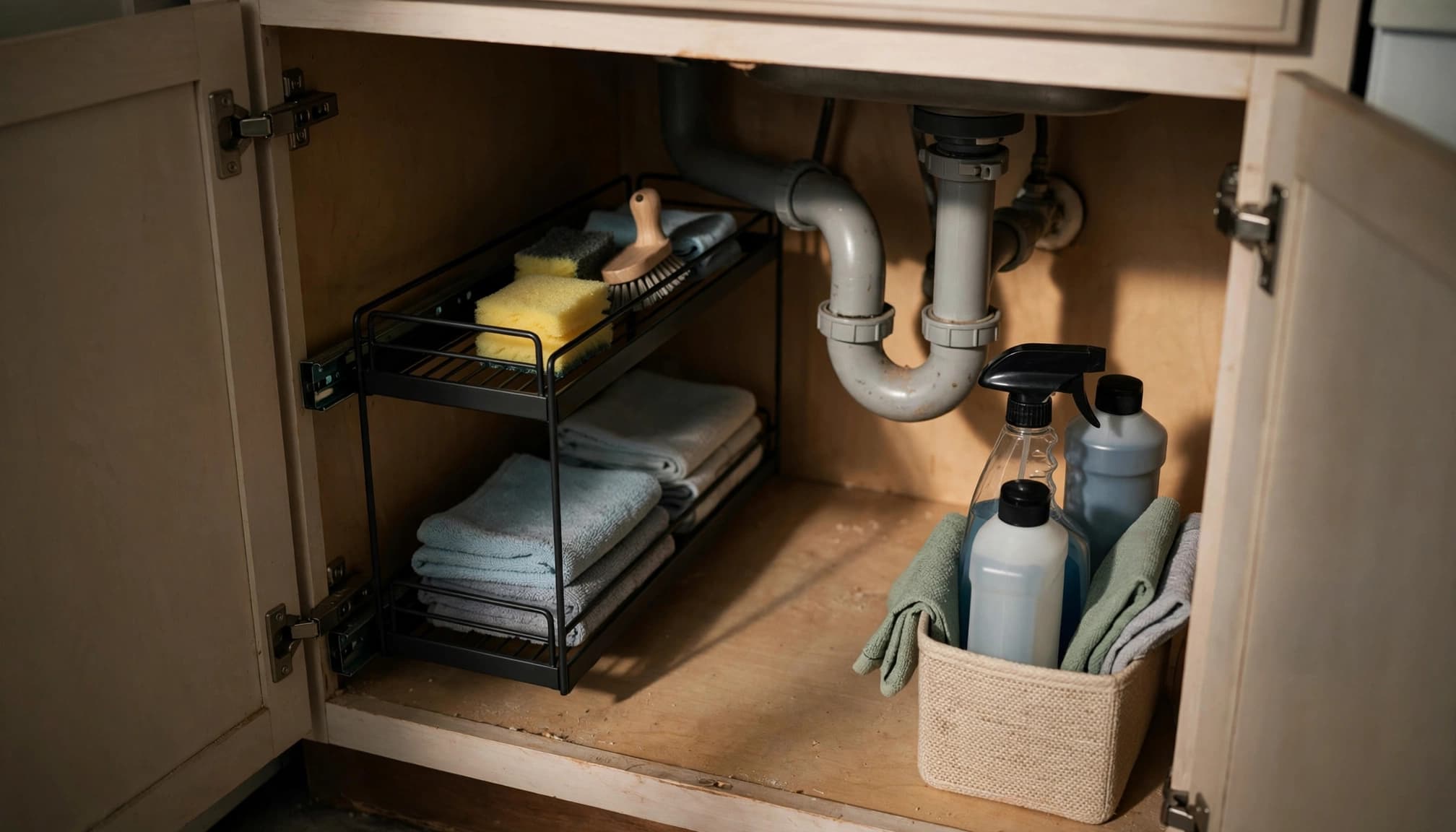
Our Top Recommendation: GeeBorn Under Sink Organizer is a 2 tier storage system that offers easy assembly (no tools) and requires no drilling. Simply put together the frame and you have an adjustable height, sliding under sink organization rack. Use it in your kitchen or bathroom.
Add a Second Tier Only Where Height Allows
A two-tier rack works beside the plumbing when both shelves remain accessible. Keep taller bottles at floor level if the upper shelf limits their headroom.
Avoid stacking frequently used supplies beneath a loaded box. You’ll gain capacity but add an extra lifting task every time you need something underneath.
Give Everyday Supplies and Backups Different Homes
Once you’ve chosen containers, arrange the contents around your routine. Small kitchen storage works better when putting something away takes as little effort as taking it out.
Keep the Working Kit Near the Front
Place the supplies you use most often in the easiest clear section. A handled caddy can keep your kitchen-cleaning kit together and let you carry it where needed.
Keep the load comfortable. If the tote becomes awkward to lift, reduce its contents rather than filling every compartment.
Put less-used replacements behind the daily kit only when you can still see and retrieve them. Store dry cloths separately from bottles that could drip, and don’t return damp cloths to a closed container.
Keep Product Labels Visible
Leave cleaners in their original bottles with warnings and directions readable. The EPA’s household poison-prevention checklist advises keeping substances in their original containers rather than transferring them into beverage bottles or cans.
You can label the outside of a caddy to identify its purpose, but that label doesn’t replace product information.
Keep incompatible products separated according to their directions, and never mix cleaners. An attractive set of matching bottles isn’t worth losing instructions you may need.
Use Cabinet Doors Without Blocking the Interior
The inside of a cabinet door can hold lightweight items, but door storage needs space within the cupboard too. A hanging basket projects inward when the door closes.
Start with something shallow for spare sponges, gloves, or trash bags. Keep heavy liquid containers in a stable, suitable position inside the cabinet.
Before committing to an over-door holder, test whether its hooks let the door close fully. Then load it and close the door with neighboring bins in place. An empty holder can hide collisions that appear once it’s full.
For renter-friendly storage, begin with loose bins and freestanding racks. Our no-drill storage ideas cover other ways to use existing cupboards without permanent changes.
Adhesive hooks also need a compatible surface and loads within their stated limits. Don’t attach storage to pipes, hoses, or shutoff valves.
Keep the Cabinet Dry and Easy to Reset
Wipe the empty cabinet and let it dry before returning supplies. If you find dampness, swelling, or an active drip, address the leak rather than hiding it beneath a liner. Renters should report plumbing problems to their landlord or property manager.
Use removable, washable trays beneath bottles that could drip. A tray helps contain small spills, but it doesn’t repair a leak. Follow the product’s directions when dealing with spilled cleaner.
Leave enough floor and plumbing visible to notice moisture. Also let brushes and reusable cloths dry before storing them.
When you replace a trash bag or refill dish soap, glance beneath the bottles and around the pipe connections. This ties a quick inspection to something you already do.
If the arrangement repeatedly gets messy, reduce the contents first. As with other everyday small-apartment storage, an easy return path matters more than filling every available corner.
Frequently Asked Questions
How Do You Organize Around a Garbage Disposal?
Use the clear spaces beside the disposal rather than trying to surround it with a full-width rack. A low bin may fit beneath nearby pipes, while a narrow caddy uses the taller open side.
Keep its electrical connection and plumbing accessible. Choose containers you can remove independently so one small task doesn’t require dismantling the entire arrangement.
Can You Organize Under the Sink Without Buying Anything?
Yes. Start with a washable basket, tray, or suitable plastic bin you already own. Remove duplicates, group supplies by use, and test the arrangement through your normal cleaning routine.
Buy something only when you’ve identified a remaining problem, such as a bin that’s too deep to lift or bottles you can’t reach. You may need a different container shape rather than more storage.
What Shouldn’t You Store Under a Kitchen Sink?
Keep food, medicines, electrical appliances, and items easily damaged by moisture elsewhere. Avoid using the cupboard as overflow storage for unrelated belongings.
If children can access it, move hazardous products to secure storage. The Kentucky Poison Center’s safety checklist recommends moving cleaning products out of the under-sink area to upper shelves or locked cabinets.
Make the Cabinet Easy to Use
A useful sink cabinet gives you room to retrieve supplies and reach the plumbing. Removable storage makes both jobs easier, especially in a small kitchen.
Start with fewer contents and one well-fitting container. Add another organizer only when it solves a problem you’ve noticed during everyday use. The finished setup should be simple enough to put back in order without rearranging the whole cupboard.
We only recommend top-rated, affordable products you can trust. As an Amazon Associate, I may earn from qualifying purchases through the affiliate links above at no extra cost to you. Thank you for supporting our work.