You can air dry clothes in a small apartment without a dryer by using a compact rack, spacing garments apart, and controlling moisture. The most useful setup fits your available door, bathroom, wall, or ceiling space without blocking everyday movement.
Airflow matters as much as the rack you choose. Clothes crowded into a damp corner will stay wet longer, even on a large airer.
Start with the space you can use comfortably, then choose a drying method that folds away when you’re finished.
Key Takeaways
- Choose an over-the-door or folding rack when you need a removable setup.
- Spin out excess water, shake garments, and leave gaps between items.
- Use ventilation or a dehumidifier to manage moisture. A fan helps air move but doesn’t remove water from the room.
- Put clothes away only when seams, waistbands, and pockets are completely dry.
How to Dry Clothes in a Small Apartment Without Drilling
You don’t need permanent fixtures to create a useful place to dry clothes. Start with an existing door or a clear section of bathroom floor.
1. Use an Over-the-Door Drying Rack
The Whitmor Over the Door Drying Rack has four bars and four optional clothing hooks. It folds flat when you’re finished.
Apartment Therapy’s Whitmor rack review describes it as a low-cost option compared with most drying racks. Prices change often, so check the current listing before you order.
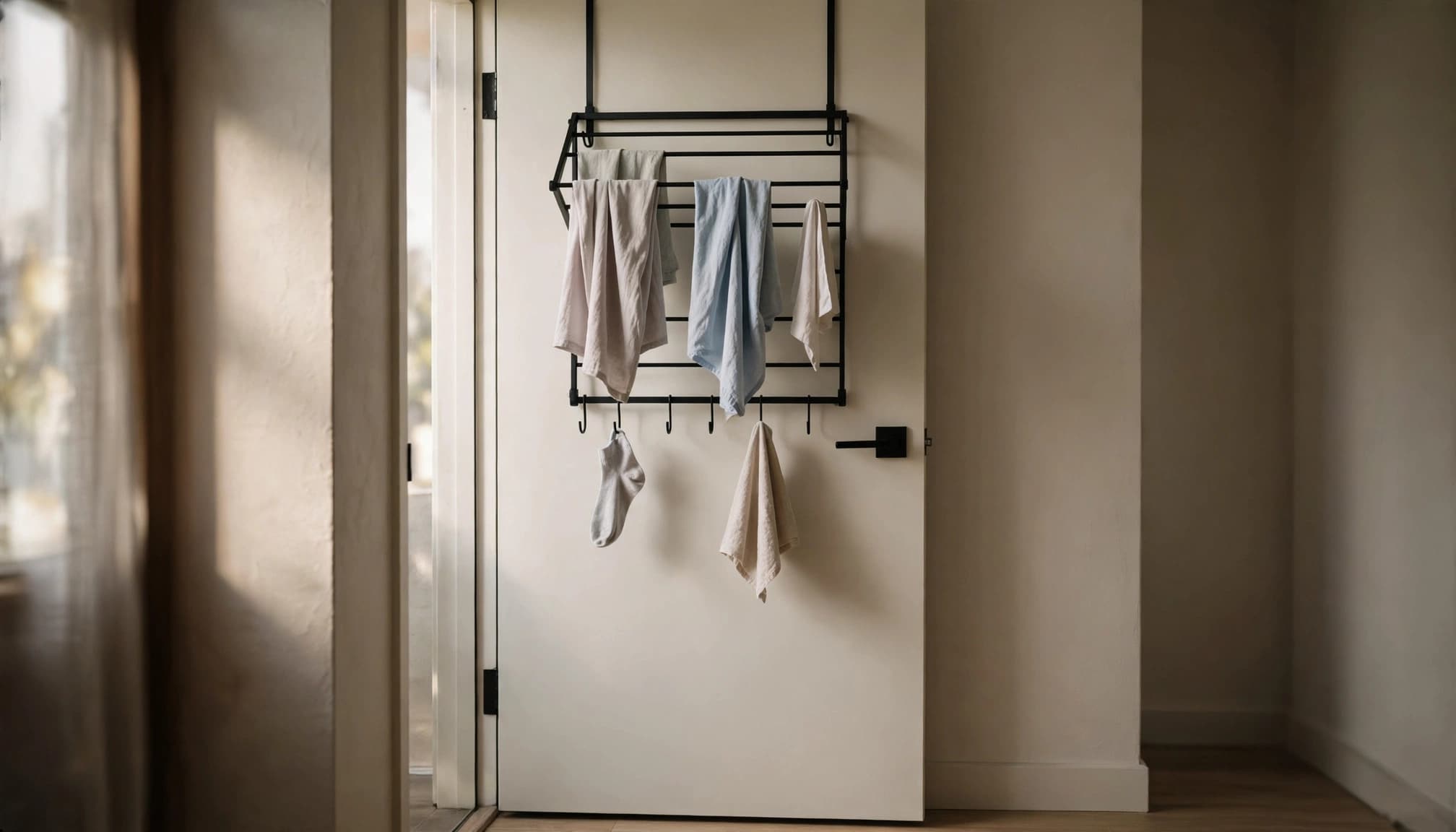
Use it for smaller items and lightweight garments. Allow space between layers rather than covering every bar with overlapping clothes.
The hooks must fit your door thickness and leave closing clearance. Open the door through its full swing so the loaded rack won’t hit furniture or fixtures. Follow its load limit, including the weight of wet clothing.
2. Make the Bathroom Your Drying Zone
A folding rack over a clear bathtub area can keep drips away from living-room flooring. Move it out before using the bath or shower.
A chain between securely mounted hooks on the bathtub walls can also hold hangers. Chain resists stretching under wet laundry better than rope, but the hooks and supporting structure still carry the load.
This second option requires mounting, so it isn’t a no-drill solution. Wet laundry can pull fixings from drywall or overload a shower rod. A freestanding rack is the simpler choice when permanent fittings aren’t allowed.
Our renter-friendly storage without drilling guide covers similar limits around supports, surfaces, and door clearance.
Which Drying Racks Keep Your Floor Clear?
If your apartment has little spare floor space, look upward or choose a rack that disappears between loads.
3. Fit a Folding or Accordion Wall Rack
A wall-mounted folding rack opens when needed and folds flat afterward. A retractable accordion rack pulls outward to provide several drying bars, then pushes back toward the wall.
Both work best where the open rack won’t obstruct a doorway or cupboard. Include hanging sleeves and trouser legs when measuring the space it needs.
These racks require suitable fixings and a supporting wall. Adhesive accessory hooks aren’t substitutes for the manufacturer’s mounting system.
4. Use a Ceiling-Mounted Pulley Rack
A pulley rack uses a drawstring to lower the bars for loading and raise wet clothes toward warmer overhead air. It can hang above a washing machine, using space that would otherwise stay empty.
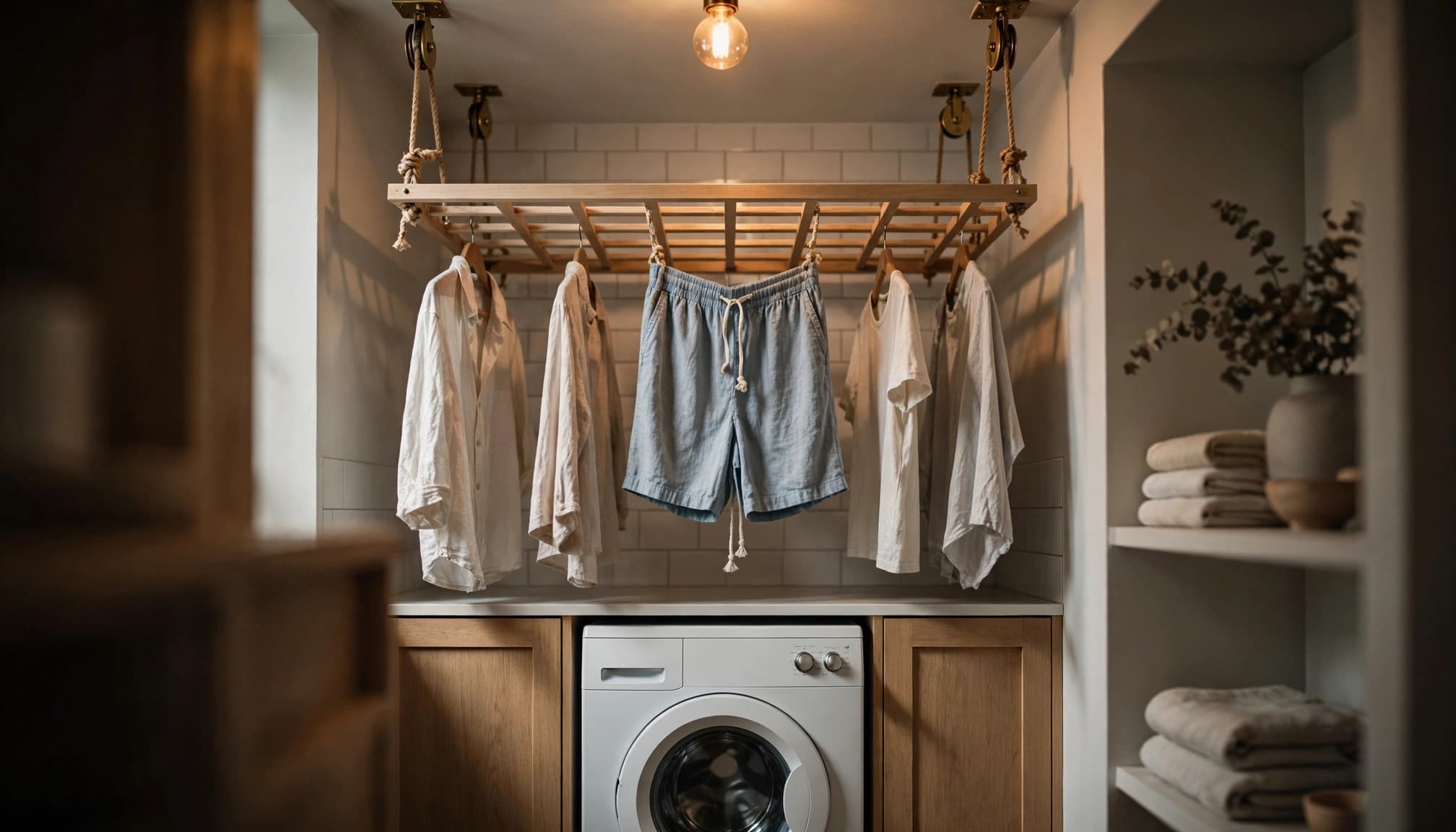
Leave enough clearance for the garments underneath. Secure installation, the stated load limit, and safe cord management matter more than squeezing in another shirt.
5. Consider a Pull-Out Drawer Dryer
An invisible drawer dryer has drying bars concealed behind a drawer front. You extend the bars for clothes and slide them away when empty.
These built-in options appear in Houzz’s space-saving laundry roundup. They suit a planned laundry cabinet better than a low-cost rental setup.
Keep the bars extended while clothes dry. Closing damp garments inside cabinetry traps moisture instead of solving the drying problem.
Help Clothes Dry Faster Without Damaging Them
Your hanging technique affects drying speed, wrinkles, and the condition of your clothes. A few small changes make each load easier to manage.
Remove Water Before Hanging
Use the highest spin speed permitted by the care label. An extra spin can help suitable items, but delicates need gentler handling.
Shake out each garment before hanging it. This releases folds, sheds loose water, and reduces wrinkles. Shaking won’t replace a spin cycle, but it helps clothes hang more evenly.
Straighten hems and open tangled sleeves. Don’t leave a shirt folded over itself when you have room to spread it out.
Choose Hangers That Handle Moisture
Plastic hangers with notches help keep undergarments and thin straps from sliding off. Plastic is useful for wet clothes because wood can warp, while velvet can hold moisture and develop odors.
Leave gaps between hangers. A tightly packed row limits airflow through sleeves and around seams.
Follow care labels for items that need flat drying. Heavy wet knitwear can stretch on a hanger, so reshape it on a suitable flat surface with airflow underneath.
Protect Colors and Avoid Clothespin Marks
Turn clothes inside out before drying them in sunlight. Direct sun can still fade fabric, so shade is safer for dark colors.
In Apartment Therapy’s air-drying tips, the writer describes black jeans fading to dark gray after direct sun exposure. The same account reports two black marks left on a white towel by dirty clothespins.
Wipe clothespins before use, let them dry, and store them in a dry, closed container.
Control Humidity While Laundry Dries
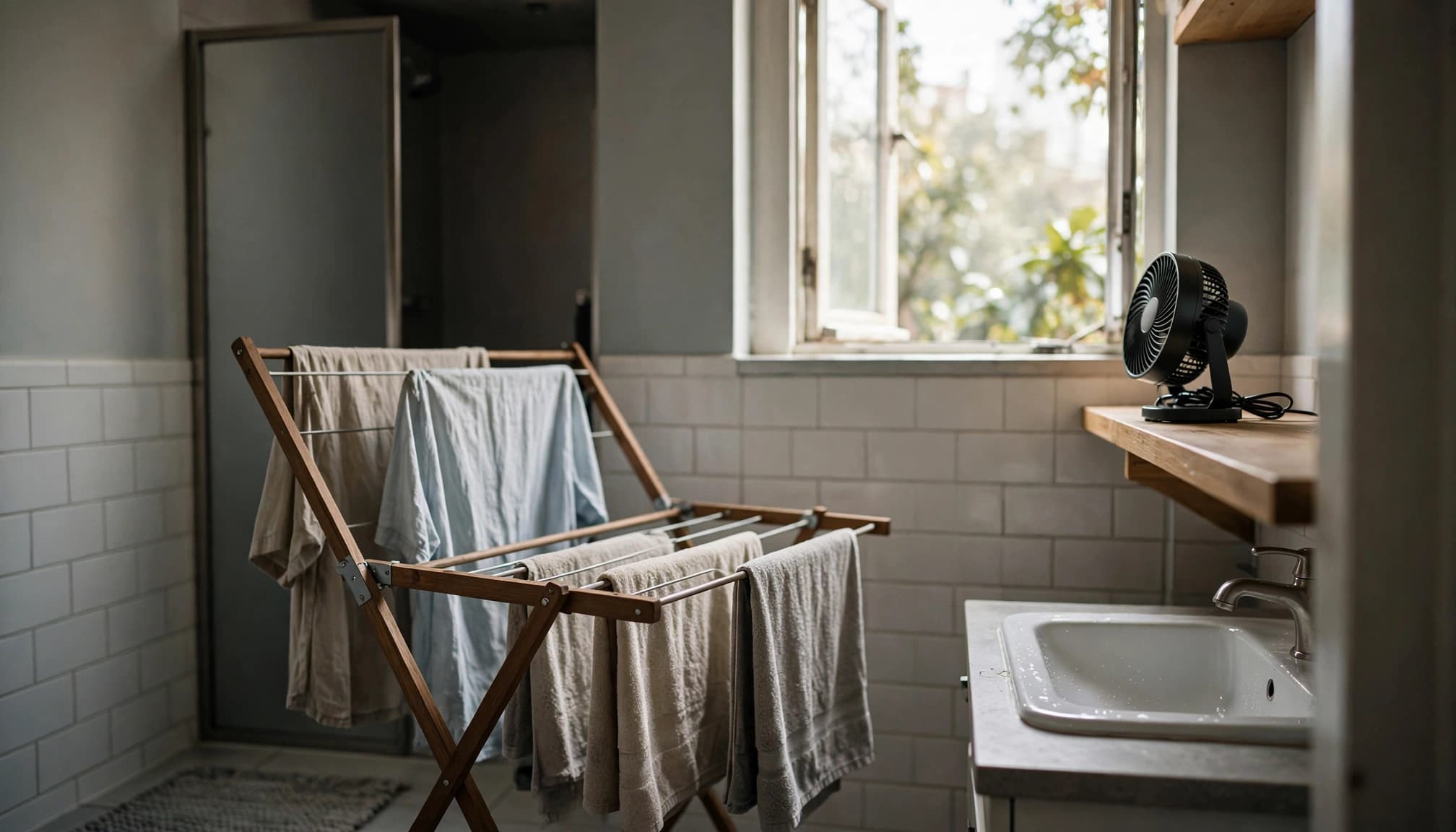
Put your rack near an open window or in a well-ventilated bathroom, rather than a dark, enclosed corner. Leave space between wet fabric and walls, curtains, or upholstered furniture.
The EPA’s indoor moisture guidance recommends keeping relative humidity below 60%, ideally between 30% and 50%. A small hygrometer makes room conditions easier to judge.
A fan moves damp air away from fabric. Position it safely on a dry surface, away from splashes, with its cable outside walking routes.
A fan helps clothes release moisture, but that moisture still needs somewhere to go. Ventilation removes humid air; a dehumidifier collects water from it.
Use a bathroom extractor that vents outdoors, or open a window when outdoor conditions help. On humid days, a dehumidifier may be more useful than bringing in more damp air.
Avoid drying a full load immediately after a hot shower. Let the room’s humidity fall first.
Keep clean spare towels separate from wet clothes. Our bathroom storage without a linen closet ideas can help you move backups to a dry location without crowding the drying area.
Persistent condensation or musty smells can signal excess moisture that may encourage mold or mildew. Improve moisture control, dry smaller loads, or choose a different drying location.
Give Sheets and Towels Enough Space
Large items need more room than shirts and socks. Wash them in smaller batches if your rack can’t hold them without overlapping.
On a traditional clothesline, put two or three hangers beneath a bedsheet to hold its hanging sides apart. This creates an air gap instead of leaving two damp layers pressed together.
Spread towels across separate bars where possible. A thick towel folded into several layers stays damp inside, even when the exposed surface feels dry.
Rotate bulky items during drying so previously covered sections face moving air. Keep the floor beneath clear, and don’t let bedding trail onto damp bathroom tiles.
Your setup should still leave doors, fixtures, and walking routes usable. A smaller load is easier to manage than a full rack that blocks your apartment.
How Long Does Laundry Take to Dry Indoors?
There’s no reliable single drying time for an apartment load. Fabric thickness, spin speed, spacing, temperature, and humidity all affect the result.
Thin clothing usually dries before denim, thick towels, and padded items. Plan around the slowest pieces rather than assuming everything will finish together.
Feel the waistband, pockets, cuffs, and seams before folding. These areas can stay damp after the main fabric feels dry.
Don’t put unfinished laundry into a closed wardrobe, under-bed container, or sealed bin. A container can trap moisture already in the fabric.
Once everything is dry, return it to its usual place. For everyday small-closet organization, group longer garments together and leave enough room to move hangers along the rod.
Let the empty rack dry before folding it away. Keep clothespins and spare hangers together so the next load is easy to set up.
Frequently Asked Questions
What’s the Best Drying Rack for a Small Apartment?
An over-the-door rack suits small, lightweight loads without using floor space. A folding freestanding rack is more flexible for mixed laundry. Wall and ceiling racks work when suitable mounting is possible.
Choose by usable drying space and clearance, rather than folded size alone.
Can You Dry Clothes Without a Balcony?
Yes. Use a ventilated indoor rack with space between garments, then manage humidity through ventilation or a dehumidifier.
Some apartment complexes prohibit balcony drying, so an indoor setup can be useful even when you have outdoor space.
Would a Small Tumble Dryer Be Easier?
A tumble dryer removes the need for a hanging system and can leave suitable clothes soft and warm under a controlled heat setting.
It also needs installation space and adds purchase and running costs. If you want to avoid an appliance, a compact rack and reliable moisture control remain practical options.
Make Laundry Fit Your Apartment
Choose one drying spot that keeps your doors and walking routes clear. Match the rack to your normal load, then give each garment enough room.
Dry fabric and a dry room matter more than hiding laundry quickly. With suitable supports, steady airflow, and careful spacing, you can make air-drying part of your routine without letting it take over your apartment.