When clutter takes over the space you need to cook, move, or relax, another cabinet can feel like the answer. Often, you can gain usable space by organizing existing furniture and overlooked areas before adding anything bulky.
Practical storage solutions for small spaces start with one daily problem, a few measurements, and a setup that suits your routine. You don’t need matching bins or a complete room makeover to make a useful difference. Start with the belongings you reach for most, then give everything else a suitable place.
Storage solutions for small spaces that free up room
Good storage leaves your home comfortable to use. Before choosing an organizer, notice where belongings collect and which routes need to stay open.
Your everyday items deserve the easiest spaces to reach. Keep frequently used dishes, clothes, and household supplies at a comfortable height. Reserve higher shelves, deeper compartments, and less convenient corners for belongings you use occasionally.
Sort the area first. An organizer works better when it holds things you need rather than everything that happened to collect there.
Use furniture that does more than one job
Start with furniture your room already needs. A storage ottoman can replace a footrest while holding throws or spare cushions. A bedside table with drawers can keep small essentials together without requiring another container on the floor.
A storage bed can hold folded clothing or bedding, but its opening style matters. Side drawers won’t help much when a wall or nightstand prevents them from opening. A lift-up base needs suitable clearance above it and a lifting mechanism you can use comfortably.
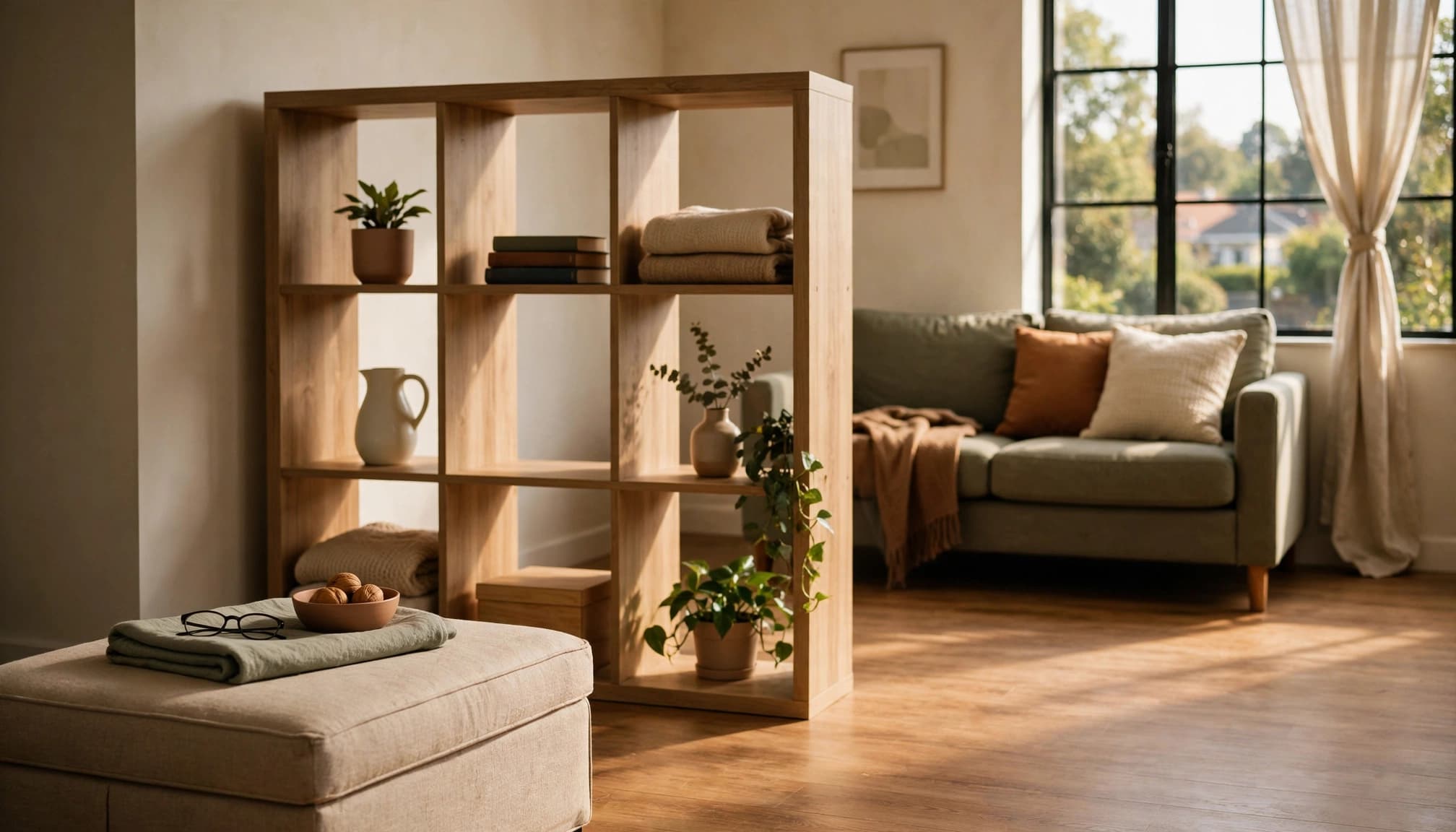
Cube shelving can separate sleeping and living areas in a studio while holding baskets, books, or folded items. Keep it outside the main walking route and follow its installation requirements.
Give each hidden compartment a clear purpose. Blankets and spare cushions can share an ottoman, while charging accessories belong together in a smaller drawer. Avoid turning a large compartment into a catch-all that needs sorting whenever you open it.
An ottoman used as a daily coffee table may suit spare bedding better than belongings you need every evening.
Look up, under, and inside existing furniture
Before buying another shelf, look inside the furniture you own. A shelf riser can make better use of cupboard height. Drawer dividers can separate small items without adding another storage unit.
Use these additions where they solve a clear problem. A riser is helpful when it lets you reach a mug without moving a stack of bowls. It adds little value if taller items no longer fit beneath the shelf above.
Under-bed containers can hold occasional-use belongings when the space is clean and dry. Account for center supports, wheels, and handles. A container also needs enough room beside the bed to slide out.
Door-mounted baskets and wall storage can free surfaces, but they need suitable supports and clearance. Keep lightweight items higher and avoid placing heavy or fragile objects above beds, seating, or walkways.
For removable options, follow the product’s surface requirements, installation directions, and weight limits. Include the organizer’s own weight where the instructions require it. Drawer inserts, freestanding desktop organizers, and baskets inside existing cupboards offer alternatives when wall mounting isn’t suitable. See this article on No Drill Shelf Ideas for more ideas.
Choose small-space storage that fits your home
The right organizer fits your belongings, your available space, and the way you’ll use it. Capacity alone doesn’t tell you whether something will work.
A large bin may hold everything, yet become frustrating if you must unload a cupboard to retrieve it. Smaller containers can be more practical when they let you remove one group of items at a time.
Measure the space and the route around it
Measure usable space, rather than the outside dimensions of a cupboard or furniture frame. Hinges, pipes, brackets, and baseboards can reduce the room available.
Use this simple measuring sequence before choosing storage:
- Record the usable width, depth, and height, including anything that projects into the space.
- Measure the opening separately, since a cabinet interior can be wider than its doorway.
- Allow room to open lids, extend drawers, lift baskets, and pull containers out.
- Mark a proposed furniture footprint with tape, then walk your usual routes around it.
Try the layout during normal activities. Carry a laundry basket past the taped area, pull out a dining chair, and open nearby doors. This helps you notice conflicts that a floor measurement won’t show.
Measure your belongings, too. A deep drawer organizer needs compartments that suit what you’re storing. Tall bottles, bulky blankets, and long cooking utensils need different shapes, even when their containers have similar capacities.
For larger furniture, include the delivery route through doors, hallways, stairs, and tight turns. Keep these measurements together on your phone so you can compare options without starting again.
Leave a little working room around containers. A box wedged tightly between shelf supports may fit, but you’ll struggle to get your hands around it.
Compare budget-friendly and renter-friendly options
Test the location with something you already own. A shoebox can separate accessories, and an unused basket can hold shopping bags. Use it through your normal routine before deciding whether a replacement would help.
This trial shows what matters. You may need a lower container, easier handles, or a position closer to where you use the contents. Matching colors can wait until the setup works.
Freestanding shelves, slim rolling carts, and door-mounted baskets offer different benefits. A cart can move aside when needed, but it still needs a parking place. A door basket saves shelf space only if the loaded door closes properly.
Renter-friendly doesn’t automatically mean safe for every rental surface. Lease restrictions still apply to adhesives, pressure-mounted products, and door attachments. Painted walls, wallpaper, and delicate finishes may have limits that rule out a particular product.
Freestanding furniture can also require anchoring. The CPSC’s Anchor It campaign addresses furniture and television tip-over hazards. Follow the furniture manufacturer’s anchoring instructions, especially where children are present. If required anchoring isn’t permitted, choose a different piece rather than leaving it unsecured.
Spend on the feature that fixes your problem. A sturdy handle or smooth drawer may help more than a larger set of matching bins.
Put storage where you need it most
Useful storage solutions for small spaces follow your routine. A convenient location makes it easier to put something away before it becomes part of a pile.
Keep each improvement focused. You don’t need to reorganize an entire kitchen because cooking tools crowd one drawer. Solve the repeated problem first, then see whether anything else needs attention.
Create simple landing spots for daily essentials
Clutter often shows you where an item needs a better home. If keys collect on the kitchen counter, a small tray near the entrance may be more useful than a deeper organizer elsewhere.
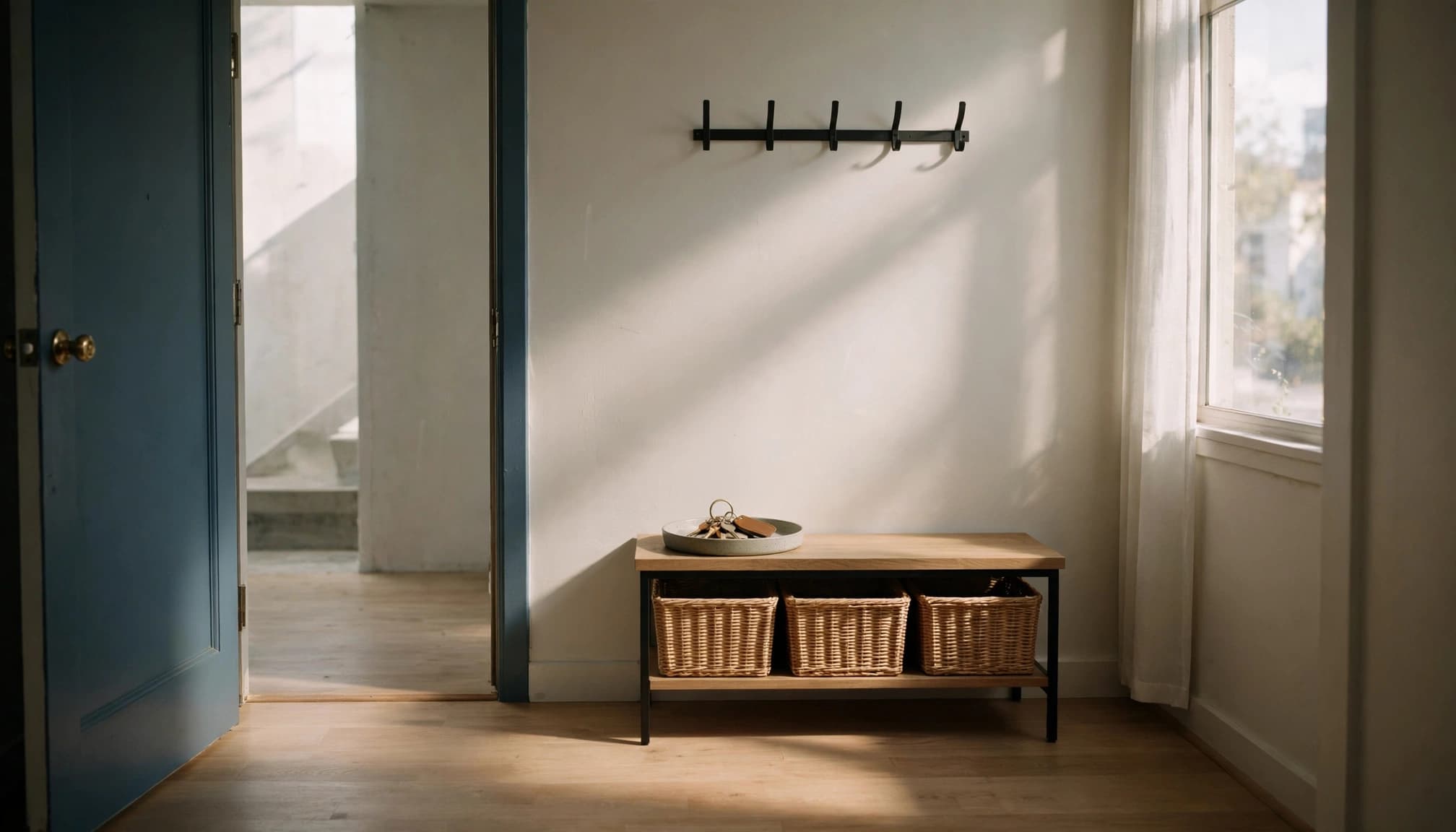
Keep the landing spot small enough to stay focused. Give it the items you carry most days, such as keys, a wallet, and current sunglasses. Store spare accessories somewhere else so they don’t bury what you need before leaving.
Apply the same idea where you cook. Keep frequently used utensils near your preparation area, with enough room to work safely. Move occasional-use tools out of the easiest drawer if they crowd everyday items.
For chargers, choose a spot near the outlet you normally use. Keep the cable accessible without stretching it across a walkway. A small open container beside that spot can hold unplugged accessories without creating another tangled drawer. We have an article dedicated to Cord Organization here.
Shared homes benefit from clear divisions. Separate small baskets or drawer sections can give each person a place for daily belongings. Choose arrangements that don’t require everyone to use exactly the same routine.
Make returning an item simple. If putting something away involves removing a lid, shifting a stack, and reaching behind furniture, a nearby open tray may work better.
Store seasonal and occasional-use items safely
Less accessible storage suits belongings you don’t need every day, including holiday decorations, guest bedding, and off-season clothing. Group them by how you’ll retrieve them, rather than filling each container with unrelated extras.
Choose clean, covered containers in a cool, dry location away from direct sunlight. Clothes and bedding should be fully dry before packing. A closed bin doesn’t make a damp cupboard suitable for textile storage.
Match the container to its contents. Rigid bins provide structure for loose decorations, while suitable fabric cases can hold folded textiles. Don’t choose compression simply to save space when it could damage delicate or structured garments.
Label containers with descriptions you’ll recognize later. For an opaque box, add a short inventory inside the lid or keep a photo on your phone. Update it when the contents change.
Keep transitional clothing within reach until your local weather makes it unnecessary. You shouldn’t need to unpack several containers for a layer you still wear regularly. Also see our article on how to Store Seasonal Clothes.
Storage must leave vents, plumbing access, and exits unobstructed. The NFPA’s home escape planning guidance recommends identifying two ways out of each room, including windows and doors. Avoid placing furniture or containers where they interfere with those routes.
Make One Crowded Spot Easier to Use
Choose one crowded drawer, shelf, or entry area and sort what belongs there. Test a practical setup with an existing container before buying anything new.
The best storage solutions for small spaces keep daily life easier without crowding the room. A useful organizer gives your belongings a clear home and leaves enough space to reach them comfortably.
Keep the setup that works through an ordinary day. Once that area is easier to use, you can give the next crowded spot the same simple attention.