Store bulk groceries in a cool, dry kitchen cupboard, a suitable freestanding cabinet, or a dedicated shelf in a nearby closet. The most practical bulk grocery storage setup separates everyday supplies from unopened backups, so larger purchases don’t overwhelm your cooking space.
You can use existing furniture before buying organizers, but every storage spot needs room for easy access. Start by assigning groceries a home that suits both the food and your apartment.
Key Takeaways
- Keep frequently used ingredients in the kitchen and unopened backups in one designated overflow area.
- Choose cool, dry storage away from cooking heat, plumbing, and household chemicals.
- Use existing containers first, and buy quantities that fit your available storage without blocking access.
Choose a Main Storage Zone in the Kitchen
Your kitchen needs a convenient place for the food you reach for regularly. However, the entire multipack doesn’t need to occupy that space.
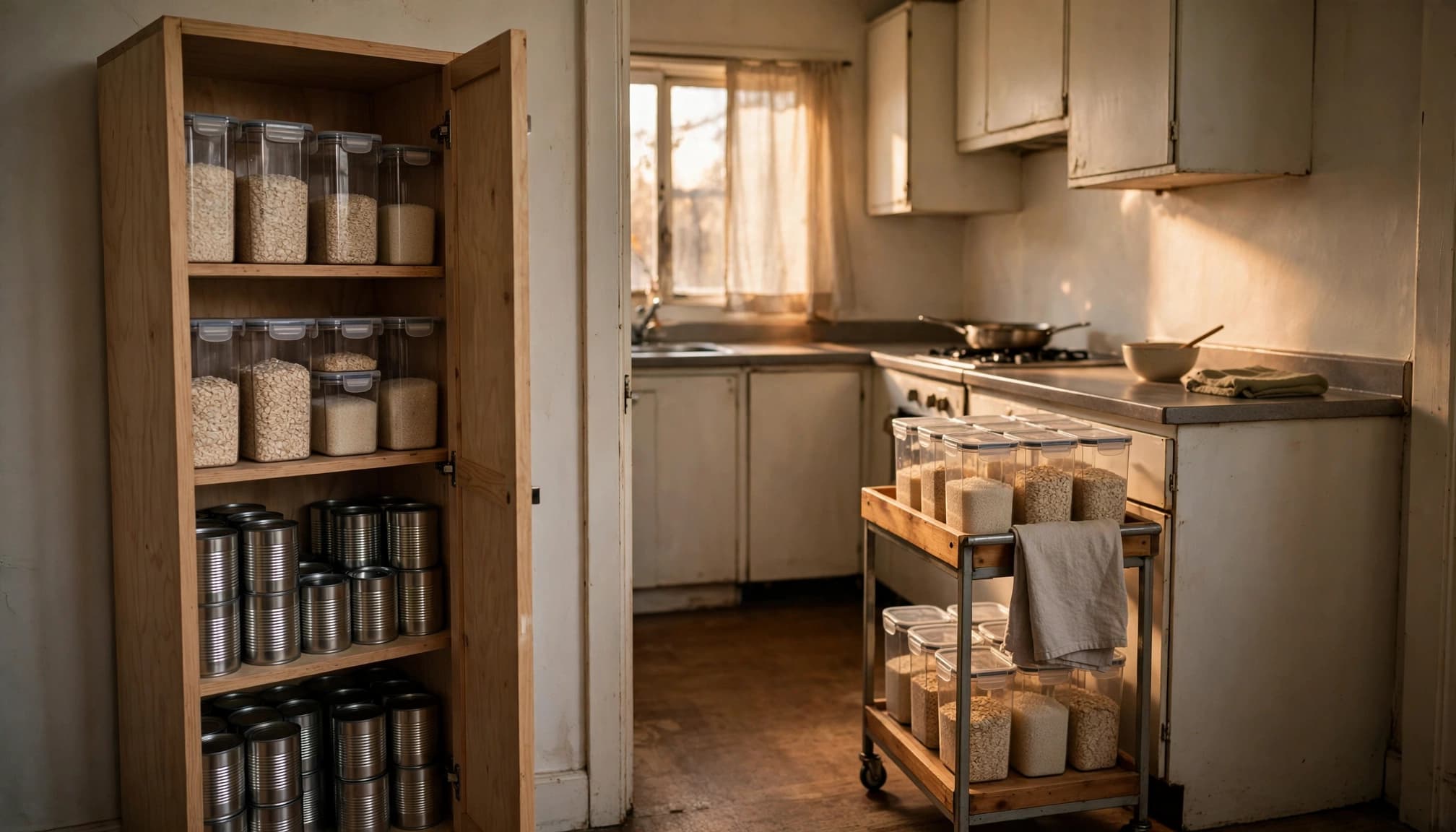
Use Existing Cabinets Before Adding Furniture
Choose one cupboard for everyday groceries, then move occasional-use kitchen equipment elsewhere if necessary. This keeps food close to your preparation area without covering the countertop.
Use adjustable shelves before buying accessories. A removable riser helps only when there’s enough clearance to retrieve the food underneath.
Choose the location carefully. The USDA’s shelf-stable food storage guidance advises against storing these products above or beside the stove or under the sink.
If you’re starting without a pantry, our guide to pantry storage without built-in shelves covers suitable cabinets and removable shelving.
Keep Dry Goods Together and Accessible
Keep your open rice, pasta, and breakfast foods within comfortable reach. Meanwhile, put unopened duplicates behind their matching products or in your separate backup area.
Give heavy canned goods a sturdy lower shelf rather than an overhead cupboard. Small packets can share a removable tray so they don’t disappear behind larger bags.
Leave enough space to pull things out independently. If getting flour requires removing several unrelated items, rearrange the shelf before adding another organizer.
Store Overflow Outside the Kitchen
A nearby cupboard can extend your pantry without adding furniture to an already crowded kitchen. Choose one overflow location so you don’t have to search several rooms before shopping.
Use a Cool, Dry Closet Area
Reserve a shelf in a dry hallway or bedroom closet for unopened shelf-stable groceries. Keep food away from shoes, laundry products, and anything that could leak or contaminate packaging.
The USDA’s dry-goods storage guidance explains that shelf-stable foods don’t require refrigeration and belong in clean, dry conditions away from extreme temperatures.
For small closet storage, choose shallow containers you can remove comfortably. Keep each food category together rather than spreading spare pasta across several shelves.
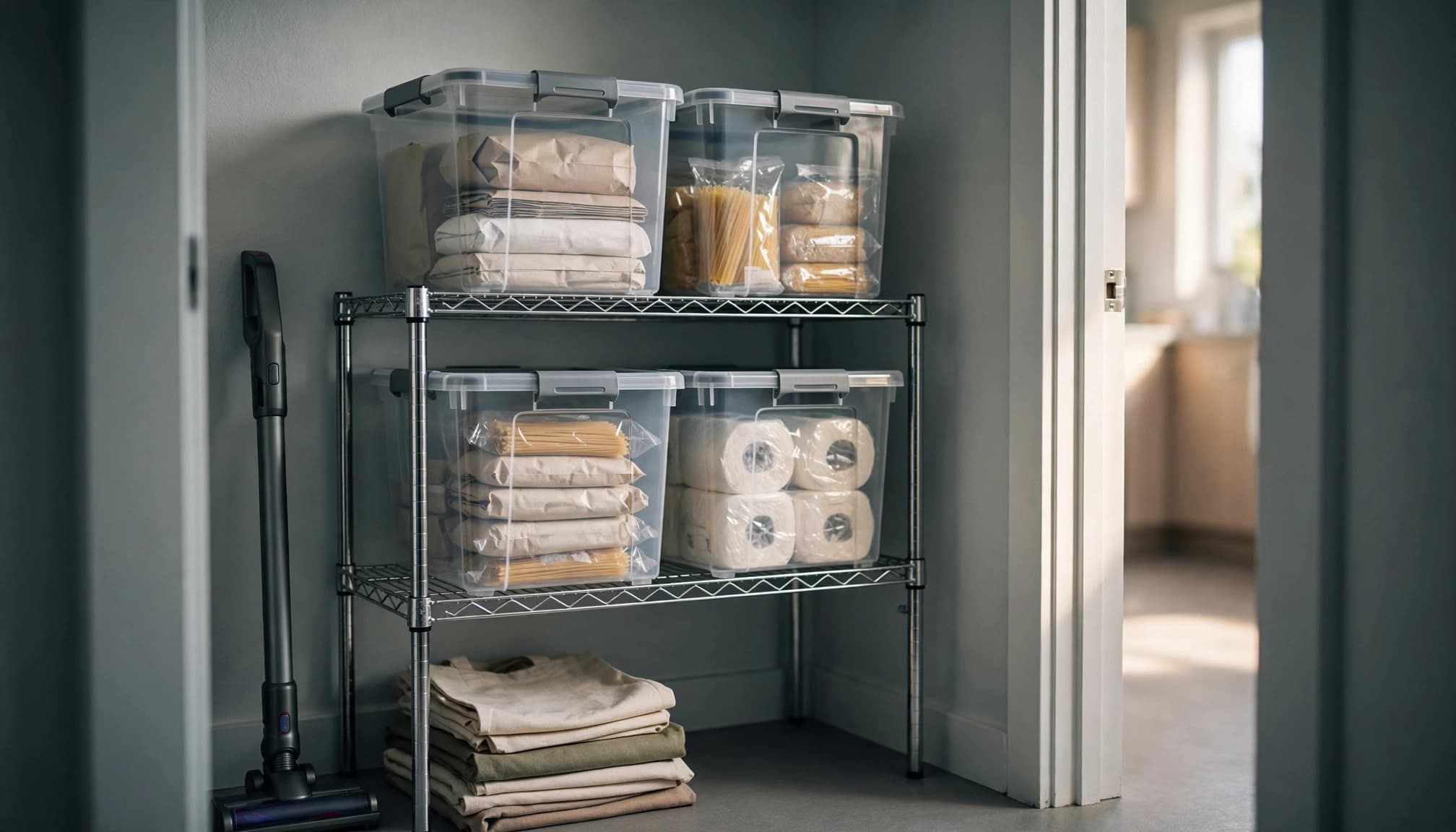
Move Nonfood Backups Before Moving Food
Sometimes the better solution is to relocate paper towels or spare napkins and leave groceries in the kitchen. These bulky supplies can occupy suitable under-bed storage or an existing living-room cabinet.
This gives food a convenient cupboard without turning your bedroom into a pantry. Our ideas for storing everyday household items can help you redistribute those nonfood backups.
Keep entryway storage focused on leaving and arriving. Grocery cartons shouldn’t narrow your walking route or prevent the front door from opening fully.
Choose Containers Without Wasting Space
Matching canisters aren’t a requirement for small-space organization. Use containers where they protect food or make awkward packaging easier to handle.
1 of our easiest recommendations is a bin for your cereal. I can’t be the only person who’s been annoyed with cereal going bad as my son left the box wide open. Awkward, bulky boxes can also be annoying. Remove those obstacles instantly, and clean up the appearance of your pantry almost instantly.
Take a look at the ProKeeper – top rated with 1,000+ 5 star reviews. It’s an easy way to store food longer as well as keeping your space cleaner and more organized.
Keep Original Packaging When It Works
Leave food in its original packaging when the package stores neatly and closes securely. You’ll retain ingredient lists, cooking directions, and dates without creating extra labeling work.
You can remove an outer multipack carton when the individual packages remain properly sealed. However, retain any information that appears only on the carton.
Test your arrangement with containers you already own before purchasing replacements. A washable basket can group sealed snack packets, while a shallow tray can keep bottles upright.
Ordinary storage boxes are suitable for packaged food, but loose ingredients need containers intended for direct food contact.
Decant Only the Foods That Need It
A torn flour bag or awkward rice sack can justify a food-safe container with a secure lid. Choose its size around the amount you buy, rather than purchasing a matching set.
Transfer the product name and useful package information, including allergen details and dates. Also keep cooking instructions if you rely on them.
Don’t pour a fresh purchase onto older leftovers. Empty the container, wash it, and let it dry completely before refilling.
If part of every bag remains outside the container, your setup creates two storage jobs instead of one.
Make Renter-Friendly Storage Work Safely
Freestanding furniture and removable accessories can add storage, but they still need suitable placement and support. Prioritize stability over squeezing another shelf into the room.
Give Carts a Permanent Parking Spot
A narrow rolling cart works only if you have somewhere safe to leave it. Measure the full footprint, including handles, baseboards, and the space needed to pull it out.
Keep it clear of appliance ventilation openings and your main cooking route. Follow the cart’s assembly, loading, and wheel-locking instructions.
If the available gap gets hot or damp, use the cart for suitable kitchen equipment instead. Then give groceries the cupboard space you’ve freed.
Use Doors and Vertical Space Carefully
Door-mounted baskets suit lightweight packets when their hooks fit and the door closes completely. Allow clearance for hinges, shelves, and the contents of each basket.
Avoid treating adhesive hooks as supports for heavy grocery bags. Also follow any required furniture anchoring instructions; freestanding doesn’t always mean anchoring is unnecessary.
Our renter-friendly storage without drilling guide covers removable options and their limitations. Keep lighter backups higher and heavier supplies lower so retrieval stays manageable.
Keep Refrigerated and Frozen Groceries at Safe Temperatures
Bulk buying needs a different plan for chilled and frozen food. A spare closet shelf can’t accommodate overflow that requires refrigeration.
The FDA’s safe food storage advice recommends a refrigerator temperature at or below 40°F (4°C) and a freezer temperature of 0°F (-18°C). Use appliance thermometers rather than guessing from how cold the shelves feel.
Before shopping, make room for the refrigerated groceries you intend to buy. Keep items requiring refrigeration chilled, and leave space for air to circulate.
For freezer purchases, divide food into usable portions when appropriate. Use freezer-suitable packaging and label portions with their contents and packing dates. Flat packages can be easier to arrange than bulky, irregular bundles.
Keep one freezer section for backup ingredients and another for prepared meals if your space allows. However, avoid adding bins that make packages harder to reach.
Buy less when the appliance is already full. An oversized purchase creates more work if you must rearrange everything whenever you need dinner.
Set a Bulk Grocery Storage Limit Before Shopping
Your available storage should help determine what goes into your cart. A lower unit price doesn’t make an oversized purchase practical if you can’t store or use it.
Start with foods you already eat regularly. Then assign each bulk category a clear boundary, such as one shelf for canned goods or one bin for unopened grains.
Measure usable width, depth, and height before buying storage. Include the space needed to open lids and remove containers. A bin that fits tightly can still be inconvenient.
If you can’t see your backup stock before shopping, moving it into a single accessible area may help more than buying additional organizers.
Write your shopping list while looking at both your everyday supplies and backups. You’ll notice duplicate purchases and nearly empty packages before leaving home.
When groceries arrive, place newer matching products behind older ones. Keep one package open where practical, and return unopened supplies to their designated area.
Also leave some flexible room for an unusually shaped package or a different grocery purchase. Shelves packed edge to edge are harder to maintain.
If a category repeatedly overflows, reduce the purchase size or deliberately reassign its space. Don’t let temporary grocery bags become permanent floor storage.
Frequently Asked Questions
Can You Store Bulk Groceries Under the Bed?
Use under-bed space for sealed shelf-stable groceries only when the area is clean, cool, dry, and free of pests. Keep packages inside suitable closed containers, away from heaters. However, paper goods are often easier to store there, leaving food in a kitchen cupboard.
Where Should You Store Groceries Without a Pantry?
Start with one existing kitchen cabinet, then assign unopened backups to a nearby dry cupboard. A suitable freestanding cabinet is another option. Keep the arrangement simple enough that you can find ingredients without searching several rooms.
Can You Keep Bulk Food in the Bathroom?
Choose another location. Bathroom humidity, plumbing leaks, and cleaning products make it a poor food-storage area. Keep bathroom storage for toiletries and suitable household supplies, and reserve a clean, dry cupboard elsewhere for groceries. This also keeps food separate from chemicals.
Keep Your Groceries Accessible
Good bulk grocery storage gives each purchase a suitable home without taking over your apartment. Keep everyday ingredients nearby and limit backups to space you can access easily.
Start with one dedicated backup area before buying new storage furniture. When putting groceries away and finding them again both feel straightforward, you’ve found an arrangement worth keeping.
We only recommend top-rated, affordable products you can trust. As an Amazon Associate, I may earn from qualifying purchases through the affiliate links above at no extra cost to you. Thank you for supporting our work.