Crowded counters and overflowing drawers don’t always mean you need another cabinet. You can often improve small space storage by sorting what you own and making your existing shelves, cupboards, and furniture easier to use.
The most useful small apartment storage setup keeps everyday belongings within easy reach without blocking the places you walk, cook, or relax. Whether you rent or own, start with one crowded spot before buying more furniture.
Key Takeaways
- Start with one crowded spot, sort its contents, and measure the usable space before choosing an organizer.
- Keep everyday belongings within easy reach, and place occasional-use or seasonal items in higher or deeper storage.
- Check that furniture, bins, and door organizers are easy to access and don’t block walkways, doors, or nearby storage.
- Test your setup with containers you already own, then adjust anything that adds effort before buying more.
How to Make Small Space Storage Work for Your Routine
Start with one problem area, sort its contents, and arrange what you keep around your daily habits. Choose storage solutions you can use comfortably, rather than filling every available gap.
Choose One Crowded Spot and Measure It
Use storage ideas to choose one crowded spot to tackle first, such as a drawer that jams, a shelf you can’t reach into, or an entrance covered with shoes. Empty that area and separate what belongs there from items that need another home. Set aside anything you no longer use.
Look for dead space in awkward corners or underused openings, then measure the usable width, depth, and height before choosing an organizer. Hinges, shelf brackets, plumbing, and baseboards can reduce the space inside an opening. Include handles, lids, and wheels when measuring containers.
Next, measure the room needed to use the storage. A cupboard might hold a deep bin, but the bin still needs space to slide out. For proposed furniture, mark its footprint with painter’s tape suitable for your floor. Walk around it and open nearby doors before committing.
Keep Everyday Items Within Easy Reach
Give your most-used belongings the most convenient spaces. Store daily dishes near your preparation area, current clothing where you can see it, and keys near the door you use.
Comfortable height matters, too. Avoid making yourself bend, stretch, or lift a stack whenever you need something ordinary. Reserve higher shelves and deeper compartments for lighter seasonal or occasional-use belongings.
Shared storage works better when each person can use it independently. Give children reachable homes for everyday belongings, and divide shared drawers so small items stay separate.
Notice where clutter repeatedly collects. If laundry lands beside the bed, moving the basket closer may help more than adding another organizer. Adjust your storage ideas to support the habit you already have. Also see Storage Solutions for Small Spaces.
Find Extra Storage in Furniture and Overlooked Spaces
Before adding another unit, look inside, beneath, and around the furniture you own. Useful small space storage increases access without making the floor plan harder to use. We have an article on organizing your shower space quickly also.
Use Furniture That Does Two Jobs
Dual-purpose furniture can reduce your need for a separate dresser, but check that its storage is easy to reach. A storage bed’s compartments must open fully. Drawers on both sides won’t help much if one side sits against a wall. A lift-up base needs enough overhead clearance and an opening mechanism you can use comfortably.
An ottoman can hold spare blankets while working as a footrest or extra seat. Choose occasional-use contents if opening it means clearing a tray every evening. A storage bench near the entrance can provide seating and shoe storage, provided it leaves the doorway clear.
A compact side table with a shelf can hold books or remotes without taking up much room. Choose one that leaves enough space to walk around it. A drop-leaf table offers a larger dining surface when needed. Test its footprint folded and extended to check whether you can still move through the room during meals.
Make Use of Cupboards, Doors, and Space Under the Bed
Shelf risers can separate short mugs or bowls when a cupboard has unused height. Drawer dividers keep small tools apart without adding furniture. Both should improve access rather than squeeze more items into an already awkward space.
An over-the-door organizer needs clearance for its hooks and contents. Open and close the door gently during your trial setup. Make sure baskets won’t strike shelves, hinges, or nearby furniture.
Under-bed storage suits clean, dry seasonal clothing and spare bedding. Measure beneath the lowest obstruction, including center supports, and leave room beside the bed to remove each container.
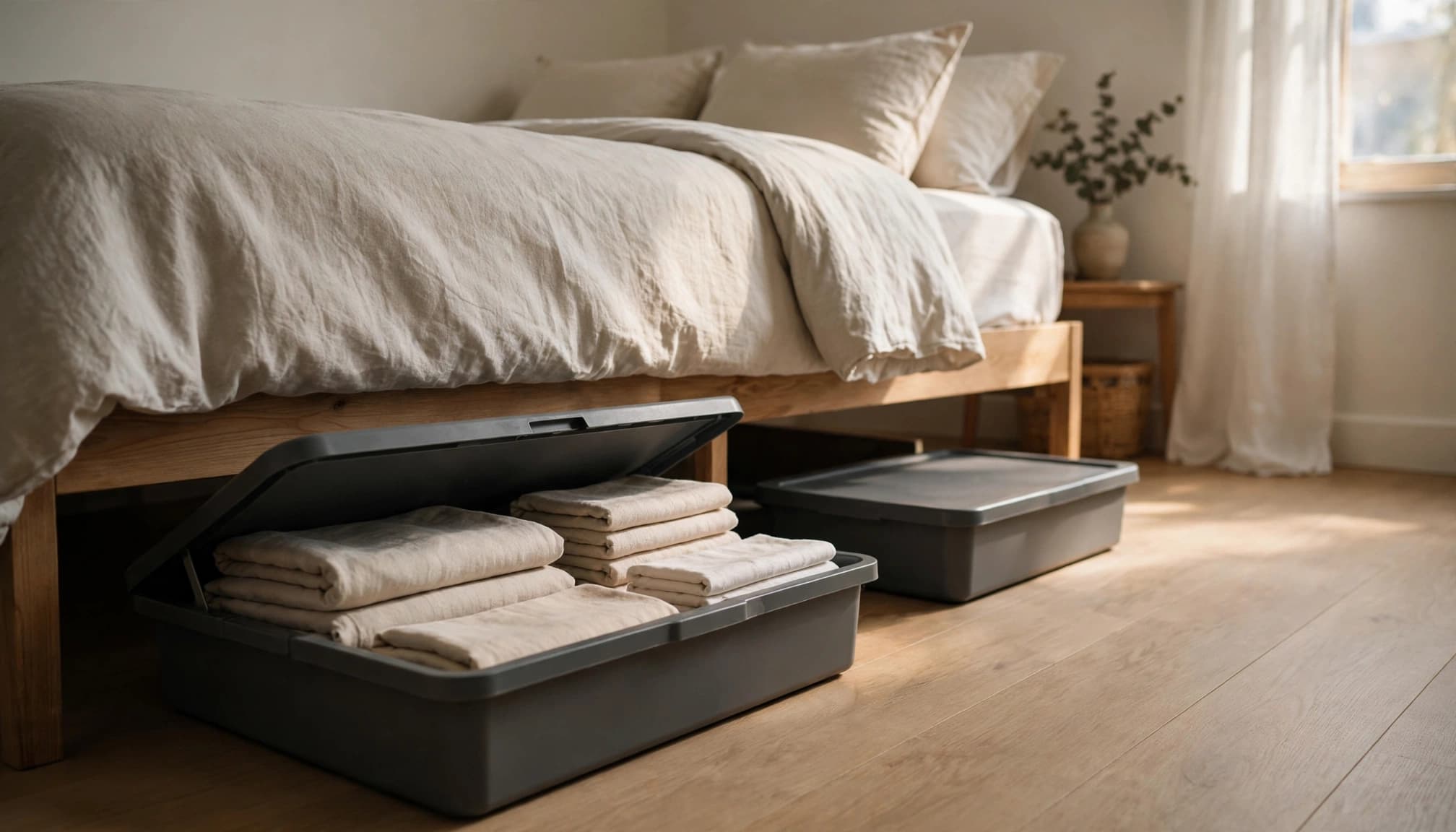
Use covered containers to reduce dust, and keep vents clear. Never seal damp textiles away; the EPA’s mold and moisture guidance explains why moisture control matters indoors.
Add Vertical Storage Without Creating New Problems
Use vertical space with narrow shelving, suitable hooks, and wall-mounted storage to free useful surfaces. Keep daily items at a comfortable height and use upper storage for lightweight belongings you need less often. Keep floor space and walking routes clear, and avoid placing heavy or fragile objects above beds or seating.
For rentals, drawer inserts and baskets inside existing cupboards are renter-safe starting points. Tension rods and removable hooks can also work, but they need compatible surfaces, correct installation, and loads within their stated limits. A no-drill product doesn’t automatically suit every wall or lease.
Freestanding furniture may still require anchoring. Follow the manufacturer’s instructions and the CPSC’s furniture tip-over prevention guidance. If your rental rules prevent required anchoring, choose a different solution rather than leaving the unit unsecured.
Choose Storage Ideas That Fit Each Room
You don’t need a complete room makeover to make progress. Choose one change that removes a repeated inconvenience, then live with it before expanding.
Clear Kitchen Counters and Entryways
For practical kitchen storage, start with the counter space you need for food preparation. Move rarely used appliances to suitable cupboards if you can lift them comfortably. Keep everyday utensils together near where you use them, without crowding the cooking area.
A rolling cart or narrow island helps only when it has somewhere useful to stand. Allow for cupboard doors, appliance doors, and your normal route through the kitchen. If you must move it every time you cook, a smaller change may work better.
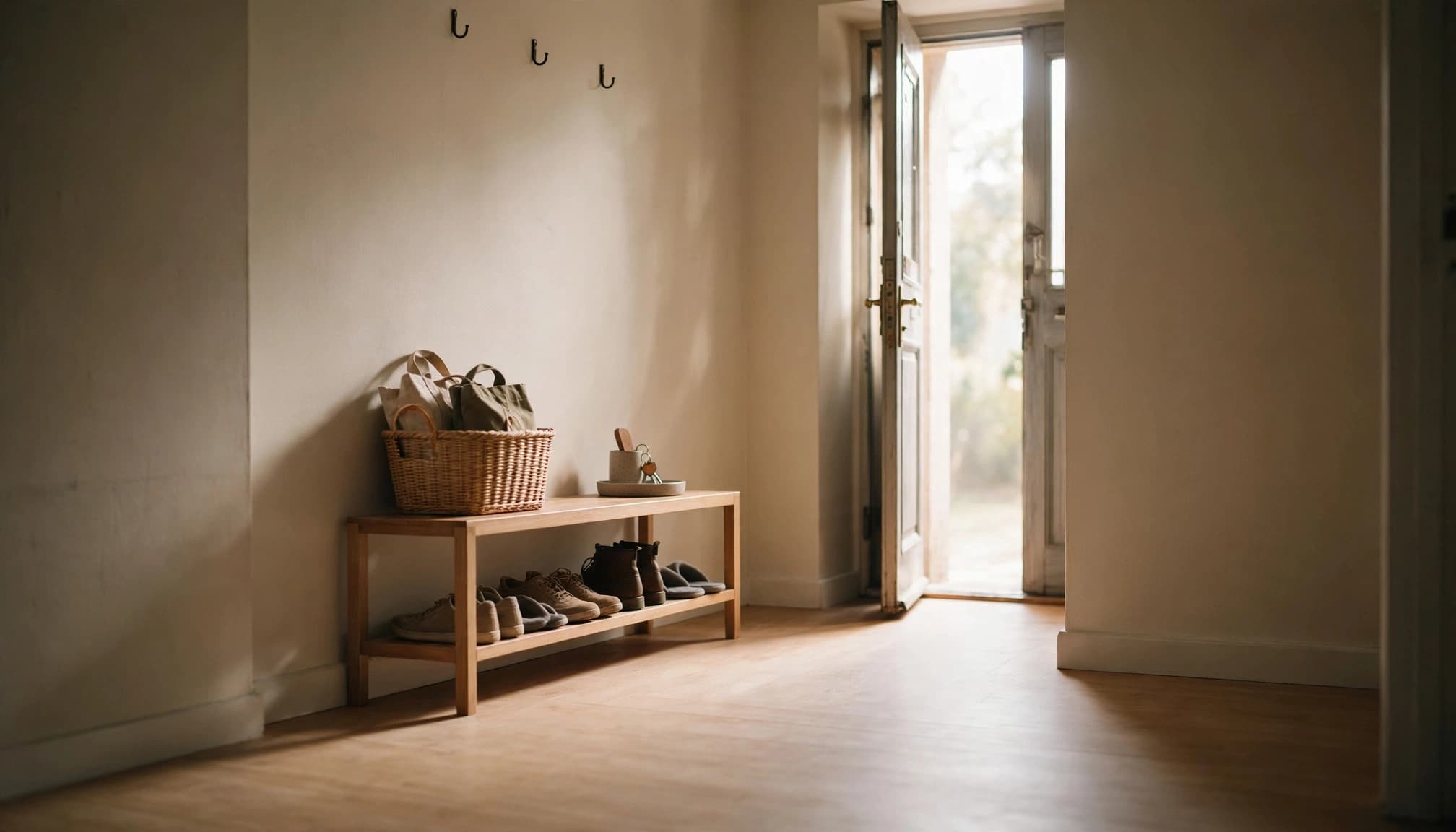
In the entryway, reuse a tray for keys and a basket for shopping bags. Keep current shoes nearby and move occasional pairs elsewhere. In the entryway, use a storage bench only if it leaves the route clear. When there’s no spare floor space, reserve part of an existing shelf instead.
Make Bedrooms, Closets, and Bathrooms Easier to Use
For small bedroom storage, keep frequently worn clothes visible and accessible in the closet. Use a nightstand drawer or shelf for items you reach for every day. A narrow nightstand can keep the bedside area usable.
Move clean seasonal pieces to a suitable higher shelf or covered under-bed container. Avoid overfilling either location, so you can remove one group without disturbing everything around it.
Preparing your home for visitors? Check out our complete blueprint on how to Plan a Guest Room in a Small Space.
A hanging fabric organizer can divide closet space, but its contents add weight to the rail. Use it within the limits of both the organizer and its support. Leave enough hanging room for clothes you wear regularly.
In bathrooms, choose organizers that clear pipes and leave valves accessible. A washable tray can gather daily products without requiring an installed pull-out rack. Store excess backups elsewhere if they crowd your morning routine.
Keep fabric storage away from persistently damp areas. The EPA’s indoor air quality guide recommends indoor humidity between 30% and 50%. More bins won’t solve an ongoing moisture problem.
Buy Fewer Organizers by Testing Your Setup First
Try the arrangement with storage bins you already own. A clean shoebox, spare basket, or washable tray can help you learn what size and position work before you spend anything.
Match Bins and Organizers to What You Store
Choose features around the contents and how often you need them. Open bins suit everyday supplies because there’s no lid to remove. Lidded containers suit occasional-use belongings when dust protection matters. Handles help only when you can reach them and carry the filled container comfortably.
Stackability is useful for backups, but less convenient for items you retrieve every morning. You shouldn’t need to dismantle a tower of containers to get dressed or make breakfast.
Measure the organizer’s outside dimensions and its usable interior. Thick walls, sloping sides, or internal dividers can reduce capacity. Test the opening and removal movement before filling it.
Keep food in its packaging when reusing containers that aren’t intended for direct food contact. A shoebox can group sealed packets, but it isn’t suitable for loose rice or flour. Keep cooking directions and date information with the food.
Keep the Setup Safe and Easy to Maintain
Follow product weight limits, installation directions, and rental rules. Include the container’s own weight when the instructions require it. Don’t treat adhesive hooks, tension rods, or furniture anchors as interchangeable products. If drilling is a problem, as it is in most rentals, check out our No Drill Shelf Solutions here.
Keep exits, door swings, and walking routes clear. Give donation bags a destination and a date to leave, then keep them away from those routes while they wait.
Use your small space storage setup through a normal week. Notice what gets left out, what feels heavy, and which lids or stacks slow you down. Adjust those details before buying additional containers.
A 10-minute evening reset can help you maintain the arrangement. Return everyday belongings, clear one useful surface, and remove outgoing items when planned. If the same area keeps becoming messy, simplify its storage or move the container closer to where you use it.
Frequently Asked Questions
How do I start organizing a small space?
Choose one crowded spot, empty it, and sort what belongs there. Measure the usable space and consider how much room you’ll need to open and remove the storage.
What should I keep within easy reach?
Keep belongings you use every day in convenient spaces, such as dishes near the food preparation area and keys near the door. Store lighter seasonal or occasional-use items on higher shelves or in deeper compartments.
How can I add storage without taking up more floor space?
Use existing cupboards, drawer dividers, shelf risers, suitable hooks, or space beneath the bed. Check access and clearance so the storage doesn’t block doors, walking routes, or nearby furniture.
Also see: Corner Shelf Ideas for Awkward Spaces.
How can I tell whether a storage organizer will work?
Try the arrangement with a box, basket, or tray you already own, and check that it fits and is easy to remove. Follow product weight limits and installation directions, and adjust the setup if it slows down your routine.
Make Your Next Small Space Easier to Use
Choose the spot that causes the most daily frustration, sort its contents, and test one simple storage idea with what you already own. Measure both the storage space and the room you need to use it.
Keep the arrangement that makes everyday tasks easier, and adjust anything that adds effort. Useful storage gives your belongings a reliable home while leaving your own home comfortable to use.