In an apartment, a small laundry room setup can give sorting, washing, drying, and folding a place, even when those tasks overlap. Good laundry room organization keeps supplies accessible without blocking appliances or walking routes.
You don’t need a separate room or matching cabinets to start. A few well-placed storage pieces can make laundry easier without taking over your apartment.
Start with the space your normal laundry routine needs, then choose organizers that support it.
1 of the easiest recommendations we can make here is this Slim Laundry Hamper – multiple color options to fit your personal style, takes up very little space and holds a fair amount of clothes in 1 small space. Easy to remove bag to take to your laundry machine or laundromat. Mine fits right behind my door and looks a heck of a lot better than piled up clothes in the corner.
Key Takeaways
- Keep everyday supplies nearby, but store detergent packets locked away in their original packaging.
- Use adjustable shelves, labeled baskets, and folding surfaces that suit your available space.
- Allow room for doors, extended racks, and hanging clothes, rather than measuring only the organizer itself.
1. Plan Your Laundry Zone Around Your Space
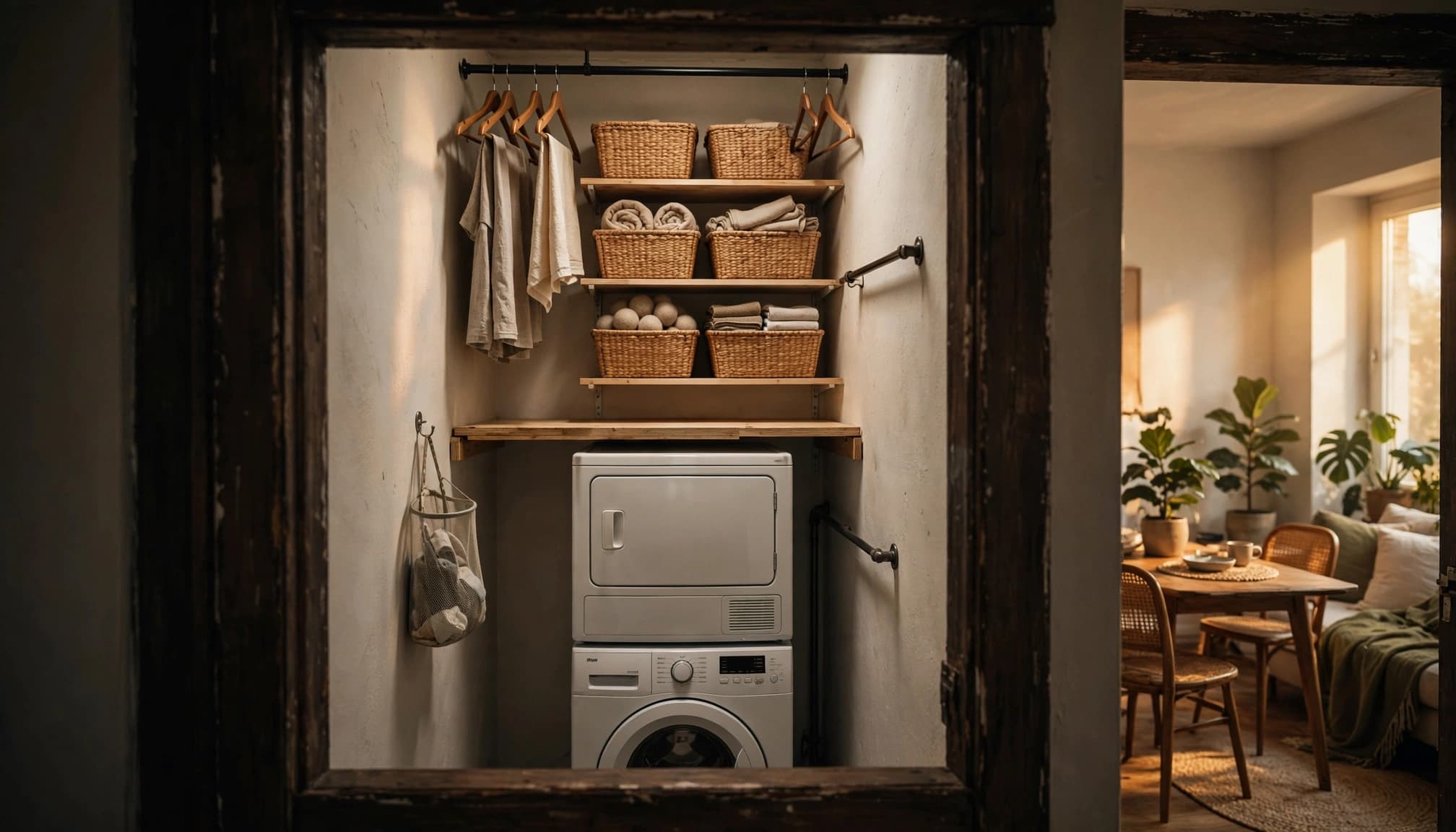
A small laundry room may be a closet or corner, not a dedicated room. Start by finding where dirty clothes collect and clean laundry gets stuck. Your laundry zone should connect those tasks, even if everything can’t fit beside the washer.
Work With the Closet or Corner You Have
A laundry closet can fit in a kitchen, bedroom, bathroom, basement, or standard 6-foot-wide reach-in closet. The location must support proper appliance installation. An empty recess alone doesn’t make a suitable laundry space.
Measure usable width, depth, and height, including door hinges and projecting handles. Also leave access to hoses, shutoff valves, and appliance controls. If plumbing or electrical work is needed, bring in a qualified professional rather than treating it as a storage project.
Give Each Laundry Task a Destination
Keep your dirty-clothes basket where you normally undress if the laundry closet has no room. Then reserve the machine area for washing supplies and a temporary landing spot.
Folding can happen on a nearby table that clears between loads. Use wall space for a drying rack that opens without blocking cupboards. For a vented dryer, exhaust must travel outdoors, as described in the Building America Solution Center’s dryer venting guidance.
2. Organize Laundry Supplies on Adjustable Shelves
Adjustable shelves make laundry room storage more flexible as bottle sizes change or you add a basket. Stack them vertically on a narrow wall, or spread them across a wider section to keep supplies within reach.
See our article on No Drill Shelves here.
Choose Shelves That Support Small Containers
To reposition a shelf, empty it, lift it out, move its support brackets, and reinsert it securely. Avoid moving a loaded shelf.
Saint Louis Closet Co. describes 3/4-inch thermo-fused laminate (TFL) shelves that can be made 7 to 36 inches wide or deep. The company presents these solid shelves as an upgrade over wire shelving. A solid surface also keeps small bottles from sitting awkwardly between wires.
Balance Easy Access With Safe Storage
Eye-level shelves make everyday cleaning supplies easier to see and keep them off low surfaces. However, height alone isn’t child protection. The CPSC’s laundry-packet safety guidance says packets should remain sealed in their original packaging and locked away.
Enclosed laundry room cabinets hide mismatched supplies and can provide lockable storage. Flat doors suit a simple, minimalist look, while raised-panel doors have a more decorative style. Choose doors that open fully without hitting adjacent walls or shelving.
3. Give Baskets and Bins Fixed Jobs
Assign one bin to darks and another to lights if you separate loads that way. Keep cleaning supplies in their own container, away from clothing. If two hampers won’t fit, use one divided hamper or sort immediately before washing. When space allows, matching baskets can replace a divided hamper for open sorting.
On open shelves, matching baskets reduce visual clutter. Add short labels such as “Darks,” “Lights,” and “Cleaning Cloths.” Place labels where you can read them without lifting the basket.
Before buying several containers, try one basket you already own. Our practical small-space storage ideas follow the same approach: test the position and access first, then spend money on the missing function.
4. Create a Folding Surface That Stays Clear
A countertop gives you space for folding clothes and setting down a laundry basket. Above front-loading appliances, it can make an otherwise awkward area useful. However, it must preserve appliance access and shouldn’t rest on the machines unless the setup is designed for that use.
With a top-loading washer, keep the lid’s opening path clear. A nearby table, fold-down shelf, or movable surface may be more practical than a fixed counter.
Decide where the basket will sit before choosing your folding spot. If the basket occupies the whole surface, you’ll still end up folding elsewhere.
Keep permanent supplies off a countertop used as a landing area. Detergent belongs on a shelf or inside a cabinet, so you don’t have to clear bottles before every load.
A folding surface only helps when it’s available on laundry day. Treat it as working space rather than another storage shelf.
5. Move Drying and Ironing Gear Onto the Wall
Wall-mounted equipment can free the floor, but its open footprint matters more than its folded size. Include the space needed by hanging sleeves and trouser legs.
Choose a Rack That Opens Into Clear Space
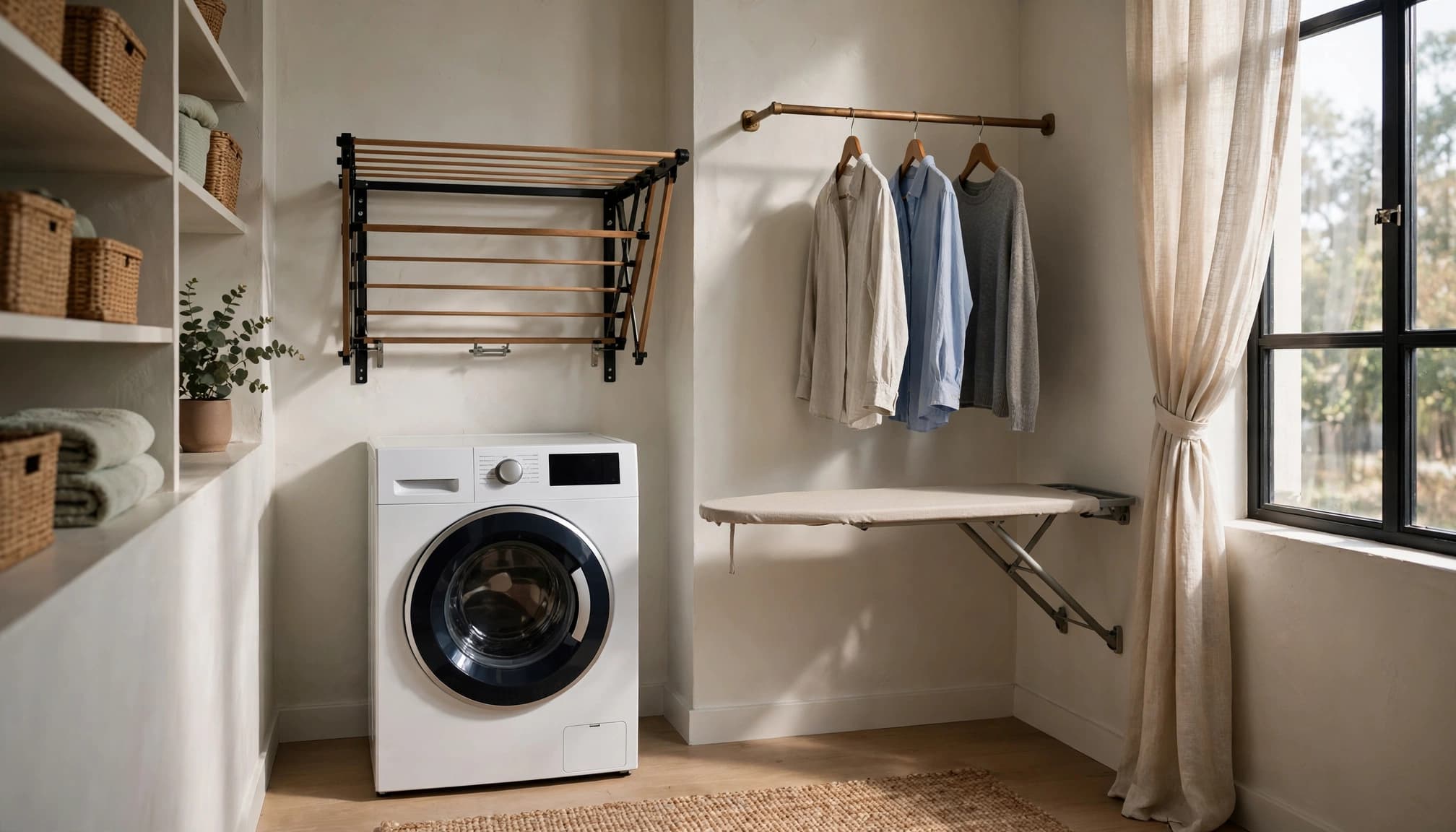
A folding or accordion drying rack can go above a sink or appliance, on a suitable door, or along a closet side. Choose a position where the open rack doesn’t prevent you from reaching controls or unloading clothes.
For rentals, an over-the-door rack offers a removable option for smaller loads. Wall-mounted racks need suitable supports and fixings, not lightweight adhesive hooks. Our guide to drying clothes in a small apartment compares options when floor space is limited.
Store the Ironing Board Where You Use It
A wall-mounted or door-mounted ironing board avoids storing a full-size board in your walking space. Allow enough room to stand comfortably when it’s open.
For a built-in option, Saint Louis Closet Co. describes a fold-out board concealed behind a flip-down drawer front that swivels 180 degrees. That’s useful in planned cabinetry, but a compact tabletop board may solve the same problem without remodeling. Store it nearby after it has cooled.
If you have a side by side washer and dryer, take a look at this Countertop With Drawer. Comes in 2 different finishes that modernizes your laundry room instantly. Hidden drawers and plenty of space to fold and iron in 1 spot. This is for washer/dryer units that open in the front, as this sits on top of the machines.
6. Use Hooks and Hanging Rods for Awkward Items
Long-handled cleaning tools often waste a whole corner because they won’t stay upright. Heavy-duty spring-loaded hooks can hold broom, mop, and sweeper handles against a wall, inside a cabinet, or on a mounting faceplate.
Keep these tools separate from clean laundry, and leave enough room to remove each handle without knocking over nearby bottles. If a curtain conceals the laundry zone, keep it clear of appliances and ventilation openings.
A hanging rod gives freshly washed items a temporary destination. When comparing IKEA laundry ideas for a narrow gap, measure the complete unit, including handles or wheels, against the available space. Pull-down rods can make upper space accessible; Saint Louis Closet Co. describes models for sections 26 to 36 inches wide.
Use rods for lightweight athletic wear and garments whose care labels allow hanging. Heavy sweaters generally need flat drying to avoid stretching, so reserve a suitable mesh surface for them.
Once clothes are dry, move them back to their usual storage. Our guide to organizing a small closet helps keep that final laundry step manageable.
7. Finish With Renter-Friendly Storage and Simple Colors
If drilling isn’t an option, start inside existing cupboards. A loose washable tray can gather bottles, while a small caddy keeps cleaning cloths together. A slim rolling cart can work beside appliances only when it leaves ventilation openings, service access, and walking space clear.
Don’t assume a popular utility cart will fit a narrow gap. Include wheels, handles, baseboards, and the space needed to pull it out.
Tension rods and door-mounted organizers offer more renter-friendly storage, but they still have load and clearance limits. Avoid using a light-duty rod for heavy wet laundry.
Finally, use a curtain or shower curtain to conceal an untidy laundry nook without adding cabinet doors. Keep it clear of appliances and ventilation openings. One or two consistent colors across baskets, curtains, and containers can make the area feel calmer, even when the storage pieces don’t match perfectly.
Frequently Asked Questions
How Can You Organize Laundry in a Very Narrow Closet?
Keep the floor focused on appliances and use an accessible wall section for supplies. Place the hamper outside the closet if it prevents doors from opening fully.
A folding table elsewhere is often more useful than forcing a tiny counter into the closet. Before adding another organizer, use the arrangement through a complete laundry cycle. Notice whether you can load the machine, retrieve detergent, and carry a basket without moving other items.
Are Open Shelves or Cabinets Better for Laundry Storage?
Open shelves suit frequently used baskets and supplies you want to see quickly. Cabinets reduce visual clutter and provide a place for locked storage when fitted with an appropriate lock.
A combination often works well: keep cloths and empty hangers accessible, while hazardous products stay secured. Neither option helps if shelves are so crowded that you must remove several things to reach one bottle.
Make Your Laundry Zone Easier to Use
A useful laundry zone gives each task a place without making your apartment harder to move through. The strongest improvement is often better access, rather than more storage.
Start with the problem that slows you down most, whether that’s a missing folding spot or supplies crowded around the washer. Use the revised setup through a normal laundry cycle, then add only what makes the next load easier.
We only recommend top-rated, affordable products you can trust. As an Amazon Associate, I may earn from qualifying purchases through the affiliate links above at no extra cost to you. Thank you for supporting our work.